July 20, 2023 · 31 minutes · Episode 364
About this episode
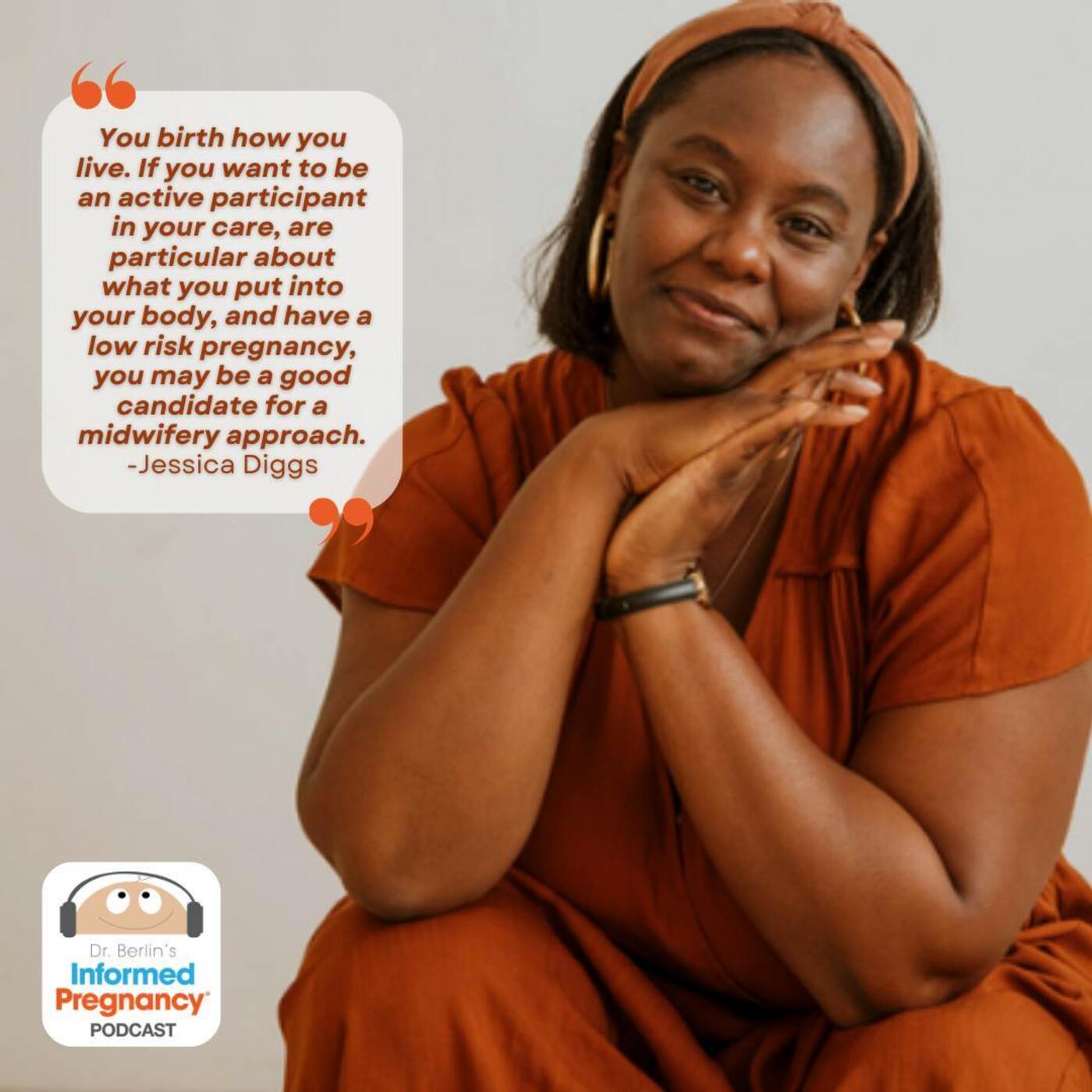
Trained ICEA childbirth educator, doula, and midwife Jessica Diggs has attended over 500 births in 10 years of being a birth worker. She explains the midwife “model of care” including what it is and what care looks like, how to choose a midwife, and who makes a good candidate for midwifery care.

- Connect with Jessica Diggs online: https://www.jessicadiggs.com/ and https://www.instagram.com/jessicaadiggs/
- Read more about being a midwife on the Informed Pregnancy Blog:
- https://www.informedpregnancy.com/single-post/what-is-a-midwife-jessica-diggs-cpm-lm
Keep up with Dr. Berlin and the Informed Pregnancy Project online!
www.instagram.com/doctorberlin/
www.facebook.com/InformedPregnancy
Learn more about your ad choices. Visit megaphone.fm/adchoices
See Privacy Policy at https://art19.com/privacy and California Privacy Notice at https://art19.com/privacy#do-not-sell-my-info.
Key quotes
“And the reason midwives and doulas are often confused is because their approach to birth is often very similar, but they have two different roles. So midwives are medical providers who typically specialize in low risk and holistic view and approach to the perinatal period. So from conception to postpartum. Whereas a doula is more of a labor support, emotional support, and non-clinical provider.”
“Yeah, I like to tell people you birth how you live. If you are already someone who is taking a conscious interest in their health and their lifestyle and are wanting to be an active participant in all aspects of your care, then you probably want to seek out a provider who's going to match that energy. That generally”
“But she often has a lot of questions and you may want to ask your parents, but also you may not want to ask your parents or you may not be the parent who wants to answer those questions. So it gives her another space, another safe space to like ask any questions. And my rule of thumb with my teens is I won't disclose what they ask unless it's a clinical concern. So it's a lot of confidential sharing. They get a safe space to get good information.”
“Everyone had a role as soon as that baby was born, the sound bath stopped, she made food, the drummer stopped, he made this and then they left, they did not even interact with the couple. They had a job, they did their job. And then they peaced out. That baby was”
“Most people didn't know I was that young. I also didn't tell clients for a long time my age. Some would pick up on it, some wouldn't. But yeah, I was 19 when I went to my first birth and I knew I wanted to”
Related episodes
- Ep. 339 Birth Work Professional Sallyann Beresford
- Ep. 382 Caitlin Wilder: Before Birth
- Ep. 333 Carson Meyer: A Doula's Birth Story
- Ep. 329 Valentina Trentini: After Birth
Transcript
AI-generated transcript with speaker labels — may contain errors, especially names and medical terms. Dr. Elliot Berlin, DC appears in blue; Jessica Diggs in orange.
Download PDF of the Transcript
Dr. Elliot Berlin, DC [0:36] Welcome to the Informed Pregnancy and Parenting podcast. I'm your host, pregnancy-focused chiropractor, Dr. Elliott Berlin. My guest today is a longtime friend and a longtime friend of the Informed Pregnancy Project. She was a doula and now is a reproductive health educator and licensed midwife, and she's here to discuss the idea behind the midwiffic model of care, what that means, and how to choose a good midwife for you. Are you even a good candidate for midwifery? Jessica Diggs, welcome back
Jessica Diggs [1:05] to the podcast. Thank you for having me back. I'm always excited to see you. I always learn cool things when I'm around you. Let's jump right in and share with
Dr. Elliot Berlin, DC [1:14] the group. Where are you from originally? I'm originally from North Carolina. I hear
Jessica Diggs [1:18] it a little bit when you say that. Yeah, only when I say it and when I'm mad. Thankfully
Dr. Elliot Berlin, DC [1:25] that's why I've only heard it rarely. What was growing up in North Carolina like? And then what brought you to LA? I loved growing up in
Jessica Diggs [1:34] North Carolina. I grew up in Greensboro, so it has the feel of Pasadena. That's the best way I can describe it. It's close enough to a city. It's enough to do, but you can also get out into the boondocks if you really want it to get like a little outside in a field if you want it to. But I grew up in a midsize city and loved it. I love North Carolina. It's beautiful. I went to school there and then I moved to LA in 2014, almost 10 years ago, which is crazy. I'm originally from medical school. I went to college thinking I was going to be an OB and thinking I was going to work with midwives. I knew about them, but I was definitely geared towards OB
[2:17] track mostly because in the state of North Carolina, midwifery care is a lot different and there's a lot more restrictions around the type of midwifery care. And I knew that I wasn't going to work well with that to have a restriction. So I was like, if I could be an OB who learns from midwives, that will release some of the red tape. We know that that's not true anymore, but still. So I moved out here for a medical school originally and then changed.
Dr. Elliot Berlin, DC [2:45] The other side of the country. Wow, that's powerful. Like, what about you from such a young age then? It sounds like you're interested in women's health care.
Jessica Diggs [2:54] Yeah, I was really interested in my body and other people's bodies from a very young age. So I became a doula at 19.
Dr. Elliot Berlin, DC [3:02] Whoa, okay. I remember meeting you at an event and you're like, yeah, I'm going to be an OBGYN. I'm like, okay, but should we celebrate your ninth birthday first?
Jessica Diggs [3:14] Most people didn't know I was that young. I also didn't tell clients for a long time my age. Some would pick up on it, some wouldn't. But yeah, I was 19 when I went to my first birth and I knew I wanted to be in reproductive health, mostly from an education standpoint originally, because I was then actively trying not to have children. And I was fascinated with the fact that we didn't know enough about our bodies. Like that intrigued me. Like, why don't we know more about our reproductive health from sex ed to actual childbirth? And that led me to learning what a doula was and then becoming one.
Dr. Elliot Berlin, DC [3:49] Wow, that's really cool. So if you came to Los Angeles to apply for med school, then how did you switch gears to mid school?
Jessica Diggs [3:57] I don't know if we haven't talked about this before. I interviewed out here, I was waitlisted originally. And then I did another cycle of medical school applications, went through the interview process for people who don't know most schools as a usually a couple day process. And I ended up like connecting with one of the guys and went on a date with him for the first day and hated him. I gave this beautiful spill about why I wanted to be an OB. And when I asked him like, why he wanted to be a doctor, he was like, because it's prestigious, I make a lot of money. And that was kind of the vibe of everyone though. And I had like, just like an epiphany of like, this is going to be
[4:40] the reality for the next four years of medical school, the next four years of residency, and probably the entire career. And I had already been exposed to California midwives by then, and realized I don't live in North Carolina anymore. The state laws are different around how I can practice as a midwife. So I withdrew my application that day.
Dr. Elliot Berlin, DC [5:03] Wow, okay. And then what was the process of midwife training like?
Jessica Diggs [5:08] I enrolled in it with free school probably a couple of months after that. I had already had a couple of preceptors and a couple of friends in the process with becoming a licensed midwife. Most of your experience is outside of the hospital setting, if not all of it. So you need to be paired up with preceptors. So finding your mentor or apprenticeship, and then you go to school for all the didactic work. So I already had a midwife who was willing to take me and I jumped into clinical care immediately. So I had a pretty expedited-
Dr. Elliot Berlin, DC [5:41] That sounds like you.
Jessica Diggs [5:42] I had a pretty expedited midwife free school experience compared to other students because they often have a harder time finding a midwife to apprentice under.
Dr. Elliot Berlin, DC [5:52] So, I mean, you already had birth experience in your doula work.
Jessica Diggs [5:56] Yeah, so I've had been a doula since 2012. So probably three to four years by then.
Dr. Elliot Berlin, DC [6:01] Wow, okay. So then if we're breaking it down, the didactic work is all of the sort of more formal classroom education stuff that you would think of?
Jessica Diggs [6:11] Yeah, so think of it as a master's degree in midwifery care. You do everything from counseling and psychology because most midwives are natural born therapists. We do pharmacology and chemistry, and then we have to move through all the actual midwifery classes from late stages of labor, navigating complications, paperwork, all those things over typically three to five years. And while you're doing that didactic work, you also are having to go through all the clinical care as well. Meaning you have a set number of births you have to attend, skills you have to obtain, and move through that over the next few years.
Dr. Elliot Berlin, DC [7:00] So are you learning your clinical skills through the apprenticeship? I mean, you guys start IVs, you draw blood, you suture, like how do you learn all that?
Jessica Diggs [7:13] Initially, you are observing, you're learning from your didactic work. You're learning, if you take suturing, for example, you're learning the different types of tissue, the different types of lacerations, the different types of materials needed from the books. Then you watch for a long time. Then you typically do a combination of practicing on certain type of material, similar to medical school. Like you have your cadavers, you have your artificial tissue, you have other things you practice on. And then as you move from observation to just assisting, to being the primary midwife, you practice on a person.
Dr. Elliot Berlin, DC [7:53] Wow. I mean, that's gotta be a little scary the first time.
Jessica Diggs [7:56] Very, very. I mean, suture and no one gets that much practice anyway because out of hospital birth, we just don't see that many lacerations, but with IVs or blood draw, yeah, you do a lot of practicing, honestly, on the other students. So I went through the privilege of going through this with Andrea and we practice on each other the entire time to learn how to do things to get comfortable. And then once you're comfortable, a good preceptor can recognize when you're ready to give guidance, but also know you're ready and just trust you.
Dr. Elliot Berlin, DC [8:29] I feel like I once saw a picture of a bunch of midwife students suturing chicken.
Jessica Diggs [8:35] Yes, chicken and oranges, the chicken breast, the way in which you cut a chicken breast, that type of laceration is very similar to a perineal tear.
Dr. Elliot Berlin, DC [8:45] Interesting. Cool for whoever figured that out. Okay. All right, let's take a little break. When you come back, we'll talk a little bit more about what midwives do and the midwife model of care. Don't go anywhere, we'll be right back.

Dr. Elliot Berlin, DC [10:32] Welcome back. We are talking to midwife Jessica Diggs. All right. Let's talk about what is a midwife. I think there's confusion. Sometimes there's confusion between the players, the midwife, the medical doctor, the doula. Let's break it down.
Jessica Diggs [10:52] Yeah. So the best way I can describe it is midwives and medical doctors, particularly OB-GYNs, are more closely related in terms of what the care they can provide. So they are specializing in pregnancy, OB-GYN, and birth. But how they approach it is what's different. And the reason midwives and doulas are often confused is because their approach to birth is often very similar, but they have two different roles. So midwives are medical providers who typically specialize in low risk and holistic view and approach to the perinatal period. So from conception to postpartum. Whereas a doula is more of a labor support, emotional support, and non-clinical provider.
[11:41] And then we have our medical doctors who, if they're OB-GYNs, they specialize in birth, surgery, cesarean birth, and any gynecological care and surgery. So the biggest difference with OBs is they specialize in high risk as well as low risk, and they are surgeons by trade. And so midwives are focused on low risk. Yes. Midwives focus on low risk, normal, gynecological care, conception support, and childbirth, which is what we're mainly known for.
Dr. Elliot Berlin, DC [12:14] Right. So that's interesting because that is, I think, when people know what midwives are, we think about them in terms of pregnancy and birth, but you're saying also gynecological care. So in that sense, is that a replacement also for the gynecologist, like a more holistic minded replacement?
Jessica Diggs [12:32] Yes. In many settings, the midwife can do pretty much everything a gynecologist can do. Yeah. So you don't have to see a gyne. If you don't want to, you can see a midwife. And we typically as midwives take the same midwifery holistic approach to gynecological care that you see and know about in childbirth.
Dr. Elliot Berlin, DC [12:52] OK. So is this like starting from the very beginning when a girl is looking for her first gynecologist, she can start with a midwife?
Jessica Diggs [13:01] Yes. I see a lot of teens. They're some of my favorite. I just got a DM today from one of my teen patients. I'm like, please email me, script DMing me with questions. But yes, ideally and historically, the midwives in most communities would know all of the women and all of the girls. And as the girls came into puberty age, they would typically have a conversation and a visit with this person. And it is the same for our teens today. It typically is a less traumatic experience and creates a lot more time for their questions. So oftentimes I'm not doing a lot of clinical care because paps have been delayed to 21 now. You know, most young girls don't need a pap smear and most parents don't know that.
[13:46] So they often are arranging the appointment at like 16 and they get to me and I'm like, I don't need to invade her body because it's not necessary yet. But she often has a lot of questions and you may want to ask your parents, but also you may not want to ask your parents or you may not be the parent who wants to answer those questions. So it gives her another space, another safe space to like ask any questions. And my rule of thumb with my teens is I won't disclose what they ask unless it's a clinical concern. So it's a lot of confidential sharing. They get a safe space to get good information. But they can stay in my care until they're ready to have a baby if they wanted to.
[14:29] And then some. Yeah.
Dr. Elliot Berlin, DC [14:31] So the annuals, whenever it's time, the paps birth control, basic fertility work?
Jessica Diggs [14:40] Yep. So very state by state, which is the case for midwives of any credential, whether it's a certified nurse midwife, a licensed midwife or certified midwife, the states have different credentialing. Every state has different things that midwives can do and not do. for doctors right now. But most midwives can offer fertility support from prescribing medication to doing the insemination. I do interuterine insemination, typically at people's homes, similar to a fertility clinic where they're doing an IUI, but in the clinic. So again, a holistic approach to conception for those who are a lesbian couple or a choice parent. They can have a nice, beautiful, holistic experience.
Dr. Elliot Berlin, DC [15:32] Now when it comes to pregnancy and birth, are you as a midwife ordering similar tests to what
Jessica Diggs [15:43] the OB would order? Yes, and probably some more. Midwives keep the same obstetrical schedule. We've all agreed that risk can increase towards the end, so you would see the midwife and the OB like the same schedule. So like every four weeks in the beginning, every two after 28, and then weekly after 36. We order and offer the same tests and ultrasounds at the same and appropriate times in pregnancy. The difference is if people are wanting to avoid things or have an alternative to something, there's a conversation around that. There is a lot more individualized care that is offered typically with the midwife and a lot more alternative care and adding people like Dr. Berlin and Kairos and acupuncturists to the
[16:33] team when you're with a midwife, mostly because we're familiar with their work and also know that pregnancy affects a lot of different things and we often need a bigger care team. Teamwork. Yes, I draw blood all the time.
Dr. Elliot Berlin, DC [16:48] Oh man, I should have you draw my blood because I'm a big wimp.
Jessica Diggs [16:52] I love blood draw. Someone yesterday just said it was the best blood draw ever.
Dr. Elliot Berlin, DC [16:55] That's what I'm saying. I bet a midwife's blood draw is a lot more calming. Okay, then when it comes to birth itself, so you know, more like a medical clinician than like a doula, what kind of clinical things at the birth or immediate postpartum do midwives
Jessica Diggs [17:12] do? So throughout the labor, we're going to be taking the mom's, all their vitals, so blood pressure, temperature, making sure they're thriving throughout the entire experience. We're listening to baby usually with a Doppler, so it doesn't restrict movement. They're all waterproof. You can be in the tub or shower and I can listen to your baby's heart rate to make sure that they're thriving throughout the labor process. If someone's GBS positive, we can give them antibiotics, set up a IV hip lock, and they can get that at home. All of those things we do and have, and we just utilize as needed. I can do cervical exams, all those things. I can also look at you and tell you kind of where you are in labor
[17:57] without using my fingers and hands, but I will if I need to. And then as things progress, as we get to pushing, everything's set up to make sure this baby transitions well. Midwives, especially in the state of California, have to maintain neonatal resuscitation certification and basic life support. Most of us have advanced life support for obstetrical care, so all of that is set up and ready to go. It doesn't get utilized or touched every birth, but it's there and we're ready to go if we need it. Yeah, I'm trying to think of postpartum. Deliver the placenta, we will suture. I personally like suturing. I don't do it that often because I don't have to, but some of us are really good at it and really
[18:41] enjoy the clinical side of our work, even though it's not something we do all the time because most births, they're pretty straightforward. One of my favorite things about postpartum, and this maybe will take us more into the midwiffic model, is that midwives check on mom and baby pretty quick after the birth, not a month and a half later. Yeah, so after I leave the house, I'm usually back within 36 hours, and that is to do a full exam on mom and baby, so making sure mom's healing okay, making sure feeding is going well with their breastfeeding, making sure baby's latching, and then making sure that they are thriving with the actual latch but also like weight and all that good stuff.
[19:28] And then I see people three additional times before six weeks, which the difference with obstetrical care they often are seeing once at six weeks.
Dr. Elliot Berlin, DC [19:38] Right, and so what I've been seeing is patients who first of all sometimes get cleared to do things before six weeks, so maybe at three weeks or four weeks, and they can start exercising or other things like that, which can really make a big difference for the body and the mind during an otherwise difficult transition or challenge, you know, transition trouble. challenges. And then also, I just see midwives more quickly pick up on some of the emotional aspects of postpartum or even relationship struggles that happen in postpartum because you're in the house and because you're checking in on them frequently in the beginning of that transition, which is arguably the most challenging part.
Jessica Diggs [20:20] Yeah. One of the biggest perks of Mitwifery here is we typically build great rapport with the clients well before the actual birth. So when we see that transition as a family, we know both the mom, the partner very well to know where they're one that we can anticipate some struggles, but also they have enough of a relationship with us that they're actually sharing their struggles. And then we are seeing them so frequently that we can pick up on things and catch things earlier and get help while they're in it versus if they're only seeing you by the six week, some things may have resolved just because they're time sensitive and others, they've gotten so bad that it's harder to
[21:03] actually deal with that if you would have caught it two to three weeks earlier.
Dr. Elliot Berlin, DC [21:08] Okay, let's take one more break. When we come back, I want to sort of dig into who's a good candidate for midwife and care and how to find a midwife that's a good match for you. We'll be right back. Welcome back. We're talking to midwife Jessica Diggs. And we're learning so much. As I said at the beginning, every time I'm around you, I learned something new. So let's talk about this. Now that we know more about what goes into midwiffic training, the differences, let's say between midwives, medical doctors and doulas, the scope of midwifery practice, all the things that you could see a midwife for in terms of both gynecology and obstetrics, who is a better candidate, let's say for midwiffic
[21:59] care versus medical care. And how would somebody go about finding a good match? I think a lot of provider relationships are chemistry oriented. So you can have a great provider who's amazing for one person and terrible for somebody else. So how do we find somebody who is a good match in terms of a midwife?
Jessica Diggs [22:21] Yeah, I like to tell people you birth how you live. If you are already someone who is taking a conscious interest in their health and their lifestyle and are wanting to be an active participant in all aspects of your care, then you probably want to seek out a provider who's going to match that energy. That generally speaking, is more aligned with the midwifery model of care. There are some gems of OBs. Myself and Berlin know some amazing OBs who do practice very similar to midwives, but it's going to be more rare. So if you're already leaning towards or living in a life where it leans towards being an active participant in your care, very conscious about what goes in your body
[23:07] and how you live and how you move, then it might make sense to look into midwifery care. Then you can decide where you want to give birth because midwives are everywhere. Midwives are in the hospital, they're at birth centers, and we do home births. That desires are very widely. But if you have a low risk pregnancy, there's nothing really coming up. You're usually a great candidate to look into midwifery care, you check in with that lifestyle. And then from there, it is about chemistry. It is like dating, you know, immediately, most providers, particularly midwives are lovely humans. Now it's a matter of is this person speaking my language? Is
[23:50] this person someone I want to talk to a lot? Is this someone is who I'm comfortable seeing me? Am I most vulnerable? Am I going to feel seen? And do I trust what they say when they give me guidance? Because that matters. And I would say starting there, finding a person word of mouth is usually the best. For the most part, I've been the midwife or doula for groups of friends, and they are all different. So sometimes it's like what worked for your friend, like really make sure both you and your friend truly align in all aspects of lifestyle, because you might bond well, but you also might be very different about your purchase of things. So word of mouth can be a nice starting
[24:31] place. If you have personal preferences, say I get reached out a lot because I'm a black person. And so a lot of people want a black midwife if they also identify as black. If you have specifics like that, start there. And then once you start meeting people, I'm always like, asking about them, and not just the care, because it is a relationship particularly with midwifery care. So people often ask like about my background, people ask about, you know, random things that we just connect about vacations, I had an interview today, we were both going to be in Mexico at the same time. And it's like, it was an easy talking point. So I was like, get to know
[25:12] the person, and then make sure that their care is competent. So not everyone's created equal and across the board providers can vary just in skill and comfortability about things, make sure they're aligning with the care you want. And they're bringing the tools that you want that you envision there. And that can also mean not less tools, but they may not use them as often because they just have good numbers. Yeah.
Dr. Elliot Berlin, DC [25:41] I know that when I go to a birth in a support role, none of them are boring. I've never been to a boring birth. They're always interesting. It's just such an interesting naturally drama, sort of an incredible, miraculous thing that you're watching and witnessing. I've always had the luxury of not being really responsible for the medical outcomes and things like that. Because as a doula, like you said, we're not clinicians, you know, we're everything that's non medical support. And I always have major respect for whoever it is that is taking on that responsibility. And even more so for midwives, because, you know, you're doing it without a host of tools and staff that is
[26:28] present at the hospital. But somehow, those births end up oftentimes becoming the most dramatically beautiful births because of that minimalist approach, you know, just sort of trusting that the meds and the tools and the team that is needed for this to go well exist inside that person's body. And it's really amazing. So I'm in awe of what you do, and grateful for you and the other people that do it. Before we close out, I wonder though, now that you've been to so many births, both as a doula and a midwife and a midwife assistant, anything strike out in your mind as a kind of more fascinating birth?
Jessica Diggs [27:14] I've had so many amazing hospital births and home births.
Dr. Elliot Berlin, DC [27:18] Fascinating.
Jessica Diggs [27:19] I don't know. Interesting, funny out of I mean, I've had a very stereotypical home birth few years ago. It was on like a compound in like Mount Washington area. And then the back was like a circle that all of their community gathers at and there was a person doing a sound bath around the house the entire time for a good 24 hours. They never stopped. There was person drumming and sitting by the fire the entire time. There was a friend slash doula. There was like a maternal figure who owned the land. And then there was her mother who also they own both houses, who came up and just prayed and just stayed there. They weren't related to this couple, but they were their community. And it
[28:08] was so woo woo and stereotypical when you think of home birth, that's what you envision. And for those who don't know me, not quite my midwife and birth doula, but it was what they needed and what they wanted. And I was like, I'm down, I'm down to support all the people. And it was the best depiction of community postpartum. Everyone had a role as soon as that baby was born, the sound bath stopped, she made food, the drummer stopped, he made this and then they left, they did not even interact with the couple. They had a job, they did their job. And then they peaced out. That baby was born and call. Like it was just one of those births where like all the magical things happen that baby was born and
[28:50] call the doula slash friend, got butt naked in the tub
Dr. Elliot Berlin, DC [28:55] with her, not her partner. Okay, this is like a out of a movie. When you say I'm having a home birth. This is all the things that start happening sounds really cool,
Jessica Diggs [29:05] though. It was beautiful. It was very beautiful. But that's the only one that like, I constantly come to all of the others are birth.
Dr. Elliot Berlin, DC [29:15] I was at a weird home birth one time. I mean, just at a weird by out of the ordinary, where, you know, my experience at home births is they're very women, focused, oriented, driven lead. At this particular one, the provider, the medical provider was Dr. Paul Crane. And I was the doula. And outside of us, there was her husband, her two big male dogs, and she gave birth to a boy. And we're out at the top, top, top of the Hollywood Hills on a fully moonlit night, laboring in her pool in her hot tub. And it was just like, yeah, seen from I could never have constructed that scene on my own. And at some point, I and said, do you want me to get one of my female colleagues
[30:02] to come here? And she's like, no, this is amazing. I've never felt so feminine in my whole life. I'm like, Touche.
Jessica Diggs [30:09] Yeah, I've been to some beautiful births with a ton of people. I've been to some of the kids who, like older siblings that are just beautiful. They catch the baby at one birth, not too long ago. The older sister wanted to be heavily involved and she was ready. She had a baby that stood on all day. Mom didn't even do a birth in the tub, but she was ready if she needed to. And then the baby came out, she was excited. And then she just freaked out. We couldn't figure out why. And she would not touch the baby. And she was scared of the umbilical cord. In all of our conversations, we didn't mention that there was umbilical cord and she thought it was a snake.
Dr. Elliot Berlin, DC [30:50] She freaked out. Oh my gosh, you just reminded me of a home birth and she actually gave birth to twins at home, but also had a five year old, I think it was five. And he was so fascinated about the birth and he got in the tub and he had a snorkel so he could stay under water and see what was going on under water.
Jessica Diggs [31:10] Wow.
Dr. Elliot Berlin, DC [31:11] I was like, oh, you're gonna work for National Geographic.
Jessica Diggs [31:15] Yes, yes.
Dr. Elliot Berlin, DC [31:16] All right, Jessica, I really appreciate you as always and this episode chock full of valuable information. Tell me one more thing. Where can we find you online?
Jessica Diggs [31:27] I am online on Instagram. My Instagram handle is Jessica A. Diggs. Someone will not give me my name, so Jessica, my middle initial Diggs. And then my website is jessicadiggs.com. So you can always connect in either of those spaces.
Dr. Elliot Berlin, DC [31:45] Amazing, especially if I'm looking for a more holistic gynecologist.
Jessica Diggs [31:50] Yes, I do a lot of well-person care and a lot of IUI and I love it. Something about helping people get pregnant and then being there for the full ride.
Dr. Elliot Berlin, DC [31:59] Yeah, I mean, literally the full ride from what it sounds like from puberty on.
Jessica Diggs [32:04] Yeah.
Dr. Elliot Berlin, DC [32:04] All right, thanks again. And at home, thanks for listening to the Informed Pregnancy podcast. If you'd like more pregnancy and parenting information, visit informedpregnancy.com.
Want more pregnancy + parenting? Start your FREE TRIAL of Informed Pregnancy+ and get access to all our curated pregnancy and parenting content — original series, iconic birth films like The Business of Being Born, prenatal workouts and more.