
December 28, 2023 · 69 minutes · Episode 387
About this episode
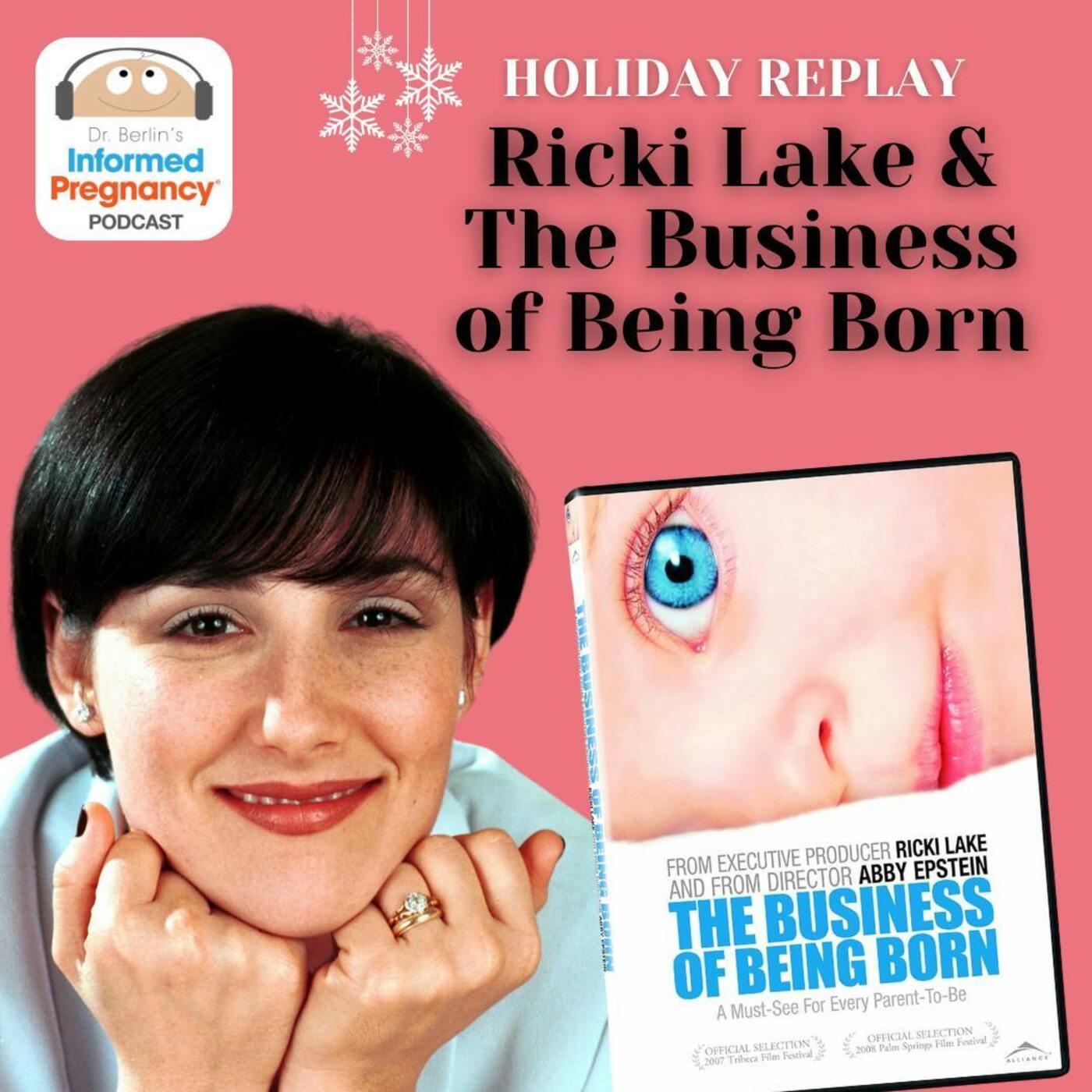
With a special holiday hello, Dr. Berlin would like to wish everyone a peaceful season and send a grateful ‘thank you’ to IPP listeners for all the support. He shares about Informed Pregnancy Plus and replays a fan favorite episode: Ricki Lake joins in conversation about life and film on the 10th anniversary of her trailblazing film The Business of Being Born.

Connect with Ricki online: https://www.instagram.com/rickilake/
Watch The Business of Being Born here!
Informed Pregnancy Plus is our all new streaming platform focused on pregnancy, postpartum, and parenting where you can find iconic content like Ricki Lake’s The Business of Being Born, Baby by Simone prenatal workouts, and educational offerings like Dr. Alyssa’s The AfterBirth Plan.
Start your free trial of IP+ today and start watching NOW: informedpregnancy.tv
Keep up with Dr. Berlin and the Informed Pregnancy Project online!
www.instagram.com/doctorberlin/
www.facebook.com/InformedPregnancy
Learn more about your ad choices. Visit megaphone.fm/adchoices
See Privacy Policy at https://art19.com/privacy and California Privacy Notice at https://art19.com/privacy#do-not-sell-my-info.
Key quotes
“And I also say, like we say in the business of being born, one of those catchphrases that stays with me is you can't have the ecstasy without the agony. They both go hand in hand. I think that's true in birth. I think that's true in life. I certainly have had my share of agony and thankfully a lot of ecstasy.”
“I still tap into that moment that's in the film where my midwife told me to reach down and pull out my baby. I mean, that kind of feeling of empowerment total and beauty and what a miracle my body was. I mean, it did so much for my self-esteem, my psyche and my healing with hating my body for so many years. I fell in love with it in that moment.”
“I don't judge any woman. I mean, women come up to me and they're like, "Oh, I had to have this or had to have this…" I don't really care. As long as they feel good about their experience and they feel like they were informed and they have a healthy baby and a healthy mom, I mean, that's really all I could ask for.”
“And then my husband and I watched it last night and the overall feeling was just confident and certain because I knew in my heart, once I was exposed to your documentary, I knew what the right decision for me was, and I just wasn't ready to make that decision.”
“It's the greatest gift in my life. I mean, honestly, and the fact that it stemmed from the births of my two children, it's the most rewarding thing I maybe will ever do in my lifetime. Women come up and literally cry. It happens to Abby all the time in the streets of New York. It happens to me so many times. They're so compelled to share their birth stories with me. I mean, it's incredible because we never anticipated any of it. It was like this little pet project that I felt compelled to do, and the fact that it's had this impact, I mean, it's just remarkable.”
Related episodes
- Ep. 414 Aly Michalka: After Birth
- Ep. 411 Welcome to Fatherhood with David Arrell
- Ep. 409 The Face of Birth with Kate and Gavin
- Ep. 389 Kara Sutton: After Birth
Transcript
AI-generated transcript with speaker labels — may contain errors, especially names and medical terms. Dr. Elliot Berlin, DC appears in blue; Sabah in teal.
Download PDF of the Transcript
Dr. Elliot Berlin, DC [0:00] Hello everyone, Dr. Berlin here. And as we immerse ourselves in the festive spirit, I have two exciting updates to share with you. Firstly, a heartfelt thank you for tuning into the Informed Pregnancy Podcast. Nearly 15 years ago, I embarked on this journey driven by a vision to build a comprehensive resource for expecting parents and families. It's been an absolute honor to feature real life parenting stories and collaborate with a diverse array of birth industry experts. Our aim has always been to empower you with knowledge and knowing that our efforts resonate with you is incredibly fulfilling. Here's a fun fact. Our first episode was recorded in a professional sound studio in Santa Monica, California for $3,000.
[0:46] It taught me a valuable lesson, which is that my clothing closet has surprisingly excellent acoustics too. Wishing you a joyous holiday season, merry everything, and a prosperous 2024 filled with health, peace, joy, and success in all of your endeavors. And now as a special treat, please enjoy this holiday rebroadcast of my interview with Ricky Lake, celebrating the 10th anniversary of the iconic birth documentary, The Business of Being Born. It's a remarkable journey back to a film that has profoundly impacted the world of pregnancy and childbirth and continues to do so today. Enjoy. Welcome to the Informed Pregnancy and Parenting Podcast. I'm your host, Dr.
[3:10] Elliot Berlin, and I'm ecstatic to be sitting in the studio tonight with one of my true heroes and biggest inspirations for all of the Informed Pregnancy media. She's an Emmy award-winning television host and pop culture icon who built a career on her graciously candid sensibility and her authentic, relatable nature. She's a writer, producer, reproducer, and has an enormous and extensive list of credits. Ricky Lake, welcome to the podcast.
Ricki Lake [3:37] Oh, it's great to be here. You're one of my favorite people.
Dr. Elliot Berlin, DC [3:40] That can't be true.
Ricki Lake [3:41] That is true.
Dr. Elliot Berlin, DC [3:42] Okay,
Ricki Lake [3:42] So you just found out – In the birth world,
Dr. Elliot Berlin, DC [3:44] For sure. I'm pretty famous among achy pregnant women. That's my group of people.
Ricki Lake [3:49] And you leave a lasting imprint on them.
Dr. Elliot Berlin, DC [3:51] I do. Sometimes a little black and blue mark. I've left one on you.
Ricki Lake [3:55] Yes, you have.
Dr. Elliot Berlin, DC [3:57] So you just found out minutes ago that I'm face blind.
Ricki Lake [4:02] Yes.
Dr. Elliot Berlin, DC [4:02] You didn't know that about me.
Ricki Lake [4:03] I didn't even know that was a thing.
Dr. Elliot Berlin, DC [4:04] Most people never heard of it, but it's a real thing and I literally could not pick my own face out from a lineup of –
Ricki Lake [4:10] So does that mean I look… What you see when you look at me?
Dr. Elliot Berlin, DC [4:12] When I see you, I see you just like anybody else sees you.
Ricki Lake [4:15] Okay.
Dr. Elliot Berlin, DC [4:16] Okay. So it's kind of like a digital camera that has no memory card. So when you're looking through it, you could see, but when you turn it off, you can't recall it ever. It's gone.
Ricki Lake [4:26] Okay. Now I'm going to be the interviewer. Now I'm going to switch and be the
Dr. Elliot Berlin, DC [4:30] Interviewer.
Ricki Lake [4:31] How weird.
Dr. Elliot Berlin, DC [4:32] It's great to be on your show.
Ricki Lake [4:33] How did you figure out you had this?
Dr. Elliot Berlin, DC [4:37] My whole life just thought I sucked at people and was maybe just didn't have a good memory or wasn't good with names. And then I randomly read an article in The New Yorker by Oliver Sachs, who's a neuroscientist who both had it and wrote about it. He not only had this, but he also had building blindness. Same thing. He could see a building, his own home. He couldn't pick it out.
Ricki Lake [4:57] So it's like amnesia.
Dr. Elliot Berlin, DC [4:59] It's agnosia, which means you just can't save it. It's not like I forget who Ricky Lake is. I just can't pick you up by your face.
Ricki Lake [5:07] I see.
Dr. Elliot Berlin, DC [5:07] But I know your voice, I know your mannerisms. Sometimes you're here.
Ricki Lake [5:10] You know my politics.
Dr. Elliot Berlin, DC [5:12] I know your politics. But also, I always make goofy jokes because I need to hear somebody laugh and that's how I tell people apart.
Ricki Lake [5:21] Oh my gosh, that's so interesting. See, I sometimes have short-term memory issues, but I think it's because of the Ambien I took back in the day.
Dr. Elliot Berlin, DC [5:28] Oh really?
Ricki Lake [5:29] I don't take it anymore, but I took for a long good time.
Dr. Elliot Berlin, DC [5:31] I just made sandwiches. That was the effect it had on me. Even when you say Ambien, I get hungry.
Ricki Lake [5:37] I know, I know. Suddenly stuff is gone in the fridge the next morning, you have no idea what happens.
Dr. Elliot Berlin, DC [5:42] Ambien sponsored by Oscar Meyer. So when I think of a person in memory and past, I can't. The fusiform gyrus, the part of your brain that saves faces, mine never developed. It just doesn't work. So when I think of you, right now I can't see your… I have my eyes closed, so I can't picture at all what you look like. Honestly, this is what I think about when I picture Ricky Lake is just a big giant heart emoji. You're so heartful. And I love about you that you run head first and jump into whatever it is that you set your sights on.
Ricki Lake [6:17] Wait, have you read that about me? Are you saying that's your take on me because that's what I describe myself as I am someone who jumps feet first and I always seem to land on my feet no matter what. In every aspect of my career, every turn it's taken. It's never been really a conscious one. It's been kind of like, I can do… I mean, it's literally like something takes over me and I think I have this inner confidence, I guess. I don't know. Maybe it's naivety, but I've been really lucky. I've been really lucky in all of my life.
Dr. Elliot Berlin, DC [6:48] I envy that because I sort of see what I want and then I look at it and I set my sides on it and then I go have some Ben and Jerry's and forget all about it and hope it comes to me. But I envy, you see what you want and you're just like, "I'm going to go get it, whatever it takes. I'm going to go take it."
Ricki Lake [7:02] Yeah, I guess I have been that way.
Dr. Elliot Berlin, DC [7:04] And if you get burned, you just pick yourself up, dust yourself up.
Ricki Lake [7:07] And I do get burned.
Dr. Elliot Berlin, DC [7:08] I know.
Ricki Lake [7:08] I
Dr. Elliot Berlin, DC [7:08] See
Ricki Lake [7:09] You get burned. There's been trauma, trauma like no other in this last year. And yet there's also magic that happens in my life and I appreciate it all. And I also say, like we say in the business of being born, one of those catchphrases that stays with me is you can't have the ecstasy without the agony. They both go hand in hand. I think that's true in birth. I think that's true in life. I certainly have had my share of agony and thankfully a lot of ecstasy.
Dr. Elliot Berlin, DC [7:39] I mean, that's really powerful because you see that as a doula. I see that in labor that when they go together, they go together. There's orgasmic birth that is in the movie, but then in reality, what you normally see is this combination. When people can feel that kind of pleasure, it's a combination of pain and pleasure together.
Ricki Lake [7:57] I don't know anyone firsthand who's had an orgasm birth birth.
Dr. Elliot Berlin, DC [7:59] You know one person, I think.
Ricki Lake [8:01] Well, the one who made the movie?
Dr. Elliot Berlin, DC [8:02] No.
Ricki Lake [8:03] Who?
Dr. Elliot Berlin, DC [8:03] I probably shouldn't say her name.
Ricki Lake [8:05] Okay, don't say her name. We can talk about there.
Dr. Elliot Berlin, DC [8:06] But you do know one person.
Ricki Lake [8:07] I do know one person. Wow. Well,
Dr. Elliot Berlin, DC [8:09] Yeah.
Ricki Lake [8:09] I mean, I think that's really, really rare. It was like her third or fourth kid. Yes. And the orgasm is sort of, you see that baby and it's a metaphor. It's not an actual orgasm, but yeah, it's a high like no other when you can have your baby on your own terms and feel empowered and tapped into your power and see what you created and see what your body can do. It's pretty mind blowing.
Dr. Elliot Berlin, DC [8:32] I was once speaking at a conference and I said, nobody really has an orgasm during childbirth. And then one guy raised his hand and said I did.
Ricki Lake [8:38] Oh, that's funny.
Dr. Elliot Berlin, DC [8:39] Great. Good for you, sir.
Ricki Lake [8:40] That's hilarious.
Dr. Elliot Berlin, DC [8:41] Very supportive. I mean, you mentioned this year of academy, so maybe we'll start backwards. Recently, you were married and you lost your husband about a year ago.
Ricki Lake [8:54] Just a year. This past week was a year. Yeah. On February 11th, 2017, my favorite person in the entire world chose to take his life after suffering from mental illness for most of his life. I mean, I knew him for six and a half years and I saw his struggle. I saw his struggle from learning issues, from chronic pain, processing issues, and ultimately the bipolar disorder. It's been the most traumatizing thing I've lived through and I lived through nine eleven firsthand, watching the plane fly into the building with a newborn. I mean, I've seen a lot in my life. Losing this person has been kind of the darkest period of my life and in some ways the greatest gift.
[9:43] I feel like I have truly spent this year grieving and partying, going from festival to festival. I went to my first Burning Man. I went to the Eclipse Festival. I've literally lived my life like I'm living for the two of us. I brought his ashes to the temple at Burning Man. I brought him to Ibiza. I had my clothes at Burning Man. I had all these costumes made and I lined his clothing on the inside of my clothing so that he could be with me. And it's like this last year has been about finding myself through my greatest loss. I feel like just coming out of a year, in most ways I feel like I'm the best me I've ever been. I feel like I know myself and I really like myself and I am one of the most resilient people I think anyone's ever met.
Dr. Elliot Berlin, DC [10:38] You are. You're like a cat. I mean, first of all, I'm sorry that you went through that loss.
Ricki Lake [10:44] And you knew him and you also saw. There were a lot of people, but few. I mean, not that many people got to really see us. You saw him, we came to your house for Shabbat and he was very manic at that time. Very social, very
Dr. Elliot Berlin, DC [10:58] Funny. Very
Ricki Lake [10:58] Social, super happy.
Dr. Elliot Berlin, DC [11:01] We sang a lot and we ate and it was just a great day.
Ricki Lake [11:04] Great time for him that day.
Dr. Elliot Berlin, DC [11:05] And he was so full of heart and soul.
Ricki Lake [11:08] He was the best. I'm telling you, I am going to be 50 years old in September.
Dr. Elliot Berlin, DC [11:11] Oh my God.
Ricki Lake [11:14] Nobody told – Well no, you can't see my face. So the truth is you can't tell my age.
Dr. Elliot Berlin, DC [11:17] No, I can see it. I just can't remember it.
Ricki Lake [11:19] Okay. Well, I'm turning 50 in September and to say I've lived is like an understatement. I've had this extraordinary life, an incredible career, incredible people that have come in and out of my life. And this one person was my absolute favorite. So it says a lot.
Dr. Elliot Berlin, DC [11:37] I know how much you cared about him.
Ricki Lake [11:39] I still, and he is with me and I have had so many gifts that have come out of this relationship and this loss. I am better having known him. I feel like I am him. The best part of him is in me now and I now have a level of compassion. The birth stuff and women's choices and with their health and their bodies and their babies, all of that was my passion. Now I'm sort of taking on mental illness awareness and suicide prevention because I have to. I have to have him not have died in vain. I need to do more to help people. That is what he wanted in life was to be of service. And I feel like –
Dr. Elliot Berlin, DC [12:20] He was a healer.
Ricki Lake [12:21] He is such a healer.
Dr. Elliot Berlin, DC [12:22] Conversations that
Ricki Lake [12:22] We had.
Dr. Elliot Berlin, DC [12:23] He just wanted to heal people.
Ricki Lake [12:24] Yep. And he's doing it. He's doing it wherever he is. He's doing it through me.
Dr. Elliot Berlin, DC [12:29] Absolutely. So at the end of the day, you talked about agony and ecstasy, but your agony becomes a benefit for the world. Every time someone kicks you, you get up, dust yourself off and stand up for everybody else who's
Ricki Lake [12:43] Going
Dr. Elliot Berlin, DC [12:44] To
Ricki Lake [12:44] Get
Dr. Elliot Berlin, DC [12:44] Kicked.
Ricki Lake [12:45] It's like self-reliance or self-preservation. I loved this man so deeply and I'm so lucky we found each other and I feel like it was divine intervention. I feel like he always said, he was very soulful and very spiritual and he always said we were together for something greater than just us. I believe that and I'm beginning to see it. I spoke last week basically on the day of the shooting in Florida. I was flying to Boca Raton, which is right next to Parkland. I was speaking at this Jewish mental health charity event. It was the first time I was speaking publicly about Christian and about my loss. I couldn't believe it, but it was the town over from where the shooting had happened the day before.
[13:34] So here I was heading to speak about something so personal that I have yet to speak about. I'm in this community where these people, their children go to that school. My husband took his life with a gun. He was mentally ill, repeatedly hospitalized, suicide attempts, and yet he was able to get his hands on a gun as well. It just felt like there are no accidents that I was supposed to be there, that he was with me, that I was there to help others and to help with my healing. It was really profound. It was really, really intense. And just this time in my life, I'm reminded that I'm exactly where I'm supposed to be.
Dr. Elliot Berlin, DC [14:14] As always.
Ricki Lake [14:16] Yeah, but I've struggled with that for a long time. When this happened to me and over this last year, I've had many moments of why me and why me, feeling sorry for myself and being mad at the world. Now I've really made peace with it. I miss him every second of every day. I think of him all the time, but I also am so convinced that he hasn't left me. He's with me and I'm doing our work together and I'm making good out of something horrible.
Dr. Elliot Berlin, DC [14:45] I can't wait to see what you do with it, what the two of you do with it.
Ricki Lake [14:51] Well, our first is our movie that's coming out next month. I have a movie that's premiering at South by Southwest called Weed the People. Weed with a D.
Dr. Elliot Berlin, DC [14:58] Weed. Weed. The people.
Ricki Lake [15:00] Yep. And the weed that people like to smoke and vape and take oil from, but the focus is cancer in children. And this was Christian's passion project. It was his legacy. He's a producer on the film. It's dedicated to him. The 111s, I always talk about 11:11 because that was a significant number for him. I talk about it on Facebook a lot and all of my story, everything is 11:11. And to him, I believe it meant eternal soulmates and twin flames. I went through all my photos and a lot of them, he would screenshot 11:11 all the time and it didn't make sense to me, but now I see the 11s everywhere and I feel like it's my connection to him and our film is having its world premiere on March 11th at 11:00 AM at South by Southwest.
[15:47] And again, I don't think it's an accident.
Dr. Elliot Berlin, DC [15:50] Oh my goodness. So you've been working on the film for a while?
Ricki Lake [15:55] For five years. It's almost five years we've been making this film. So Abby Epstein, my director and partner from The Business of Being Born and all the other documentaries we've done together, we teamed up again. This was Christian's kind of, like I said, it was his passion because he was trying to heal himself from chronic pain.
Dr. Elliot Berlin, DC [16:10] I remember he was talking about the oils and just for all sorts of different things.
Ricki Lake [16:13] To research, for his own stuff and also for his grandfather who was struggling with late stage cancer.
Dr. Elliot Berlin, DC [16:19] As in physical pain.
Ricki Lake [16:20] Physical pain. Yeah. And headache. I mean, anything. I mean, cannabis can be really useful for most any ailment. And so this was really the journey we started taking and Abby said, "Hey, we should be documenting this." And it turned into this film, which the focus of the film is on children and cancer. So these are all, we have about six kids in the film that all have different kinds of cancer. And I believe it's a really important piece. I think whether it has the impact that the business of being born had and has remains to be seen, but I do think it's at a very, very timely time in our lives with Jeff Sessions wanting to take away all the access that these 29 states have gotten.
[17:03] He wants to reverse everything Obama has done as far as cannabis. I mean, I think it is more timely than ever. So I think it'll be a great conversation starter.
Dr. Elliot Berlin, DC [17:14] It's interesting. I can't wait to see it. And also, do you know where people will be able to see it?
Ricki Lake [17:21] Well, no, because I don't. We haven't sold the film. So basically the world premiere is next month.
Dr. Elliot Berlin, DC [17:26] But there's a website.
Ricki Lake [17:27] There's not even really a website. I mean, that's the thing. The crazy thing, the business of being born has literally changed, safe to say, the birth industry in a big substantial way. I mean, I know the home birth rate has doubled in the country because of the film. I heard that from an anthropologist, Robbie Davis Floyd, who's in our film. And I heard the C-section rate is flat lined for the first time in, I don't know how many, whatever, decades. Decades,
Dr. Elliot Berlin, DC [17:53] Yeah. Yeah.
Ricki Lake [17:53] But it's interesting. It's like we never managed to make our money back. We never managed to break even or…
Dr. Elliot Berlin, DC [18:03] After a gazillion people watched the film.
Ricki Lake [18:05] And that's great. And it wasn't really about that, but it would've been nice to get some money to be able to do the work that we do.
Dr. Elliot Berlin, DC [18:10] More projects.
Ricki Lake [18:11] Yeah. So it's just that's been the hardest part is these funding for these projects and then keep sustaining ourselves.
Dr. Elliot Berlin, DC [18:18] Well, as soon as the film is available someplace – Yeah, I'll let you know. We'll send a newsletter out to our audience about it.
Ricki Lake [18:24] Please, please.
Dr. Elliot Berlin, DC [18:25] It's interesting. Talking to somebody, I've never done any recreational drugs at all, not even marijuana, and my wife hasn't either. And people are always trying to encourage us, just do it. I'm like –
Ricki Lake [18:36] Well, but cannabis, let me say, is a medicine.
Dr. Elliot Berlin, DC [18:39] Yeah, it's a medicine.
Ricki Lake [18:40] I mean, it is recreational for some, but it is medicine. It is literally saving lives in a huge ways. Epilepsy must in the studies.
Dr. Elliot Berlin, DC [18:48] I'm not close to it in any way. I've just never had a need.
Ricki Lake [18:51] Let's get high after this, Elliot.
Dr. Elliot Berlin, DC [18:53] Maybe for the second half.
Ricki Lake [18:56] You don't know what you're missing. You might actually recognize someone after getting high. I don't know.
Dr. Elliot Berlin, DC [19:01] You know what? That's a good experiment to do.
Ricki Lake [19:04] I'm not condoning. I mean, I'm not pushing you to use drugs.
Dr. Elliot Berlin, DC [19:08] No. I did have this curiosity to take a whole bunch of people in their 40s who have never smoked up and put them in a room and just see what happens together.
Ricki Lake [19:17] I say won't go one step further and let's use psychedelics.
Dr. Elliot Berlin, DC [19:20] Okay. That's the sequel. All right. We're going to spend the whole second half talking about the Business of Being Born because it has been such a huge impact. And everybody who listens to our podcast knows about the business as Being Born, probably has already seen it or is getting a lot of pressure from the defense society.
Ricki Lake [19:37] Because you talk about it all the time.
Dr. Elliot Berlin, DC [19:38] Not only do we talk about it, but almost every guest who comes on the show talks about it.
Ricki Lake [19:43] Oh, that's amazing. I mean, I'll tell you something. I mean, I know we're going to talk about it, but again, the whole idea that I jump feet first into something, making that film was personal to me. I did not ever, ever anticipate that it would have the impact that it would have, that people would have the interest in it. It was really something that I felt I needed to do.
Dr. Elliot Berlin, DC [20:04] It's a game changer. It's a game changer. For individuals, it's a game changer even for hospitals and for birth as a whole, at least in our country and probably beyond.
Ricki Lake [20:15] Abby and I had no idea.
Dr. Elliot Berlin, DC [20:17] We're going to get there. I want to go back to where did you come from? Where did you grow up?
Ricki Lake [20:22] Oh my goodness. I come from just outside of New York City, Westchester County. I'm from Hastings on Hudson, a very small, kind of quaint town, very middle class, nothing too… I mean, quaint and sweet. And I was a kid that wanted to be in show business. I wanted to be on stage – From early on? Very early age. Little, little girl. I was singing Shirley Temple and obsessed with Annie when I saw Annie on Broadway when I was seven years old. I mean, that was like, I had to do that. I had to be up there. And it wasn't until I was 18 when I did my first film, Hairspray.
Dr. Elliot Berlin, DC [20:59] Were you taking acting classes, acting camp?
Ricki Lake [21:02] I was acting. I was singing. I was singing in little off-Broadway reviews in New York. So I really studied as a singer when I was nine. And I was actually a really… I was like a little Ethel Merman, like a little Broadway belter. And I did these little shows that were off Broadway, and they were really great training for me to get in front of an audience and try to win over a crowd. And I loved it. That was my education as far as learning how to perform.
Dr. Elliot Berlin, DC [21:32] It's cool that you have that drive as a kid because most kids are like, "Don't look at me."
Ricki Lake [21:37] No, I wasn't self-conscious. At all. I should have been. My mother was very reluctant to let me because she was afraid I would be rejected and she didn't want me acting. When I wanted to audition for Annie, she said I wasn't the starving orphan type. So my mother was anything but a stage mom, but I had this kind of inner drive in me and this inner belief, and I think a lot of that came from my grandmother.
Dr. Elliot Berlin, DC [21:59] How'd you get from there to a talk show?
Ricki Lake [22:03] I wish I could say, "Oh, I thought it," but I didn't.
Dr. Elliot Berlin, DC [22:06] Y didn't. Okay.
Ricki Lake [22:06] I did not. I was actually really struggling financially. I'd lost my house. Literally, my house was foreclosed on me. I'd bought a house when I was really young, way too young, bought two big, like a three bedroom house. I was like a 19-year-old kid. What the hell did I need with a three bedroom house in the Hollywood Hills? Well, I did have parties with no furniture. I came here when I was 19. Oh,
Dr. Elliot Berlin, DC [22:27] Wow.
Ricki Lake [22:27] And it was a great lesson for me, but I basically was homeless for a little bit and living In A pool house and struggling. And I had been a guest on Letterman a lot. I was one of those, I was like Sandra Bernhardt. I was a really good guest. And this was when Letterman was back on CBS and I would go on, I would fill in for any guest that fell out. They'd fly me in and I'd basically flirt with him for a segment or two. And it was from that that the producers were looking for a younger talk show host, a younger Oprah. I was one of a hundred girls that auditioned, interviewed, and they gave me the pilot and I just needed the money so bad. I was like, "Okay, I'll do it for five grand."
[23:05] I needed the money so badly. And then it just kind of snowballed. It just moved me to New York, changed my life, got me out of debt. I mean, it became this phenomenon. Again, I didn't think twice when a 24-year-old is offered to be a talk show host. I really didn't think I couldn't do it. I would channel Oprah. I would sit there and I think, "Okay, what would Oprah say? What would Oprah
Dr. Elliot Berlin, DC [23:29] Ask?" Oh,
Ricki Lake [23:29] Interesting.
Dr. Elliot Berlin, DC [23:30] Yeah, because at 24, you don't have that much
Ricki Lake [23:33] Exposure to the
Dr. Elliot Berlin, DC [23:33] World.
Ricki Lake [23:35] But in that job, I mean, I think looking back on it, I was naturally good at it. And I think a lot of people can't do it because a lot of people tried to do what we did and couldn't do it. I was really non-threatening, very relatable, likable, very open and candid. Super
Dr. Elliot Berlin, DC [23:52] Relatable.
Ricki Lake [23:53] Yeah.
Dr. Elliot Berlin, DC [23:53] And I – Because I'm eight years younger than you. So I was 16 and I'm like, "I don't feel well I'm going to stay home from school." And then your show would come on. It was just so interesting to watch, just interesting to watch you and your guests and your audience.
Ricki Lake [24:07] How not to live your life. A lot of it was like, "Okay, I'm not going to be in a relationship like that." But I think we were able to really be the voice and the presence for a younger generation. We were doing topics that were of interest to them. I was treating everyone with respect. I mean, I really am proud of the work I did because I really did treat every relationship, whether it was a gay relationship, interracial, biracial, I treated everyone with the respect that I would want. And I think that went a long way. I meet people now. I met someone at the airport, a gay man who knew it was me, and he's like, "I have to tell you, you helped me in coming out and being who I was because your show was the one place I could go.
[24:48] I grew up in Montana or whatever, and there was no one like me, but I could turn on your show and see gay people that were being treated well." So that kind of stuff really, I look back on and I think, wow, we were kind of revolutionary in that time.
Dr. Elliot Berlin, DC [25:03] I remember feeling like you were curious and confident, and those two things were a little magical.
Ricki Lake [25:09] And I'm a good listener. I'm a really good listener, and I really am curious. I'm not like a comedian who is thinking up the joke while someone's talking. I was able to really pay attention, move the story along, kind of tie it up in a bow at the end as much as I could, get the conflict out. There were beats, there were formulas that you had to follow.
Dr. Elliot Berlin, DC [25:29] Yeah, because you have a timeframe.
Ricki Lake [25:31] Oh yeah. And I could do it without time codes. I didn't wear an IFB. So a lot of those hosts, they wear an earpiece in your ear so that you can take cues from people in the control room. I refused to wear one much to the chagrin of my team because they didn't have control over me. I didn't want them telling me what to say. So I would do my own thing. I was really good at it. I won the Emmy. I'm so glad I don't do it anymore.
Dr. Elliot Berlin, DC [25:54] But you had fun at the time.
Ricki Lake [25:55] I had a great time. I made a ton of money. I was at the height of my game. I loved it and I walked away from it. Nine eleven was a huge, huge pivotal turning point for me personally, and I walked away from my show. I could have been still on Maury and Jerry Springer now. I did not want to do it anymore. It did not serve me. And it was out of nine eleven, literally watching a plane fly down the Hudson, crash into the building in my neighborhood that made me want to really reassess what I was doing with my life and really soul search as to where I could make an impact in a positive way.
Dr. Elliot Berlin, DC [26:31] Where did you go from there?
Ricki Lake [26:33] I moved. I left New York. I left my husband and I left my show. That's it? All of that took… I'm sorry, that's it? Yeah, that's it. Yeah. And I think I probably lost a few pounds in there. No, I changed everything up and it was conscious and it was necessary. I mean, I did not feel safe. And I love New York. I'm a New Yorker through and through. I love my city. I go back and it still takes my breath away, but I did not feel safe at the idea of having one child across town, the other one. I felt… I don't know. And I think part of it was because I had a newborn and I was this lactating lioness protecting my cubs and I felt was so traumatized.
[27:14] I did not want to be there anymore. I sold that apartment and I've never looked back.
Dr. Elliot Berlin, DC [27:20] Did you move to California?
Ricki Lake [27:21] I moved to California. I moved here and I got a divorce and I really regrouped and really spent some time.
Dr. Elliot Berlin, DC [27:29] So you already had two kids then?
Ricki Lake [27:30] Yeah. Milo was four and then Owen was two months old when nine eleven happened and we ended up moving out here and I was going through divorce when they were six and two. So major scary decisions I had to make. Ultimately, I think they were the best for everyone involved. I mean, I think my ex-husband might not have thought that way, but I think he's grown to love California. My kids definitely appreciate growing up here. And again, I love New York. I'm going back next month. I love it, but I also think I made the right decision for my family.
Dr. Elliot Berlin, DC [28:01] It's just another example of Ricky jumping in from first. You get this impulse and you're like, "That's what I'm going to do."
Ricki Lake [28:08] Yeah. And I follow through, and I don't really have many regrets in my life. I can't think of one right now.
Dr. Elliot Berlin, DC [28:17] That's really cool to be –
Ricki Lake [28:18] I mean, I'm sure I could. If I really though about it, I'd come up with one or two.
Dr. Elliot Berlin, DC [28:20] I'm just saying, but to be looking at 50 and say, "I don't have huge regrets. I would have to look for them." I have enormous regrets and I'm behind you.
Ricki Lake [28:31] It's not worth it. It's not healthy to have regrets, honestly. It's like moving forward. I mean, I think, obviously, I wish I could have saved my husband a third time. I couldn't do that, but I've had a really great life, and I continue to have a great life.
Dr. Elliot Berlin, DC [28:48] Yeah. I feel like I'm very blessed in my life. I mean, there are regrets that I learned from. I wish, as we were having more and more kids, that I was just home more with my kids and found a way to balance work and life better, but I learned from it now.
Ricki Lake [29:02] Yes.
Dr. Elliot Berlin, DC [29:03] And so I guess in the long run, it's a learning experience instead of a huge regret. I can talk to you for hours, but we don't have hours, so I'm going to take a quick commercial break. When we come back, we're going to talk about the business of being born. Stay tuned. We're coming right back with Ricky Lake.

Dr. Elliot Berlin, DC [30:58] Welcome back to the Informed Pregnancy and Parenting Podcast. I'm your host, Dr. Elianne Berlin, and we're continuing our candid conversation with one of my personal heroes, Ricky Link. All right, finally, we're up to the business of being born.
Ricki Lake [31:18] We touched on it before, but yeah.
Dr. Elliot Berlin, DC [31:20] We touched on it and it's hard not to be in your presence and be on a pregnancy podcast and not touch on it. Nine eleven happens, you just make these enormous changes and move to California and you have these two little kids. At what point did a film become a thing?
Ricki Lake [31:37] Yeah, it wasn't initially a film. It was like a project because after nine eleven, I really did kind of go deep into where I can make a difference. I had to go back to work to my show two days after nine eleven and it was some dumb like, "My boyfriend's cheating on me with my blood, blah." It was nonsense. It was mostly just like… And I was like, "No, no, this can't be my legacy. I need to do something else that's going to be a little bit more positive." And so I didn't know what it was, but Abby Epstein is a really good friend of mine and she and I had done The Vagina Monologues together, how apropos. She had directed me in that and she came to visit me to see my new fat house and my new life out in LA.
[32:18] And I said, "I have this idea." I was so impacted by both of my birth experiences, one in a hospital setting and one at home. And what I learned in between and how I got caught up in the whole art of birth and going to see Ina May talk and all these people. I was so fascinated by what so many of my friends and peers did not know. And so I gave Abby, I remember it so vividly, I gave her spiritual midwifery, Ina May's book, Birth as an American Rite of Passage, Robbie Davis Floyd's book, and my nine hour home birth video that I had never watched. It's like my unedited nine hour birth. Who shot it?
Dr. Elliot Berlin, DC [32:58] Who shot it?
Ricki Lake [32:59] Yeah. I think my doula and my husband would switch over. I mean, it was never shot to show to anyone. I mean, it was really to document my own experience.
Dr. Elliot Berlin, DC [33:06] When people just take pictures or video at their birth.
Ricki Lake [33:09] And it was on a camcorder. My second son was born in 2001 on one of those tapes. It is still in the machine and I just handed it to her and I was like, "Here." And she sort of went back to New York and checked everything out and she's like, "I think it should be a documentary." And I was like, "Okay." And then it was like, "All right, let's just start." And so then I bought the equipment. I paid for this movie. It was $450,000. No one would help us fund it.
Dr. Elliot Berlin, DC [33:37] No one, because they didn't care?
Ricki Lake [33:39] No, because they did. I remember we met with HBO and they were like, "Oh, this is a great idea. Come back with the finished film."
Dr. Elliot Berlin, DC [33:46] Home birth office.
Ricki Lake [33:52] Documentaries are really hard to make. They're really hard to… Now with Kickstarter and things like that, it's a little bit easier. It's easier to get finding. You made your own documentary. I made a couple. But like I said, this was a very personal project for me. I felt like this was something that I was so profoundly impacted by my relationship with my midwives, what it did for my relationship with my body after giving birth on my own terms in my home, being respected, seeing what my… I still tap into that moment that's in the film where my midwife told me to reach down and pull out my baby. I mean, that kind of feeling of empowerment total and beauty and what a miracle my body was.
[34:36] I mean, it did so much for my self-esteem, my psyche and my healing with hating my body for so many years. I fell in love with it in that moment.
Dr. Elliot Berlin, DC [34:44] I feel like I need to give birth in a bathtub on a camcorder.
Ricki Lake [34:48] It was kind of next level. And it was just what I felt like from my experience. My film is not about telling women to do what I did. That is not the message at all, but there is a message of this opportunity for women to be tapped into their power has been taken away in a lot of instances, unbeknownst to them and not for any good reason that I can find. It's really out of the interest of the hospitals and protecting themselves from a lawsuit. All these factors play into that. So I really wanted to educate women about the options that they have and the rights that they have when they give birth in a hospital and give those women the power to make the choice that's best for them.
[35:28] I don't judge any woman. I mean, women come up to me and they're like, "Oh, I had to have this or had to have this…" I don't really care. As long as they feel good about their experience and they feel like they were informed and they have a healthy baby and a healthy mom, I mean, that's really all I could ask for.
Dr. Elliot Berlin, DC [35:47] It's interesting because there's a lot of places you can point your finger on why there's so much intervention in childbirth today. And I think, and you probably agree, I don't want to speak for you, but that those interventions are amazing. When you need to have a cesarean, there's nothing greater than having access to a cesarean.
Ricki Lake [36:06] Absolutely.
Dr. Elliot Berlin, DC [36:07] Or even if you want to. Yes. And if you need to have any of the other interventions, whether it's induction, augmentation, pain relief, they're great, but they're also overused and pushed a lot of times on people who don't need them and don't want them and people are made to feel like they couldn't possibly have this baby without them. And the reasons for that, I think in the title, The Business of Being Born, sort of suggests there's a business to it. If you're in my restaurant sitting at my table, I want you to eat your meal and go out so somebody else can eat their meal and just move it through the factory. But also, we have a friend in common, Dr.
[36:42] Jennifer Lang.
Ricki Lake [36:43] I love Dr. Lang.
Dr. Elliot Berlin, DC [36:45] She's an amazing person, also very inspirational. Was just on the podcast recently. She has an episode where it sort of is her talking about the book, the whole nine months about prenatal nutrition, but she shares her first birth story and it's really eye-opening because she's an OB – GYN who chooses to have an elective cesarean because of all the fear that she has about childbirth, because of the way it was presented to her in medical school, very fear-based model. And so in her mind, none of the decisions that she was making for herself or her patients were because of money or because of the business. It was because that's the model that she really felt is the best way to support people and women is to intervene as often as possible to prevent anything from moving to the right or moving to the left.
[37:29] And then she shares her story, how she went and got… She realized that she's electing to have surgery. She's young, strong, healthy, really superwoman in my book and electing to have surgery that she doesn't need. And then she has a hard time sleeping at nighttime because it's like I'm nervous about this option and I'm nervous about that option. And then she does hypnosis and well, you can listen to the episode and hear what happens. It's kind of an amazing story.
Ricki Lake [37:56] Yeah, she is an amazing story. Yeah, but I think a lot of the decisions are being made based on fear and a lot of these… We all give up our power when we think doctors know best. We're in a hospital setting. It's a place where sick people go and a lot of things are stacked against you. Honestly, I don't have the answer. I think everybody should have the right to have the kind of birth they want, where they want. They should have all the options available to them. They just should be informed and it's not a simple thing. When you do have some sort of intervention, there is a pro, there is a con, there's many of them. So it's just knowing what you're getting yourself into.
Dr. Elliot Berlin, DC [38:36] And being at eight centimeters and sort of quasi-present is probably not the best time to start exploring your options.
Ricki Lake [38:42] Yeah. I made this movie with the idea of reaching people long before their family planning. I love the idea of this being taught to teenagers and really changing the norm of what birth is to them. I was thrilled. When I went into labor, I couldn't wait to experience what labor felt like. I was excited. I wasn't scared. I trusted my body. I trusted my care provider. I had all my backup in place. I mean, I was elated at this opportunity, this experience. And so it's the mindset that I think needs to be shifted.
Dr. Elliot Berlin, DC [39:23] Sure, because you don't normally see that. All right. So we have another guest in the studio tonight. Her name is Sabea. Welcome. Hello.
Sabah [39:29] Thank you for having me.
Dr. Elliot Berlin, DC [39:30] Of course. We go way back almost a week when we met. You're about 20 weeks into your pregnancy, about halfway through your pregnancy, a little more. We were just talking, chatting through our visit and I was sort of like, "Hey, what kind of birth do you want to have?" And then you became, in my mind, the question mark emoji, which is you're not a hundred percent sure.
Sabah [39:52] Right.
Dr. Elliot Berlin, DC [39:52] And so a lot of your friends, you said, recommended, why don't you watch The Business of Being Born? Because I guess it helped them become more informed. And you told me, "I'm nervous to watch The Business of Being Born." Tell me more about that.
Sabah [40:05] It's funny because everyone who saw the film spoke about it and they said it was eye-opening, you have to see it. It was so much information to be gained. I was just like, "I don't want to be exposed to another institution that's going to disappoint me." And that's where my fear developed. I didn't want to necessarily know about how doctors operated in the hospitals. There was a certain ignorance is bliss, but in preparation for today, I said, "Okay, I have to watch it."
Dr. Elliot Berlin, DC [40:39] Oh, you watched it?
Sabah [40:39] Yeah, I did.
Ricki Lake [40:40] Oh, you did watch it.
Sabah [40:41] It's funny how the stars align. I was kind of go ahead, do it. And then my husband and I watched it last night and the overall feeling was just confident and certain because I knew in my heart, once I was exposed to your documentary, I knew what the right decision for me was, and I just wasn't ready to make that decision. So that was my feeling. But I still do have a lot of questions and doubts and I don't necessarily have a fear of giving birth. I'm uncertain as to what's the proper decision to make.
Dr. Elliot Berlin, DC [41:21] What does it feel like? When you say what is the proper decision to make… First of all, I always look at a birth plan, for example, as a flow chart. What a lot of people consider their whole birth plan in my book is page one, right? It's the most natural birth you can possibly picture yourself wanting to have. So for some people that's squatting in a strawberry field with nobody around them, fine. Some people it's a home birth with a midwife, home birth with an obstetrician, which is an option we have here in LA, or a hospital birth with a midwife, medicated, unmedicated, vaginal, abdominal. It doesn't matter. It's your birth. So in my mind, it's what's the most natural birth you want to have?
[41:59] And that's the starting point. Let's aim for that. But let's say you got to 36 weeks and found out your placenta was blocking your cervix, placenta previa. Almost nobody will deliver that baby vaginally because it doesn't make sense. The placenta will necessarily become traumatized and it's dangerous for you and for the baby. So then we have this great safe other way to get the baby out. So that's an example of going down the flow chart. If you're in labor and let's say your plan was, I want an unmedicated birth at the hospital and labor at home for a long time and then go to the hospital later and you're in labor and you start to feel overwhelmed by it and you start to not just have pain but suffering, then you have lots of different options on how you can alleviate that discomfort for yourself.
[42:40] So in your mind, you're looking for the right choice. What strikes you at the beginning or do you not have enough information about the choices?
Sabah [42:48] Well, I never had a vision for a birth plan. I still don't have a birth plan. I never envisioned it to be a certain kind of way. What really struck me is this growing issue with autism and what's the right decision to make for my baby and how do these drugs impact my baby? There just wasn't enough information out there for me to make a decisive decision and then create a birth plan because that is the most important to me. Part of watching the documentary, there was a section they spoke about how there's not enough data on long-term effects of epidurals and Pitocin, but also the mixing of those cocktails and what that does on the fetus.
Ricki Lake [43:36] Yeah, it's a lot to consider, but you do have options and it must have been empowering. I would imagine to have the information. The whole ignorance is bliss thing I think is… I mean, I personally think it's better to know what you're getting yourself into when you step into a hospital. I realize, yes, I'm a filmmaker, but I'm also pretty opinionated about my own choices. I didn't like personally being plugged into an IV when I wasn't sick, that idea of… It's a very personal choice that you have to make, but you have options and you have someone on your side. Elliot Berlin is the best. How do you work with your patients? With someone like here that she doesn't know, do you offer suggestions?
Dr. Elliot Berlin, DC [44:23] Well, I try to… We're on the same page, informed pregnancy and business of people.
Ricki Lake [44:27] We're doulas, but we're not supposed to advocate for the patient, right? So we can't push our own agenda.
Dr. Elliot Berlin, DC [44:33] It's a different kind of advocacy. The advocacy is information, right? The advocacy is to put you in the driver's seat and you can't really be in the driver's seat unless you have awareness of what map options you have. You want to get from point A, which is where you are now, healthy and pregnant, to point B, which is healthy and holding a healthy baby on the other side, but there's a million ways to get there. And if you're not familiar with the map, then basically somebody else is going to root it for you and just push you along whether that was best for you or not. So once you know your choices, then you can sort of set up a plan to find support for those choices.
[45:14] But unless you know the options, you can't. So what I do is I always tell people, watch the Business of Being Born. Usually they've seen it already, but if not, watch the Business of Being Born. Read Inime. Become aware of birth. My sense is most people today, because we're not exposed to birth, I mean, it's incredible that you shared your birth footage with the world. It's so intimate and so personal. I get really embarrassed if one of my top buttons is undone and I'm like,
Ricki Lake [45:47] "I can't believe I was going
Dr. Elliot Berlin, DC [45:48] To say…"
Ricki Lake [45:48] When I think about the fact that I let that footage out there, I joke that I would have… Had I known I was going to show this to the world, I would have had a top on, I would have removed the shampoo bottles behind my head and I would have had better lighting.
Dr. Elliot Berlin, DC [46:02] Yeah. Well, it was very believable the way you did it. I don't know how many takes you did, but it's really powerful. And again, just another place where it just became inspiring to me that you found this. I need to share this message, so here I am. Take me or leave me.
Ricki Lake [46:21] And Abby too. Abby, my partner who has the C-section at the end, I mean, we were making this film for three years before she had her baby at the end. We were going one direction. We were making a movie about home birth, really. And then she had this emergency, very justified, necessary C-section. It's like, oh boy, where do we go from here with our film? But ultimately, it was a gift for the film because it balanced the movie. But yeah, I mean, it was very personal for both of us. It's the most fulfilling thing I've ever done in my life outside of having my two children, honestly.
Dr. Elliot Berlin, DC [47:00] And again – It's a great also commercial for shampoo.
Ricki Lake [47:04] For shampoo, absolutely.
Dr. Elliot Berlin, DC [47:07] Since then, I started using shampoo and condition.
Ricki Lake [47:09] Oh my goodness.
Dr. Elliot Berlin, DC [47:10] In one. Okay. So Sabe, I mean, another thing that I like to sort of see if… Look, there are some people who don't want to have any involvement in their own birth, very little. They want to go to a practitioner who will make all the decisions for them and they want to know as little as possible. And that's sometimes okay too, but you don't get to do this very often. I mean, you are going to be there at a moment when a human being comes out of your body into the world, this sacred, really incredible moment for the universe, but also for you. So there's a million ways you can experience that, and there's pros and cons to every choice. In addition to the long-term effects for the baby, it's also the long-term effects for you and both physical and mental health effects of the journey.
[48:04] So in your mind, you start sort of, I think, what setting is comfortable? Do you want to have a baby at home or do you want to have a baby at a birthing center or a hospital or in the back of you?
Sabah [48:19] Well, it's funny because before watching the documentary, it was like I had this fear and once I put this fear aside and stopped making my decisions based on this fear, I walked away feeling invigorated by your documentary. There was so much to consider that you never thought about before, even the fact that you release a certain bonding hormone.
Ricki Lake [48:42] Oxytocin, yeah.
Sabah [48:43] I had no idea. And so those little things, it helps me develop my birth plan now by being exposed to this information, which I initially thought I was going to be afraid of, but it was the complete opposite. I think now I'm kind of taking that same mentality towards my birth as, okay, you have these small fears, but if you just put them aside, you'll have this wonderful experience.
Dr. Elliot Berlin, DC [49:11] Well, that's pretty cool. That's the effect.
Ricki Lake [49:13] That is cool.
Dr. Elliot Berlin, DC [49:13] That's the bob effect.
Ricki Lake [49:15] I wanted to mediate fear. That's great.
Sabah [49:18] Yeah.
Dr. Elliot Berlin, DC [49:21] So many people, you said earlier, it's what people do not know that you wanted to address. And that's what happens is there's such a… Most of us, about medical things in general, we just don't ask questions. My parents' generation was a lot simpler. Their philosophy is do whatever the doctor tells you. And it was a simpler time for everybody. The doctors even had a simpler time. Now they're pulled in a… We, I am a doctor. We are pulled in a million different directions by malpractice insurance, which wants you to do only things that are litigiously safe by medical insurance in terms of what's going to be paid for or not going to be paid for.
[50:02] And by time constraints, how much time that we're really given to spend with a patient on a certain thing. So if I, as your doctor, have three options in front of me, and one is going to pay while and not take very long, and another one is not going to pay well and take a lot longer, as a human being, I'm sort of driven to, why don't you just take this option? And it may be the best one for you or it may not be the best one for you. So in today's day and age with all these forces on medical providers and institutions too, like the hospital, you have to be a very active participant in your own decision making. You can't do it without the information.
Ricki Lake [50:43] You have to advocate for yourself.
Sabah [50:44] It's funny because this morning I had actually my OB appointment and I was –
Dr. Elliot Berlin, DC [50:49] Is that before or after you watched the movie?
Sabah [50:51] This was after. So I saw it last night. I went to the OB this morning and I looked at her with a new set of eyes and ears and it sounded different and I just kept thinking, "Well, slow down, doctor. You're talking really fast. I need you to slow down because you're not alleviating my concerns truly. You're just throwing words at me." So it was a phenomenal experience for me this morning.
Dr. Elliot Berlin, DC [51:14] Did she call you on it? Was she like, "Did you watch the business?"
Ricki Lake [51:16] Did you tell her?
Sabah [51:18] I didn't bring it up. I should have.
Ricki Lake [51:20] I don't know whether doctors at this point roll their eyes. I mean, in the beginning… I mean, you remember, I probably tell you stories, it's 10 years now since the movie came out. And in the beginning, they were so angry with us. They said horrible things to us. We were targeted in a resolution with the AMA. I mean, it was really, really bad. But then nine years later, Cedars-Sinai gave me the Mother of the Year Award. It's just so funny how… It's not funny, but it's just interesting how the consumer really dictates the change. It's like they got this information and these mothers have spoken out and changes are happening in these hospitals all around the country.
[51:59] It's powerful. We do have the power.
Dr. Elliot Berlin, DC [52:02] You are, but you are that spark. You got the birth ball rolling and then we're just… Literally, everything I do is inspired by that.
Ricki Lake [52:10] Oh, that's amazing.
Dr. Elliot Berlin, DC [52:12] So you became a doula?
Ricki Lake [52:14] Yes. I haven't practiced, but I did go through the certification.
Dr. Elliot Berlin, DC [52:17] Oh, are you going to start going to some birth?
Ricki Lake [52:20] I would do it for friends. I don't know. To be honest, I think I'm a better advocate for the profession and for the birth world than I am. I'm a little too opinionated, I think. And I don't know. I don't know. I think if a dear friend of mine wanted me to participate and be their doula, I would be honored and I would jump at the chance, but I'm not really taking clients.
Dr. Elliot Berlin, DC [52:43] Okay.
Ricki Lake [52:44] I hear you. Although I was going to assist you. Remember there was one birth you said for me to come in and I was going to, but then she changed her mind or something happened. Something happened.
Dr. Elliot Berlin, DC [52:54] I still…
Ricki Lake [52:55] How many births do you do a month?
Dr. Elliot Berlin, DC [52:57] I just stopped going about three months ago.
Ricki Lake [52:59] You stopped because it was too much.
Dr. Elliot Berlin, DC [53:00] I was going to too many births. I was going to one or two births a week and I work at the office 10, 12 hours ago.
Ricki Lake [53:06] And you have what, four kids, five kids?
Dr. Elliot Berlin, DC [53:08] Something like that.
Ricki Lake [53:09] Yeah.
Dr. Elliot Berlin, DC [53:09] I lost track. Yeah, it was too much for me and I just wasn't seeing my kids. That's what I was saying earlier, the work-life balance. Absolutely. So right now I'm doing this. I have, I think, another friend of ours, so I am going to do her birth in the summer. And because I was at her first and she really wants me to come to her second –
Ricki Lake [53:28] I'll tell you if I were to have another child, I'd like you at my birth.
Dr. Elliot Berlin, DC [53:30] I'll be there.
Ricki Lake [53:31] No problem. I don't think that's happening. Maybe a grandchild.
Dr. Elliot Berlin, DC [53:34] That's why I can commit. Yeah. I'm sure you're going to end up attending birth as a doula. You're so passionate. And also you can help somebody tap in. You've been there in a way that I could never, because I'll not do that. In one sense, I'll never have to do it. In another sense, I'll never have the opportunity to
Ricki Lake [53:55] Do it.
Dr. Elliot Berlin, DC [53:56] But you have, so there's a way that you can sort of connect with somebody. I have this, because I do body work at birth, so sometimes I'm there with a doula very frequently. And I get to watch these amazing… I go to birth with Anna Paula and watch her just…
Ricki Lake [54:12] She's my goddess. Yeah, she's incredible. Anna Paula Markel. Beanie Birth. She's an educator, childbirth educator. I was trained with her. She's one of my dearest friends. She's an angel.
Dr. Elliot Berlin, DC [54:22] We've got an episode of the podcast of Anna Paula talking about everything about what a doula is and how they're trained and what their scope of practice is and how to pick one. She's magic. And she trained both of us to be doulas and my wife to be a doula as well. So I get to watch these amazing doulas in practice. And I just know because you're so passionate and-
Ricki Lake [54:40] And birth is amazing. It's the most miraculous experience. And particularly if you can see one that's natural and see a woman in that moment, it is awe. It is just sheer awe inspiring to watch a woman give birth. It's one of the most beautiful things you'll ever see in your life.
Dr. Elliot Berlin, DC [55:01] Yeah. Sometimes it's like this reality competition, it seems like, or watching somebody climb Mount Everest who doesn't think they can do it. And then they have this Sherpa and the Sherpa's been there and knows the ropes a little bit and sort of guides you. And just when you think you can't do it, you realize that you can or you get a little distraction and go. And then that climax, when you do it, however it is that you do it and this baby comes into the world and you're holding them, it's an incredible moment. It's addictive. So now it's been three months that I haven't been at a birth and I'm like – You miss it?
Ricki Lake [55:40] Yeah. And my children, my oldest is turning 21 next month. My youngest is going to be 17, and the youngest is the waterbirth that's
Dr. Elliot Berlin, DC [55:48] In the film.
Ricki Lake [55:49] Your water baby. I still, when I think back on that moment, that was one of the most powerful moments in my life, and it's changed me on every level that if I can do that, I can do anything that has stayed with me through every aspect of my life.
Dr. Elliot Berlin, DC [56:05] So it's interesting. I don't have very visual memories, especially with faces, but all of my kids' births are sort of burned in my mind with a branding iron. But the waterbirth, we had one waterbirth, and the incredible thing about waterbirth, there's a lot of them, but is that the baby comes out in water and isn't breathing yet. They're just in water like they are inside you. And then the midwife put him in my wife's hands and she brought him to the surface and then brought him through and you watch him take his first breath. It's usually lost. That moment is so burned in my head. So I'm grateful for that. We're running out of time. I do have another question for Ricky, but do you have any other questions?
Sabah [56:50] Oh, I have plenty of questions. Fire away. I'd love to hear more. I mean, even just about your documentary when your friend, the director, I didn't understand how the doctor didn't catch that the baby wasn't getting the nutrients that it needed.
Ricki Lake [57:06] Yeah, because she was having a home birth, so she had not seen him regularly. He was the backup doctor. I have to remember because it was 10 years ago now, but he didn't see her regularly. At that point in pregnancy, he would've seen her every week, but the midwife was seeing her and she was measuring fine. So it was just something that slipped through the cracks and they didn't catch it. And the baby had IUGR – Intrauterine growth
Dr. Elliot Berlin, DC [57:29] Restriction.
Ricki Lake [57:30] Intrauterine growth retardation.
Dr. Elliot Berlin, DC [57:33] Either way.
Ricki Lake [57:33] And I mean, most cases, those babies die. They're stillborn. And so she was very lucky that he was born at 36 weeks. I remember he was three pounds something.
Dr. Elliot Berlin, DC [57:43] Oh my God, my sneakers are three pounds.
Ricki Lake [57:44] Tiny, tiny, tiny. But ultimately, he's healthy. Now he's 11.
Dr. Elliot Berlin, DC [57:50] Wow.
Ricki Lake [57:50] Or 12. Goes
Dr. Elliot Berlin, DC [57:51] Fast.
Ricki Lake [57:52] Mateo. Mateo, he's amazing. He's an amazing kid. He's a huge Clipper fan too. Yay. But yeah, that's why, because she had a midwife, they missed it. And it wasn't negligent on anyone's part. It just was the way it happened.
Dr. Elliot Berlin, DC [58:12] And measuring the size of a baby is not an exact science either. There's no scale for them inside. So sometimes you think they're healthy measuring average and they come out much smaller. Sometimes you think they're going to be 10 or 11 pounds and they come out seven or eight pounds.
Ricki Lake [58:26] And they don't know why he was restricted. They don't know why he wasn't getting the nutrients. I mean, it's just like some of those things you just never know.
Sabah [58:33] Great. What else you
Dr. Elliot Berlin, DC [58:34] Got?
Sabah [58:35] Actually, about your new documentary, I myself love edibles and it's helped me with my body because I tend to contract a lot and hold a lot of tension, and so it helps me relax and get out of my mind and release my body. I believe that if I could use CBD oil, that it would help me in the birthing process. But this is just my own theory. I have no.
Dr. Elliot Berlin, DC [59:02] A lot of people ask about that and use of marijuana during childbirth.
Ricki Lake [59:09] Yeah. I mean, I'm not a doctor, so I'm not going to be recommending any cannabis for pregnancy. You'll have to ask your doctor about that. But in the film, we have this incredible woman who happens to be a midwife. She's a Mormon midwife herbalist, and she's in her film, and she brings out these old medical journals from the early 1800s, and she dog eared everywhere there was mentions of cannabis, and cannabis was used for every ailment, every condition, including labor and delivery. And it's in these books from the early 1800s. Wow. Yeah. She's like, "It's just a travesty that this is gone. This information has just been wiped off the map because of making it illegal 75 years ago."
Dr. Elliot Berlin, DC [59:49] Right. I don't know either the safety of it, but it's on the surface. As soon as people hear about it, like, "Oh wow, marijuana during pregnancy, you can't do that." Or during childbirth, that's a Disaster, horrible. How could you possibly do that? You're pregnant. But then when you look at the drugs that we do give during labor and delivery – The
Ricki Lake [60:06] Hypocrisy.
Dr. Elliot Berlin, DC [60:08] They're powerful too. I guess the argument from the medical side is how they've been studied for their effectiveness and safety during pregnancy. But we haven't been allowed to study.
Ricki Lake [60:19] No, but things are being studied much more so outside of this country. So Israel is one of the leading countries for the science, studying the science, particularly with cancer.
Dr. Elliot Berlin, DC [60:29] Oh
Ricki Lake [60:29] Yeah. It's incredible. And that's in our film as well.
Dr. Elliot Berlin, DC [60:32] Oh, cool.
Ricki Lake [60:33] But I would ask your doctor. I mean, CBD is certainly –
Dr. Elliot Berlin, DC [60:36] I don't think you're doctor, based on what I know so far.
Sabah [60:38] Everybody said no so far. But I can't wait to see that new documentary.
Dr. Elliot Berlin, DC [60:43] Weed the baby.
Sabah [60:47] So great. Well, thank you for having me.
Ricki Lake [60:48] Oh my gosh. I wish you the best. It was a pleasure.
Dr. Elliot Berlin, DC [60:51] Maybe we'll have you back on the other side after you have the baby so we can find out how your journey continued and how it all came to be for you. Played out for you.
Ricki Lake [61:01] Having a boy or girl, do you know?
Sabah [61:02] A boy.
Ricki Lake [61:02] Nice.
Dr. Elliot Berlin, DC [61:03] I was pretty sure it was a boy or a girl, but I'm usually right.
Ricki Lake [61:08] No sure what it looks like.
Dr. Elliot Berlin, DC [61:09] Exactly. It's a baby question mark. I did have a question from our Facebook page and they wanted to know, Ricky, how you talk to people who know their choices are limited for one reason or another. And if you have any thoughts for them. For example, someone who wants to do a vaginal birth after cesarean, but there are no providers in their area. Someone who wants to deliver a breach baby, but there are no providers in their area. Someone who wants to do a home birth, but there's backlash from family or friends.
Ricki Lake [61:43] I mean, I think you make the best choices for you within your circumstances. I mean, it is unfortunate. I don't know how many hospitals today don't do VBAC. I mean, I think back in the day it was like 300 hospitals refused to do VBAC. I feel like that's changing.
Dr. Elliot Berlin, DC [61:59] It is changing, but we're here in Los Angeles, so there's a lot of support for VBAC, but if you go 20 miles out of Los Angeles, no support at all.
Ricki Lake [62:06] There's still no support up.
Dr. Elliot Berlin, DC [62:07] Yeah. I don't know each city, but when you go literally 20 miles out of here, I get requests all the time. Is there a doctor in my area, a hospital in my area? There just aren't. So I think the bigger cities that have hospitals that do high volume and there's residents and there's hospitals always on the floor, they do them. But you go into smaller towns and they don't have… A lot of times the hospitals just don't feel like they can handle it because there's no anesthesiologist there twenty four seven. There's no surgeon there twenty four seven. So if they would have to jump in –
Ricki Lake [62:39] There's no
Dr. Elliot Berlin, DC [62:39] NICU,
Ricki Lake [62:39] Right?
Dr. Elliot Berlin, DC [62:39] There's no NICU sometimes. And so they don't feel comfortable equipped. But that means sometimes women drive hundreds of miles.
Ricki Lake [62:48] Yeah. I think it's limiting for a lot of people. I think it's just doing the research in your own town and seeing what options are available to you. I know people who went down to Ina Mae on the farm to deliver those midwives. But who can leave their families or their jobs for – Savannah can.
Dr. Elliot Berlin, DC [63:04] She can. Ina male. She'll have some sort of herbal remedy for you.
Ricki Lake [63:09] I'm not sure I gave the best answer, but – It's you.
Dr. Elliot Berlin, DC [63:13] It's honest. It's like chase –
Ricki Lake [63:15] And I'm no expert. I've never claimed to be an expert on any of this. I'm just curious and I'm someone that had an experience and hopefully I'm informing others through what I've learned.
Dr. Elliot Berlin, DC [63:27] Yeah. Over the 10 years of this movie, and in many ways you've moved on to other projects, but in the 10 years of this movie, the response that you've had to it, of course there was a negative response from the powers that be, but even some of them, they've come around. But the response from the… I mean, I can't imagine the literally, if not thousands of people that I've come in contact to personally that have been so personally affected by your film and your sharing your story.
Ricki Lake [63:58] It's the greatest gift in my life. I mean, honestly, and the fact that it stemmed from the births of my two children, it's the most rewarding thing I maybe will ever do in my lifetime. Women come up and literally cry. It happens to Abby all the time in the streets of New York. It happens to me so many times. They're so compelled to share their birth stories with me. I mean, it's incredible because we never anticipated any of it. It was like this little pet project that I felt compelled to do, and the fact that it's had this impact, I mean, it's just remarkable.
Dr. Elliot Berlin, DC [64:33] Okay. Onto something much more serious, Dancing with the Stars.
Ricki Lake [64:37] What do you want to know? That's another accomplishment that I'm very proud of.
Dr. Elliot Berlin, DC [64:40] I know. I mean, you were a singer as a teenager.
Ricki Lake [64:44] Yeah, I was not a dancer. I mean, I danced in hairspray. I was a dancer in that… I was the fat girl that could move. But no, I became a ballroom dancer with that
Dr. Elliot Berlin, DC [64:52] Guy.
Ricki Lake [64:52] You beat me up for that role.
Dr. Elliot Berlin, DC [64:53] I wanted to be a fat girl that can move.
Ricki Lake [64:56] You could have been my brother.
Dr. Elliot Berlin, DC [64:58] Yeah. So how did that come to be, and were you nervous about it?
Ricki Lake [65:02] I turned them down every year. They'd asked me to do… Do you watch that show?
Sabah [65:04] I do, yeah.
Ricki Lake [65:05] I had been asked every year and I was like, "There's no way." I'd never done a reality show. I was like, "I'm not doing it. I'm not doing it." I was going back on the air to do a talk show, so I was convinced it would be good timing. And it was, and it was one of the hardest experiences. In some ways it was even harder than labor, I think, because labor is short-lived. That was three and a half months of no day off. Just pushing your body. What?
Dr. Elliot Berlin, DC [65:27] Just pushing your body.
Ricki Lake [65:29] My body was… I mean, I lost 25, 30 pounds in a very short amount of time. I wasn't eating. I wasn't sleeping. I was so sore. I broke a rib. I had a knee injury.
Dr. Elliot Berlin, DC [65:38] Oh my goodness.
Ricki Lake [65:39] But I became a sick dancer. I mean, it was amazing. And the live aspect of it, you didn't know what could happen, and it was amazing. I would do it again in a heartbeat.
Dr. Elliot Berlin, DC [65:50] Really?
Ricki Lake [65:51] I would.
Dr. Elliot Berlin, DC [65:51] I lost 12 and a half pounds watching that season.
Ricki Lake [65:55] Wait, and you know I have another documentary that's in production about birth control.
Dr. Elliot Berlin, DC [65:58] Tell me about it.
Ricki Lake [65:59] Well, it's called Sweetening the Pill, and that one's going to really make some people at Big Pharma maybe a little –
Dr. Elliot Berlin, DC [66:07] Not happy with you?…
Ricki Lake [66:08] On edge. Well, I mean, we're going to do what we did for birth, we're going to do for birth control. And so basically, again, it's about informed choice. It is always from a place of informing the public about their options. So it's not really fair that a woman spends five minutes with her doctor to talk about birth control options or with Planned Parenthood. There are a lot of pros and cons that we don't really think about. And so we're going to explore those options for people and shed some light on what these drugs do to these women.
Dr. Elliot Berlin, DC [66:38] Wow. When do you sleep?
Ricki Lake [66:41] Oh, I mean, I do sleep.
Dr. Elliot Berlin, DC [66:42] You do so much.
Ricki Lake [66:44] I'm also into cryptocurrency. That's become my new passion. I'm way into that. And I'm still grieving my loss. I'm busy and I'm inspired again because there was a time where I did not want to really get up and do anything. There was a few months there where I was really in a dark place and I feel like I'm finally coming back to life and there's a lot to live for.
Dr. Elliot Berlin, DC [67:10] I'm happy that you've come to that point. It's just great to see you and follow you.
Ricki Lake [67:14] It's always great to see you.
Dr. Elliot Berlin, DC [67:16] I love following you on social media and just –
Ricki Lake [67:19] I don't do a lot. I mean, I don't do the Instagram stories and all that. The stuff about my husband, I felt compelled to because I want his memory living on with the people that care about me and thus care about him.
Dr. Elliot Berlin, DC [67:35] Is there a place to follow the projects that you're working on?
Ricki Lake [67:39] We do have a site. Abby and I have… We're going to redo our website. I think you can go to the business@beingborn. com or you can go to Abbeyfilms. com. There's ricky. com. There's Ricky. It all goes to the same place pretty much. I am going to try to get a new website going because I really think I've never done it. I'm kind of a dinosaur in that way. I know I need to get with the technology and do something.
Dr. Elliot Berlin, DC [68:01] I do. My dream also is that maybe one day you'll do Birth Flix.
Ricki Lake [68:06] Birth Flix, what's that?
Dr. Elliot Berlin, DC [68:07] It's just take all, because there's so many great documentaries and other media about that were sparked, I think, by the Business of Being Born, and they're hard to find. They're all small little independent things.
Ricki Lake [68:20] Oh, and have a hub.
Dr. Elliot Berlin, DC [68:21] Have Netflix for birthy stuff.
Ricki Lake [68:24] You think there's enough product out there?
Dr. Elliot Berlin, DC [68:26] Oh
Ricki Lake [68:26] Yeah.
Dr. Elliot Berlin, DC [68:26] I mean, yeah, because it's a time and space. It's like pregnancy, childbirth, postpartum. So I think there's a lot of stuff and I think a lot of those creators would love to get together and just have their stuff be seen.
Ricki Lake [68:41] That's a good idea.
Dr. Elliot Berlin, DC [68:41] And so just a streaming site where you can just watch and share.
Ricki Lake [68:46] I never get sick of birth. Honestly, it's 10 years into it. I've had my kids… My oldest is about to be 21. I never get tired of hearing birth stories. It's still my passion. It's still something I love. And yeah, I look at you and you're so lucky that you're having this experience. I don't want more children, but I love the experience of being pregnant.
Dr. Elliot Berlin, DC [69:09] I got to take you to a birth.
Ricki Lake [69:11] Take me to a birth.
Dr. Elliot Berlin, DC [69:12] Yeah.
Ricki Lake [69:12] Take me to a birth.
Dr. Elliot Berlin, DC [69:13] Yeah,
Ricki Lake [69:13] I'm going to take you to a birth. Yeah, I'll just take it all in. I would love that. A natural birth, like a home birth. I would love that.
Dr. Elliot Berlin, DC [69:21] For sure.
Ricki Lake [69:21] If they'll have me, I'll bring some good food or something.
Dr. Elliot Berlin, DC [69:23] They'll have you. Oh, food is just sweetening the… Oh no. Okay. All right. We got to go. Savaya, thank you so much for being here today. Thank you again for having us. We are going to follow up with you and see how things go, and I'm going to take care of you.
Ricki Lake [69:36] And what a beautiful pregnant woman you are.
Sabah [69:38] Oh, thank you.
Ricki Lake [69:38] Yes. Nothing more beautiful.
Sabah [69:40] That's liquid gold, I hear that. Thank you.
Dr. Elliot Berlin, DC [69:44] Ricky Lake, my dear.
Ricki Lake [69:44] Thank
Dr. Elliot Berlin, DC [69:45] You. Thank you so much for being here and sharing.
Ricki Lake [69:48] It's my pleasure, honestly. I won't do this for many people, but I'll do it for you.
Dr. Elliot Berlin, DC [69:51] Oh, you're the best. I appreciate you. At home, thanks for listening to the Informed Pregnancy Podcast. If you have a topic you want us to discuss, send your suggestions to info@informedpregnancy. com and visit us online for lots more pregnancy and parenting media at informedpregnancy. com.
Want more pregnancy + parenting? Start your FREE TRIAL of Informed Pregnancy+ and get access to all our curated pregnancy and parenting content — original series, iconic birth films like The Business of Being Born, prenatal workouts and more.
