
December 12, 2024 · 51 minutes · Episode 437
About this episode
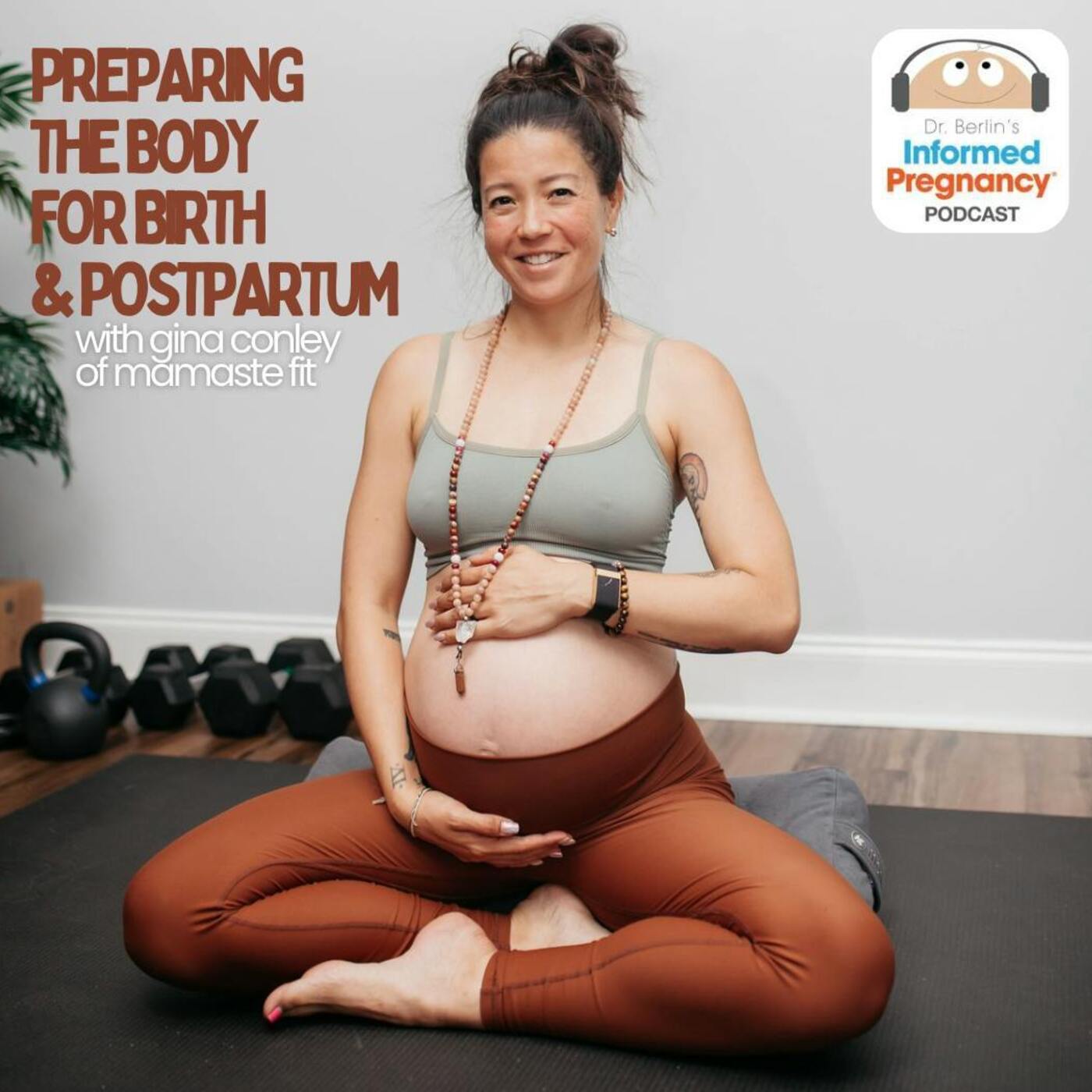
Birth doula, exercise scientist, founder of Mamaste Fit, and mother of four Gina Conley joins the podcast to talk about perinatal wellness and preparing the body for birth and postpartum.

Connect with Gina: @mamastefit and mamastefit.com
Gina’s book Training for Two
Start with a free trial and gain access to Mamaste Fit courses on IP+:
Condensed Childbirth Education Course
Painfree Pregnancy Mini Course
Key quotes
“And so looking back, I'm like, I just needed someone to like tell me to breathe and to tell the nurse to turn the pitocin off”
“Exactly like there is room for a happy mom, too. And so I think the thing that really helped me was recognizing that emotions could coexist and they don't diminish each other. And so I can be really joyful and happy that my baby was here with us and that she's doing really well, while also mourning my birth experience and mourning this journey and the start of our story together.”
“It was incredibly healing. When people ask me like, what helped you really heal from your first birth? It was my second birth. I don't wanna put that on my baby. And I don't wanna like necessarily like tell people like the only way to heal from a traumatic birth is to have a better birth the next time. But that really was for me what helped me heal from it was knowing that this amazing birth experience could happen and feeling just so, so supported in it.”
“We're just looking for movement that brings you joy that makes you feel good in your body because you don't have to be in pain during pregnancy. There is some amount of discomfort that is probably expected, but you do not need to be in the debilitating pain. Pelvic pain is not a requirement. The solution is not to just give birth. There's a lot that we can do during pregnancy to be comfortable, to be pain-free, but most importantly is finding movement that feels good for you.”
“And then when it comes to the postpartum, being patient with that process is so, so important. If we rush it, we're gonna end up having more issues than helping us and there's no need. Like the only body that has created like life is the postpartum body. And that is incredible. Like we should honor that. Like there's no need to bounce back or to rush back to fit into this specific small size. Like being smaller does not mean better or healthy. Like we really just wanna be very gracious with ourselves as we navigate our motherhood journey.”
Related episodes
- Ep. 446 Perinatal Exercise with Sarah Zahab
- Ep. 435 Jackie Amézquita: After Birth
- Ep. 442 Jessica Zadeh: Before Birth
- Ep. 426 Mia Rigden: After Birth
Transcript
AI-generated transcript with speaker labels — may contain errors, especially names and medical terms. Dr. Elliot Berlin, DC appears in blue; Gina Conley in orange.
Download PDF of the Transcript
Dr. Elliot Berlin, DC [0:12] Welcome to the Informed Pregnancy and Parenting Podcast. I'm your host, pregnancy-focused chiropractor Dr. Elliott Berlin. Today, I'm thrilled to be joined by a birth doula exercise scientist, founder of Mama Stay Fit, author of Training for Two, and mother of four. She brings a wealth of knowledge about preparing the body for birth and recovery, and today we'll dive into her personal journey and expert insights. Gina Comley, welcome to the podcast.
Gina Conley [1:03] Thank you so much for having me.
Dr. Elliot Berlin, DC [1:05] It's a pleasure to have you, and you do incredible work, and you have a lot of experience both on the personal side of making babies and on the professional side of helping people who are making babies. I'd love to dig into both of them. Let's get started with a little bit of your background. Where did your journey into doula work and fitness for moms come from?
Gina Conley [1:25] So after the birth of my first daughter, I was actually still in the army, and I transitioned off of active duty into the civilian world, and I was trying to figure out what I was going to do when I grew up. After I no longer had the career that I had for the past seven years, and I decided that I was going to start doing pre and post-natal fitness in my local community. And after about a year of doing that, one of my prenatal clients asked me to be her doula, and I was like, sure, I will figure that out. Such an army attitude. And I was like, cool, I'll do it. So I took the Dona doula course, and I became her doula. I actually got to shadow a few other doulas, and then one of the
[2:08] doulas had me be her backup. And unfortunately, her father was going through a lot of medical complications. And so I got to back up a lot very quickly as a new doula. So I had a bunch of births under my belt very quickly, which is pretty uncommon for somebody that's just starting out as a doula. And so by the time I actually made it to my client who was pregnant, I already had attended over 10 births. And so I kind of it was like unfortunate, but also like lucky for me. And so I had a lot of experience supporting my very first clients that actually had hired me. And that's kind of how my journey began into the birth world. So I started in the
[2:47] fitness side, I ventured to the birth realm and realized that they obviously are all very connected to one another. So it made sense that I could provide support to somebody throughout their pregnancy with fitness. And I could then support them during their birth with movement and help you to guide them through the process and then help them recover in the postpartum. And so we ended up being able to provide this full spectrum support for our clients in person. And then a few years ago, we expanded to really offering a lot of our services online as well to folks that don't live near us. So we started in person, we still support folks in person and our gym and as a birth doula and then people
[3:24] all over the world, which is really awesome.
Dr. Elliot Berlin, DC [3:26] Did you say that prenatal and postpartum training started after you had your first?
Gina Conley [3:31] Yes, it did. So after I had my first is when I started my business primarily focusing on pre and postnatal fitness, because there wasn't that much out there at that time, there was like, maybe like one company really focusing on prenatal fitness, there weren't really any programs offered, especially for someone like me that was from an athletic background, like I was in the army, I wanted to do things that were challenging for me during my pregnancy, couldn't really find anything. So I was just kind of like doing what felt right in my body, just kind of modifying here and there as based on what made sense. And then in the postpartum, I was kind of like, well, what do I do now? Like, how do I get
[4:07] back to that level of fitness? And so fortunately, my mom is originally from South Korea. So she really kind of instilled in me to rest in the postpartum to take my time getting back to fitness. And I think that really helped me long term with my healing was being so mindful in that early phase of healing, like eating lots of nourishing foods, having tons of support. And so I wanted to create something for other women that provided a challenging fitness program during their pregnancy that was safe, but also helping to prepare them for birth. So there's a lot within our programming that helps somebody stay strong throughout their pregnancy, comfortable and
[4:45] pain free throughout their pregnancy, while also helping to prepare them to open their pelvis for birth. And then we have our programs to help them recover after, but this all started after the birth of my first daughter about seven years ago now.
Dr. Elliot Berlin, DC [4:57] Nice. Well, and then there's three more before we get to that. You said athletic background and military background. First of all, thank you for your service. But then also athletic background. Is that the military background or are they separate?
Gina Conley [5:12] Well, I was a collegiate athlete. So I ran cross country and track when I was in college. And then my athletic ness kind of continued when I was in the military from doing some pretty physically intensive jobs throughout my career. And so I left the military pretty good physical condition. And I wanted to figure out how to continue to do that as I kind of ventured into my childbearing years. And what I was finding was I had a lot of clients coming to me that wanted to stay strong throughout their pregnancy. They wanted to feel challenged, but they didn't know where to go. All the prenatal programs that they were doing were like really easy or like very gentle and
[5:46] they wanted something more. So we kind of provide that for folks that are looking for that next step in a way that is accessible, that has modifications, that has those offerings for folks that are not as much into fitness and they want to do things to help them prepare for birth. Like we include that for those folks as well, but definitely focusing on the athlete that wants to stay in shape throughout their pregnancy. But they want to be mindful of how they're moving and then recovering in the postpartum.
Dr. Elliot Berlin, DC [6:14] What is an exercise scientist?
Gina Conley [6:16] So my master's degree is in exercise science. So I don't necessarily refer to myself as an exercise scientist, but it's just my degree.
Dr. Elliot Berlin, DC [6:26] I mean, is it what it sounds like the program?
Gina Conley [6:29] Yeah, so it's just studying like human movement, like how does the body move? What are different like biomechanical movement patterns do? What muscles are involved? Like, how do all these kind of correlate to moving a human body? So that's kind of what my background and study was for my bachelor's and master's degree. And then of course, my study with like working with my clients and just researching body movement is kind of my background.
Dr. Elliot Berlin, DC [6:52] And a lot sort of has changed and developed over seven years, but during your time doing this type of work, what have you found, especially in the postpartum side is maybe the biggest gap in fitness, advice or accessibility for new moms?
Gina Conley [7:06] So when it comes to the postpartum realm, I think the hardest thing is the childcare aspect with exercising and having somebody that could either want to take care of your baby so that you could go to the gym and work out. A lot of gym childcares don't take babies younger than a certain age. So even if I went to like my local gym here, like I couldn't put my baby in it. So after they were six months or 10 months or 18 months, like some of the time frames are pretty large. And so then you're pretty limited on when you can work out. Like if you want to go to the gym, you got to wait until somebody else is available to watch your baby. If you're working at home, having
[7:39] this set up at your home and then trying to manage working out with your kids at the same time. So it can be pretty challenging to return to fitness in the postpartum. And what we found with our clients is during pregnancy, we have a lot of pregnant clients. Everybody wants to do stuff to help their baby, to help their pregnancy while they're pregnant. And then postpartum, it's a lot harder to get those clients to come back to the gym because it's just harder in the postpartum. We don't have as much support sometimes so that we can do workouts that feel accessible. And then there's a little bit of expectation management. Like our workouts are not going to look the same as
[8:11] pre-kids. I got four kids now. Like my workouts do not look the same as when Juno was in the army and I didn't have any children. Like I can't work out for two or three hours a day. I've got I've got a lot of competing demands and it's just not realistic for me. Like what I'm looking to train for is to be able to keep up with my kids, to play with them without being in pain, get up and off the floor, be able to pick them up and live a full life with my children. And so when we shifted to the postpartum, this is probably the first time that we have fitness goals for ourselves that are beyond aesthetics, that are beyond like certain performance goals. Like it's really just about being
[8:46] healthy and being able to move and to play with our children and to keep up with them not only right now in their postpartum but for years and decades to come. And so there's a little bit of shifting in our goals and our priorities when it comes to managing fitness in the postpartum. And a lot of it deals with how do we manage our kids? What do we do with them while we're working out? How do we involve them in it? Like what type of setup do we have that's available to us? And then just kind of adjusting our expectations of like what is my workout going to look like? It's probably going to have some interruptions because we got if you're working out with your baby, your
[9:19] baby's got their own little demands that they have for us. And so for me, sometimes my workouts are pretty smooth. I can get through like my 45 minute workout without really any interruptions. But most of the time, it's like every 10 minutes I'm stopping to give somebody a snack, to give somebody a toy, to nurse my baby. But I'm still exercising. I'm still moving my body, involving my kids in it. But it can just be challenging to find the time and to find the support to do so.
Dr. Elliot Berlin, DC [9:44] Yeah, everything I see and hear from our patients in the office echoes what you're seeing here. And then that's kind of like what's the first baby. And then when you're pregnant and you have a little toddler, you have both dynamics at the same time. Now you have no time for yourself and you're pregnant. And it just seems to exacerbate the whole cycle. So, you know, a little bit later in the podcast, I'm definitely going to want to pick your brains for some specific tips that we can give to help people find their fitness during and after pregnancy. And then of course, share your resources. Before we do that, I want to get into your own pregnancy and birth stories. We'll
[10:17] take a quick break and we come back. We'll see how your journey of four has been. We'll be right back. Welcome back. We're talking to Gina Conley from Loma. Stay fit. Okay, so you have four kids. Tell me about your experiences with pregnancy and birth. Obviously, there's a bunch of them, but also kind of what you've learned along the way and your professional birth career has developed along the way too. So how that influenced your personal experiences and how your personal experiences influence the work that you do.
Gina Conley [10:56] So my very first pregnancy, I had no idea about anything. Like I grew up terrified of childbirth and I just was like, you know what, people get pregnant. They just go to the hospital and then somehow a baby is born and I'll probably get an epidural. Like I was just very like, whatever happens, happens. I had no like real idea of like a birth plan or preferences and also just didn't know what options were available to me. Like, why would anyone do it in any other way? Like we have an epidural, like why would you not get one? And into my third trimester, I began to realize that there were people that actually gave birth without paying medication and that it could
[11:34] be this really cool experience and I was like, I wonder if I can do it. I think I want to try that.
Dr. Elliot Berlin, DC [11:40] And also what's weird that I found out is they're not ultra-hugging, pre-istriving vegan hippies.
Gina Conley [11:45] Yeah, like in all sorts of different places. So I began to explore or understand that there was other ways that people gave birth and I wanted to have an unmedicated birth. I wanted to give birth without an epidural. And so when I was nearing the end of my pregnancy, anyone that I had voiced this to was like, Oh, you just wait, wait until like you feel your first contraction, you're going to be screaming for an epidural. And it was just like a really unsupportive kind of vibe that I had going around me.
Dr. Elliot Berlin, DC [12:15] Before you jump too far further, that's a big flip from growing up terrified of birth and not really anybody ever did it without meds to like almost advocating for yourself to do it without meds.
Gina Conley [12:26] Yeah, it's just, I like started to get exposed that there were people that did it without medication. And I was like, Oh, that seems interesting.
Dr. Elliot Berlin, DC [12:34] Particular resources that touched you more than others.
Gina Conley [12:38] Not really not in the first pregnancy. I just think I started seeing like Instagram posts and stuff of people. I can't even remember where I saw it or what exactly like triggered me to like flip to the other side, but I kind of viewed it as maybe this will be a challenge. Like let me see if I can do it. I'm in really good shape. I could totally do it. Like it'll be probably the whole thing.
Dr. Elliot Berlin, DC [12:55] Fit people love challenges like that you pay people to challenge you like that.
Gina Conley [12:59] Yeah, I was like, I'll just do it with birth. So towards the end of my pregnancy, I hired a doula. My husband was like, we should get a doula. My friends all talk about how amazing doulas are. And I was like, yeah, let's hire a doula. And I started nearing the end of my pregnancy. And I showed up at my 40 week appointment and the nurse practitioner was like, well, here's your induction date and 10 days from now if you're still pregnant. And I was like, what do you mean that this is my induction? Like is something wrong with my pregnancy? Like it just felt like this arbitrary date. And so I became very, very stressed out. The days just kind of ticked by and I was
[13:35] still pregnant. I'd wake up and I was still pregnant. I hit 41 weeks and I was still pregnant. And I was so stressed because I felt that an induction would really impact my ability to have an unmedicated birth. I mean, at the time, my sister who works with me and mama say fit was a labor and delivery nurse. And she had not quite really been exposed to unmedicated birth. And she was like, Gina, induction's not a big deal. Like people get pitocin all the time. And she was very dismissive of how I was feeling. And now we have conversations about how that maybe wasn't a good approach for her. And so 41 and three was my induction date. At 41 and two, I
[14:12] started labor and I was like, I'm going to make sure I do everything to keep this going because I do not want to get induced tomorrow. And so I walked for miles. I was just like running around my house, all the things of opposite of what you should do during early labor. And I was just so stressed out that my contractions would not continue and that I would have to be induced the next day because I didn't quite understand like how the whole induction process worked. And so when my contractions are like four to five minutes apart, I was starting to need a little bit of support for them. I was starting to breathe through them a little bit more. And I
[14:46] was like, I need to go to the hospital because my app is telling me that it's time to go. Like we live like 40 minutes away from the hospital. I don't want to be in the car and like super labor. So we drove all the way to the hospital against my doula and my sister's advice. And I was like two centimeters. And instead of just going home and laboring at home, I was convinced that things would progress and I should just stay near the hospital. And looking back now, I know that I was just like really stressed out and I needed someone to just tell me that it was okay, that my labor was going to continue to progress. Like I wasn't going to get induced, like Gina, just
[15:24] take a breath and go sit down. But I didn't feel like I had that person that was telling me like the thing that I really needed to hear to like calm down, essentially to tell me that I was safe and that it was going to be okay. And so we just kind of like wandered around near the hospital. There's like a track nearby. We walked around, things continued to pick up. We went to dinner and at dinner, I was like, I cannot anymore. And I was starting to kind of shift into more of like an early act of labor at that point. Went back to the hospital and I was still two centimeters and I was just like, oh my God, what is happening? But for whatever reason,
[15:58] they admitted me at that point. And I didn't understand why they weren't admitting me. The midwife started talking about potosin. She's like, we're going to give you potosin to really get things going. And I was immediately horrified and I was like, potosin is going to ruin it for me. Like I cannot get potosin. And so I started asking immediately about what pain relief options I had, because everyone tells me that potosin is really bad and I'm not going to be able to handle it. And so she was like, well, if you don't want enough Aduro, I can give you IV pain meds. And it was just really nonchalant. She was like really dismissive and it was just not a
[16:29] very supportive vibe that I was getting from her. And my doula had no really no idea what's going on. My sister had no idea what's going on because I didn't know how to communicate what they were telling me. And so, like, I didn't know how to tell my support team, like what was even happening. And my husband wasn't really sure what was going on either. And then I had this midwife that was like really difficult to like communicate with. Like she was just really abrupt and like really abrasive with me. And I felt like I was like bothering her by being there and that she was angry at me. And so that was definitely not helping me anymore. So eventually we made
[17:02] it to the labor room. They started the pitocin. I'm already starting to panic because I'm afraid that the pitocin is going to go zero to a thousand really quickly because I didn't really understand it very much. And so they gave me IV pain meds and I was like, well, the IV pain meds just made me feel like very like drunk and like very tipsy. I didn't like how it made me feel. And as soon as it wore off, I started panicking because I was like, the pitocin is still on. I would like it to be turned off. I feel like my contractions are really close together. They feel very strong and I don't want the pitocin anymore. And so the nurse came in and she was like,
[17:39] we're not turning it off. And then I was like, I want to talk to the midwife and the midwife came in with her arms crossed and she's like, I heard you want to talk to me. And I was like, I do not want to talk to you. And so at that point, I just began to like mentally spiral where I was just like everyone is against me. The staff hates me. I don't know if I can manage this. And so looking back, I'm like, I just needed someone to like tell me to breathe and to tell the nurse to turn the pitocin off because I really don't know why they put me on pitocin because my contractions were consistent like they were happening. It wasn't like they were super spaced out
[18:13] or there was something going on. Like to this day, I don't know why they put me on the pitocin. And so I was like, I am mentally not OK anymore. Like I cannot handle like what is happening right now. I can't keep up with these contractions. And I started asking for an epidural. And so my doula really tried to like help me. Like we went to the bathroom. I felt like the nurse just like was hard to talk to. And little did I know that shift change was coming. And if I had just waited like another hour, it may have been a completely different experience for me because the staff that came on for day shift was phenomenal. Like they were so much better
[18:50] than the nighttime staff I had. But I felt like if I just had like a different nurse that could talk to me and like calm me down, like it would have been a different experience for me. So I got the epidural, shift change happened. And I remember before I got the epidural, I was like four or five centimeters at this point. And this was at like six or seven a.m. I was like complete and fully dilated by like nine a.m. So it was pretty quick from like when they last checked me to like when I was complete, which is a trend that I have with all of my labors, all of my labors. I tend to be like three or four centimeters for a really long time. And then all of a sudden
[19:27] I'm complete. And so my active labors are very quick once they transition. I'm obviously I didn't know this was my first time. And they checked me at like nine and I was almost complete or almost 10 centimeters. And they were like, well, do you want us to break your water and like to really just get things going? And in that moment, I like remember it to this day. I just felt so defeated, like I felt like everything that I wanted for my labor, like that empowering experience that I felt like all of these women who had unmedicated births had was just gone. And at that point, I was like, we'll just do whatever you want, I guess. I mean, everything else
[20:06] has been has been you guys. And I just remember feeling so defeated. And it absolutely crushes me as a doula when I find myself in that moment again with a client where it was just relentless from the medical staff. And I've had amazing experiences in hospitals as a doula as well. But sometimes you just get the wrong person who is just not vibing with you well, and it can just make it so bad. So eventually I was like 10 centimeters pretty quickly after that push for like two and a half hours. My baby was born screaming and they immediately took her for me to the warmer. And I was like confused why she didn't come straight to my chest. To this day, I don't know
[20:48] why they took her at that point. And I just felt really defeated from that birth. I obviously was excited that my baby was born, that she was healthy, that I was healthy. But it just felt like maybe that was the bare minimum like for us to be alive when and like thriving after your baby's born. But I just felt like emotionally like something was off for me, like I didn't leave that feeling really empowered or that this was some monumental moment in my life. And I really struggled with it for the next like three years before my son was born.
Dr. Elliot Berlin, DC [21:22] And so how did you work through it?
Gina Conley [21:26] Initially, I think I just kind of told myself that it was fine. And then eventually I began to tell myself that it was OK, that I was not happy with that experience. And to this day, I think I will have a hard time telling my oldest like her birth story without being really sad about it, especially since I wanted to have three really amazing, like empowering birth experiences. And so it really saddens me to the stage to know that my very first birth experience and one of the limited times that I mean, I only gave birth four times, like you can only do it so many times. And to know that one of the four experiences that I had with giving birth was like on the more traumatic side
[22:03] for me and emotionally defeating side for me just like breaks my heart. And it makes me so sad to know that there's a lot of women who have really hard birth experiences that everyone is healthy and happy or healthy at the end. Everyone's alive. But emotionally, we're not necessarily happy with how that went. And it feels like it's just the bare minimum for everyone to be alive. Like there's room for a happy mom to you and for an empowered mom.
Dr. Elliot Berlin, DC [22:28] That's a powerful thing that you just said, because I know that people sometimes it strikes them the wrong way when they didn't have the birth experience that they wanted or didn't feel like they were listened to or empowered or, you know, in the driver's seat for their birth experience. Like you said, you don't get to do it too often. Well, meaning people commonly say, you know, luckily you and the baby are healthy. Shouldn't we focus on that? But the way you just expressed it is right. Yeah, of course, we're grateful for that, but that's the bare minimum. And why should we, you know, especially in a country that has so many resources, where are we settling
[23:03] for the bare minimum?
Gina Conley [23:04] Exactly like there is room for a happy mom, too. And so I think the thing that really helped me was recognizing that emotions could coexist and they don't diminish each other. And so I can be really joyful and happy that my baby was here with us and that she's doing really well, while also mourning my birth experience and mourning this journey and the start of our story together. And so I had another friend that is still a real big part of Mama Say Fit to this day, who also had a birth that she was not expecting and she was not planning for. And so we really kind of bonded with each other over kind of healing from that. And I think what really helped
[23:43] both of us heal was coming to support this community with Mama Say Fit and providing like in-person support to our clients and to folks that are navigating their pregnancies, their postpartum and their birth, in addition to kind of expanding to the world. And so now we have a lot of folks that will message us and say, you know, I followed your Instagram. I did your program. I took your course. I had an amazing birth. And so I kind of look at that as well, because I had this first birth, I know that it can be bad for people, even when everyone is alive and healthy at the end. Like it can still be a hard experience and that's still meaningful. So now I'm going to create
[24:22] this course and these offerings to help folks have a better experience so they can learn from me. So that's kind of how I have mentally kind of dealt with it is kind of using it as like a silver lining, which I don't wish that I had that first experience. But my next three were definitely more aligned with what I think we're supposed to have when we give birth.
Dr. Elliot Berlin, DC [24:42] I'm super curious about the second because that's the first one after the experience that you had. How did you go into that one? And what was the plan for that birth and how did it go?
Gina Conley [24:53] So this birth, I initially had planned to give birth in the hospital again, same hospital as my first, but I was more with the midwives within my clinic this time. I was doing like centering. So I was with one midwife with like a group of other folks that were due around the same time as me. And so I was navigating this pregnancy with the intention to again, try to give birth unmedicated without an epidural. I was going to try it in the hospital first and then maybe for a future baby, we'll think about home birth. And so this was kind of our plan. I was preparing for it. I was feeling kind of nervous about it. And then COVID hit and my son was born in 2020
[25:32] and this was my third trimester when the shutdown happened. And I was very concerned about who is going to be at my birth, like who is going to be allowed at my birth because for some folks, like the hospital that I was going to give birth that there was question on whether or not the partner was even going to get to be there. Like, could my husband even be at the birth? We're definitely not going to be able to have a doula. My sister and my mom were not going to be able to be there. I had a birth photographer. She was not going to be able to be there. So it was going to be me and maybe my husband. He wasn't even going to be allowed to be in triage with me.
[26:03] So there was going to be a period of time where I was going to be laboring by myself. And so I felt very, very anxious about this. And at this time, it was March and my son was born in June. So I was like, well, maybe it'll be fine by June. Like, surely this is only going to last a week. We all know it did not last a week. But I was like, I don't want to find myself in June. And there's still lots of restrictions or things have gotten worse and not be able to find a midwife to get birth at home so that people that I want to be there can be there. And so I talked to my husband. I was like, I don't want to give birth in the hospital because I don't want to be by myself.
[26:40] Like, I don't want to give birth by myself. Like, that does not sound like a good time to me. And I was like, I want to do a home birth and I want to find a midwife. And he was like, sounds good. Let's do it. Like, I don't want to give you to give birth by yourself either. And so in North Carolina, only certified nurse midwives or CNMs can practice legally. And so I started trying to reach out to find a certified nurse midwife because we have limitations on the type of midwives that can practice. They're also very limited in number. And at the time, midwives could not practice independently. They had to have like an OB kind of sign off on them.
[27:12] Now they can practice more independently. But it's there's still a lot of restrictions. And so we are very limited on home birth midwives that are available. So there was one that I had worked with as a doula that I really wanted to be my midwife. And I had worked with her a few times and I debated asking her what her availability for June was. But she actually goes on vacation every June. And so she would not have been available even if I had reached out to her like immediately about finding out that I was pregnant. So in my third trimester, I'm like, I don't know if anyone's going to be available. And so I reached out to her and she happened
[27:47] to have canceled her June vacation because of COVID. And so she was available. She was wide open. Her schedule was wide open.
Dr. Elliot Berlin, DC [27:54] Oh, COVID's working in your favor.
Gina Conley [27:56] I was like, please be my midwife. And she was like, sure, I will. And she said that she ended up taking on a lot of folks like last minute because people were wanting this and she didn't want to turn them away because she felt obligated to support. So we secured our midwife in like the last month. And then for the next three months, we're like fighting insurance to get approval to give birth at home. But we had paid her in cash. We were like, well, if we don't get reimbursed, we don't get reimbursed. And then everything that I was kind of wanting for my birth happened. Like I wanted to wake up with contractions like I did with my first after a full night of sleep.
[28:33] I wanted my friend who does massages to like come to my house and give me a massage and early labor. I wanted to labor throughout the day and then give birth at night. And everything that I wanted happened in his birth, which was wild because I was very concerned that like something crazy would happen again or like something would interfere with my ability to give birth at home. And then like, I was like, maybe I'm gonna go too far past my due date, but I just kind of accepted and tried to surrender to it as much as I could. And I actually went into labor one day past my due date. And so I woke up in labor. I was having my mild contractions and I was really excited,
[29:12] but I wanted to be more mindful about it this time. So I focused more on like resting and like eating and like when I felt like it doing some movement, labor just kind of slowly progressed through the morning. And then my friend came over. She gave me a massage and early labor, which kind of really helped to pick things up. We went for a few walks and then my midwife came over to check on us. I had started to transition into more active labor. So she stayed and like her birth assistant came as well. And we just kind of labored together. It felt really manageable the whole time. Like I felt so supported in my environment and so comfortable in my environment.
[29:48] And then towards the end of my labor, like I had never experienced this part of labor before, like without an epidural. And so I wasn't sure what sensations to like look for. And I started feeling myself feel very panicked where I was like, I don't know if I could do this. I don't know how much longer I can do this. And I remember looking at like my clock on my TV and it said like 8.30 at this time. And I was like, oh my God, like how much longer am I gonna have to do this? And I was starting to feel like really emotional about it. And my sister says that she knew at that point I was in transition because she had asked me a question and I was like, I don't know,
[30:22] like I don't know, I don't know. And then like 10 minutes later I started pushing. So I had this like vision for myself to give birth in the pool. And for whatever reason, I put the birth pool in our kitchen but I've labored primarily in the bedroom. I don't know why I did this. I should have put the pool in the bedroom. So my vision was I was gonna go push in the pool and give birth to my son in the pool that my husband was gonna catch the baby. And I was standing next to the bed when I had my urge to push. And I was like, we are giving birth to this baby right here. We're not making it to the pool. So we ended up giving birth to my son like right there by my bed or on my bed.
[31:03] And my husband was actually the first person to catch him and bring him to my chest, which was like a big moment for us because my husband's father was actually not at his birth. And so he had a pretty strained relationship with him the first few years of his life. And so it was like a really big deal to us that my husband was the first person to touch our son and to give him to me. But he like came flying out. This dude had like no chill. He was just like shot out as soon as his head was born. And all of us were kind of like not prepared for how fast he was gonna be born. Actually, when I was pushing, a light bulb exploded in our bathroom, which is important for our future birth of mine.
[31:42] And so it was like this big powerful moments that happened. And then bam, this kid is like in the world. And so it was like-
Dr. Elliot Berlin, DC [31:51] I thought for sure you were gonna say a figurative light bulb exploded.
Gina Conley [31:54] Like a literal light bulb exploded in our bathroom. And looking back on it was like the perfect birth. Like it was like everything that I wanted. I felt so supported and empowered. And like as soon as he was born, I was like, I need to do this again. I need like 10 more children. And my husband was like, can we wipe the blood? Can we wipe the blood off first before we start talking about like more kids?
Dr. Elliot Berlin, DC [32:16] That's a wildly different response to your first birth. Was it a first period of healing in a way?
Gina Conley [32:22] It was incredibly healing. When people ask me like, what helped you really heal from your first birth? It was my second birth. I don't wanna put that on my baby. And I don't wanna like necessarily like tell people like the only way to heal from a traumatic birth is to have a better birth the next time. But that really was for me what helped me heal from it was knowing that this amazing birth experience could happen and feeling just so, so supported in it. And after my son was born, my husband and I were like, we are never gonna give birth in a hospital unless like medically necessary. Like if we just have a normal pregnancy, like we are 100% just gonna do this at home.
[32:59] Even if it's not a pandemic.
Dr. Elliot Berlin, DC [33:01] Yes, even if it's not a pandemic. Well, that's a markedly better birth experience. And then you had two more babies, I guess, you know, on your way to 10 more. And I'm curious also how those birth experiences went. And we're definitely gonna have to pick your brain for some tips for pregnancy fitness, postpartum fitness, and learn more about the resources that you have both for people local to you and virtually online. We'll be right back.

Dr. Elliot Berlin, DC [33:36] Welcome back. We're talking to Gina Conley from Mama Stay Fit. Two very different birth experiences with your first two kids. How the other two go?
Gina Conley [33:43] The next two we decided to just do homework from the start. So we had the same midwife that supported us for our next two births. And my husband actually didn't know that we were gonna have more than two children. I sort of sprung it on him when I said we're actually gonna have three and then four. But he was obviously a willing participant. I didn't force him to do anything. So for the next birth, so I didn't get a water birth with my son. And in between my second and third birth, my sister gave birth. And she gave birth in this freestanding birth center in California in Monterey. And it was this very serene birthing goddess birth. And I was like, I'm gonna have that next time.
[34:19] With my son, I was like screaming, like I was roaring him out. Like it was a very powerful experience, but I was very loud. And she was like a super quiet, like serene birther. And I'm like, I can have that too. I did not have that for this next one, spoiler. So I was like, I'm gonna have a water birth. It's gonna be amazing. And so for my third, I was like, well, the reason why I didn't go into labor early or around my due date with my first is because I was super stressed out. So I'm gonna be super relaxed and my baby will be born around her due date. But I went into labor at 41 and three with my third. And I was very sad, like after I passed 41 weeks.
[34:58] So it was the same thing. I woke up one morning and my labor had just started. I was feeling the contractions, was super excited about that. And then we had a hurricane that was coming through. So I was a little nervous that there was a hurricane going on outside. And so the power went out at one point and my midwife was like, it's okay. And I'm like, I need hot water. If we don't have any power, we're not gonna have hot water. I require this for my labor. And she was like, don't worry. Hundreds and thousands of women have given birth without electricity before. And I'm like, I don't care. I live now and I want electricity. It did go back on within an hour
[35:32] because we do live within city limits. So the people that do all the power stuff was able to fix whatever lines were broken. And so labored, it was really similar to my son's birth where once after labor picked up, it was pretty quick from there. And I did start pushing in the pool, but then I had to get out because my baby's heart rate was pretty low. And so my midwife wanted me to be on the bed because if there is anything after she's born it's much easier to resuscitate on a firmer surface. And so I willingly got out of the tub because I was like, yes, I would like assistance if needed. So she was born like within like two pushes after I got out of the bed.
[36:08] And I was kind of like bummed. I didn't get the water birth but it was still a really amazing experience. But I felt like I had put a lot of pressure on myself to like have this specific birth. Like I really wanted the serene water birth. Like I felt like I was putting on a performance in a way to have this specific birth and put a lot of pressure on myself. And so in hindsight, I was like, well, I should just accept the way that I give birth is very loud. It's very powerful and it's okay. I'm not a serene birther. Like it's totally fine. Yes, it was very primal. And actually like two or so months after I gave birth to my third, one of my friends, I supported her birth
[36:47] and it was her second unmedicated birth. And she was like, Gina, I'm really scared for pushing. And I actually had a moment before I knew I had to push with my third that I was like, this is gonna be intense. I'm kind of nervous for the intensity of pushing. And so I just kind of looked at her and was like, I feel you. Like pushing can be really scary. I was just here. And her husband was like, that is not helpful. And she was like, this is so helpful. You be quiet. And I was like, I see you. I know how you feel right now. I'm with you in this. And so when I came to my fourth and last planned baby, I always like to say because you never know. I really just wanted to take the pressure off of myself.
[37:28] And I was like, you know what? Yes, I would love to have experienced a water birth. If I don't, it's fine. Like now I'll give birth on the bed. I'll give birth forever. Like it'll still be an amazing experience because I'm just so surrounded by so much love and support and everyone believes in me and everyone is just there to help me. Like I don't have anyone that's gonna come into my space that's gonna mess with my vibe. And so I just felt very comfortable and excited to give birth at home again. And so the same thing, I woke up. I was actually before my due date, which I was surprised by. I really thought I was just someone that gave birth at 41 weeks.
[38:05] And so it was like two days before my due date and I woke up, I was having some mild contractions and I was like, oh man, okay, we're doing this before or do you like, this is awesome. Really similar to my other births where I just kind of labored throughout the day. And then once the sun set, things really pick up for me pretty quickly from there. So really long early labor is very fast, active labor. But I was not expecting it to be as quick as it was this time. The previous ones were like three to four hours for active labor. For this one, it was maybe an hour, hour and a half once the active labor began, so pretty quick. And I was not expecting that.
[38:43] Yeah, so usually what I do with my contractions is I feel them build, they peak and they release and like, oh, and it's this very like manageable contraction. And so I would just focus on the peak of the contraction and then I would pretend the rest of it wasn't a contraction. And I would talk myself through this progressive relaxation and it always felt very manageable. This labor, my most recent one, it felt like it was just a little bit hard for me to like keep up. I didn't have that opportunity to like, just focus on the peak. Like the whole contraction just felt really intense. Like it was always manageable, but it just felt more intense than my previous labors.
[39:22] And I was kind of confused by it, but I just like kept telling myself like, okay, well, your labors, the active labors only last like three hours. We've been here for like half an hour, an hour. You've just got like two more hours to go. Like it'll be fine. And so I just kind of kept telling myself that, but then I felt like I was in transition already. And I was like, I just have so much time left. Like I can't already be in transition. With this labor, for my previous ones, I always had like a lot of people at my births. Like I had my sister, my mom, the midwife, her birth assistant, a doula, like photographer. Like it was always kind of like a little bit of a party.
[39:57] But for this one, I just really wanted to be just, but I still had a bunch of people in the house, but I wanted to be more secluded when I labored. And so I spent a lot of time in the shower because no one really followed me in there. And I just kind of wanted more like privacy with it to really allow myself to just kind of surrender to this experience. We didn't have a hurricane this time. We didn't have a light bulb exploding. So like the energy and the power of the birth externally was not there. It was just all internal for me. Like I was doing a whole lot that I didn't realize. And I started to feel a little bit more like weepy and a little bit more panicked,
[40:33] which is my usual transition. I just start feeling much more emotional, which for me in general, being really emotional is a very vulnerable thing for me. And so this is just kind of me like releasing that vulnerability, which I think really just helps me kind of transition to pushing. And so my husband like knew that I really wanted a water birth, but I was okay if I didn't get one. And so I was starting to feel a little like pushy in the shower. And I was like, I'm feeling a lot of pressure. It just doesn't feel like it's been enough time, but I think I'm gonna start pushing soon. Like I think I'm gonna have this baby soon. And so my sister was like trying to encourage me
[41:06] to get back to the pool. And I was like, I feel really good right here. Like I feel like maybe I need to go to the bathroom. Like I don't really know. And my husband, I remember him saying like, if Gina starts pushing and she wants to be in the tub, I'll just pick her up and carry her to the tub. Like she will make it to the tub. Like we will make sure that she gets into the water, like for when she starts pushing. So I started to feel a little bit more pressure and decided that I wanted to go back to the pool. So I went to the pool and this is where I started to feel the urge to push and just started kind of bearing down. All my kids came and were like surrounding the pool
[41:41] and were like just kind of like waiting for their baby sister to be born. And it just felt like super intense as usual. I was making tons of noise. Like I was roaring this baby out. And then I was in between pushes and I knew that her head was gonna be born soon. And I really wanted to focus on like her head being born cause I was in the water and I didn't wanna tear also. And so my next interaction came and I was like really quiet and like super focused on trying to like ease her head out. That nobody except for like my husband and my midwife knew that her head was crowning. And so I gave birth to her head and I was like, hey, her head's out guys.
[42:21] And I just said like her head's out. And everyone was like, what? Cause I was so like serene and like I had my calm, serene water. I got it. And then I like didn't know what to do cause her head was born. I was like, oh, what do I do? And so my midwife was like, just keep pushing. Okay. But I was sitting so low in the pool that like I didn't have room to get her out. And so my midwife gave me a little bit of assistance. I actually felt her rotate to like finish her rotation to be born. And so my midwife helped me guide her shoulders and the rest of her body out. And I sat back and I had my baby on my chest after having my water birth finally. And I was a serene birther.
[43:03] Like it was like all of the things that I like kind of surrendered to accepting may not ever be a reality for me. And that I was just going to accept my birth for whatever it was going to be because it was exactly what I needed. Like all the things that I kind of wanted secretly like happened, which was like really awesome. So I finally had a water birth. We didn't lose power this time. No light bulbs. No explosions. It was just really fast compared to my normal labor. All my kids got to be there to see their baby sister to be born. My husband was there and my mom and my sister were there. And I left that labor just feeling so happy with how much love was surrounding me
[43:43] and just feeling so, so supported and empowered in this experience. And I was like, I wish everyone felt this like after they gave birth that they just left it feeling like I can conquer the world. Like I am amazing. Like I am woman, hear me roar. Like everyone surrounding me is like, you are amazing. And it just sometimes it makes me so sad to know that that's not everyone's reality. It wasn't mine with my first. And I'm very, very thankful that I've had three really empowering and wonderful birth experiences since, but I wish I had it for all four.
Dr. Elliot Berlin, DC [44:17] What an arc of birth experiences. Really interesting journey that you had there. We're almost out of time, but I do want to tap into just the last couple of minutes here, maybe a tip for somebody who's pregnant and not sure what to do in terms of fitness and a tip for someone who recently had a baby is not sure what to do with fitness. And then we'll find out where the resources you have that are available that people can tap into for much more information.
Gina Conley [44:44] So for pregnancy, the thing that I recommend is just to move in whatever way feels good for you. Like there's no like set checklist of you must do things in the specific way in order to have whatever birth experience, whatever experience you're looking for. We're just looking for movement that brings you joy that makes you feel good in your body because you don't have to be in pain during pregnancy. There is some amount of discomfort that is probably expected, but you do not need to be in the debilitating pain. Pelvic pain is not a requirement. The solution is not to just give birth. There's a lot that we can do during pregnancy to be comfortable, to be pain-free,
[45:20] but most importantly is finding movement that feels good for you. And obviously I have tons of recommendations on different types of movements to do to feel more comfortable, to be more pain-free, to continue to have a strong core, to help create more space within your pelvis when it comes to birth to help support your baby's positioning. But ultimately the most important thing is to find movement that feels good for you because there are so many benefits to exercising throughout your pregnancy, both for you and for your baby. And there really isn't a whole ton of risk involved with it unless you have some sort of complication with your pregnancy.
[45:50] So when it comes to the postpartum, the biggest thing is to give yourself some grace. Like it's hard postpartum and the journey into motherhood is really challenging. And so what I would really recommend to somebody that is looking to return to fitness after birth is to take your time. There's really no need to rush the process and rushing the process after giving birth to return to fitness in the postpartum is probably gonna cause more issues than help. And so giving yourself that first month or two to just kind of rest, do gentle movement, do some walks, maybe some gentle core exercises, really just reconnect with your core and your pelvic floor,
[46:24] connect with your baby, and then begin a very gradual return to fitness. And so we're thinking about what are our final movement patterns that we're trying to make it back to? What type of exercise are we trying to make it back to? And how can we gradually rebuild that and know that it's gonna be a long process. It's gonna be like six months to a year probably if we're like really consistent with it. But what I have found for my clients is probably like most realistic is it's probably gonna take you a year because life happens, you go on vacation or maybe get sick, you get sick. Something's going on where there's gonna be interruptions in that return to fitness.
[46:57] And it's okay, like again, we're not training for the CrossFit Games or some crazy competition, like we're training to be healthy as mothers and to be able to do things with our children, get up and off the floor, like keep up with them for decades to come. So we wanna think about like our long-term health as well. So when it comes to pregnancy, just move your body, how it feels good for you. And then we can go further with that if you want like more specific exercises, like things that you can specifically do to help with pelvic pain, to help create space within your pelvis. But ultimately we want it to be movement that you enjoy because it's gonna be easier for you to do.
[47:30] And then when it comes to the postpartum, being patient with that process is so, so important. If we rush it, we're gonna end up having more issues than helping us and there's no need. Like the only body that has created like life is the postpartum body. And that is incredible. Like we should honor that. Like there's no need to bounce back or to rush back to fit into this specific small size. Like being smaller does not mean better or healthy. Like we really just wanna be very gracious with ourselves as we navigate our motherhood journey.
Dr. Elliot Berlin, DC [48:01] I might have waited too long. My firstborn is 20 years old and I still haven't fully recovered. But those are really both great advice. Gina, tell me where we can find you online and what we get there, what kind of resources are available.
Gina Conley [48:13] So you can find us mostly on Instagram. We're at MamaStayFit. So it's like namaste, but with an M at the front and then fit. We post tons of content there to help you with prenatal fitness, postpartum fitness, childbirth education. Both my sister and I run the page. She's a labor and delivery nurse and a student midwife. So you get kind of the medical perspective on things. You get like the doula perspective and the fitness perspective. And so we just like to vomit onto people with tons of education and free info because we want the information to be accessible. We're also on YouTube, our channel is MamaStayFit as well. We post workouts over there, tons of educational videos.
[48:48] And then we have all of our online courses. So you can find us on our website at MamaStayFit.com. Everything is MamaStayFit just to make it really easy.
Dr. Elliot Berlin, DC [48:54] That is very simple.
Gina Conley [48:56] We have childbirth education, pre and postnatal fitness. And I also have a book now, Training for Two, which is all about prenatal fitness. So if you're looking to kind of understand the why behind everything that we do at MamaStayFit, especially for prenatal fitness and those exercises that you can do, my book Training for Two is gonna include that with pictures, QR codes to videos. It's a really beautiful book. The publisher did an amazing job with the design of the book. It's full color, the pages are thick. So we offer a lot because we wanna support people during their pregnancy, their birth and beyond. It is such an important time for folks in their lives.
[49:32] We only give birth so many times and we just really wanna help people have that empowering experience as they go into motherhood because it's gonna impact generations to come. If we have empowered mothers, motherhood is just gonna be so much more joyous and so much more fun. And it's just gonna impact the next generation.
Dr. Elliot Berlin, DC [49:48] The enthusiasm that is inside you kind of explodes out of you like a light bulb during a birth. Gina, thank you so much for joining me, sharing your personal story and your professional insights. I really appreciate having you. And at home, thanks for listening to the Informed Pregnancy podcast. For more pregnancy and parenting information just like this, visit us online at informedpregnancy.com. I got a whole lot.
Want more pregnancy + parenting? Start your FREE TRIAL of Informed Pregnancy+ and get access to all our curated pregnancy and parenting content — original series, iconic birth films like The Business of Being Born, prenatal workouts and more.
