
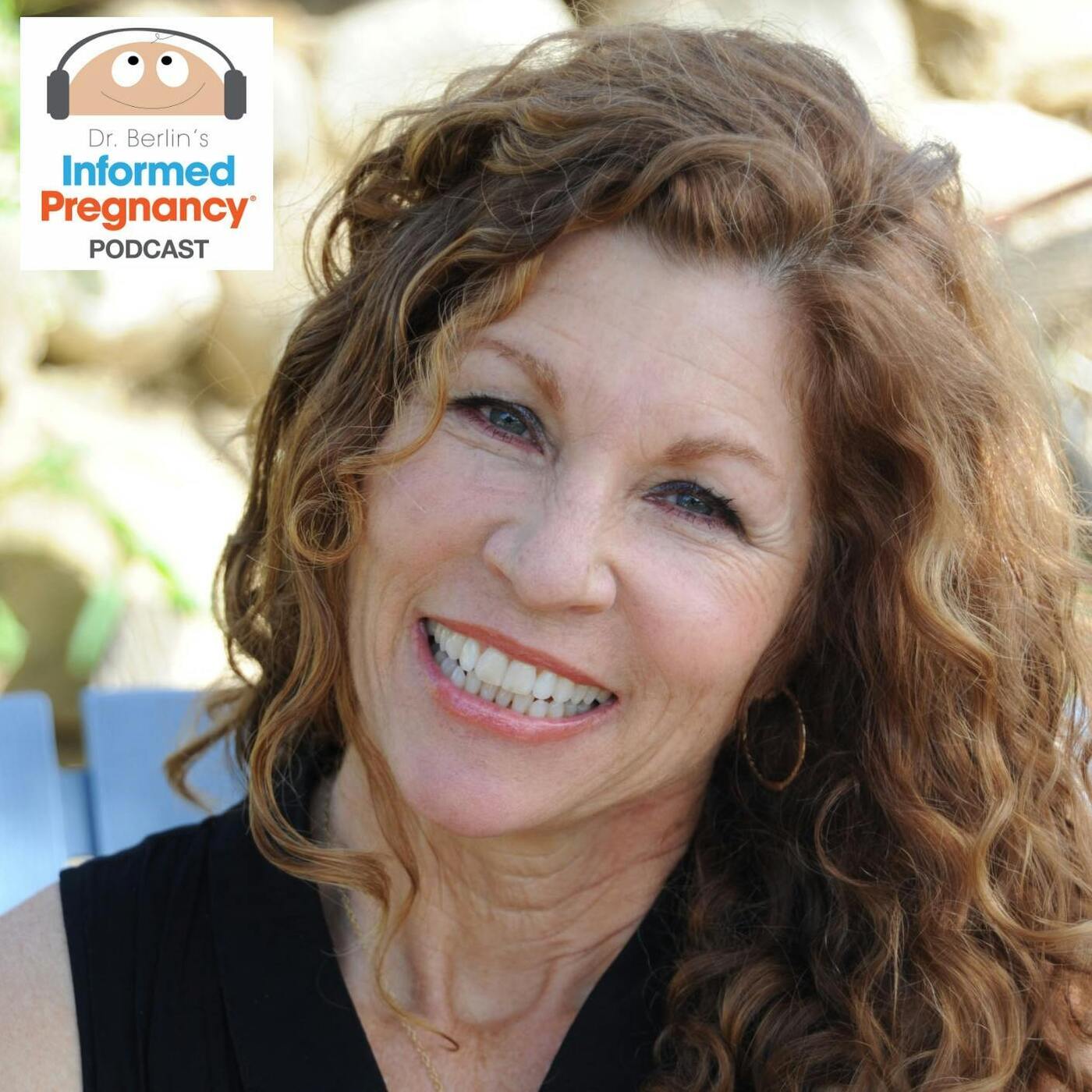
January 30, 2020 · 43 minutes · Episode 160
About this episode
Today we are talking a deeper look into the feeding your infant with breast milk or formula with pediatric nurse and lactation consultant Jennifer Davidson who has worked for 10 years at Children’s Hospital of Los Angeles and 28 years at a progressive pediatric practice. Additionally, her documentary film, The Milky Way unveils the problems facing American culture that have lowered breastfeeding success rates.

Learn more about your ad choices. Visit megaphone.fm/adchoices
See Privacy Policy at https://art19.com/privacy and California Privacy Notice at https://art19.com/privacy#do-not-sell-my-info.
Key quotes
“So my job is a confidence builder.”
“it creates an appetite for life.”
“It's probably the most earth-friendly packaging.”
“She needs to learn to trust what her instincts tell her.”
“So again, breastfeeding is so much more than the milk.”
Related episodes
- Ep. 266 Gina Mehta – A VBAC Journey
- Ep. 271 Michele Gastel – Birth Stories
- Ep. 256 Lauren Guilford – After Birth
- Ep. 164 Midwife support options for any setting
Transcript
AI-generated transcript with speaker labels — may contain errors, especially names and medical terms. Dr. Elliot Berlin, DC appears in blue; Jennifer Davidson in orange.
Download PDF of the Transcript
Dr. Elliot Berlin, DC [1:36] Welcome to the informed pregnancy and parenting podcast. I'm your host. Dr. Elliott Berlin today We're taking a deeper look into breastfeeding My guest is a pediatric nurse and a lactation consultant who has worked For ten years at Children's Hospital of Los Angeles and 28 years at a progressive pediatric practice She is also a fellow filmmaker Her documentary film the Milky Way unveils the problems facing American culture that have lowered breastfeeding success rates Jennifer Davidson Welcome to the podcast. Thank you very much for having me. I'm honored. Oh, I'm honored. So look at us. We're both honored You are clearly very passionate about what you do. You're in it to win it a hundred percent immersed in what you do
[2:19] Let's learn a little bit more about how you got there. What's your background?
Jennifer Davidson [2:22] Well, my background is I went into pediatrics because I had such a fond interest in children I studied to be a nursery school teacher and Then found I was really fascinated with nursing so ended up at Children's Hospital for ten years and once I had babies Discovered that I couldn't be away from them for those long 12-hour shifts Like I don't know how nurses do it. Oh, I don't well I did it for ten years I don't know why it has to be that way either, but no, it shouldn't be that way It's like these causes accidents on the freeways. Oh my tired. Yeah And then I just drive like your people's hands like you're doing critical stuff sometimes and you really want to be alert
[3:05] Mm-hmm, and then once you have babies I realized I waited all this time to have a child and now I'm gonna pay someone else to raise him I just didn't make any sense to my brain I thought I was gonna go back to work full-time, but Discovered that wasn't quite for me So I discovered I could work in a pediatric office and was given part-time hours. Oh that worked really well Oh, that's one win. Yeah, it worked pretty good Except I still didn't like being away from my newborn at four months old But I did it and discovered that I really fell in love with helping other moms Learn the beauty of breastfeeding which is what I had discovered and so there I went beginning teaching and helping moms to do it and
[3:52] Then went on discovered. I wanted to have that license so I could actually really be an IBCLC so I went back to school and studied and studied and passed the IBCLC exam and And began seeing all the patients in the office when they came in to interview I'd be there to be the first one to meet them and greet them and tell them how we had this very special practice where They get a lactation Consultant who comes to their home and sees them after the baby's born to help them through these early days And I would say that that single-handedly makes our practice about an eighty to ninety percent success breastfeeding practice So that is a very important item that I think it would be lovely if all pediatric practices would instill
Dr. Elliot Berlin, DC [4:40] So you're saying that regardless of there's any issues or struggles when somebody has a baby and they want to breastfeed
Jennifer Davidson [4:47] You go to their home. I like yeah, they have a lactation. Yes consultant come to the home Mm-hmm, and when I was making the film what we did was we went over to Germany to film a practice where they have a hospital where the NICU and the maternity ward are right next door to each other. So if a baby is born premature, the mother and the baby and the dad are all rolled into one room.
Dr. Elliot Berlin, DC [5:10] Oh, they're not on different floors?
Jennifer Davidson [5:11] Not on a different floor.
Dr. Elliot Berlin, DC [5:12] That's such a novel idea.
Jennifer Davidson [5:15] Such a novel idea. And seeing all of that, we also learned that these mothers, when they do go home with full-term babies, they have a midwife actually, not a lactation consultant, but she's a midwife who's experienced in all parts of lactation. She comes to see that mother every day for six weeks.
Dr. Elliot Berlin, DC [5:33] Wow. That's incredible.
Jennifer Davidson [5:35] So having a lactation consultant come once is, I've discovered, really not enough. Mothers should have someone come at least several times in the early days because just think about it. They've never done that before. They've never breastfed. They've never had their breasts filled with milk. So all these changes are going through in their body and to have someone standing near them and guiding them makes them feel the confidence. More than really helping them, teaching them, doing anything for them, I am the one who supports and lifts and shows them all the wisdom that they have just already residing in their body. So my job is a confidence builder.
Dr. Elliot Berlin, DC [6:13] Oh, wow. That's so beautiful. And the truth is, if you think about it, I think we always had that. Going back, I sometimes say this about labor and delivery too, going back where We lived in villages on family property with all the family around. You would be a lot more exposed to breastfeeding from your relatives that were around you that did it before you. And they'd still be there to coach you, help you find that confidence, help you out of a rut if you were having one. But since we moved away from our families, for the most part, in large part, that kind of support sort of dwindled down. And so like other types of support, like doulas and postpartum doulas and childbirth
[6:52] educators, those are some of the professions that have kind of popped up to fill in the gap there. Of the family. Yeah. And if it's missing, then it's not like it was never there and it's still not there. It was there and now it's not there. Right. So there's a gap, there's a deficiency, there's something missing, an element of support that has disappeared.
Jennifer Davidson [7:12] And that's the word. That's the word that we discovered when we were making the film was that the reason that America has such a poor success rate is we don't have the support. When we went to Sweden and filmed there, we knew that they had some of the highest breastfeeding rates in the world, up to, say, 90 percent. And the real reason was because, just like you said, they see it being done as their young children. It's done openly, not covered up. People aren't embarrassed to expose themselves and nobody judges them harshly. It's seen as a beautiful thing to feed the next generation and nurture. And that's revered in other countries where it's not revered and lifted up here like
[7:53] it should be.
Dr. Elliot Berlin, DC [7:54] It's true. Here it's more of a beautiful thing. It's revered for selling beer, but not for feeding babies.
Jennifer Davidson [8:00] Yeah.
Dr. Elliot Berlin, DC [8:01] Sad, right? It's a little interesting. Let's start at the beginning, because I feel like there's so much judgment around breastfeeding also. For some reason, everything in this space has a lot of, you know, are you going to have your baby at home in a hospital, medicated, unmedicated, cesarean, vaginal, are you going to breastfeed or not? There are strong opinions. And so people are sometimes touchy about even thinking about it, talking about it with other people. I sometimes feel like a woman would rather me say, you know, how old are you and how much do you weigh, than are you going to breastfeed? I even sometimes just ask for practical reasons in the office, are you
[8:34] breastfeeding? Because if they're going to lay face down, we'll give them like a specialized pillow so that they're comfortable. And still, it's almost like a taboo question. So I'd like to talk about some of the pros and cons of breastfeeding or alternatives to feeding a baby, then breastfeeding, such as like pumping milk and feeding the baby that way, human breast milk or formula feeding or some combination of these.
Jennifer Davidson [8:59] You would like to hear what are the different options besides breastfeeding?
Dr. Elliot Berlin, DC [9:03] Those are some of the options, but what are the benefits? Why would it be important for someone to breastfeed versus one of the other options or vice versa?
Jennifer Davidson [9:12] Well, as a lactation consultant, I'm going to tell you all the benefits of breastfeeding, right? So I'm a little skewed, right? But I do feel very strongly for the woman who can't or doesn't want to or just discovers she doesn't like it. For that reason alone, I will come to her aid and support her 100%. But I'll start out with why breastfeeding is just so amazing. And the first thing I would say is it is so much more than the milk that we're providing. Because what it does is it releases a whole array of hormones when a baby comes to the breast and suckles. It releases oxytocin and prolactin, and these are the hormones of falling in love, of releasing milk, of bonding.
[10:00] And the prolactin, not only is it the milk maker, but it's also the mother tiger hormone. So all the hormones of falling in love and becoming a mother are facilitated just by that baby coming to the breast. So a mother doesn't have to work at her skills and her instincts of being a mother as hard, because the baby comes to the breast every couple hours. So she's then falling in love and staring at her baby, not wanting to do all the housework, et cetera, et cetera, that lays around her because she's busy falling in love with this baby. That doesn't always happen right at first, right? We'll get to that. But these are some of the big benefits. When I was in Sweden, we learned this word.
[10:43] We were interviewing people and this one woman said, oh, in Sweden, we have this word, trug, T-R-U dot dot G. And she says, you don't have this word in America. She goes, it is all the pleasure feelings, the peace, the connection, the security, safety, confidence, all the things that a mother wants for her baby. And she goes, and we know that just by breastfeeding, we give that to our babies.
Dr. Elliot Berlin, DC [11:08] Oh, wow.
Jennifer Davidson [11:09] We thought that was, that's it. We're putting that in the film. Didn't make it, but I love that. So when the baby comes to the mother and skin to skin, this is where it's more than the milk, when that baby's skin to skin with the mom and the eye contact and her voice and her warmth and that connection creates a homeostasis, which everything falls into regulation, heartbeat, breathing, blood pressure, temperature. So everything, and baby learns to calm and soothe. And that ability we learned to calm and soothe through this loving connection with mother goes with that baby for the rest of their life. It's so critical and vital. And what's beautiful about it is a mother
[11:53] just does it naturally. She doesn't have to read in a book. She just puts the baby to the breast and all begins to happen. So we call it liquid gold because breast milk is the real true super food. It's ready for a baby at every stage of development, meaning it changes. Changes throughout the day, and it changes throughout the stages of a baby's life. Based on their needs. Based on their needs. But still, if we're getting another milk from another mother or breast milk, I wouldn't ever tell the mother don't take milk from the older child versus the younger mother's milk. But also you sometimes see milk banks where people get other people's milk.
[12:36] And it's all mixed. It doesn't have to do with the time of their child's life. So it's still human milk versus cow or formula milk made from cow or soy. So it's the proteins in the milk that are absolutely perfect for human development, easier to digest. And the ratio of the fat, the carb, and the protein are perfect for that baby. Prevents diarrheal infections. It helps pass the meconium at birth. A baby is never constipated with breast milk. It's always the perfect temperature. It's always ready. It's a live food full of enzymes. And the flavor changes with what mom eats. So it's what we like to say is it creates an appetite for life. That's a pretty big one.
[13:22] It has more prebiotics than any other food out there. The prebiotics are now being discovered into what feeds the probiotic. So it's got prebiotics, probiotics in helping create that health, which now they know is 70% of our health comes from our gut.
Dr. Elliot Berlin, DC [13:38] Microbiome.
Jennifer Davidson [13:38] Microbiome, I love that word. So it's immune boosting. It builds the immune system. In colostrum, which is IgG, and IgM, IgA, those are the highest, the immunoglobulins. They're the highest in the colostrum, and they last a lifetime. Here's an interesting fact. It's got human alpha-lactoalbumin, which is known to cause death to cancer cells. Really? Yeah. Who doesn't want that?
Dr. Elliot Berlin, DC [14:07] Who doesn't want that? We'll just say that. I'm just saying you're making almost like a case
Jennifer Davidson [14:12] that we should all be drinking breast milk. Ooh, yeah. And I can tell you that what I learned in Korea, the mother will put a bowl of breast milk out for her husband to drink.
Dr. Elliot Berlin, DC [14:21] Oh, really?
Jennifer Davidson [14:22] Yeah. It has stem cells in it. It can cure eye infections. It can cure… I do see people put little drops in their eyes or ears or… Or I tell moms, when you're traveling, to prevent you or your husband or your baby from getting ill on the airplane, have a little vial of your breast milk and just drop it into everybody's eyes or in their nose, down their eyes, but in their nose.
Dr. Elliot Berlin, DC [14:46] Nose and ears?
Jennifer Davidson [14:46] Yeah. Well, I don't usually put it in the ears, but… I just see for people who got ear infections, they'll put a little drop of breast milk in the ear. Oh, you actually see that? Okay. I've always wondered about that.
Dr. Elliot Berlin, DC [14:59] I wanna take a break. because you are loaded with information, which is great. I mean, it's great for me. I didn't know. I mean, let's put it this way. Your passion for breast milk and your knowledge of what, you know, the benefits of breast milk literally make me think, wait a second, I could use some stem cells. I can use some cancer healing cells. I can use some like great things, immunoglobulins. All right, let's take a little break. We're gonna be right back with Jennifer Davidson.

Dr. Elliot Berlin, DC [17:46] Welcome back to the Informed Pregnancy podcast. We're talking to Jennifer Davidson about some of the benefits of breastfeeding and breast milk. So you mentioned a bunch already. You're passionate about this.
Jennifer Davidson [17:59] Oh yeah.
Dr. Elliot Berlin, DC [18:00] I mean, people can hear you and they probably hear your passion, but I'm looking at you and I'm seeing your passion. It's incredible. All right, what else do we have in terms of some of the benefits of breastfeeding?
Jennifer Davidson [18:12] Well now we know also that the sucking action of breastfeeding helps provide oral motor skills for speaking and optimal development for the teeth and facial structure. That's pretty fascinating. And of course, you're gonna have less sick visits when your baby's getting breast milk because you're getting all this immune function, immune boost to the body, as well as mom's then gonna be able to, if she has to return to work, have less sick days. And then there's help in preventing allergies, diabetes, cancer, arthritis, neck, GI infections.
Dr. Elliot Berlin, DC [18:48] For the baby in the long run? Or for the mother?
Jennifer Davidson [18:51] In the long run. And we don't like to say it like that because then we're comparing it to formula and we're trying to get away from the whole idea of saying that it's preventing these things because that is skewed backwards. Because if breast milk is the norm, which it should be, it's not that we're preventing these things, we're creating an optimal health, whereas it's the formula that can come in and create some of these other diversions of health.
Dr. Elliot Berlin, DC [19:17] If the norm is having these things, then it's not having them, the deficiency of these things that starts to create certain health problems that maybe could have been avoided. Maybe could have been avoided.
Jennifer Davidson [19:27] Right. And by breastfeeding, you're creating that homeostasis, as I mentioned, where the baby's skin-to-skin on you. So they say higher risk of SIDS when the baby is not breastfeeding because they're not in that skin-to-skin close connection. The WHO, which is the World Health Organization, recommends it for a good two years.
Dr. Elliot Berlin, DC [19:47] Oh wow.
Jennifer Davidson [19:47] Fascinating, right? So that's all health for baby, and then for mom, she feels empowered when she breastfeeds. You hear it when moms tell you heart to heart what their experience was with breastfeeding. they'll tell you it was the best time of their life. I mean, for those who feel successful at it, right? Because they feel empowered to take care of themselves, they get this close connection with their baby, and there's that time to bond and be intimate.
Dr. Elliot Berlin, DC [20:16] Can I just tell you, someone is in my office today, and she was talking about her baby. I think the baby is four months old, and what you just said resonated with me because I said, how's the baby doing? She's like, he's great, he's growing, he's got these chunky little rolls on him, and he's thriving and happy, and she's like, what's incredible is, I am the source of everything that he has. All of that comes from the nutrients that I give him that my body makes, and I give him with my body, and like you said, she's kind of blown away by herself. I'm always blown away by the whole process, how a woman can just grow a baby in their body, and deliver a baby, bring a baby into the world
[20:59] through your body, but then how you all of a sudden know how to make just the right food for the baby, and nurture and sustain and support the baby with your body, it's mind-blowing, incredible from my vantage point, but what you're saying resonates with me because for someone who does feel comfortable with it, and is having success with it, I think it can be this really just life-fulfilling mission, like you just see how you feel like, I did that.
Jennifer Davidson [21:27] And you really do begin to feel very empowered because you have this ability, as you say, to sustain life, so it's what you just said, but it's very empowering.
Dr. Elliot Berlin, DC [21:37] And it just happened timely to hit me today because I saw this patient today.
Jennifer Davidson [21:41] Isn't that nice? Yeah, I get to see it every day. It's pretty empowering to watch a woman feel empowered. What it does also, which I think is really cool, it ignites when she's breastfeeding her, and just the birthing and taking care of a baby, but especially then with breastfeeding, it ignites her right brain, which is the emotional intuitive brain, which is all these chemical releases that are going on, just when a baby's skin-to-skin with you. So she doesn't have to be breastfeeding to have that experience. Every mom is going to have that when her baby's on her skin-to-skin. So it's her emotional, right, intuitive brain is ignited. They've done studies to show.
[22:25] So instead of saying that, oh, I've just got that mom brain, that less cognitive, less alert, less bright brain, no, actually what she has is this real turned-on emotional right brain. And she's reading her baby's right brain because at birth through the first couple years, the baby is right brain dominant. 40,000 neural connections a second are going on in that little baby's brain. And so she's reading her baby through that right brain connection. And the two of them kind of intuit each other's needs. The baby's looking at the mom, the mom reads the baby, and the two of them, it's very symbiotic, very beautiful. So she gets all these hormones
[23:07] that help her to feel good. She learns to trust her body. She learns to trust and read her baby. So it helps her to feel stronger and more relaxed. And I believe maybe even helps prevent some of the postpartum when she can be supported and be surrounded by those who support and trust her.
Dr. Elliot Berlin, DC [23:28] I wouldn't be surprised by that.
Jennifer Davidson [23:29] Right? That's a thought. I haven't done the study. But it helps the uterus to retract. The oxytocin does that. It's five to 800 calories a day that you are giving to the baby. Suck out. So a little weight loss might happen. Not with everybody, but it does seem to be pretty much most of the time. It's easy. There's no bottles. There's no mixing. There's no washing and getting them ready, right? So it's just a lot easier to breastfeed your food on the go. Literally, yeah. Yep. And then we have to talk about the environment because it's gonna be no waste for the environment, especially in a day when we're having global warming. It's a sustainable food.
[24:11] So that makes it probably the most sustainable food there is. It's probably the most earth-friendly packaging. Yeah. We have to look at that, right? The sucking sensation, once all the early difficulties are gone, is actually very pleasant. And the mother's inspired to care for herself. Her baby smells sweeter. The odors from a baby who is breastfeeding are more pleasant. And then formula costs lots of money. So that's one of the other positives. Some of the benefits. Some of the benefits.
Dr. Elliot Berlin, DC [24:42] I think you've mentioned a lot of the benefits, both to mother and baby, that some of which I never even thought of or knew about. And I'm sure our listeners are gonna find to be valuable and informative. But then sometimes, you know, you describe the breastfeeding as blissful and empowering. empowering, but sometimes it isn't for various reasons. Sometimes a woman will have a hard time breastfeeding or an inability to breastfeed for one reason or another or make a choice that she doesn't want to breastfeed for a reason or another. And so there are other options too. And for example, if she's producing milk and she wants to give the baby human milk,
[25:20] then she can pump and then bottle feed the baby breast milk and still would get some of the benefits that you were talking about. And then sometimes breastfeeding is not an option or a desire. And then there's all sorts of new and improved formulas on the market.
Jennifer Davidson [25:37] That's right.
Dr. Elliot Berlin, DC [25:37] So how does somebody navigate that? When is the reason why somebody may just choose not to and that's okay also, right?
Jennifer Davidson [25:44] And that's okay too. And I never, ever, ever criticize a mother because what we say is that you trust the mother. She needs to learn to trust what her instincts tell her. And we as a family of her human connections need to make her feel good about herself. So everybody's choice is their choice.
Dr. Elliot Berlin, DC [26:02] Yeah, and there's so many reasons why she may not want to. That's right. I know somebody recently who they had a very wild and needy two-year-old or two-and-a-half-year-old. When she had the baby, she wanted to breastfeed the baby, but the two-and-a-half-year-old would go absolutely insane every time. And just from a mental health perspective, it was driving her crazy. And so she stopped breastfeeding and she was very comfortable with her decision to stop and she started to formula feed. And for her, it was the best choice. Yeah, the best choice in the world. There's a lot of reasons, other reasons that may come up that are personal reasons that don't matter to anybody else.
[26:36] It's really her world, her choice, her decision. So, but what other options does she have?
Jennifer Davidson [26:41] Well, she has the option, just like you laid out, she can pump and she can pump her breasts if she chooses to. Let that be the milk that she's giving her baby her own milk. If she doesn't want to pump her own milk, she can get milk from another mother, which we have milk banks now. If she wants to get milk from a friend, she can even have that milk tested. So it doesn't have to be milk that's been processed. Breast milk from another mother might be the first choice I'd go to. And then if that's not available or doesn't appeal to her, then there's formulas, like you're saying. And we have all the different options of formulas, too. There's a lot of them now.
[27:20] There's so many now. And mostly in Europe, I believe, they're really advancing into the kinds of milk proteins they're going to. Goat milk. They're goat milk. And they're even doing plant-based now. Or is that pea-based? Yeah, pea-based. So here it goes. A whole nother line of income for…
Dr. Elliot Berlin, DC [27:37] Well, it's a line of income, but it's also more choices for people to find what's appealing to them. That's right. And I think moms are feeling empowered by that, too.
Jennifer Davidson [27:46] I think so, too. So that's a good thing, that there's better choices out there. Because that always has been one of the things that has been so upsetting, is that the products that are in a lot of the formulas aren't things that you'd eat yourself sometimes. So I would give it to our babies. But now they're getting better.
Dr. Elliot Berlin, DC [28:01] You talked about success rates, like the office success rate among people who want to breastfeed. For you guys, it's around 80% and 90%. And you also talk about the success rate, which we'll talk about in your movie in the next segment. In the United States, it's not really high compared to some other countries. Do you know the breastfeeding rate here?
Jennifer Davidson [28:19] When we made the film, it was 2014. It was 15% in America.
Dr. Elliot Berlin, DC [28:23] Oh, my goodness. What constitutes success?
Jennifer Davidson [28:27] Success means exclusive breastfeeding through six months.
Dr. Elliot Berlin, DC [28:30] OK, so less than 15%.
Jennifer Davidson [28:33] And now I think we're up to 20%, 25%, maybe. It depends what studies you're reading. It does seem to be a swing, where people are more motivated, determined to have more support. I'm not sure. Support, I think, is the word always, which I think have been missing. And we're getting a little more of that now.
Dr. Elliot Berlin, DC [28:52] I would love to talk to you about a couple more things. One is so that group, because there's obviously a big discrepancy between 15% and 20% nationwide, and 80% to 90% in your practice. And I believe it because I have the privilege of working on some of the moms in your practice. And I know they work on it and have support through it. And if they want to succeed, they will, typically. But sometimes, no matter what we do, they won't. So in our next segment, I'd like to talk about some of the roadblocks and hurdles that sometimes come up that make people not able to succeed in breastfeeding, or maybe their roadblocks that they could overcome, and then find out a little bit more about your film.
[29:29] Don't go anywhere. We're going to be right back with Jennifer Davidson. Welcome back to the Informed Pregnancy podcast. We're talking to Jennifer Davidson. All right, so we've laid out, neatly, you have some of the benefits of breastfeeding for both mother and baby and environment. I said both, but I listed three things.
Jennifer Davidson [29:56] Yeah, now it's three.
Dr. Elliot Berlin, DC [29:57] That's the beauty of podcasting. It's like texting. It doesn't have to be perfectly punctuated in grammar. And then we also talked about some of the alternatives for people who either don't want to or can't. But now we're going to talk about some of the issues that may come up for people who do want to breastfeed but are finding roadblocks. What are some of the more common roadblocks that get in the way of breastfeeding?
Jennifer Davidson [30:17] Well, I think our first is lack of support. So that's a big one. One of the things that's been occurring, I feel, lately is that moms are being asked to start pumping early on. And that can be a roadblock because once you begin pumping, you stop this process of really being able to trust just the flow back and forth between the mother and the baby. There's a time to pump. But if she pumps too early on without a good reason, then she can set up a whole array of concerns of not really getting in tune with her baby's needs. And she's now going down the path of pumping and bottle feeding.
Dr. Elliot Berlin, DC [30:59] What would you say is too early?
Jennifer Davidson [31:01] Well, if in the hospital, like right after birth.
Dr. Elliot Berlin, DC [31:04] Oh, you mean really early?
Jennifer Davidson [31:05] Like right after birth.
Dr. Elliot Berlin, DC [31:06] Why would they encourage her to pump in the hospital?
Jennifer Davidson [31:08] A lot of times a mom is encouraged to pump, I think, because they don't trust the process in the hospital always quite as much where the baby gets small amounts of colostrum. What really should be happening is a mom should be encouraged to have someone come to her house and observe this baby closely if there is concern in the hospital that a baby is not. Not getting enough? Not getting enough. Okay. You hear that all the time.
Dr. Elliot Berlin, DC [31:34] Babies not getting enough. Because they are just getting, they're not getting a lot of volume at the very beginning. They're getting. But they're getting like concentrated miracle grow for babies.
Jennifer Davidson [31:42] That's it. So they don't need a lot of volume. Not a lot. They might be a whole teaspoon.
Dr. Elliot Berlin, DC [31:46] But a professional will kind of have an idea of if the baby's getting what they need or not. How long does milk usually take to come in like more fully?
Jennifer Davidson [31:54] It can take anywhere from two to three days. Up to five days.
Dr. Elliot Berlin, DC [31:58] Five days if you use USPS instead of FedEx or UPS. And so in order to get, to be able to go full five days, they should have someone watching and making sure that baby's still creating enough urine, enough poop, and checking that mother baby.
Jennifer Davidson [32:12] But that's not really our model. It's not our model. And it would be really nice if it was. We'd have a bigger success rate. So jumping away from that, pumping, that's a whole other segment which I won't get into but I would just say.
Dr. Elliot Berlin, DC [32:25] I guess we'll have to have you back.
Jennifer Davidson [32:26] Wait a little bit to start pumping. OK. Fair enough. OK. Unless there's a reason to pump early on. A different story. Yeah. And then another really big interference in breastfeeding I believe that causes the biggest roadblocks is our myths. We have a lot of myths that are being spread and they cause moms to doubt themselves. And I'll just name them because to me they come up and I've kind of been able to pull them into this package here. One of them is babies should be fed on a schedule. And to me that one is a big one because you're interfering with babies' natural flow.
Dr. Elliot Berlin, DC [33:03] You mean waking up a baby to force them to eat at that time?
Jennifer Davidson [33:06] Well if a baby's a very sleepy baby that hasn't been assessed by a nurse or a lactation consultant that this baby is too sleepy, needs to be woken up on a schedule. And I'm talking about after we've assessed all that and we know your baby's getting enough milk and able to get the milk that it needs, then setting a baby on a schedule which is a real common thing that we do here, that can be a little dangerous because a baby might get hungrier sooner when they breastfeed because we're not measuring how much the baby gets. So it's better to follow the baby's lead. They might want to, if they're going through a growth spurt for instance, like at day three, at two weeks, at six weeks, at three months, at six months, or anywhere
[33:50] in between where they're going through a growth spurt, they might want to nurse every hour, every hour and a half. And that's a moment for the mom to just kind of lay back and say oh I guess I need to turn over to the baby's lead here to tell me that I need to feed all day long today because I need to grow this milk supply. And that's a bit different than trying to put the baby on a schedule and saying you know, you couldn't possibly be hungry. My clock says wait one hour ago, you're not due to eat for two hours.
Dr. Elliot Berlin, DC [34:18] Right, my app says.
Jennifer Davidson [34:20] So it's really important that the mother reads her baby's cues. Another one is never use your breast as a pacifier. That one's sad because that's one of our superpowers is that we have the ability not only to feed the baby with our breast but to be able to soothe our babies and comfort our babies and that builds this really nice relationship.
Dr. Elliot Berlin, DC [34:40] A random obscure question pops up into my head.
Jennifer Davidson [34:42] Oh, what's that one?
Dr. Elliot Berlin, DC [34:43] Can a guy do that?
Jennifer Davidson [34:44] Oh, well guys don't usually have enough of a nipple for a baby to latch on to. They can use their finger as a pacifier to let the baby suck on it.
Dr. Elliot Berlin, DC [34:53] Okay, food for thought.
Jennifer Davidson [34:54] Yeah, food for thought. We're stretching beyond. But if he wants to. do again. Don't let your babies fall asleep on your breast. That one's sad. Because they say then they'll that's the only way they'll ever fall asleep. Well I say let them fall asleep if you like to. That's what I did and I found it one of the most enjoyable things I ever did. So I think in general there's
Dr. Elliot Berlin, DC [35:16] these sometimes black and white rules that don't apply to everybody. So for somebody for a particular person and their baby maybe a rule that works well for somebody else it may not be. And right so in the end it's
Jennifer Davidson [35:28] what's ever right for you is the right answer right. Another myth is babies should learn to self soothe and that one really bothers me because if we just looked at the very fact that we are social mammals we would learn that real soothing happens when the baby's next to the mother with the whole homeostasis and the connection of the loving touch the sound of her voice breathing her heartbeat. Alan Shore is a psychologist over at UCLA. He's called the American father of attachment and he says our unconscious is created in this relationship between the mother and the baby which goes with us for the rest of our life. So the real true ability for a baby to learn to
[36:16] soothe is that connection with the mother which is so important. We don't throw that away. We don't want to throw that one away. I mean certainly that doesn't mean you can't put your baby down and they you know we'd love them to be able to sleep by themselves for a few moments throughout the day while we're eating or we're wanting to have a nap by ourselves all of that's fine but I just don't want to go completely the opposite and say babies belong over there. Babies belong on the mama and the
Dr. Elliot Berlin, DC [36:44] dada. You talked about lack of support which I think is very important being encouraged to pump very early on which is not ideal and then these myths that kind of get into the psychology and sort of break the physiology of what leads to success in breastfeeding but are there also structural things that can happen just physiologically make breastfeeding a challenge that we're not able to overcome? Absolutely. So there are some structural things that can happen like a tongue tie, a lip tie, thrush, mastitis. So we have a whole episode on tongue tie and lip tie with Dr. Chelsea Pinto which I think is a big topic. It is a hot topic right now. It's a hot topic now and we cover it
[37:33] pretty in depth in that episode but you mentioned other things that people
Jennifer Davidson [37:36] may not know what they are. What is thrush? Thrush is very common in breastfeeding. It's a yeast that we have naturally in our bodies but an overgrowth of it can cause problems which means like you see in the baby's tongue for instance and inside their mouth little patches of white and they don't usually interfere completely with breastfeeding but they can make it uncomfortable. They can make the baby uncomfortable and if mom gets it on her nipples she can be uncomfortable. So yes there's things like that that can absolutely interfere and she needs help to remedy them and there's many natural remedies as well as chemical remedies that you can get
[38:19] from the doctor. The natural remedies could be things like grapefruit seed extract, putting five drops in an ounce of water, scrubbing that on the tongue. Well that goes into the baby and on the nipples. And changing the diet. And if dad's using his nipples as a pacifier he should probably use it too. And it can get on baby's bottoms so I mean it can create problems and so getting on top of it is important and sometimes you need something stronger prescription strength. You know I just thought of something I said dad's but sometimes you have two women partners and so the non-lactating woman could pacify or breastfeed. Could she also breastfeed?
[39:01] Could she make milk? Well there's a whole other subject. We'll do another episode on that. She could. What are some of the other structural things that get in the way? Well. You said latching issues. Yeah latching is a very important one because if a mom can't get the baby to latch either through tongue tie or just by being shown some nice real good latching positions to help that baby get on really deep it can make it very uncomfortable for her to nurse and might cause her to end her experience with nursing. What about if she has to
Dr. Elliot Berlin, DC [39:37] take medications? Like if somebody has to take medication for various things even just over-the-counter things for like pain or discomfort or cold or flu or bigger things prescription things. Are there sometimes where she could take medication and continue to breastfeed safely? Absolutely. Most
Jennifer Davidson [39:54] medications in fact very very little not even a therapeutic amount. can reach the baby through the milk. So very few medications are contraindicated while breastfeeding.
Dr. Elliot Berlin, DC [40:06] For breastfeeding?
Jennifer Davidson [40:07] Yep.
Dr. Elliot Berlin, DC [40:08] And then you just ask your doctor or?
Jennifer Davidson [40:09] Ask your doctor. Well, it's not like common knowledge. This is like a real specific kind of information. So you go to your lactation consultant who can look it up or you can actually go online and look up LACnet. LACnet? LACmed. Oh, LACmed. And you can have that as an app in your phone. You can look it up. Really? It's now available to people to look up for themselves. It's really wonderful. Dr. Thomas Hale has been studying. He's a PhD and that's all he does is study medications in breast milk.
Dr. Elliot Berlin, DC [40:40] How do they test it? Do they give it to animals or?
Jennifer Davidson [40:42] No, they actually do studies like blood studies and test if it's.
Dr. Elliot Berlin, DC [40:47] All right.
Jennifer Davidson [40:48] And you can see if it's in the breast milk without giving to a baby and then find out.
Dr. Elliot Berlin, DC [40:51] Yeah, yeah.
Jennifer Davidson [40:52] How much is in the milk?
Dr. Elliot Berlin, DC [40:55] Very interesting stuff.
Jennifer Davidson [40:56] It's very interesting.
Dr. Elliot Berlin, DC [40:57] What I'm thinking is that we're gonna have to have you back for another episode. You have too much good information and passion. It's a really beautiful combination. But I do, before we end this one, wanna talk about your film. I know we've been mentioning it on and off. It's called The Milky Way. What prompted you to make it and how has it been received?
Jennifer Davidson [41:16] What prompted me to make it was, I have a girlfriend named Chantal Molnar and she's one of the reasons I became a lactation consultant. She was a lactation consultant before me and she helped me birth my baby. She was a former midwife. So she was there at my birth and so she kinda led the way for me to be a natural mama who breastfed. And as I became a lactation consultant, I would share with her all my stories about these different experiences I was having and one day we were at a conference, a lactation conference, and there's so much good information there and we were meeting over and over again so many of the same stories about roadblocks that got in moms' ways.
[42:00] And we finally came to the conclusion one day, we said, let's make a film. And we both looked at each other and said, who are we to do that?
Dr. Elliot Berlin, DC [42:08] You're not filmmakers.
Jennifer Davidson [42:09] Yeah, we're not filmmakers. And then we said, let's just put one foot in front of the other and see what we can do. And the two of us did that. I'm in a practice where there's a lot of filmmakers, a lot of directors, a lot of producers, a lot of movie stars. I thought, geez, I'm kind of in the perfect place to make a film. And so that's what drove us. And it was the most exciting thing interviewing people in our practice who wanted to step forward and be in the film. And then we had this great idea to go to Europe where breastfeeding rates are so high and compare and contrast. And it was phenomenal. Took us seven years.
Dr. Elliot Berlin, DC [42:49] Whoa, I didn't realize that.
Jennifer Davidson [42:51] Seven years and we emptied our bank accounts and then some. Yeah, yeah.
Dr. Elliot Berlin, DC [42:55] One great way to not make money is to make a documentary.
Jennifer Davidson [43:00] Actually, our film is now in 135 countries.
Dr. Elliot Berlin, DC [43:04] Wow.
Jennifer Davidson [43:05] It's translated into nine languages. It's streaming on almost every streaming channel, I think, except Netflix. And-
Dr. Elliot Berlin, DC [43:13] What's Netflix?
Jennifer Davidson [43:15] Never heard of it, have you? But there's so many alternatives that, I mean- That are out now, yeah. It's on Amazon, Hulu, Voodoo. So you can see it. And we've had really great response to it. And I'm so happy. I had a mom come in today and said, I saw your film. She goes, I cried through the whole thing. And it just resonates.
Dr. Elliot Berlin, DC [43:36] Yeah, I remember the premiere when it came out. And yeah, for some reason, I don't remember which part and why, but I remember I'm not a big crier in general. I do sometimes cry at birth. I don't know why. Emotional. Yeah, after the baby comes out, people are always like, hey, Dr. B, come take a picture. And I'm always like, thank God I don't wear mascara. It would be running all over my face. And then at your movie, I also did. I cried a little bit. So it's powerful. It's just powerful stuff.
Jennifer Davidson [44:02] It's powerful stuff.
Dr. Elliot Berlin, DC [44:03] That's why it's so important for there not to be judgment. Because I think all the things that you're saying on how great breastfeeding can be for a mother and a baby, I think it can also be detrimental. Like if somebody just can't or doesn't want to.
Jennifer Davidson [44:16] Right, and so you know what? I just want to say this. I think this is so important. When a mom can't breastfeed. I want to change the word from breastfeed to nursing. And that way we can all do it. Everybody can nurse a baby. If you're bottle feeding, that's nursing a baby. Because what's the word nurse mean? It means nurture. So you bring that baby close to your chest and you hold that bottle right there and you're skin to skin and you're looking down. The oxytocin is flowing and that baby's getting all that same wonderful connection. So again, breastfeeding is so much more than the milk. And if you have to bottle feed for whatever reason, nobody's judging you, you can still nurse your baby.
Dr. Elliot Berlin, DC [44:57] You're gonna make me cry again.
Jennifer Davidson [44:58] Oh. That's so beautiful.
Dr. Elliot Berlin, DC [45:01] Smell nice?
Jennifer Davidson [45:02] I really love that.
Dr. Elliot Berlin, DC [45:03] We need to change the way we talk about it. That's a beautiful, powerful way to end our episode. Jennifer, thank you so much for being here and for sharing your passion and knowledge and wisdom. I have a question. Where can we find you online?
Jennifer Davidson [45:16] So Milky Way Foundation.
Dr. Elliot Berlin, DC [45:17] Is it a website?
Jennifer Davidson [45:18] Is it? Or .org? .org. And online you can say jennifer at milkywayfoundation.org.
Dr. Elliot Berlin, DC [45:26] Oh, we can send you emails and things.
Jennifer Davidson [45:30] Sure.
Dr. Elliot Berlin, DC [45:33] Thank you for coming. I know we're going to have you back. We have to have you back. There's too much of you to squeeze into one episode.
Jennifer Davidson [45:40] Thank you very much. It was a joy to be here with you.
Dr. Elliot Berlin, DC [45:44] And at home, thanks for listening to us. We love your feedback, even your constructive criticism. Just send us an email, info at informedpregnancy.com or find us on Instagram and Twitter at DrBerlin.
Want more pregnancy + parenting? Start your FREE TRIAL of Informed Pregnancy+ and get access to all our curated pregnancy and parenting content — original series, iconic birth films like The Business of Being Born, prenatal workouts and more.
