
July 23, 2020 · 37 minutes · Episode 185
About this episode
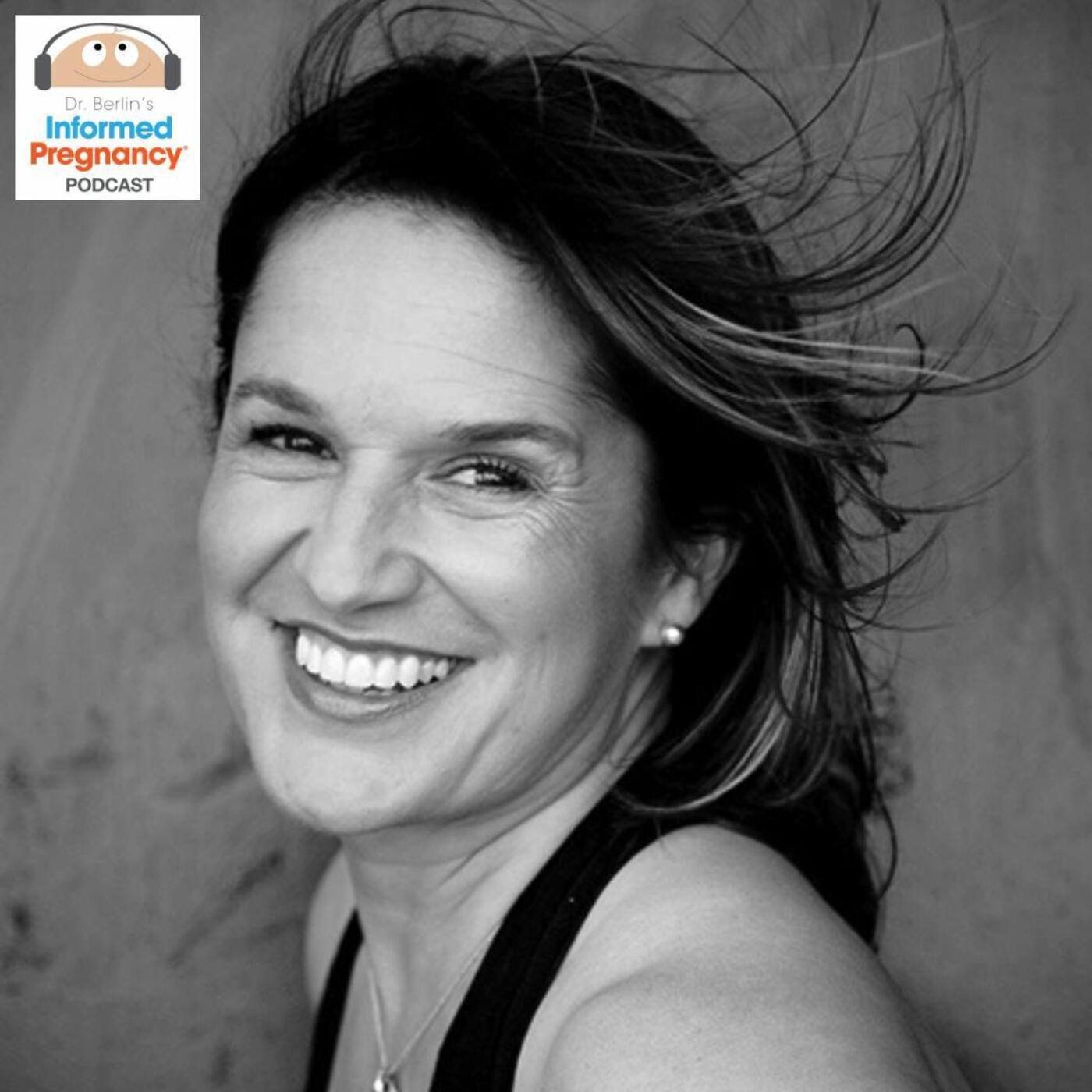
Certified doula, yoga instructor, massage therapist, aromatherapy practitioner, and mother of two, Rebecca Benenati discusses unique challenges and solutions for doulas and their clients during the covid-19 pandemic.

Learn more about your ad choices. Visit megaphone.fm/adchoices
See Privacy Policy at https://art19.com/privacy and California Privacy Notice at https://art19.com/privacy#do-not-sell-my-info.
Key quotes
“Yeah, I really think I mean, the yoga definitely keeps my body strong and flexible for being a doula.”
“There's not a too early or a too late to call me or text me or reach out to me, and that's my work. That's my job.”
“I once had a woman, she really was just squatting, you know, lower and lower to the ground, but stopping very slowly. And I was behind her supporting her hips. And before I knew it, I was squatting as low as she was squatting. So we ended up going all the way down together with me behind her.”
“And so having that sense of community is one way to really calm the anxiousness.”
“So I think we have to tune into trusting our bodies. As women, we have to trust that we know what's best for us.”
Related episodes
- Ep. 449 Birthwork & Motherhood with Jennifer Campbell
- Ep. 427 Birth & Baby with Elite Certified Doula Kristin Revere
- Ep. 38 Becca Gordon
- Ep. 230 Laughter Yoga with Jamie Poster
Transcript
AI-generated transcript with speaker labels — may contain errors, especially names and medical terms. Dr. Elliot Berlin, DC appears in blue; Rebecca Benenati in orange.
Download PDF of the Transcript
Dr. Elliot Berlin, DC [1:13] Welcome to the informed pregnancy and parenting podcast. I'm your host dr. Elliott Berlin today we're gonna talk about doulas what doulas do and don't do and what they could and Possibly can't do during a pandemic My guest today is a yoga instructor with extensive training and experience and personal training massage Aroma therapy meditation and she's a certified doula and mother of two. What don't you do Rebecca Beninati? Welcome to the podcast
Rebecca Benenati [2:04] Thank you. I'm so happy to finally be sitting with you and having this time together
Dr. Elliot Berlin, DC [2:10] Me too, and you have a rich background of things that you do I want to talk about some of that before we get into the do the work How did you get started in all this?
Rebecca Benenati [2:20] Well, I grew up in Santa Fe, New Mexico And I think that starts a good foundation for healing arts growing up in a place like that Where my mother actually got me into acupuncture and Getting chiropractic treatments and those kinds of things as a teenage girl I was a gymnast and true leader So I had my fair share of things that I needed to have worked on in my body So I think it started back then as a teenager and then when I moved to LA in 1991 I found myself joining a gym here just to kind of start meeting people and I ended up working at the gym got a job there and was very interested in Seeing how the personal trainers that I was managing were helping people with their
[3:13] Well-being with their bodies their their wellness and so I went on to get certified as a personal trainer first And then during that same time I was employing some massage therapists at the same gym and There were two women that were just absolutely extraordinary Massage therapists who I am still friends with today and it was their body work that made me want to go learn how to Do the same thing. So then I went to massage school back in like 1993 or four and then I found yoga. I found yoga around that same time a Friend of mine dragged me to a class and it was as close as I could Get to still being able to do things that were gymnastics related and felt similar
[3:58] And so I started taking two classes a day got really into it and then did my first teacher training in 1992 and went on and took several trainings after that
Dr. Elliot Berlin, DC [4:11] Yeah Incredible that you just see something and you like it and you just go get it I'm gonna do that because you talk about each of those things like they're just a moment But you know becoming a personal trainer is a commitment and massage school is a commitment They each take time effort resources and they're different from each other, but you start to build this well-rounded Machine where you have so many different tools in your tool belt to help somebody with their health and wellness I'm fascinated by gymnastics. I Never did any gymnastics. Nobody in my family ever did gymnastics It was always something you just sometimes see on TV How old were you when you started doing gymnastics and what types of gymnastics were you doing and when did you stop and why?
Rebecca Benenati [4:55] Oh, yeah, I started when I was about I mean, I think Well, my mother actually would say I started in the womb because yeah, she said I was on my way out and I decided to flip sunny side up. And so she said at that moment that she knew I was going to be a gymnast. And I guess so it started there, but on earth with my feet on the earth, probably when I was around five, I really started, you know, somersaulting and those kinds of things. And then at seven, I started going to my first classes and training and I only really did it recreationally until I was about 15. And then I stopped and didn't actually do anything, but it was in my blood and I could
[5:34] still do round off back handsprings. And that was the only thing that mattered to me is a round off back handspring. Then life was good.
Dr. Elliot Berlin, DC [5:42] I mean, my girls do it and my youngest son, and it's kind of amazing to watch them progress over time. And and one of them in particular, she puts a lot of effort into her practicing and we have a big trampoline outside and it's incredible to watch what she can do. But on the flip side, I do see a lot of people in the office as a chiropractor who either injured themselves doing gymnastics when they were younger or more commonly, actually, I'll see them get back on the trampoline. Now that they have a couple of kids and do some kind of maneuver that they used to perfect, but haven't done in a long time and like land on their head or something like that.
[6:20] And they get these awful injuries. So it seems to be kind of a if you're doing it right, it's kind of amazing. And the people that I see who have been doing gymnastics for a long time, they all look really healthy, like very fit. But also I see the injuries when you stop. Was it a conscious choice to no longer want to do it?
Rebecca Benenati [6:41] Or, I mean, I just got into cheerleading and so I was doing enough of it in that. And then I just got into life and didn't really think much about it. And I certainly never, ever actually wanted to compete or anything like that. So it was just more about feeling good in my body. And honestly, that's why yoga just was the perfect thing for me to find in my life, because, you know, keeping my spine limber and being able to do back bends, and I certainly don't do round off back handsprings anymore. I leave those for my daughter, but, you know, it feels good in my body to still be able to be limber and loose and flexible and, you know, not so cautious about how I move my aging body in life, especially as a doula,
[7:24] I have to say.
Dr. Elliot Berlin, DC [7:25] You know, it's kind of amazing now that you say that when I attend birth, so I'll sometimes see doulas and even midwives. I was just at a birth recently with a patient and right before she gives birth, like maybe for the last 15 minutes, wherever she is, she drops down onto the floor and for some reason does the last part of labor on the floor, not on a bed, not on any other piece of furniture, just on the floor. And she pushes her baby out on the floor. She has five kids and it's been that way for every single birth. And most of her births were in the hospital. So they lay sheets everywhere. They just start putting sheets everywhere. And then the last one was at home in her own home.
[8:04] But I just remember one of those births was attended by a midwife in the hospital and when mom dropped down on the floor, the midwife was able to just sit there on the floor, kind of patiently waiting and just leaning her body this way and leaning her body that way. Getting really low down to the ground to be able to just check and see what's happening without making the mom have to move at all was incredible. And I see that sometimes at birth also with doulas, how you guys can get into these really interesting positions and hold it for a while and not be in pain. I'm in pain watching it. You guys seem really comfortable. I envy that.
Rebecca Benenati [8:41] Yeah, I really think I mean, the yoga definitely keeps my body strong and flexible for being a doula. I once had a woman, she really was just squatting, you know, lower and lower to the ground, but stopping very slowly. And I was behind her supporting her hips. And before I knew it, I was squatting as low as she was squatting. So we ended up going all the way down together with me behind her. And then on the way up, thankfully, the doctor slipped a chair underneath me and said, Rebecca, why don't you sit down? And my client sat down on my lap and continued to labor on my lap. And that's like, you know, if you remove the laboring woman out of that equation, I'm doing like hardcore squatting exercise.
[9:23] You know, so yoga definitely keeps us healthy and fit for the job.
Dr. Elliot Berlin, DC [9:28] Yeah, that also reminds me at that same person at her fifth birth, I just happened to be behind her when she dropped down onto the floor. And I ended up being like her birthing stool, like she was pushing back against me the whole time. I was so uncomfortable and I actually made a commitment to myself. I'm like, maybe I should start stretching more. Yeah, yeah, you know, you also do aromatherapy, which is an interesting art on its own. How did you get involved in that? And in what ways do you use it? in your work?
Rebecca Benenati [10:01] Yeah, so when I was in massage school is when I first really got into them. Again, my mom was into all of that stuff, but when I was in massage school, I got way more interested and realized that, you know, it would be something nice to offer in the massages. Now it's so mainstream. I mean, everybody uses essential oils, but this was back in the day in the early 90s. And I actually was trained by a woman who has a really interesting story. Her company is no longer around, but she is a very fair-skinned woman who ended up having a burn on her face from a wood stove that backfired on her, and she burned her entire face. And her Navajo Indian grandmother
[10:39] gave her lavender compresses to heal the wounds on her face. And if you saw her today, you could not tell at all that her skin had been burned in any way, shape or form. And it was purely lavender oil that she used to heal. And hearing her story, seeing the pictures, and working with her line of oils, I just got very interested in the healing properties of them. So I use them now for my own life, for my household, for various things. And as a doula, I limit it to pretty much just three or four oils, unless my clients have something specific that they love that works well with them and is safe. But I use them to help with nausea. I use them to just kind of bring in
[11:21] a nice fragrance for them to feel relaxed, usually something like lavender. And not always topically, usually just to kind of wave underneath their nose, to inhale to help with various things that go on during labor, nausea, emotions, et cetera.
Dr. Elliot Berlin, DC [11:38] I mean, sometimes when we're doing aromatherapy in a labor and delivery room, the nurses, I feel like, like to gather and linger in the room a little bit. They're like, wow, it smells so nice in here. It's just calming for everybody. Yeah, they really love it. I think if you know how to use them, you could really get the benefit of each different oil and have the right impact, whether it's for fear or for anxiousness or even different types of pain. They've proven to be really powerful.
Rebecca Benenati [12:10] Yeah, and I do, I love that some of the local hospitals actually carry some oils there for you to use. That's really awesome. That's a big change. Yeah, it's a big change. And also, from my education, I had the resources that I had, but recently an anesthesiologist turned me on to using just lemon oil for nausea. And so now I added that to my repertoire of oils.
Dr. Elliot Berlin, DC [12:34] Well, that's good to know even in the first trimester.
Rebecca Benenati [12:36] Yeah, yeah.
Dr. Elliot Berlin, DC [12:38] All right, wealth of information. We're gonna take a quick break and we will be right back with Rebecca Benanati.

Dr. Elliot Berlin, DC [15:10] Welcome back to the Informed Pregnancy Podcast. We're talking to Rebecca Benanati. On top of everything else you do, you're a doula. When did you do doula training?
Rebecca Benenati [15:21] My first training was in 2008 with Judy Chapman, actually. I used to run the programming at Cedar Sinai and I did a weekend long training with Judy and Jenna Denning and I was sort of guided to do the training as a yoga teacher. I was teaching prenatal yoga at the time and one of my students asked me after class if I would be interested and willing to assist her at her birth and I honestly had never thought of it. It never crossed my mind. In my own two births I did not have a doula. Both my babies came early. I had no doula, I had no baby shower, I had no nothing and hadn't thought about it really. I really did not ever think about being in the delivery room with another woman until
[16:13] she asked. I was excited to go get that first training and then I went on and of course studied with the one and only divine, Anna Paula Markle. I really should be like, ah. Yeah, I know. I did Anna Paula's training twice and audited probably another two times just to be around her and now I'm so grateful. She actually has me come and do the doula teacher trainings with her and I teach the comfort measures. So it's pretty exciting to have a full circle like that.
Dr. Elliot Berlin, DC [16:48] I mean that's amazing since you have so many comfort measures that you're seasoned in.
Rebecca Benenati [16:54] Yeah.
Dr. Elliot Berlin, DC [16:55] It's just great for the doulas. My wife and I did our doula training with Anna Paula and it definitely was a game changer. I had been going to births before that to do some body work and I ended up at a few births where I felt like I should know more. I know as much as I need to about doing body work but just situations that would come up where a person would look at me and say, say something useful. I'm not that guy, I rub stuff and crack things. So I thought it would be great to do the training and have more to offer at a birth and be better poised to be in there and then my wife said, great, I'll do it with you and it was really amazing to do it together and I really went into my first
[17:38] birth after the training feeling much more confident in a different way. I'm in the kind of unique situation where sometimes I'm doing body work and there's a doula there and we did a birth also like that. And I have this incredible ability to watch amazing doulas like you and other very well seasoned doulas just do their magic and just pick up little tips and bits of magic from them and be able to bring them into the next birth that I go to.
Rebecca Benenati [18:09] So I learned some magic from you at the birth you're referring to watching you do your body work in such a totally committed, your endurance and your consistency was just amazing to watch. And so I actually learned so much magic from you.
Dr. Elliot Berlin, DC [18:29] Oh, thank you. It's mutual. I think any endurance I had came from coffee, but bodywork is definitely my thing. When you teach comfort measures, what kind of things would somebody expect a doula to do comfort measure wise?
Rebecca Benenati [18:45] Well, I mean, there's the typical, there's the, you know, any kind of massage that the laboring woman wants until she doesn't want it anymore. Right. And so any type of massage really, but the comfort measures themselves, like based on Kenny Simkin and different techniques that even Annapala and other birth workers have come up with over the years, hip squeezes and leg shakes and shimming the hips, like what we call a washing machine, doing light feathery touch, various things. But because my background is in massage therapy, a little bit different than the way I witnessed you anyway. I'm very, very physical. You know, I really believe that the laboring woman, as she wants to move,
[19:33] should be inspired to continue moving like that. I'm, you know, doing whatever is necessary to help them just keep moving their pelvis around, swaying, slow dancing, cat cow on in different forms on the hands and knees or leaning over a piece of furniture or a shower or whatever it is. So a very, very active comfort measures for me until, of course, like I said, the laboring woman doesn't want that anymore. And then it's. hands off, and then the support turns to just, you know, positive affirmations and encouragement and verbal support and a lot of eye contact.
Dr. Elliot Berlin, DC [20:08] I mean, it's interesting that you say that it could be seconds where in one second she's wanting and enjoying some medium to deep tissue body work, literally in the middle of labor, and two seconds later maybe a surge comes through or hormone shift, and it's like, oh my God, oh my God, take your hands off of me. And then, but it could cycle around, sometimes it will take a 20 minute break and then she'll be in the mood for either more body work or different body work or body work on a different area.
Rebecca Benenati [20:39] Yeah.
Dr. Elliot Berlin, DC [20:40] And so, again, it's great that you personally have so many tools in your tool belt. I think that a lot of doulas who aren't massage therapists, they do more of a comforting touch than an actual massage, and it's really nice. You're kind of like you and me bottled into one.
Rebecca Benenati [20:58] Yeah.
Dr. Elliot Berlin, DC [20:59] Doula plus. What other kind of things, when someone's thinking about hiring a doula, what kind of things would they expect during the pregnancy to get ready for birth? And you already talked about some of the things during labor, but at what point do you normally meet up with them in labor, and are there things that you do after the baby's out, or is that like when your contract is over?
Rebecca Benenati [21:23] Well, so when people work with me, I provide support as soon as they sign my contract. I'm available. So that means constant texting throughout the pregnancy, anything that comes up, and I encourage them. I actually have it in my contract, and it's bold-faced and large print that communication is really important to me, that I don't want to not hear from my clients. One of the things that I struggle with to make very clear for my clients is that they can't bother me. There's not a too early or a too late to call me or text me or reach out to me, and that's my work. That's my job. So it's support through text messages. It's support through phone calls.
[22:06] Right now, it's support through FaceTime check-ins or whatever is necessary, but it's ongoing support and just encouragement that they're doing the right thing, just little check-ins. And I ask them to send me pictures of their growing belly if we haven't seen each other in a little while. But I think one of the things that makes it unique to my work is that I teach prenatal yoga. And so a lot of times I get to see my clients weekly, a couple times a week if they commit to taking my class. So I'm not just seeing them maybe two times per my package. I'm seeing them twice a week throughout their entire pregnancy, and I get to watch their bellies grow.
[22:45] I get to see how their bodies are adjusting to the changes, how they're adjusting to the extra weight on their joints, how their bodies are holding up, how their sacrums are holding up, different things. So I think that's one of the perks in my particular line of work. The way my approach is, is that I get to see them. I get to actually help prepare their bodies for birth.
Dr. Elliot Berlin, DC [23:08] That sounds great. I needed that as a dad. Watching my belly grow. And then what about afterwards?
Rebecca Benenati [23:19] Afterwards, my contract ends, you know, well, at the birth, I usually stay around two hours after the birth to make sure that they've gotten a good latch and of course I stay longer if there's any issues at all. But within those first two hours I stay, I help kind of just tidy up the room, organize their things for them so they can just enjoy being with the baby, help them pack up and transition to postpartum room. And then the final visit in my package is a postpartum visit within the first month where I go back and check on the family, see how they're adjusting, check in, make sure there's no signs of any postpartum depression or blues or anything that I can help with.
[24:00] And also the really important part of that last visit is to relive the birth story because as you know, the labor is long usually and it's exciting. And then they meet their baby and life is completely different and all about the baby. And I really think that so many women are figuring out breastfeeding and in the middle of the night, they might have these little flashes of their birth and trying to remember and be sort of in awe and in shock and in fascination of what they just did to give birth. And it's like they're piecing it together while they're also tired and hormonal and bleeding and trying to figure out who baby is and what the needs are.
[24:43] And so the most important part of that followup visit, besides the depression screening and that is to help the mom put the whole story back together in her head so she can remember the chronological order of things and where things went a different way and how she She met each of those challenges in the birth and things that we did and highlight how strong she was. And also just, you know, anything that's unique and personal to each birth, just really highlighting those things for the couple, including letting the partner know that, you know, they were a strong, steady support in different things that they might have done during the labor to really be a solid, solid force of consistent energy for their woman.
Dr. Elliot Berlin, DC [25:26] Wow. You know, what's popping into my head is a VCR. I always had a VCR growing up. And then the DVR came out and we didn't have one. But people said they were so head over heels in love with the DVR, it was such a game changer. It was like a totally different league. And I see a lot of your clients and that's how they talk about you. They just love you. And they talk about you as being like a total game changer for their whole pregnancy and birth. And now I understand why. I mean, that's so powerful and beautiful what you do even after the baby's already out. And of course, all the things during pregnancy leading up to and during the birth. We're going to take a little break.
[26:07] We're in the middle of a pandemic, hopefully towards the end of a pandemic. And things have changed a lot for birthing, especially in the hospital, including limitations on who can come in with the laboring person. And so when we come back, I want to talk about how that affects labor support and doula care. Don't go anywhere. We'll be right back with Rebecca Benenati. Welcome back to the Informed Pregnancy Podcast. We're talking to Rebecca Benenati. Okay, so, you know, in the past few months, we're now, we don't usually say exactly when we record these. We're in June of 2020, starting, I guess, February, we entered the United States phase of the coronavirus pandemic.
[27:01] And things changed a lot for pregnancy, for labor and delivery, and a lot of it, we had to close our office for a while, people couldn't come in for care, and I felt bad. We were getting all these phone calls of people who were in a lot of discomfort or were at the end of pregnancy and wanted help getting their bodies ready for labor and delivery. And a lot of our patients, I mean, a bunch switched over from hospital birth to out of hospital birth, either because they didn't want to do labor and delivery in a mask or because they were worried about being in the building where all the people who had the coronavirus were going for treatment, or a lot of them simply wanted
[27:38] to bring certain support people with them. And hospitals had varying policies about it. Some didn't let any support with you, not even a partner or a doula, nobody. Other ones allowed one support person to come with you, but then they had to leave as soon as the baby was out. As things are unfolding, the policies, I think, are fluid, they're changing. But one thing's clear, most of the hospitals here don't allow more than one support person. So you sort of have to pick sometimes between a partner, a family member, or a doula, and a lot of the doulas are not able to attend birth right now in the hospital. In our first two segments, especially the middle segment, you talked about a lot of
[28:18] things that you do that are so physical with your client. Are there ways for people to still have doula support and labor when you can't be with them at the hospital?
Rebecca Benenati [28:29] Yes, absolutely. Yes. I really am so, I'm so grateful that I'm a teacher of yoga to start with as my initial background because I'm used to instructing people in what to do. And so I think that's been a huge positive in this pandemic virtual doula because I've been able to educate, teach, guide the partners to do exactly what the comfort measures are and giving them physical landmarks on the body to where to place their hands and how to stand and position their own bodies to be able to do those comfort measures safely in their own body for as long as they're going to be doing them. Because when I'm there physically, we'll go back and forth and swap.
[29:17] I'll do it and the partner will do it or whatever. But knowing that they were going to be the only one doing it and knowing how physical it is to be a doula support, I was able to, or I have so far and I will continue until this ends, educate and really teach the form of being a doula support physically for laboring women. So it is possible. And in teaching the partners how to do those comfort measures, you know, I'm also asking the women for feedback. Like, it does that feel good? And, you know, is that right? And we practice this ahead of time that way. Of course, obviously in labor, we're not asking any questions and we're not saying like, is that right?
[29:59] Does that feel good? We're not asking anything like that. So I've got to do extra preparing with them to make sure they know exactly where they're supposed to touch, why they're supposed to touch, when to touch, when not to touch, and then also be able to just go, you know what, wow, I learned all these comfort measures and my wife doesn't want anything. So then what to do. So in one of the births that I've attended during the pandemic virtually, the sort of tricky thing was how to have them on the screen and also not say anything to interrupt her vibe and be able to get his attention to come near so I could give him something to do. So that was a little tricky on the first one, but I figured it out.
[30:42] And so what we did was on the computer was FaceTime on her phone and that way he could have his phone so I could text him little tips and things to do. Well, that way she didn't hear any conversation.
Dr. Elliot Berlin, DC [30:56] Oh, that's so smart.
Rebecca Benenati [30:57] Yeah, it took a minute because I was like, oh gosh, how am I going to get his attention and I don't want her to hear me and I don't want to whisper and I don't want to, you know, it was very kind of challenging in those first couple hours and that birth lasted three and a half days. So by the end, we had a system down pat.
Dr. Elliot Berlin, DC [31:16] Wow. Is that prep work something that you have to do in person or I know the virtual part is when they're in labor and you're remoting in, but can you also do the preparation work remotely?
Rebecca Benenati [31:30] Oh, yeah, that's what I've been doing. And honestly, so maybe two years ago, I had somebody here in L.A. who hired me to give them comfort measures, privates, like a, you know, birth prep class, one on one for the couple. And they were going to go to New York to have their baby. And they were going to get there and they were going to find a doula once they got there. And they got to New York and for whatever reason, they couldn't find a doula that really was the right fit for them. So they asked me two years ago to FaceTime into their birth. And so I was able to get a sort of head start on this whole virtual doula thing a couple years ago. Now in that case, I did do in person teaching the partner what to do, but absolutely
[32:17] virtually, it works really well. And I do it as many times during pandemic. I mean, I'm meeting with my couples more than my package is usually allotted. So I'm maybe meeting with them three or four times instead of just the two times at their home, just to reassure them that they are prepared to reassure them that they know what to expect and to make sure that they know also kind of the virtual system. Like I said, it can be kind of tricky to navigate, like, you know, which camera and which phone and all of that.
Dr. Elliot Berlin, DC [32:49] Yeah, it's definitely a learning curve. And it's kind of amazing once you're put into that position, how much you realize you can do without physically being in the room, although it doesn't obviously totally replace being in the room. I've been finding that our patients, some of them are taking the quarantine or the shelter in place as enjoyable. Like, how often do you really get to during pregnancy, slow down and just, you know, be with your partner or have time for self-care? And I think that some people see it that way or at least choose to focus on that. And then a lot of other people are more anxious. They're taking the lockdown as being stressful.
[33:34] So, you know, in our office, I see that because they'll walk in very, very stiff, you know, for the first time back since we reopen and leave a completely different person. But are there things that you're able to do to help during the pregnancy or during the birth to target that anxiousness, that extra fear?
Rebecca Benenati [33:54] I mean, a lot of breathing. Like I said, my yoga class, the other part of the calming the nerves is making sure that they do not feel alone. And so if that means me getting on the phone with them more, but also when they take my class, they're in Zoom times and virtual time, they're seeing other women, you know, in my classes in person, they get to know each other really well. But on Zoom, they've been able to meet each other that way, which is awesome. And they're, you know, all open my camera and hear them kind of talking with each other before I start the class. And so having that sense of community is one way to really calm the anxiousness.
[34:38] And I've been doing some customized recordings, meditation recordings for my clients using their names and the sex of their baby and their partner's names and the situation that they're in and knowing what their own individual worries are. So I've been recording some customized meditations and just sending those along to. give them something to help stay calm.
Dr. Elliot Berlin, DC [35:03] Yeah, I mean, there's only so much you can do, but those are some great tips, and hopefully we'll be able to be back surrounding our patients face to face in the not too distant future. My other question is, I know several of our patients have switched from birthing in the hospital to out of hospital birth. I would say that most of them, the ones that I have in mind, always had a thought about out of hospital birth. It wasn't a brand new concept, but maybe they, let's say for the first baby, they thought maybe I'll have this one at the hospital and then see how it goes before I choose to do an out of hospital birth. Or maybe they were just 60-40 convinced
[35:42] that the hospital's the more comfortable place for them where they feel safer, but not by much. And then once the pandemic broke out, they went 60-40 the other way. Do you have advice for people who are trying to consider alternative birth options during these times?
Rebecca Benenati [35:58] I mean, my advice is to honestly hire a doula, seriously. Or I mean, get somebody that is gonna go with you consistently back and forth. I just supported a couple who literally had home birth options lined up and ready to go and hospital options lined up, ready to go. And day to day they went back and forth and back and forth. And I was the only constant during all of the considerations and during all the sort of worry and weighing out the pros and cons of both for various reasons. And I think that to have somebody in your corner that is consistent is really important. And also, I mean, you know, and there's been a lot of babies born during the pandemic,
[36:51] and it actually is safe to go to the hospital. And there are ways to get support. And I think you just have to do the thing no matter what. You have to do the thing that feels authentic to you. One of the births that I just supported, she was lined up to go to the hospital with her favorite doctor that she loves and adores. But because pandemic worried her, all the health concerns, rightfully so, she switched to a home birth and ended up at the hospital, ended up being transferred. So I think we have to tune into trusting our bodies. As women, we have to trust that we know what's best for us. And if you've never wanted a home birth and you know you feel comfortable at the hospital,
[37:32] then go with that. It's as safe as it can be. The doctors, the nurses, the medical staff are doing an amazing job keeping it safe. And also the same for midwives. I mean, if you really think you wanna be at home and you wanna give that a go, surrender to it. I think you have to surrender to your choice and stand behind it and also still be open that things might still shift just as they do in pregnancy pre-pandemic.
Dr. Elliot Berlin, DC [37:58] That's well said. I always am a big believer you gotta give birth where you feel safest. And then there's also options to kind of think outside the box. So we had a few patients hire a midwife to labor with them at home knowing that they would go to the hospital eventually, but for the bulk of their labor to be surrounded in person by their doula, by their midwife, by other support people, and just go to the hospital for the later parts and feel safe knowing that they were being monitored and the baby was being monitored during the time that they were laboring at home. So interesting times call for interesting solutions and I love what you've been able to do
[38:36] in terms of your virtual doula service and your virtual yoga classes. Very innovative and leaves expecting moms with support that might've disappeared if we hadn't had the innovation and we hadn't had the technology available to us.
Rebecca Benenati [38:51] Yeah.
Dr. Elliot Berlin, DC [38:52] I learned a lot from you and I always do. And I appreciate you for coming on and sharing your magic with our listeners. Where can we find you online?
Rebecca Benenati [39:02] Well, you can find me at wellbornlifestyles.com. That's my website and I'm on Instagram as Rebecca Benanati and also Wellborn Lifestyles. And just to give you a quick little understanding of the name Wellborn Benanati, bene means good or well and nati means born. And so I just sort of did a play on my ex-husband's last name that I'm keeping because of my children. It was sort of a way to create a business name for myself but it also beautifully supports my whole business being wellborn and being born to live well.
Dr. Elliot Berlin, DC [39:37] That's beautiful, I had no idea. I thought Wellborn Lifestyles by itself was a great name and the meaning behind it, I did not know. Thanks for joining us. At home, thanks for listening to the Informed Pregnancy podcast. If you like our program, please share us with your friends. Leave us some feedback in your podcast app. And for more pregnancy and parenting related media, visit us online at InformedPregnancy.com.
Want more pregnancy + parenting? Start your FREE TRIAL of Informed Pregnancy+ and get access to all our curated pregnancy and parenting content — original series, iconic birth films like The Business of Being Born, prenatal workouts and more.
