
October 3, 2024 · 36 minutes · Episode 427
About this episode
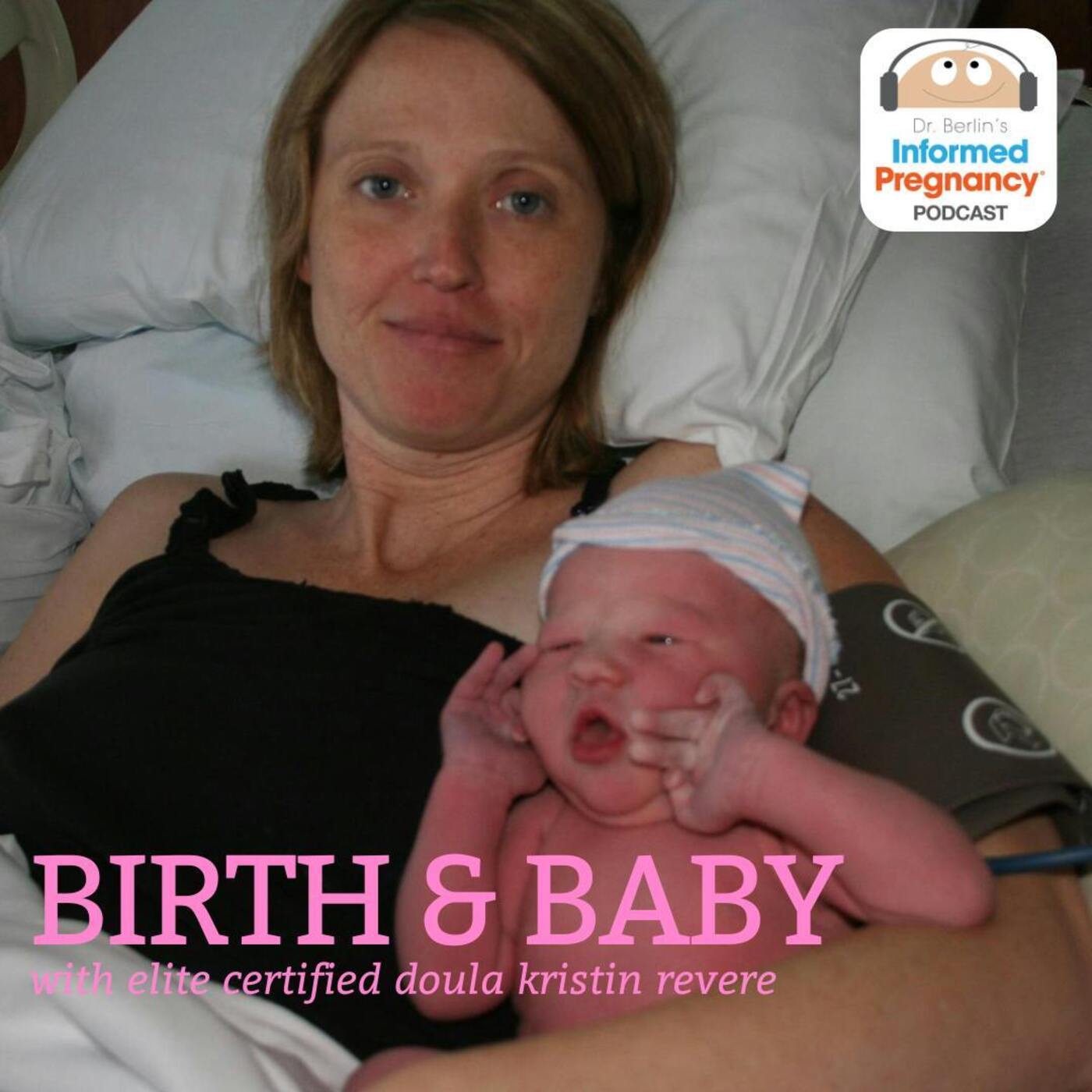
Kristin Revere is an elite certified birth and postpartum doula, newborn care specialist, and owner of Gold Coast Doulas in Grand Rapids, Michigan. She joins the podcast to share about her work and her new book Supported: Your Guide to Birth and Baby.

Connect with Kristin:
Tired As a Mother (a virtual class for mothers during pregnancy or very early postpartum)
Blog Birth and Baby: One Size Doesn’t Fit All
Key quotes
“And as an agency owner, I still take clients myself, but I am the matchmaker for clients and the doula is on my team. So I like to ask a lot of questions in that initial call, whether it's a birth client or a day or overnight postpartum client to try to find the best fit for the family.”
“So for me, movement was key. Having my husband be there for emotional and physical support. He had our workbook from Lamaze and was trying different positions and hip squeezes. And so, you know, just listening to your body and if something didn't feel good or if my baby wasn't responding to a particular position that I was in, then I made changes.”
“It certainly put me, I feel like, in a position that I can have a lot of empathy, although I can't relate to families who had their children in the NICU for six weeks, for example. Just having some of the feeding struggles and knowing that my plan didn't go as I had prepared for, you know, just allows me to be a better doula.”
“One of the earliest things that I tell my doula clients to do is plan for child care, find a nanny or a pair or a center and look into childbirth education if they choose to prepare in that way, hire a doula early,”
“I certainly could have used doulas. And I think that you mentioned, again, there's the lack of the village. People are moving for jobs and may not have family nearby or they're delaying pregnancy and they have aging parents that they're also caring for that can't necessarily help with child care.”
Related episodes
- Ep. 435 Jackie Amézquita: After Birth
- Ep. 442 Jessica Zadeh: Before Birth
- Ep. 443 Jessica Zadeh: After Birth
- Ep. 446 Perinatal Exercise with Sarah Zahab
Transcript
AI-generated transcript with speaker labels — may contain errors, especially names and medical terms. Dr. Elliot Berlin, DC appears in blue; Kristin Revere in orange.
Download PDF of the Transcript
Dr. Elliot Berlin, DC [0:12] Welcome to the Informed Pregnancy and Parenting Podcast. I'm your host, pregnancy-focused chiropractor, Dr. Elliot Berlin. My guest today is an elite certified birth doula, newborn care specialist, elite certified postpartum doula, and owner of Gold Coast Doulas in Grand Rapids, Michigan. She's also co-author of the new book, Supported, Your Guide to Birth and Baby. Kristin Revere, welcome to the podcast.
Kristin Revere [1:02] Thanks for having me, Dr. Berlin. I'm excited to chat with you today.
Dr. Elliot Berlin, DC [1:06] Ah, it's such an honor. And you have so much experience both on the side of being a mom and parent and supporting so many moms and parents. And I want to pick your brain on everything that you know and share some of those pearls of wisdoms that you've picked up along the way with our audience. But let's start at the beginning. Where are you from originally?
Kristin Revere [1:24] I'm from Michigan. I call Grand Rapids home. I was born in the Lansing area and lived out west for part of my childhood as well as the Pacific Northwest.
Dr. Elliot Berlin, DC [1:36] You sound a little Michigan-y.
Kristin Revere [1:38] Yes, I do have that Michigan twang.
Dr. Elliot Berlin, DC [1:42] Yeah.
Kristin Revere [1:42] A bit of the Midwestern drawl.
Dr. Elliot Berlin, DC [1:44] What's winter like in Michigan?
Kristin Revere [1:46] Cold. Although global warming is real, so it's been warmer the last several years than usual, but we get lake effect across Lake Michigan and it's windy and, you know, black ice and bitter cold most winters.
Dr. Elliot Berlin, DC [2:06] I mean, if things keep up, it'll soon be the new Southern California.
Kristin Revere [2:11] Exactly.
Dr. Elliot Berlin, DC [2:11] Unfortunately. Sadly. Okay. Now you have Gold Coast doulas. What did you originally plan to do with your life? Because very few people are like, you know what? I think I'm going to be a doula.
Kristin Revere [2:22] That was not in the cards for me. I went to school for journalism and public relations and worked in public relations out of college and loved the excitement of events and working with multiple clients. Also did some political work within that agency. And then I moved on to advertising sales. This will date me, but I did sell Yellow Pages for quite some time.
Dr. Elliot Berlin, DC [2:52] Like actual Yellow Pages?
Kristin Revere [2:54] Yes. Not yellowpages.com. Actual the phone book for eight plus years. So yes, it was a blast. I loved it.
Dr. Elliot Berlin, DC [3:06] I kind of missed those Yellow Pages. It was fun to read through.
Kristin Revere [3:09] Yeah. And I worked with, you know, front cover ads, back cover ads, and every type of business. So as a former journalism major, I loved asking questions. So I learned a lot about many different industries, also sold for magazines, and did some radio sales, and then transitioned to political fundraising.
Dr. Elliot Berlin, DC [3:35] Wow. That's a whole different type of sale.
Kristin Revere [3:38] Yes.
Dr. Elliot Berlin, DC [3:38] But yeah, some similarities.
Kristin Revere [3:40] Yeah, similar but different.
Dr. Elliot Berlin, DC [3:42] And I think it's neat to have a profession where you can sort of have different flavors and varieties. Just keeps your mind stimulated in different ways.
Kristin Revere [3:51] Exactly. I get bored easily, so.
Dr. Elliot Berlin, DC [3:53] Well, now you don't do any of that, right? So how did you go from that to where you are now?
Kristin Revere [4:00] I was working on a governor's race during my first pregnancy, and I really became fascinated with maternal health and wanted to, you know, have all of the services related to birth and baby at my fingertips, and that didn't exist in my community. So I slowly transitioned to that work. Although my first three years of my agency, I did have a full-time job.
Dr. Elliot Berlin, DC [4:29] So you became interested in it while you were going through it?
Kristin Revere [4:33] Like through my pregnancy.
Dr. Elliot Berlin, DC [4:35] Yeah. Yeah. And what was missing for you? It sounds like you didn't have what you wanted.
Kristin Revere [4:42] So I had kids later in life. I was pregnant at 36 and 38. And so many of my friends had kids quite some time before I did. So the information that they were giving me was a bit outdated during that time. And I switched providers. They switched from an OB to a nurse midwife and my midwives recommended a Lamaze class. I wanted to have an unmedicated hospital birth. So as I was looking at taking breastfeeding classes and all the preparation, working on a busy political campaign and traveling state, I found that it was just taking me so long to research and really wished that an agency existed like Gold Coast Duelas in my area.
Dr. Elliot Berlin, DC [5:36] So then it sounds like you started to create an agency to fill in the gap for other people, but also be working a corporate job and having a baby.
Kristin Revere [5:47] Yes. So I did not actually get full force into the work until I had my son. Two years after I started getting into breastfeeding advocacy, creating events, really understanding all of the birth and baby options after my first pregnancy. And then became certified to teach pregnancy and childbirth classes right after my son was born. In fact, I signed up for the class during pregnancy and then went out to the training with my whole family and taught sacred pregnancy classes. And then my students wanted me to be their doula. So I thought as a hobby, I might take a client here or there, a student that I was especially connected with. And I started working with a doula collective to begin with, where I taught my classes
[6:45] through and I fell in love with it. After the first birth, I was hooked and really loved being able to meet clients where they're at and support families without judgment. And every birth that I attended, I fell more in love with the act of service that a doula provides.
Dr. Elliot Berlin, DC [7:08] You know, I was a speech and drama major and I did a lot of journalism in undergraduate. And now that you're saying these things, it does kind of strike me in my mind that having a journalism background probably is helpful for being a doula too, in terms of interviewing somebody about what it is that they want and what kind of experience they're trying to put together, what their needs are that are or are not being met. I could see how that background would be helpful.
Kristin Revere [7:36] Absolutely. Uncovering what the need is. And as an agency owner, I still take clients myself, but I am the matchmaker for clients and the doula is on my team. So I like to ask a lot of questions in that initial call, whether it's a birth client or a day or overnight postpartum client to try to find the best fit for the family.
Dr. Elliot Berlin, DC [8:02] So what are the different services, just broadly, that Gold Coast doulas offer both locally and virtually?
Kristin Revere [8:11] Great question. So we locally in West Michigan offer birth doula support, day and overnight postpartum doula support, hypno birthing classes, a variety of other classes, including breastfeeding, comfort measures, newborn survival. And we also have some virtual services like sleep consulting. We work with clients all over the world. And I have an online course that I co-created with Alyssa van der Klaas called Becoming a Mother that preps for birth and baby. And your video is actually in the course. So thank you very much.
Dr. Elliot Berlin, DC [8:56] Honored.
Kristin Revere [8:57] And yeah. And then we, as you mentioned earlier, launched a book and so a birth and baby guide called Supported Your Guide to Birth and Baby. And so yes, we have a mix of in-person and virtual services. And then my business did expand to northern and southwest Michigan for day and overnight postpartum doula support.
Dr. Elliot Berlin, DC [9:25] Wow. So you have a lot of offerings, both locally and virtually accessible to anyone anywhere, some of them. And you have now exposed your wealth of experience and knowledge. So we're going to have to draw some practical tips out of you. Before we do that, let's take a little break. When we come back, I want to find out more in depth about your own experiences with pregnancy, birth and early parenting. And then we'll come back and pick your brain for useful take-home tidbits. We'll be right back.

Dr. Elliot Berlin, DC [11:29] Welcome back. We're talking to Kristen Revere from Gold Coast Duelists. Okay, you have two kids you said you started a little bit later, and your experience was that while you were pregnant, you didn't have some of the resources available to you that you were needing, wanting, and hoping for. Tell me from the beginning, so what did you know going in, and what kind of sources of information did you find valuable?
Kristin Revere [11:59] Yes, so again, I interviewed a lot of my friends and watched documentaries. Many of them are on your streaming platform.
Dr. Elliot Berlin, DC [12:11] We have a lot.
Kristin Revere [12:12] Yes, and read many books, including Hypnobirthing, and I am a person who likes to over-prepare. And I didn't know what doulas were. With my first pregnancy, I hired doulas with my second, but I did take Lamaze classes and worked with nurse midwives who gave me a lot of attention and longer appointments than I originally had with the OB that I had worked with with my first pregnancy.
Dr. Elliot Berlin, DC [12:42] So in your first pregnancy, that's when you switched from OB to midwife?
Kristin Revere [12:47] Exactly.
Dr. Elliot Berlin, DC [12:48] Mid-pregnancy?
Kristin Revere [12:50] Early pregnancy.
Dr. Elliot Berlin, DC [12:51] And how did you become aware that that's what you wanted to do, or the difference in the model of care?
Kristin Revere [12:57] So I asked friends, and a friend of mine had used this particular midwifery group. So I made some phone calls, and they accepted me. It was still early enough in my pregnancy that I was able to easily make a switch and just felt like I was more supported in my wishes for an unmedicated hospital birth with the midwifery model.
Dr. Elliot Berlin, DC [13:24] Were you more of a natural person to begin with than a medical person?
Kristin Revere [13:28] Absolutely. I had a fear of hospitals at the time and didn't want to feel like a patient, but also due to my age and my husband's comfort level, we felt like the hospital was the best place for us.
Dr. Elliot Berlin, DC [13:44] Okay, so trying to sort of get the benefits of the medical safety blanket of a hospital without the feelings, especially for you, if you have a fear in that setting.
Kristin Revere [13:56] Right.
Dr. Elliot Berlin, DC [13:57] Without triggering that autonomic reflex where you go into fight or flight mode.
Kristin Revere [14:01] Exactly.
Dr. Elliot Berlin, DC [14:03] Okay, so then no doula in the first pregnancy?
Kristin Revere [14:07] No doula in the first.
Dr. Elliot Berlin, DC [14:09] As someone who was over 35, did you feel like your pregnancy was handled differently by the midwives?
Kristin Revere [14:18] Not initially. They had mentioned, because I saw multiple midwives in the practice, that I was having the perfect pregnancy. Although again, as I mentioned, I was working in the governor's race, so I was traveling quite a bit. My events were at night. I had high stress, but things were going well up until 37 weeks.
Dr. Elliot Berlin, DC [14:38] What happened there? I developed preeclampsia. Ah, what did you notice? What were your symptoms?
Kristin Revere [14:45] I never had a headache, a little bit of swelling, but it was more of the protein in my urine.
Dr. Elliot Berlin, DC [14:55] So you just found it through a routine doctor's visit or midwife visit?
Kristin Revere [14:59] Exactly, yes. So I wasn't complaining of anything at the time.
Dr. Elliot Berlin, DC [15:05] So it was a surprise to you?
Kristin Revere [15:06] Yes, and again, as a planner, I didn't love hearing this news when everything was on track through most of my pregnancy, so I was put on modified bed rest.
Dr. Elliot Berlin, DC [15:19] But you're already 37 weeks, so already in the zone.
Kristin Revere [15:23] Right.
Dr. Elliot Berlin, DC [15:24] And was it modified bed rest with a plan to monitor or to induce a 39, or what was the goal?
Kristin Revere [15:33] Yes, so monitored, and over time there were more signs, and so it was important to induce. And I did get induced at 39 weeks.
Dr. Elliot Berlin, DC [15:45] What was the method of induction?
Kristin Revere [15:48] It was a cervical ripener.
Dr. Elliot Berlin, DC [15:50] Okay. At the hospital?
Kristin Revere [15:52] At the hospital.
Dr. Elliot Berlin, DC [15:53] Like cervical?
Kristin Revere [15:55] Yes, cervical.
Dr. Elliot Berlin, DC [15:56] Okay. What did it feel like for you?
Kristin Revere [15:59] It felt fine for me. I obviously was worried from my Lamas class hearing about inductions and how that can lead to other interventions that I didn't want, and also certainly didn't want a surgical birth. And so I was worried. And my husband has a daughter from a previous marriage, and she's 22. And his experience was more of that medicalized. She was a surgical birth. So he had more experience in that area than I did. And I had feared even getting an epidural in the needle, you know, in my spine. So I wanted to do whatever I could to avoid. So used a lot of visualization and positive affirmations to get me through that slow time of induction. I should say that my membranes were also swept in the midwife's office
[16:59] before I went into the hospital. And I was, you know, slowly making some progress, but my baby wasn't responding well to the servodil. And so they took it out. And I was contracting, fortunately. And so…
Dr. Elliot Berlin, DC [17:20] Just to be clear, they took out the servodil, not the baby.
Kristin Revere [17:23] Servodil, yes.
Dr. Elliot Berlin, DC [17:26] At this point, I would love to pause for a second in your story. This is one of those moments where I feel like you as an individual, but you as a professional could offer a tidbit for someone because you're not alone. And a lot of people don't feel comfortable in the hospital. They feel anxiousness about being in a hospital, about, you know, just a tip for someone who knows that they're going to have a baby at the hospital, but they're nervous about it. And I know you mentioned visualizations, but more specifically, what could somebody do in that setting to kind of calm their mind and body down and get all the benefits of being at the hospital
[18:01] without having that intensity and emotion?
Kristin Revere [18:04] So for me, movement was key. Having my husband be there for emotional and physical support. He had our workbook from Lamaze and was trying different positions and hip squeezes. And so, you know, just listening to your body and if something didn't feel good or if my baby wasn't responding to a particular position that I was in, then I made changes.
Dr. Elliot Berlin, DC [18:33] And those things were helpful to you. Okay. Going further in your story. So the servodil baby was not responding. Does that mean like having decelerations in the heart rate or?
Kristin Revere [18:44] Yes.
Dr. Elliot Berlin, DC [18:44] Okay. So you took out the servodil and what happens next?
Kristin Revere [18:48] So it felt like quite some time had passed, but I'm sure it wasn't. I wasn't looking at the clock, so can't really tell you. But I was having some back labor and nothing my husband could do was relieving that. So I remembered from Lamaze to try hands and knees. My baby did like that position better. So the nurse walked in and helped me sway my hips and all of the sudden I felt like I was pooping. So the midwife ran in and I was actually crowning at that point. It happened very quickly.
Dr. Elliot Berlin, DC [19:30] That sounds super fast.
Kristin Revere [19:32] Yes. And I do remember the midwife telling me as I started pushing that she, because of all the D cells, had called in the team for a surgical birth and that I was very fortunate.
Dr. Elliot Berlin, DC [19:47] Wow. Dodged it.
Kristin Revere [19:49] Yes. Yeah. My daughter was tiny and it was quick. I remember three pushes.
Dr. Elliot Berlin, DC [19:55] Wow. That's crazy on her first birth. How big?
Kristin Revere [19:58] Six pounds, two ounces.
Dr. Elliot Berlin, DC [20:00] Oh, so no epidural. Just kind of what you wanted, an unmedicated birth of the hospital.
Kristin Revere [20:05] Right. No pitosis, no epidural, no other interventions.
Dr. Elliot Berlin, DC [20:10] And that's sort of another, I think, misnomer. People feel like if you're going to be induced, you must have an epidural, but that's not exactly true. You could kind of see how it is.
Kristin Revere [20:22] Right.
Dr. Elliot Berlin, DC [20:22] In your case, things move quickly and you gave birth.
Kristin Revere [20:26] Yeah. So everything was great after delivery until I got to my postpartum room and I was focusing on breastfeeding and was so excited to room in with my baby. And again, all of those plans of bonding initially after delivery were taken away because my daughter Abby had some glucose issues and needed to go to the NICU. So I then started pumping and was going back and forth from my room to the NICU and she ended up being in the NICU for four days.
Dr. Elliot Berlin, DC [21:04] Oh, wow. That's hard.
Kristin Revere [21:06] It certainly put me, I feel like, in a position that I can have a lot of empathy, although I can't relate to families who had their children in the NICU for six weeks, for example. Just having some of the feeding struggles and knowing that my plan didn't go as I had prepared for, you know, just allows me to be a better doula.
Dr. Elliot Berlin, DC [21:30] Right. You can definitely relate to people in a way that someone who hasn't had an experience like that would not be able to. Was the baby just being monitored or was there some kind of treatment necessary?
Kristin Revere [21:42] Yes. So obviously the heel pricks and she was given an IV and then enhanced formula while I was pumping. And while she was still in the NICU, I was able to eventually try to breastfeed her, but I had a limited amount of time that I could do that. And so she eventually was released on that fourth day by her pediatrician and I went home without my daughter and was back and forth for a bit. And so, yeah, not what I imagined again, but certainly I was thankful that, you know, I was feeling great. I didn't have a surgical birth to recover from. And so I sought help from lactation consultants, both in the hospital and at my home to be able to meet some of my breastfeeding goals.
[22:34] And I was took a lot of time, but I was successful with that.
Dr. Elliot Berlin, DC [22:39] Well, congratulations. It was a while back, but then you did it again.
Kristin Revere [22:44] Yes. So I had kids back to back. My kids are 21 months apart. And by that time, again, I got involved in the breastfeeding community and different birth and baby organizations. And so I hired doulas right when I found out I was pregnant. And again, due to my age, my midwives had suggested, you know, trying after about a year. And I even with breastfeeding still got pregnant quite easily. So I was fortunate in that way.
Dr. Elliot Berlin, DC [23:14] That's a blessing.
Kristin Revere [23:15] Yes.
Dr. Elliot Berlin, DC [23:16] Was the second pregnancy different than the first?
Kristin Revere [23:18] Completely different. And so I took Lamaze all over again. So I love to over prepare, as I mentioned, still read all the books and reviewed the birth partner with my husband. And we went in with wanting to stay home longer, still have a hospital birth, the same midwifery group. And my doulas gave me a lot of reassurance. I was worried about getting preeclampsia again. I was worried about my own health and, of course, babies. So at that point, I saw a chiropractor, a Webster certified chiropractor with both pregnancies. But I did see a naturopathic doctor, functional medicine, and did a lot to make sure that I wasn't deficient in minerals and that I was taking care of my health
[24:12] and used a lot of, again, visualization, positive mindset throughout pregnancy.
Dr. Elliot Berlin, DC [24:19] And how did you feel? Because a lot of times people say the second pregnancy, especially when they're that close together and you have an infant, still toddler, new toddler, but also your body hasn't had that much of a rest, from pregnancy to birth to postpartum breastfeeding, pregnant again. Most people say the second one feels more intense and draining than the one before it. But it sounds like you're doing more things to take care of yourself. How did you feel physically, one versus the other?
Kristin Revere [24:51] I felt better the second time around. And I think because I was caring for myself, I was no longer working on political campaigns. So I was doing some consulting and worked for a nonprofit. So yeah, it was quite different during those days than the constant travel and the stress that I had through work.
Dr. Elliot Berlin, DC [25:14] How did things go at the end? Did you get preeclampsia?
Kristin Revere [25:18] I did not, fortunately. So I had a very easy pregnancy. And the only hiccup was that the midwives in the practice ended up leaving the last month of my pregnancy. So I had an OB deliver and she kept with my birth plan and obviously having worked with midwives was very supportive. My plan and so there were no health concerns. And my doulas were fantastic and very reassuring. And I had a mother blessing that my doulas put on for me and brought my friends together and felt very supportive. I did decide to continue breastfeeding throughout my pregnancy because my friend that is an IBCLC had recommended that I not try to wean in pregnancy, that that might cause my body some stress
[26:19] and my daughter did not want to wean so I didn't force it.
Dr. Elliot Berlin, DC [26:24] Wow, that's so interesting. How was the birth?
Kristin Revere [26:27] It was amazing. I did a lot of visualization about how I wanted things to go. And so I had wanted to deliver during the day. I ended up going two days over my due date and my son was actually born on Halloween. Yeah, it was great. So I labored at home.
Dr. Elliot Berlin, DC [26:51] Was the hospital decorated for Halloween?
Kristin Revere [26:54] It was. Yeah, it was so fun. So I remember making my daughter breakfast, having some surges and just going about my day. And because I had a child to care for, it was a great distraction. And so I called my doulas and my parents came and picked my daughter up and we headed into the hospital. And I remember getting checked at triage and I had a bulging bag of water. So I was about six and a half to a seven and my water broke right when I got up to my room. So I was pushing and a resident ran in and my OB was in by about the second push. And again, very similar to the first, I only had a handful of pushes. So I think it was about four with my son.
Dr. Elliot Berlin, DC [27:53] Wow, I think I pushed more when our kids were born than you did.
Kristin Revere [27:59] Yeah, I'm sure.
Dr. Elliot Berlin, DC [28:01] Actually, it's sort of true though. Sometimes you feed your toddlers, and I don't know, for me anyway, when I hold the spoon in front of their face, I always open up my mouth just subconsciously. I hold the spoon and I'm like, ah, every time. Also, I think when my wife was pushing, and even as a doula when my clients were pushing, I definitely found myself also pushing sometimes and then I'd be sore the next day. Anyway, enough about me. So after the birth, did the baby have any of the regulatory issues?
Kristin Revere [28:35] Nothing at all. So he was almost nine pounds. I felt like he had roles compared to my daughter and he was easy as far as that first latch and I was able to room in with him. The only hiccup is we didn't have many postpartum doulas in our area. I knew what they were at that time, but my husband had to go home to care for my daughter. So I was alone in the hospital, which was a little bit challenging, but the nurses were amazing and the only issue with him is I was having some uncomfortable latches and the pediatrician discovered a tongue tie once I got home and went to the first visit and was complaining about the difference between the two in feeding.
[29:31] And so he got that revised and everything was fine after that.
Dr. Elliot Berlin, DC [29:36] Awesome. I want to take another break. When we come back, I want to talk a little bit more about your work and your book and draw some more of your amazing pearls of wisdom. We'll be right back. Welcome back. We're talking to Christian Revere. Okay, let's talk about this book. It's a relatively new book at this point. What made you want to write a book on top of all the other things that you were doing?
Kristin Revere [30:09] Well, as a former journalism major, I've always wanted to write a book to start with and really felt like even having the online course, the information that I've learned over the years and that my co-author, Alissa Van der Klaas, who's a sleep consultant, which I am not, we wanted to be able to reach more people and be even more accessible than all of our classes and courses would allow.
Dr. Elliot Berlin, DC [30:39] And what's the structure of the book?
Kristin Revere [30:42] So it is divided into two parts and I wrote the pregnancy and birth preparation section and then Alissa wrote the baby care and postnatal preparation section, which does include feeding of all types and sleep for both parents as well as infants.
Dr. Elliot Berlin, DC [31:08] When do you recommend people read the book?
Kristin Revere [31:11] Early in pregnancy or even pre-conception if they are planning a family.
Dr. Elliot Berlin, DC [31:18] So someone like you who's a planner?
Kristin Revere [31:20] Yes. But I do think so. I think it's great that even if you're thinking about it to read this book before the pregnancy is how you can get the most out of it.
Dr. Elliot Berlin, DC [31:30] Exactly.
Kristin Revere [31:31] And then it's also great for anyone who works with expecting families or new parents and includes a lot of resources like Webster certified chiropractors, mental health therapists, pelvic floor physical therapists, car seat safety technicians and everything from streaming platforms like Informed Pregnancy Plus to documentaries to books and ways to expand your education again for those that are planners or who want more evidence-based research.
Dr. Elliot Berlin, DC [32:11] Yeah, it's a great resource by itself and it's also a guide to other great resources. So it's got a lot of value there and you can get a lot of information over a short period of time. And the book is called Supported Your Guide to Birth and Baby. If someone is towards the beginning of a pregnancy from your online resources, where would somebody want to start?
Kristin Revere [32:35] Early in pregnancy, certainly deciding where they want to give birth, which we cover in the book, their dream team of not only their ob-gyn or nurse midwife or home birth midwife, but everyone else that they want to assemble. And that could be a physical therapist or a chiropractor thinking about child care. I mean, we're in a child care crisis right now. One of the earliest things that I tell my doula clients to do is plan for child care, find a nanny or a pair or a center and look into childbirth education if they choose to prepare in that way, hire a doula early, and check out their maternity benefits because a lot of the dream team members,
[33:31] like a physical therapist, a chiropractor, may be covered under benefits. And I'm so thankful that birth and postpartum doulas are covered in many corporate benefits now with plans like carrot fertility and progeny.
Dr. Elliot Berlin, DC [33:48] Yeah, that's a great point. And I do think, you know, we talk all the time about how it takes a village to raise a child, and to some degree the village that was there not too long ago is gone. And as you're talking about all these different professions and professionals, they're really there to fill in the gaps where the village is not there anymore and to provide the kind of support during fertility, early pregnancy, late pregnancy, birth, postpartum, and raising a child to kind of fill in and give the support that was once there and is pretty much still needed.
Kristin Revere [34:27] Right.
Dr. Elliot Berlin, DC [34:28] And without that support, it just becomes much more challenging on the mind, body, spirit, couple. And so all the things that you're talking about, I think that a lot of people don't realize, A, that they might need, and B, that are available.
Kristin Revere [34:41] Exactly.
Dr. Elliot Berlin, DC [34:42] Sometimes until it's too late, like in your case even, not having had a doula with your first baby.
Kristin Revere [34:48] Right. I certainly could have used doulas. And I think that you mentioned, again, there's the lack of the village. People are moving for jobs and may not have family nearby or they're delaying pregnancy and they have aging parents that they're also caring for that can't necessarily help with child care. And so there are so many different concerns now or even at Gold Coast, we teach a grandparents class and so much has changed with feeding and safe sleep and car seats that we want to take the pressure off of our clients and give the grandparents some evidence-based information and keep them up to date on how to safely care for their grandkids.
Dr. Elliot Berlin, DC [35:39] It's another great resource. Okay. So you have all these wonderful resources. Where can we find them online?
Kristin Revere [35:47] So goldcoastdulas.com is my agency website and then the book website is supportedbook.com and I'm on Facebook and Instagram and Pinterest at Gold Coast Dulas.
Dr. Elliot Berlin, DC [36:06] Awesome. Kristen, thank you so much for joining me today and also for all of the incredible work that you're doing that is available again to the lucky people in your area in Michigan but really to anybody anywhere through the book and through your online offerings. It's really a tremendous support to the community and it's certainly helping a lot of people have a better experience and a better transition to parenthood. So thank you.
Kristin Revere [36:33] Thank you. And again, I appreciate your contribution to the forward of the book.
Dr. Elliot Berlin, DC [36:39] Could not be more honored. And at home, thanks for listening to the informed pregnancy podcast. For more pregnancy and parenting information just like this, visit us online at informedpregnancy.com.
Want more pregnancy + parenting? Start your FREE TRIAL of Informed Pregnancy+ and get access to all our curated pregnancy and parenting content — original series, iconic birth films like The Business of Being Born, prenatal workouts and more.
