
February 9, 2023 · 37 minutes · Episode 326
About this episode
After a traumatic and life changing experience with her newborn’s health, Keira Morè changed her career path to service families as a doula. Keira shares her experience and gives insight into caring for loved ones who may need extra support after welcoming a child.

Connect with Keira online: www.instagram.com/noa.doula
Keep up with Dr. Berlin and the Informed Pregnancy Project online!
www.instagram.com/doctorberlin/
www.facebook.com/InformedPregnancy
Learn more about your ad choices. Visit megaphone.fm/adchoices
See Privacy Policy at https://art19.com/privacy and California Privacy Notice at https://art19.com/privacy#do-not-sell-my-info.
Key quotes
“Kind of I mean once I know something I just know and I really kind of listened to my gut and intuition it's very loud and Yeah, once I make a decision I make a decision that's it like nothing is gonna change my mind”
“Like I did some kind of like math equation in my mind and I felt like I was uncomfortable, but I realized that I had so much longer to go. I think I was maybe four centimeters at that point. And I just knew that I needed to be able to rest. Otherwise I wasn't going to be able to do it. And I kind of like pulled the trigger on that.”
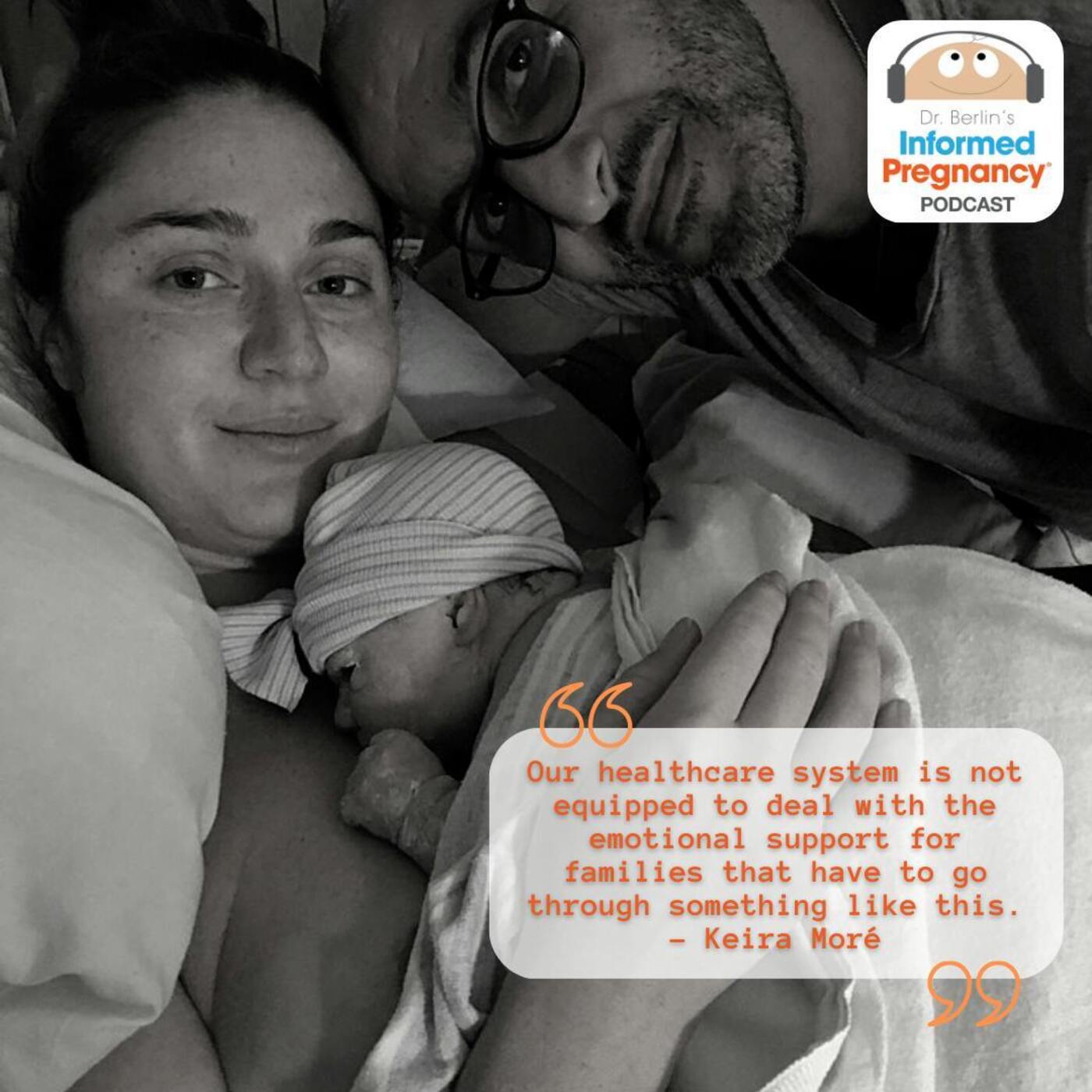
“It just didn't exist. And I really felt called to do something different and to help people that are in my situation, had been in my situation, the parents that will go through what we went through because our healthcare system is not built for the emotional support and hand-holding that needs to be done for families that go through things like this.”
“I think for the mom that is going through it or will go through it, I think the take home message is that you just kind of have to hold on and that there are people that want to love you and hold you up. You just have to find them. And I think my message to people that are loving people that are going through that is to just kind of hold on and let them have their process and be there with your arms open to catch them when they're ready to be helped.”
“hey, I dropped off dinner at your doorstep. You don't have to come outside or anything. I just left it there. It's there for you, you know? It's something as simple as that.”
Related episodes
- Ep. 339 Birth Work Professional Sallyann Beresford
- Ep. 395 Birth and Advocacy with Dawn Thompson
- Ep. 366 Dr. Erica Rozmid: A Personal Experience with Microcephaly
- Ep. 329 Valentina Trentini: After Birth
Transcript
AI-generated transcript with speaker labels — may contain errors, especially names and medical terms. Dr. Elliot Berlin, DC appears in blue; Keira Morè in orange.
Download PDF of the Transcript
Dr. Elliot Berlin, DC [1:13] Welcome to the informed pregnancy and parenting podcast. I'm your host pregnancy focus carprector. Dr Elliott Berlin my guest today is a mom and She's here to discuss her life-changing experience dealing with her full-term Newborn daughter's health issues and put her in and out of the NICU from day one This led to her leaving the hospital without the baby right away and that led to a new career path Here amore. Welcome to the podcast. Thank you so much My goodness, you've been through a lot and I was sort of there as this new career path unfolded and it's quite the journey and your Struggle is really helping a lot of other people. Let's get into it. Where are you from originally?
Keira Morè [2:18] Originally from New York, but moved to LA when I was about five. So grew up in LA. Welcome to LA, right?
Dr. Elliot Berlin, DC [2:27] All right. How'd you meet your partner? Oh
Keira Morè [2:29] We were double booked for a lunch with my Oldest and closest friend Oliver. He actually wanted to introduce me to my husband Probably like six months before we actually met and I wasn't interested and then I met him and became very interested
Dr. Elliot Berlin, DC [2:51] Quite interested and how long was it from there to you realize wait a second this might actually work out
Keira Morè [2:57] This is it. Um, it was about two minutes It was really weird I just knew when I saw him I knew that it was almost like a feeling of oh There you are, you know, and I felt immediately at home with him He didn't know that and I don't think But I decided that I was right and just hung out for a while. Oh, wow
Dr. Elliot Berlin, DC [3:22] Okay, and then was there talk like when things were heating up was there talk about family and kids always
Keira Morè [3:29] Even before we were like really serious. We always talked about family. I come from a big family. He comes from a big family We both always knew that we wanted children whether that was I mean I knew it was with him You know, it was always a very easy conversation to talk about children
Dr. Elliot Berlin, DC [3:48] And how long did it take for him to get on board with the whole relationship a
Keira Morè [3:54] Couple months and that was nine years ago so We've been together basically ever since a decade. Are you generally a quick decision maker? Kind of I mean once I know something I just know and I really kind of listened to my gut and intuition it's very loud and Yeah, once I make a decision I make a decision that's it like nothing is gonna change my mind But sometimes it takes more than two minutes
Dr. Elliot Berlin, DC [4:23] sometimes Gosh, I was like if you can decide that in two minutes like the pair of shoes
Keira Morè [4:30] I mean, I can't pick a restaurant, but I can pick a partner in two minutes. Okay, I'll pick the restaurants That's my strong point
Dr. Elliot Berlin, DC [4:39] So you guys got married and then had a kid?
Keira Morè [4:42] Basically
Dr. Elliot Berlin, DC [4:44] Were you planning to get pregnant when you did um
Keira Morè [4:48] Yes, and no, I mean I feel like if you aren't actively not trying to get pregnant Then you're trying to get pregnant, but we knew that we wanted to have a baby, right? away. I didn't think that it was going to happen quite as fast as it did because everyone around me, it seemed to be taking a little bit longer. So we started trying. I got pregnant the first try, which was much faster than I had anticipated. Were you both surprised by that? Oh yeah. Oh yeah. We were both like, Oh, okay. The stars were blind. How did you find out? We were just late or? Um, no, I wasn't even late. We actually went on a, like a road trip. We went to Laguna and I was so tired. I couldn't stop falling asleep
[5:35] and I thought I was sick. I had like a prescription of antibiotics that I just was like pushing off. I didn't want to take it. I didn't want to take it. And then for some reason I was going to take it because I felt so awful. And then I had a little voice that told me, you know, just take a pregnancy test just in case I hadn't missed my period yet. And it was positive. The doctor double checked in and was positive there too.
Dr. Elliot Berlin, DC [6:01] What did pregnancy feel like for you? I didn't love it. Are you allowed to say that? Am I allowed to say that? I don't know. You're certainly allowed to say
Keira Morè [6:14] that to me. And I'm here. I just feel like people are so judgy. Yeah. I loved feeling both of my children move inside of me. I loved the fact that I was able to do that, but I just didn't feel great pregnant from the beginning, from the beginning with my daughter. You know, I gained a lot of weight and I was really swollen. I thought I was going to be like this glowing goddess and that's not what I was. Was it different things at different stages of the pregnancy? Yeah. I think just like the exhaustion in the beginning and the nausea and everything was so new and unknown. So I felt really nervous. And then I guess in the second trimester, I felt pretty good. And then in
[7:01] the third trimester, I just blew up. She was born in September. It was very hot. Third trimester. Oh yeah. And just like sweating and puffy. Yeah. You're not selling it. Well, I'm not selling it, but it's, it's funny because I know intellectually that I didn't love it, but I miss it. If that
Dr. Elliot Berlin, DC [7:23] makes sense. Hmm. I don't know. It sounds like the yes, no of where you're trying to get pregnant. I was like, yes, but it sounds like you're saying if I'm hearing you right, like you liked being with child, you just didn't like how that made your body feel. Totally. That's exactly it. Did you have family and friends that were pregnant around the same time? Did you have exposure to pregnancy and childbirth? Not birth. Not
Keira Morè [7:52] really. Most of my friends either had children way before me or didn't want kids. I felt kind of isolated in the pregnancy. I didn't have like a partner in the pregnancy. You know, it wasn't like I had a girlfriend that I could go like on walks with. I mean, I didn't have that. So everyone was kind of busy living their own lives. I have older siblings and they had children, but their kids were so much like my nieces and nephews were so much older already. It was in distance.
Dr. Elliot Berlin, DC [8:21] And when your siblings were pregnant, were you around them?
Keira Morè [8:26] Yeah, but I was just a kid. You know, like my niece who's closest in age with my daughter is 14 and my daughter.
Dr. Elliot Berlin, DC [8:35] Okay, so long before you're in that storybook. Yeah. So what were your sources of information? The informed pregnancy podcast. Oh, I strongly recommend it. Wait till you hear about my episode with Keira Moore. Alright, I want to take a little break. When I come back, we'll talk about your plans for birth and how things went. We'll be right back.

Dr. Elliot Berlin, DC [10:26] Welcome back to the informed pregnancy podcast. We are talking to Keira Moore. So pick your husband right away and pregnant right away and not a glowing goddess, at least that's not how you felt and the third trimester in the Los Angeles summer, that's brutal for me and I'm not pregnant and obviously we can't complain too much because there are places that are a lot worse, but you know, to be dragging around that extra weight and just hot and humid and sweaty, no good. What were your plans for the birth?
Keira Morè [11:05] Um, I wanted to have an all natural birth and all natural meaning in this sense unmedicated, but in the hospital, my husband and I decided that that was right for us. And yeah, I really thought that that's what I was going to do.
Dr. Elliot Berlin, DC [11:23] Um, what was important to you? Cause I mean, most people have their baby in a hospital today, a small percentage don't, but also most people are medicated during their birth, especially at the hospital. What about not medicating was appealing to you?
Keira Morè [11:42] I think I wanted to experience it. Also, my mom had really fast labors and the way it was talked about was very, um, like you can do it. You're fine, which is how she is about everything. And also I'm a little bit afraid of needles and I was afraid of getting an epidural.
Dr. Elliot Berlin, DC [12:03] Afraid of all needles. Like some people are afraid of things going in. Some people are afraid of things coming out like blood draws.
Keira Morè [12:10] I'm not afraid of blood. I'm not like queasy or anything. I was really afraid of the needles going in, not on other people. That doesn't bother me. It's just myself. And also just the idea of having like something in my spine was scary to me. Yeah. I felt really nervous about that. Yeah.
Dr. Elliot Berlin, DC [12:30] More so than the intensity of childbirth without medication.
Keira Morè [12:35] Yes.
Dr. Elliot Berlin, DC [12:36] Okay. And how did that go?
Keira Morè [12:39] It didn't. I ended up having really very high blood pressure towards the end is pre preeclampsia. I was 39 weeks and I ended up getting induced right away. And so I got all the things.
Dr. Elliot Berlin, DC [12:53] So did you have the epidural before the induction?
Keira Morè [12:57] No, but I went in and I got induced. They gave me all the different medications and I think it was maybe around 14 hours in that I got the epidural and my daughter was born after 24 hours.
Dr. Elliot Berlin, DC [13:12] Okay. You got the epidural because it started to become overwhelming.
Keira Morè [13:17] Like I did some kind of like math equation in my mind and I felt like I was uncomfortable, but I realized that I had so much longer to go. I think I was maybe four centimeters at that point. And I just knew that I needed to be able to rest. Otherwise I wasn't going to be able to do it. And I kind of like pulled the trigger on that. And after they broke my water and after they did that with the pitosis and the contractions were really kind of unbearable. And I just decided that I needed to be able to rest, to have the vaginal birth that I wanted.
Dr. Elliot Berlin, DC [13:52] That makes sense. How was the epidural compared to how you thought it would be?
Keira Morè [13:56] Well, it only worked on half of my body.
Dr. Elliot Berlin, DC [13:59] Okay. I guess that's not how you thought it would be.
Keira Morè [14:02] That's not how I thought it was going to be, but it was okay. The placement was fine.
Dr. Elliot Berlin, DC [14:06] Yeah. Okay. Now, how is it with half of your body numb during that? Cause you just described a very intense, not a natural labor pattern, but one sort of fueled by a petition. And then they took away your kind of cushion by breaking your water.
Keira Morè [14:25] Yeah, he did. I didn't know what I didn't know, you know, and the epidural only working on my left side, it was crazy. The nurse was kind of yelling at me to lift my leg. I guess my leg had fallen off the side of the bed. The one you couldn't feel the one I couldn't feel. She kept kind of yelling at me to lift my leg back up. Cause I think we were about to push or something. And I couldn't, and I told her, I said, if I knew where my leg was, I would try to lift it, but I don't even have a leg as far as I'm concerned. thing. I felt nothing on that side, but it felt everything on the other side. Oh my goodness. I was very disorienting.
Dr. Elliot Berlin, DC [15:06] And how did that feel pushing the baby?
Keira Morè [15:09] I wanted to feel something, you know? So I was happy that I had that in some sense, but it was very strange. It was very strange. Luckily she came out very fast. So thank goodness.
Dr. Elliot Berlin, DC [15:22] You know, I can't picture what it feels like to push a baby out in the first place, but if I'm thinking about doing something that's overwhelmingly intense to me, it feels to me like it's too much for me. And I want to numb it some, but not all the way. This does not sound like that at all. This sounds like completely having all of the overwhelmingly that I didn't want on one side and being eerily disconnected on the other side.
Keira Morè [15:50] Yeah. Yeah. I mean, really I feel lucky. I don't know what would have happened had she not kind of like flown out on her own. She really did.
Dr. Elliot Berlin, DC [15:59] Was there half a ring of fire? Wow. That's so weird. Okay. Half ring of fire. Okay. Well, thank God she came out quickly. And then what happened after birth?
Keira Morè [16:14] It was kind of a whirlwind. Everything seemed okay. She was fine. It wasn't until we went into recovery that I had put her down in the, like the little bed that they gave you, like the little bassinet. I put her down for a few minutes and I looked over and she kept like kind of coughing and she was spitting up a lot of fluid. Well, now I know that it was the amniotic fluid that was still in her lungs. I guess she couldn't get all of it out on her own. And they normally say that babies can pass it on their own, but I laid her down and she turned blue. She coded and we called the nurse. They took her. I mean, I was still like half numb from an epidural and trying to chase them down
[16:58] the hallway, but that was kind of the first of many crazy things to happen.
Dr. Elliot Berlin, DC [17:03] Had you already latched? Yeah. So you already latched, maybe you already ate some, and then you put her down.
Keira Morè [17:10] I put it down and I remember my sister-in-law coming by and she saw the baby and she was really nervous about the coughing and like the kind of like the spitting up of the fluid. You know, when you're in labor for that long, you're just kind of out of it. You know, I was not thinking clearly and yes, I put her down and I guess she was choking on the food and she turned blue and they, they hit the, you know, the code button on the wall.
Dr. Elliot Berlin, DC [17:36] Oh my goodness. That's horrifying.
Keira Morè [17:38] Yeah.
Dr. Elliot Berlin, DC [17:40] And then what did they do for her?
Keira Morè [17:42] So they rushed her to the nursing station where they use this vacuum into the lungs and suck up all the extra amniotic fluid.
Dr. Elliot Berlin, DC [17:50] Did they realize right away that was the issue?
Keira Morè [17:54] You know what? I don't really remember because my husband ran with the baby and I was behind them. It took me a minute to get over to where they were.
Dr. Elliot Berlin, DC [18:01] Oh my goodness. Had you walked before that?
Keira Morè [18:06] Yes. I think I had, you know, they make you go to the bathroom and all of that. I think I had done that. It's kind of a blur now, but I think I had gotten up, but I wasn't like moving, you know?
Dr. Elliot Berlin, DC [18:19] So after they suck the fluid out, normal breathing and color came back.
Keira Morè [18:24] Yeah.
Dr. Elliot Berlin, DC [18:25] They brought her back.
Keira Morè [18:26] I don't know if my normal color would have come back.
Dr. Elliot Berlin, DC [18:29] Yeah, no, I certainly wasn't normal. Oh my goodness. How scary. Okay. So then what happened after that?
Keira Morè [18:37] So we were discharged and we went home and then the next night we had our first night at home, which was like pretty magical. And I tell everybody that that's like the most surreal moment, like bringing your baby home. And then we got a call the next day saying that her jaundice was out of control and that we needed to bring her back to the hospital.
Dr. Elliot Berlin, DC [18:58] What do you mean her jaundice was out of control? You were already home.
Keira Morè [19:02] We were already home. They said they were just Billy Rubin results or I guess, yeah. Our pediatrician had us because we saw the pediatrician the next day. Our pediatrician told us to get her blood taken for a Billy Rubin test and they called us later with the results. I was in the shower and the hospital called me and said that her bed was ready and that was how I found out. We had to go back.
Dr. Elliot Berlin, DC [19:27] Wow. Oh my goodness. Yeah, I had no idea. This is one day after you came home.
Keira Morè [19:33] Yeah.
Dr. Elliot Berlin, DC [19:34] Oh wow. So also scary.
Keira Morè [19:37] Yeah.
Dr. Elliot Berlin, DC [19:38] Especially if you don't really understand what's going on. Right.
Keira Morè [19:41] And I didn't, I really just didn't know, you know, and so we went back to the hospital and she, they kept her under the lights for 16 hours, which was not ideal because when they're under those lights, you know, they really make a big deal about you not removing them, like they wanted you to. pump and wanted me to pump. Oh, you couldn't feed her. I couldn't feed her. I couldn't hold her. She had to stay under the lights. That's what they told me continuous. Yeah, it wasn't until I kind of lost it and said I'm taking her home. And I found out then that there are actually companies that will rent you the Billy Rubin lights like it's a good do it at home. Yeah, it's a Billy blanket and you can do
[20:25] it at home. So that's what we ended up doing. And it was fine. And in California, we have so much sunlight, so much sunlight. And it was like late September is beautiful. There was no reason to do all of that. I just didn't know.
Dr. Elliot Berlin, DC [20:40] I'm so sorry. That's okay. All right, let's take a little break. At some point, this has to turn around because I know she's good. Let's take a little break and we'll be right back. Welcome back to the informed pregnancy podcast. We are talking to Kieran way. So you come home, and then you get called right back to the hospital. Then they put the baby in Billy lights out of reach for you for 16 hours. So you pump and then they bottle feed. Yeah, did your milk come in? It had come in on that day. So like every fiber of you just wants to latch that baby and feed and you can't. And then you went home. And then I went home again. Did she still need lights? Yeah, we had the blanket. She did the
Keira Morè [21:40] blanket. Truly I did indirect sunlight and just kept feeding
Dr. Elliot Berlin, DC [21:44] her. Okay. And then one would hope everything was just
Keira Morè [21:49] jolly after that. One would hope. What happened? She started vomiting green, which felt very weird. But I was assured that it was the green juice that I had earlier. And then she started sleeping longer stretches. I called the pediatrician. You thought that because you drink green juice, the baby was, I had a newborn care specialist tell me that the reason why she was vomiting green was because I drank a green juice.
Dr. Elliot Berlin, DC [22:22] Again, this is the baby that coded at the hospital and came home and got brought back to the hospital for what they told me was extremely high jaundice. And then now you're home same day or next day.
Keira Morè [22:37] I think it was the next day. She started spitting up green. And then it just got progressively worse. And like, she would sleep much longer stretches. And I called the pediatrician and told him what was happening. And he told me that I was overfeeding her. I called him three times. And by the third time, it was like the morning after and she was still vomiting green. And that was when I said, I'm either coming to your office, or I'm going to the hospital, you tell me which one. And, and he said to come in. And I did, I went in and the other partner in the office, he really was trying to convince me that I was just overfeeding her, which as a first time mom, about four or
[23:22] five days postpartum, I wasn't overfeeding her my milk had just come in, you know, there was no, and you're only feeding milk. Yeah, there was no way I was overfeeding her. But again, I didn't know. So my husband and I took her to the pediatrician's office. And they saw that her stomach was distended. And they saw the color of her vomit. And they sent us to the ER.
Dr. Elliot Berlin, DC [23:46] Wasn't spinach. So what happened at the ER?
Keira Morè [23:51] So they took us right in. And they performed every test except the test that my pediatrician asked them to perform. Why? I don't know. I think there were some young doctors who were curious about other things and wanted to do different tests. They told me that she probably had a stomach bug, a virus. And I really had to fight very hard to just get the test that the pediatrician had asked them to run. What test was that? I forget what it was called. What was it for? It was to see if there was a blockage in her digestion. So they gave her a bottle of liquid and under like an x-ray machine, you could see the liquid like she'd swallow it and then move through.
[24:38] So did they eventually do it? Yes, after like three and a half, four hours, they did it. And it stopped. I could see the liquid come down and it stopped. And after that, they called the surgeon and they booked her. It was one of two things. So they just took her and said, we'll figure out what it is once we have her open and we can see. Oh, meaning the only way to really figure out which one of the two
Dr. Elliot Berlin, DC [25:05] things is to literally cut her up and take a look and then treat it? Yes. Were they reassuring
Keira Morè [25:12] that it was treatable either way? Yes. They said either way we can fix it, but we just don't know which one it is yet. Wow. This is less than a week. Yeah, it was like day five. So intense. Okay. So they do the surgery and what do they figure out? So they do the surgery, which was crazy, but they figured out that she's a duodenal atresia. And what that means basically is that there's a little opening into her stomach. It was like very, very small, much too small. And I think what it was is that when I just had colostrum, it was fine because it was just such a small amount of milk going through. But once my milk actually came in, she could swallow
[25:58] it, but it just wouldn't go down. So it wouldn't go into her. Oh, geez. Okay. With the bile. So it created like a bypass with that and then removed her appendix and kind of like reorganized the way things were. We removed her appendix to make more room. They removed her appendix because there's a 15 to 20% chance that she might need surgery again. And they didn't ask my permission for this, by the way, but they didn't want any confusion. So if she was an adult and she went in for stomach pain, they didn't want anyone to say, oh, it's an appendicitis or it's something like that. She would just be able to say, no, I don't have an appendix. It's because of my seems like a crazy reason to take out,
Dr. Elliot Berlin, DC [26:40] even though you could live without it. And we're not quite sure how much you need it. Yeah. I mean, it seems like she should just be able to say, oh, I have this thing. Right. They made that decision for us. Duodenal atresia. Did the surgery do the trick? Yes, so far. I mean, she's fine. How old is she now?
Keira Morè [27:01] She's four, almost four and a half. Okay. And how was the recovery? Was it a laparoscopic surgery? No. Oh, the incision. Yeah. It was an incision. It was very challenging. I feel really lucky that she was full term. And I also still to this day feel really lucky that we caught it so early and that it didn't become infected or, you know, there wasn't an infection. There wasn't anything like that. She wasn't completely malnourished. She was probably slightly dehydrated, but it could have been a lot worse. Recovery from this is normally about a month and she did really well. She really did. Newborns are amazing and the NICU staff is amazing. Yeah. She healed very fast. I think it was harder for us, you know,
[27:50] in a lot of ways, but yeah, she's okay. I'm just wondering, are these things connected at all? I don't know. I still don't know. The coding and the jaundice. My son had jaundice. I had jaundice. I think jaundice is fairly common, but the coding, I'm not sure. When I was pregnant, I had a lot of amniotic fluid and they never said anything about it. Normally in pregnancy, they'll see a duodenal atresia in the growth scans. They look for it because it's normally a marker of some sort of chromosomal issue. They missed it with my daughter.
Dr. Elliot Berlin, DC [28:30] You look more closely with your son. Very. I looked very, very closely. Yeah. He didn't have it. No. Wow. And then this change your career path. So what were you doing career-wise before
Keira Morè [28:44] having a baby? So before I had a baby, I was in the clothing industry and then I stopped working and I was planning on staying home with my daughter, but I just felt like there was so much I could have used. I needed more support and it wasn't there. It wasn't offered. It just didn't exist. And I really felt called to do something different and to help people that are in my situation, had been in my situation, the parents that will go through what we went through because our healthcare system is not built for the emotional support and hand-holding that needs to be done for families that go through things like this. So I didn't know how I wanted to give back, but I knew that I wanted to,
[29:28] that it felt very important to me. And it started out just talking to, you know, different friends, friends started reaching out to me and kind of looking for that support when they were pregnant. And then I started volunteering with an organization that pairs NICU mom to NICU mom as kind of like a peer to peer support. Current NICU mom with former NICU mom? Yes. So people who have already gone through it are just kind of being there and talking to people that are currently going through it.
Dr. Elliot Berlin, DC [30:00] That's great. What's that called? Hand to hold. Appropriate. Yeah. And so now you're a doula. You help people while they're pregnant and through the transition. Yes. I've seen your clients and they love you. It almost seems a little bit like, you know, we had a bunch of miscarriages before we had our first kid and then we had our kid. And I think it's just a different kind when you hear your kid scream at two o'clock in the morning, it's like comforting. Whereas people who didn't have that experience, it may not be as comforting. And so, you know, you're helping people ideally go through typical childbirth and postpartum experiences, but your personal life experience puts you in a position to really support in a way that someone who
[30:45] hasn't had that experience couldn't do it quite the same way you do. And I know your clients feel that deep, heavy, holistic support, full, well-rounded support. So kudos to you for making a big old vat of lemonade. Thank you. Thank you. I'm sorry you went through that, all of you, but I'm glad she's healthy now. And you have the courage to do it again. I did. No, was that one also like sort of not trying, trying?
Keira Morè [31:14] Yeah, no, it was super healing. Actually, I was really nervous during my pregnancy with my son and my second child because of everything that we'd gone through. And it was also the beginning of COVID and it was just like a very stressful time, but it ended up being totally fine and normal. Epidural? Epidural. Both sides? Both sides. And I appreciated that because he was 10 pounds. Oh, wow. Yeah. But that pregnancy and birth and postpartum period, I think just really healed that wound because there was a lot of grief, you know, of what I felt I lost and, you know, recovering from birth in the NICU and not able to hold your baby and not able to nurse and just like
[32:01] everything that goes along with that experience. It really felt like full circle after my son was born and knowing what it's like to take the baby home and stay there. You know, I kept waiting for someone to call me, but they never did. So I was really happy about that.
Dr. Elliot Berlin, DC [32:15] No news is good news. Yeah, I was just thinking actually just how people, you know, culturally, a lot of cultures stay home for 40 days so that you can heal physically and emotionally and, you know, transition in your bubble. I didn't even think about that with all the running back and forth to the hospital and supporting a surgery and you're literally just recovering from the intensity of childbirth. Wow. Even more intense than I had previously
Keira Morè [32:44] pictured. Yeah, it was a lot, but I'm happy that I wasn't thinking about how much it was at the time. It was only after that I had realized like, oh, like that was really wild and didn't like set me up for success in a lot of ways. But you succeeded. I did. Yeah. I mean, I had to go find the help and I did and thank God for all those people that
Dr. Elliot Berlin, DC [33:08] carried me, you know? Wow. Very powerful. It's so crazy that, you know, a hole that's a little too small could lead to all of that chaos and also equally kind of amazing that we now know how to diagnose and treat it so that a baby can grow into a healthy child and adult. Kira, thank you so much for coming on and for sharing your experience and it sounds like there are some take home messages here. What would your key take home points be?
Keira Morè [33:37] I think for the mom that is going through it or will go through it, I think the take home message is that you just kind of have to hold on and that there are people that want to love you and hold you up. You just have to find them. And I think my message to people that are loving people that are going through that is to just kind of hold on and let them have their process and be there with your arms open to catch them when they're ready to be helped.
Dr. Elliot Berlin, DC [34:07] Yeah, I actually have a friend slash client who's going through this right now. It was slightly different, but same idea in their case, beautiful, healthy birth. And then the next day things didn't seem right. So they went back to the hospital and it's been a whirlwind, a lot of testing and uncertainty about what's going on. Literally the baby is coming home right now from the hospital a couple of weeks after the birth. I don't think they know a hundred percent what happened or what is happening, but they got all the symptoms under control. So clear to go home. You know, I saw that someone set up for them like a WhatsApp group and they also have a toddler. So that's even more complicated. And they're
[34:51] good about saying what they needed. So friends and family could be extra supportive in the ways that they needed support, but in events. where that doesn't happen so black and white. What would you say to someone who has a friend going through a NICU experience like that? I think a lot of times we don't know what to say, we don't know what to offer. From the other side, what would a piece of advice be on how we could be supportive?
Keira Morè [35:18] I think if the family that is going through a NICU stay has older children, going and helping with the older children so that they can be with the baby is super helpful because I imagine that there would be a lot of guilt. So kind of making sure that those older children are taken care of and maybe having fun and distracted from whatever is going on at home in a situation like that, I think that's the most helpful you could be. If you don't have other children, I think obviously allowing them to vent or talk about whatever is going on without judgment or kind of that like toxic positivity, like where you're like, oh, but everything happens for a reason
[36:01] or everything's gonna be fine. Like that's really not helpful in situations like this. So I think being in ear, food is always a good thing. Like coming home from the NICU and not having anything in the house. If a friend wanted to bring some food over, just so you had something, you know. We had a friend who actually delivered lunch to the hospital for us and like made us care packages with like snacks that we could just keep there because they knew we were there for like 16 hours at a time, you know.
Dr. Elliot Berlin, DC [36:31] That's so thoughtful.
Keira Morè [36:32] Yeah, just like making it so easy. We had people that would help clean up our house after us, like really just carried us in that way and took care of everything so that we could just focus on taking care of our baby.
Dr. Elliot Berlin, DC [36:46] That's really good advice. I think a question that we wanna ask is, oh, hi, what do you need? And a better answer would be just like here. I did this. I did this, yeah. Check this off your list, it's done.
Keira Morè [36:59] Exactly. I think it's so natural to say like, how can I help you? Like, what can I do for you? But the truth is, is you may be unknowingly putting more of a burden onto that person and expecting them to explain what they need rather than just like, hey, I dropped off dinner at your doorstep. You don't have to come outside or anything. I just left it there. It's there for you, you know? It's something as simple as that. Also remembering that the mom is in postpartum. She's healing, she's recovering. She's likely an emotional wreck. Like she might not wanna see people. She might not be able to properly articulate what's going on. You don't know what doctor said to her today.
[37:38] I always think that acts of service are the best things you can do for people in need.
Dr. Elliot Berlin, DC [37:43] Yeah. Well, that's a helpful message for both sides, friends and family, and the people going through the difficult time. So thank you. Kira, where can we find you online?
Keira Morè [37:55] I have a website called noadula, N-O-A-D-O-U-L-A.com.
Dr. Elliot Berlin, DC [38:01] Where does Noah come from?
Keira Morè [38:03] Oh, that's my daughter's middle name.
Dr. Elliot Berlin, DC [38:04] Oh. Do you know Adula? Oh, I know Adula. Oh, cute. Okay. And you post cool stuff on Instagram.
Keira Morè [38:14] I do sometimes. Sometimes not, but whatever. My handle is at noanola.dula.
Dr. Elliot Berlin, DC [38:22] At noanola.dula. Again, thank you so much for being here. I'm gonna find you on Instagram because you do post interesting things, informative and also delivered in a way that catches your eye. So I'll see you there. We're also on Instagram at Dr.Berlin. That's D-O-C-T-O-R-B-E-R-L-I-N. I got a.
Want more pregnancy + parenting? Start your FREE TRIAL of Informed Pregnancy+ and get access to all our curated pregnancy and parenting content — original series, iconic birth films like The Business of Being Born, prenatal workouts and more.
