
May 1, 2023 · 38 minutes · Episode 346
About this episode
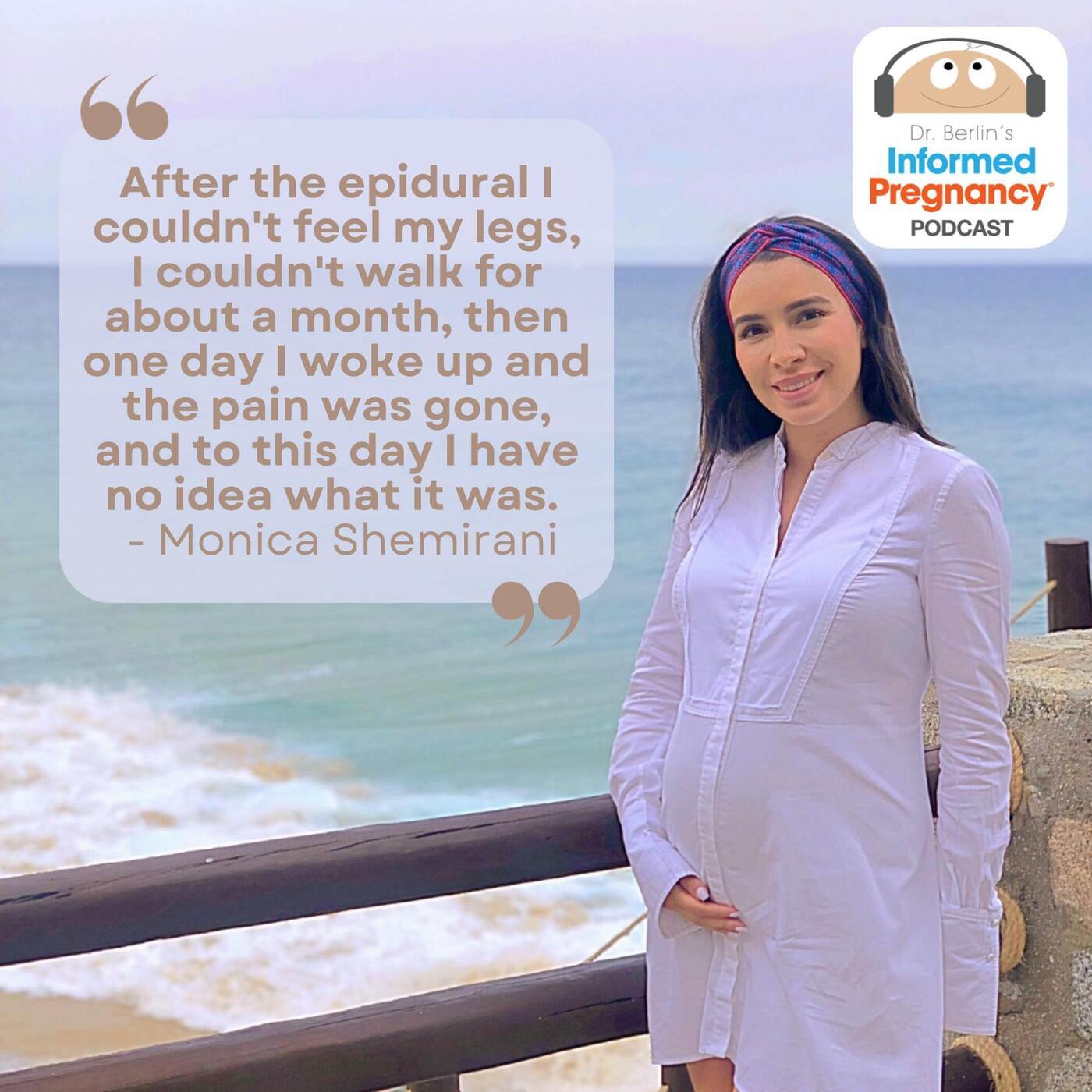
After a mysterious and painful postpartum experience with her first child, Monica Shemirani has many new plans for the upcoming birth of her second child.

- Want to hear about more cesarean birth journeys? Check out our newest show Empowered Mama on Informed Pregnancy Plus. Start your FREE TRIAL and search “Empowered Mama” to start streaming today: https://www.informedpregnancy.tv/
- Check out Monica’s husband Dr. Nima Shemirani’s post about pregnancy and plastic surgery on the Informed Pregnancy Blog: https://www.informedpregnancy.com/single-post/plastic-surgery-pregnancy-when-is-it-safe-to-get-work-done-eos-rejuvenation-sponsored
Keep up with Dr. Berlin and the Informed Pregnancy Project online!
www.instagram.com/doctorberlin/
www.facebook.com/InformedPregnancy
Learn more about your ad choices. Visit megaphone.fm/adchoices
See Privacy Policy at https://art19.com/privacy and California Privacy Notice at https://art19.com/privacy#do-not-sell-my-info.
Key quotes
“I do frozen yogurt.”
“I'm not afraid of them. So I completely surrender and Jesus take the wheel.”
“well, this is good enough for me. I don't need an explanation. And that was it.”
“I mean, if you told me the craziest thing, I would do it.”
“Um, so giving birth to a breech baby is like giving birth on an airplane.”
Related episodes
- Ep. 378 Traci Burk: After Birth
- Ep. 362 Filmmaker Rani Khanna: More Than Blood
- Ep. 350 Ciara Whaley: After Birth
- Ep. 382 Caitlin Wilder: Before Birth
Transcript
AI-generated transcript with speaker labels — may contain errors, especially names and medical terms. Dr. Elliot Berlin, DC appears in blue; Monica Shemirani in orange.
Download PDF of the Transcript
Dr. Elliot Berlin, DC [1:13] Welcome to the important pregnancy and parenting podcast. I'm your host pregnancy focused chiropractor. Dr. Elliott Berlin My guest today is the director of business development for EOS plastic surgery in Beverly Hills She's currently pregnant and nearly due with her second son We'll talk about her first pregnancy and birth including a mysterious experience She had after delivery and her ever-changing plans for her upcoming second birth Monica Shamirani. Welcome to the podcast
Monica Shemirani [2:03] Hi, dr. Berlin, thank you so much for having me. I'm excited
Dr. Elliot Berlin, DC [2:07] Thank you for coming and sharing these stories. We have a lot to pack into an episode So I'm gonna jump right in where you from originally. I am from Anaheim, California Orange County natives before it was the OC before it was OC How is growing up in Orange County? You know, I have no complaints. I had a
Monica Shemirani [2:29] magical childhood I Went to private Catholic school my whole life. So I guess I had a sheltered life I guess you can say but it was beautiful now that I look back at it and After a sheltered umbrella any surprises. Oh, man There's an entire world outside of you know, private school like you move to LA and you see all sorts of things there's something for everybody here in Los Angeles whether you want to be a Singer a dancer a lawyer a doctor. This is where dreams are made of this is the city where you come to Excel and be successful and you know, like me start a family grow my practice like all of these things And you could wear whatever skirt you want to yes. Yes, that is true different in Catholic school
Dr. Elliot Berlin, DC [3:22] You mentioned your practice tell me about the practice
Monica Shemirani [3:26] So my husband and I own a facial plastic surgery practice here in the city of Beverly Hills We have been working together for about ten years now he specializes in revision rhinoplasty, so Basically just procedures of the nose and we consider him a true expert in the field
Dr. Elliot Berlin, DC [3:45] Well, it's amazing how specific the specialties have gotten
Monica Shemirani [3:50] Yeah, I remember having this conversation with him early on in his career And he was deciding well, what do I do? How do I market myself? And I said, well, you're really good at noses let's just stick to that and Now he's really just perfected his craft and I guess I'm biased, but I think he's one of a kind
Dr. Elliot Berlin, DC [4:09] I mean by all accounts. He's very skilled and an expert at what he does I wonder if you've been working together for ten years does that predate your marriage? Yes How did you meet originally? I
Monica Shemirani [4:23] Met him when I was an intern in college I worked with him for maybe like a year and a half and it was coming time to where you know I was graduating college and I decided to myself like I need more experience outside of this, you know Small practice. I need to learn what an executive does or what Somebody that manages multiple doctors does so I left the practice. I went to Cedars there I joined a really big ENT office and I think at the time there was about ten or twelve doctors and I learned how to run an office I learned the anatomy of the head and neck, first of all, that was a requirement for the position and I was there at that practice for about two years after that my husband's like, you know, you're busy making them rich come over and let's do something together.
[5:15] And by that time we got engaged, married and the rest is history.
Dr. Elliot Berlin, DC [5:19] And there you have it. Is kids something that you decided on early on?
Monica Shemirani [5:26] You know, I really wanted kids from the very beginning. My husband was a little bit hesitant. I think if you ask him, he would have said, if I didn't meet you, I don't think I would have had kids. I didn't want kids. Oh, at all. And when he met me and you know, we fell in love. He wanted a baby. He's like, I want a family. I want to get married. And I want to, you know, run this awesome practice with you. So we did all the things and here we are. Wow. I mean, that's a big shift. Yeah, I remember the day that I met him. I always say the story. This was 10 years ago. So you have to remember this was before the beautiful fig scrubs and he was wearing these like horrific like teal oversized scrubs.
[6:19] It didn't stop there. The shoes. It was like these pointy like dress shoes like they came up like they had like a point at the end. And I remember I was wearing like this white suit with this like beautiful Louis Vuitton purse and my hair was done. I had the fake lashes, the whole thing. You know, I was going to interview with a Beverly Hills plastic surgeon. I had to put my best foot forward and I thought to myself, wow, he's really handsome, but I can't see past his neck. Everything below the neck has got to go. So if you see him now, he's totally different and manicured. He's had the demonic overall.
Dr. Elliot Berlin, DC [7:02] Oh yeah. Yeah.
Monica Shemirani [7:04] Once you decided, yes, let's have kids together, did they come easily to you? You know, my first pregnancy was actually a miscarriage. Oh, I'm sorry to hear that. Yeah, it was horrible. I think going through that, your first time trying, it was our very first time trying. We got pregnant right away and it ended up being a miscarriage, which your first being a miscarriage kind of scars you because you're thinking, oh my gosh, what if I can never have kids? And at this point, I'm already married.
Dr. Elliot Berlin, DC [7:37] All right, that's a very scary moment.
Monica Shemirani [7:41] Yeah, but we actually tried the very next month and we got pregnant.
Dr. Elliot Berlin, DC [7:50] So all in all, not too hard to us a process to get the baby in. Yes, not too bad. How was that first pregnancy?
Monica Shemirani [8:00] My first pregnancy was difficult.
Dr. Elliot Berlin, DC [8:04] I think as a first time mom, you have this idea of what your pregnancy should look like, or you have these expectations.
Monica Shemirani [8:11] What were those for you? Oh, I just pictured myself healthy, happy, just growing and personally and professionally, like all the things were like this beautiful magical experience. And, you know, I'm here, I'm eight weeks pregnant and I'm just puking my guts out. Like it was so bad. And I remember at the time I didn't have an appointment, but I really needed to see my doctor, Dr. Finke. And they're like, you know, he's really busy. He can't see you. And I thought to myself, I'm going to lose my child because I just cannot stop this projectile vomit. And I go to his office. I start crying in the waiting room. I'm like, oh my God, help. They're like literally like ballistic.
[8:56] And they take me to the back. That was like immediate right to passage, the crying and the I'm going to die. They take me to the back and, you know, they suggest I get an IV, which I did. And they gave me a prescription called Bonjesta. Yeah. And that completely changed my entire experience of the pregnancy. It was like the magic pill. That was around eight weeks.
Dr. Elliot Berlin, DC [9:22] Oh, OK. So that was like in the heat of nausea and vomiting.
Monica Shemirani [9:26] Yeah.
Dr. Elliot Berlin, DC [9:27] It was still that effective for you.
Monica Shemirani [9:29] Oh, yeah. And I didn't stop the Bonjesta until I gave birth. Oh, wow. Did you try? You know, I did try, but I could feel the sickness just like festering in my stomach. And I didn't take any time off of work. So I always had to be on my A game. There was no like, you know, call your boss. And tell him you're sick type of thing. It was really difficult.
Dr. Elliot Berlin, DC [9:55] How was the second and third trimester?
Monica Shemirani [9:58] Um. I think the second trimester was good. I didn't have any major mobility issues. I remember that I started seeing you during my second trimester because I had like really bad rib pain.
Dr. Elliot Berlin, DC [10:13] That's right.
Monica Shemirani [10:15] And this pregnancy, I've discovered that I was just sitting on my chair for too long. You know, when you're sitting for 12 hours a day, it really does number on your back. And your ribs, especially everything just gets compressed and there's no more room for those nerves. Yeah. So I started seeing you, second trimester was good. Third was good too. And drum roll, please. I gained 57 pounds.
Dr. Elliot Berlin, DC [10:42] Whoa. Yeah, it was, mind you, it was only 100 pounds. That's what I'm saying. That's a whoa for you because 57, you know, it has a lot to do with where you start. For you, that's a 57% increase.
Monica Shemirani [10:55] Yes. My bones were like, what are you doing? This is way too much, but-
Dr. Elliot Berlin, DC [11:01] But I have a question. Did you gain that weight because that's how your body handles pregnancy? I mean, I know you were not feeling great. Did you slow down your exercise and not eat as well?
Monica Shemirani [11:11] You know, I'm not proud to say it, but I wasn't even exercising. That wasn't even part of my life back then. But I would eat whatever I felt like eating because you hear these stories like, oh, just eat whatever you want. You know, it's fine. You'll lose it later. Or the baby needs this. This is why you're craving. Everyone tells you all these different things. But yeah, I gained 57 pounds. And thankfully, after I gave birth, I lost it all.
Dr. Elliot Berlin, DC [11:38] It must have not been very comfortable towards the end.
Monica Shemirani [11:41] It was so uncomfortable. It was so bad. Like my feet, they looked deformed. They were just- With all the fluid. With all the fluid and my hands too. Like none of my old rings would fit me. I mean, I could only be in leggings and like oversized shirts because it was really bad.
Dr. Elliot Berlin, DC [12:00] I thought you would have to wear giant teal scrubs.
Monica Shemirani [12:04] If they were available at the time, I would. It had to be a cute scrub. Otherwise I wouldn't wear it.
Dr. Elliot Berlin, DC [12:10] Yeah. Okay, let's take a little break. When we come back, we'll find out what you planned for your birth and how things went. Don't go anywhere. We'll be right back.

Dr. Elliot Berlin, DC [13:55] Welcome back to the podcast we're talking to Monica Schammerani. Okay, so you somehow convince your husband to dress a lot better than he was. You launch this amazing practice together. You convince him that family is a good thing and you guys are gonna have kids together. After a miscarriage setback, you get pregnant and it's a nausea and vomiting pregnancy remedied with Bungesta. And then it's a huge weight gain for you, 57 pounds on your 100 pound frame. So uncomfortable at the end, what kind of plans did you have for birth?
Monica Shemirani [14:31] Oh my gosh, I remember talking to you about this and I said, if you could send me to hell, the number one thing would be giving birth and going on an airplane. And then you said, what about giving birth on an airplane?
Dr. Elliot Berlin, DC [14:46] That's funny, because that's the thought that just popped into my head again.
Monica Shemirani [14:49] Yeah, yeah, and I was like, holy shit. And I was like, oh my gosh, that is definitely the ultimate hell, giving birth on an airplane. But so clearly you don't like airplanes. I don't like airplanes, but I will go because I love to travel and I love to see the world. But you know, like sweating. I mean, that's an anxiety issue. It's an anxiety issue for sure. So are we saying that anxiety bubbled up about how to get the baby out of your body? Right. And another thing to note is that I'm definitely 100% a control freak. So if I don't know what's ahead of me, I'm hesitant and I'm scared. You know, all the things I'm thinking everything that could
[15:35] possibly go wrong. About birth in particular? About birth, about everything, but especially about birth because, you know, I'm fairly young. I'm 29 years old. I had my first baby at 25, although I'm very mature. And my husband says you're like a 70 year old woman. Like you've been there, done that many times.
Dr. Elliot Berlin, DC [15:53] And I feel like any of the guys listening, don't take that advice. That may not be
Monica Shemirani [15:58] received well. Yeah, I, but he means it well. He's saying you're very mature. Yeah, he means it well. You know, he thinks of me as, you know, we're equals. We're equals. We're doing this together for us. I don't even think about, you know, he's 15 years older than me. It's weird. Unless somebody brings it up.
Dr. Elliot Berlin, DC [16:20] Right. But he's very youthful for his age, which is not old. And you're very mature for your age.
Monica Shemirani [16:26] Yes. Yes. I swear to God, he trains like an athlete. He eats extremely clean. He does cold plunges every morning at 5am. He's doing a cold plunge and working out and he does intermittent fasting. He's just wild. I do frozen yogurt.
Dr. Elliot Berlin, DC [16:46] Me too. Okay, good. I'm not alone. I'm in good company. I mean, with that, you can't have too much control over birth, no matter how you get the baby out. And so that must have been daunting. What options in front of you did you sort of aim for?
Monica Shemirani [17:04] Well, my doctor, Dr. Finke said, listen, you're in the driver's seat. I want to do what you want to do. So I thought, well, I could do a C section and call it a day. I'm not a stranger to surgery. I see it every single day. I think I know how to manage my pain properly. I think I can do that. Or I can really be, you know, adventurous and try vaginal birth. So that's what I did. And
Dr. Elliot Berlin, DC [17:28] you went for the vaginal birth with an open mind to surgery if needed.
Monica Shemirani [17:32] Right. So then I hired my doula, who at the time was Katie Hamilton. I started seeing you. You know, I had a lot of great influences in my life and in my pregnancy that made me realize you can do this. And everything's going to be okay. And, you know, with the help of everyone that was helping me get through this scary time in my life, I was able to give birth vaginally. And that's a huge accomplishment for me. I mean, I'm like this tiny, you know, pre pregnancy, 100 pound girl, giving birth to an almost eight and a half pound baby.
Dr. Elliot Berlin, DC [18:11] Wow. Healthy. In a nutshell, what was that labor like? How did it start, progress and end?
Monica Shemirani [18:18] Well, I was sent on bed rest at about seven months. My cervix was really short. And Dr. Finky said, Listen, you have to go home. You can't have this baby this early. He sent me on bed rest. And, you know, by 39 weeks, the baby's just not coming. And we did two membrane sweeps. And I think after that last one, the second day I went into labor, and, you know, contractions, they're hard. People say it's oh, it's like a period cramp or like a really bad period cramp. I don't know that that is true.
Dr. Elliot Berlin, DC [18:54] Well, how would you describe it?
Monica Shemirani [18:56] It's just like a pain that I've never experienced in my life. And I hope this time around, it's quicker. It's like a debilitating pain that, you know, paralyzes you. And for me, it was like a sensation from head to toe. And I remember I was driving or my mom was driving, we were in the car, our houses in Bel Air. So from Bel Air to Cedars, when there's traffic, you're not getting there in 45 minutes.
Dr. Elliot Berlin, DC [19:21] No, the car must have been terrible.
Monica Shemirani [19:23] Yes, there was so much traffic. And remember, my mom's from Orange County. She knows nothing of LA traffic or how to get to the hospital. I'm giving her directions. And then my sales girl is calling me like, Hey, Monica, I have this problem. And I'm like, okay, like, okay, this is what you do. And she's like, what's wrong with you? I'm like, I'm in the car. I think I'm going into labor. And she's like, Okay, bye. Like, it was just like a okay, bye. The conversation ended. You know, my husband was in surgery at the time. Wow. But thankfully, his surgeries are like, six to seven hours long. sometimes eight. So thankfully, he was at the tail end. And once he finished his procedure,
[20:07] he was able to meet me at the hospital. But getting to the hospital was tough. I remember my mom pulled up to the Cedars Valet and I ran out of the car. I darted out of the car. I pressed the elevator to go up and there was the nicest guy on the planet. He was this random construction worker and he saw that I was holding my stomach and crying. Obviously, I was visibly pregnant. I was 157 pounds. So he grabs this wheelchair. He takes me up to labor and delivery. And by that time, Dr. Finke had called in the epidural. And maybe 30 to 45 minutes after arriving, I had my epidural and all was good.
Dr. Elliot Berlin, DC [20:53] Okay. So it worked for you. And the administration of the epidural was smooth?
Monica Shemirani [20:59] Yeah. Yeah, it was fine. I think like halfway, maybe like halfway through the labor, it stopped working. So they had to redo it. But every minute when you're in labor and these contractions are coming and coming, it just seems like an eternity. But all in all, it was like 45 minutes from the time I arrived to the hospital to the time I got an epidural. And how was pushing? Oh my gosh. I pushed maybe for like six hours, I think. The entire birth was like, oh my gosh, it was so, I was pushing for a long time. And finally, after all of that, I had my son and it wasn't too bad. It really wasn't as bad as I thought it could have been. I didn't have any tears, thankfully. My doula was there
[21:49] with me. She was helping me do the exercises with a peanut ball. The lights were dim. She had aromatherapy. She had music. Massage was an option. It was really zen in there, minus the fact that my husband's in the corner shivering. His teeth are clenching. He's like, I'm so cold. I'm so cold. And I'm like, you're cold? Seriously? And, you know, this time around, he says the cold plunge guy.
Dr. Elliot Berlin, DC [22:19] Yeah, I know the cold plunge guy. He's complaining about the room being too cold,
Monica Shemirani [22:23] but poor guy. He was in the corner just waiting for our son. And, you know, finally we had him.
Dr. Elliot Berlin, DC [22:29] Okay. When you finally got him out, what position were you in?
Monica Shemirani [22:34] I was laying down on your back. I was laying down on my back. Yeah. The traditional, I guess, hospital birth experience. I mean, you said the epidural was kind of in and out. What kind of sensation did you have at that point? It was just like sharp pains in my lower back, like my entire left side. I could feel some kind of pain that I knew was not right. Like something's not working on the left side.
Dr. Elliot Berlin, DC [23:00] It's interesting also because you're a control freak and sometimes control freaks don't like not feeling their body or not being able to move their body. Was that an issue for you at all or was it just so relieving to the discomfort that it was fine?
Monica Shemirani [23:15] No, you know what? Because we're in medicine, this is what we do every single day. I firmly believe in, you know, the effects of medication and I know what they're made to do. I'm not afraid of them. So I completely surrender and Jesus take the wheel.
Dr. Elliot Berlin, DC [23:32] What a great place for a little break. On that note, we'll be right back. Welcome back. We're talking to Monica Schimardi. Now you're pregnant again. Before we get into this pregnancy and your plans for birth, after you gave birth last time, something weird happened. Tell me about it. Oh my gosh. So, you know, I have my baby,
Monica Shemirani [24:04] I'm transferred to my room and I can't feel my legs. This is like hours after the epidural,
Dr. Elliot Berlin, DC [24:12] like hours. Like when you'd expected to be worn off already and you can-
Monica Shemirani [24:16] Yeah, you're expected to go to the bathroom and, you know, do all the things. I look over at my husband and I said, I cannot feel my legs. I can't walk. I can't even like try to bring myself to like a forward sitting position because I have no strength to do that. So, you know, they bring a team of like neurologists. You know, they really couldn't find anything. I remember it was this really handsome neurologist and I'm like OCD clean freak. So I'm like, oh my God, I haven't showered in 24 hours. I haven't shaved in 24 hours. Like this guy's looking at my like unshaved legs. He can't come back and see me in this state again. So, I don't know how the hell I managed. I dragged myself over to the sink with all the
[25:07] upper body strength that I had. Thankfully, my husband wasn't there because he would have not let me get out of that bed. I pulled myself to the sink and I washed up. I shaved. Next time he came in, thank God, I cleaned myself. He came in with a team of 12 doctors, were just like, we don't know what's going on. My feet were like balloons. They were so swollen. They couldn't really find the reason why. They did imaging. Nothing was broken. There was no evidence of any type of bone trauma. Next thing you know, you're leaving the hospital. It wasn't like I was followed up with or anything like that. But after I gave birth to my son, I couldn't walk for about a month. Wow. That's so intense. So,
[25:59] did they ever figure out what it was? Never. Until this day, I don't know what it was. I couldn't even lift my toes to put my pants on. I couldn't sit in a car. It was unbearable.
Dr. Elliot Berlin, DC [26:12] The pain was just- I have so many questions. How do you take care of a newborn? Like, during that whole month, were you still trying to figure out what it was? Did you do anything therapeutically to try to overcome it?
Monica Shemirani [26:24] No, I didn't because I don't have any help at night. I don't have any help during the day. Who's going to take care of my newborn? I think as moms, we have this newborn baby. We don't know how to take care of them. I don't even know how to put a diaper on him. So, I'm trying to figure out all these things to keep my baby alive. And, you know, you come second. I didn't even have a chance to visit my own doctor. But, you know, I figured out that by dragging myself everywhere, I could make it work. And I did. I dragged myself for about 30 days. And one day, I woke up and the pain was gone. And I could do all the things. And I thought to myself, like,
[27:07] well, this is good enough for me. I don't need an explanation. And that was it.
Dr. Elliot Berlin, DC [27:12] I mean, it sounds like so scary. Like, will it ever come back?
Monica Shemirani [27:17] I thought about that. Yeah. And the thing is, like, because I could not sit in a car, like, I couldn't sit upright. I had to, when I took my son to his appointments, I had to, like, lay down at an angle in the car. And getting out of the car was, like, a whole situation. It was, like, a 10-minute thing because, you know, you have to, like, slowly lift, like, I couldn't even lift my feet up,
Dr. Elliot Berlin, DC [27:41] like, an inch to get out of the car. Wow. I mean, think that somehow resolved itself. I mean, flash forward, you're pregnant again. Yeah. I mean, after that experience, did you have concerns about carrying another baby?
Monica Shemirani [27:58] I definitely did. I was very afraid. I delayed it for about three years. And my husband, he was supportive, you know, either way, but he really wanted a second child. And I thought to myself, well, we could do IVF and have a surrogate. And he wasn't really on board with that. So I told myself, well, let's give it one last shot. You know, let's just do it
Dr. Elliot Berlin, DC [28:24] one more time. Let's see how it goes. And here I am. Okay. So one would wonder what kind of plans you have for birth this time, especially since we have no idea what caused that complication last time. But before we get to plans for birth, how has this pregnancy been?
Monica Shemirani [28:42] It's been interesting. I developed pubic symphysis early on. Pain, dysfunction. Yeah. Yeah. And when did I start seeing you? I think I was, like, 14 weeks. Yeah, just after the first trimester. Yeah. Yeah. Just describe what that feels like. So mobility becomes an issue. There is intense pain in the pubic bone when you're getting up, like the act of getting up from a chair, the act of getting out of your bed, or the act of simply moving from your right side to your left side as you're laying down is very painful. Just mobility is hard and it's very painful.
Dr. Elliot Berlin, DC [29:23] Something new, a little gift from each child with each pregnancy.
Monica Shemirani [29:26] I know it's a token of love. What else in this pregnancy? The nausea and vomiting. Intense as last time on just up to the rescue bone just to the rescue. I'm still taking it now. How many weeks are you now? I am 37 weeks. Wow. Okay. In the zone, in the zone, I'm nesting. I'm preparing. I'm actually recording from my son's beautiful nursery. I'm so excited to see him and hold him. And, you know, I'm just so happy.
Dr. Elliot Berlin, DC [29:58] Okay. So from the outside, that if you were anxious about birth last time, your first experience could not have made you less anxious about birth this time. So from the beginning, what were your plans for birth?
Monica Shemirani [30:11] I told myself, listen, we're doing a C-section. There's no question about that. You are doing a C-section. As soon as I found out I was pregnant and the pregnancy was viable, Dr. Finke said, this is my scheduler. I know you want to do a C-section. Schedule your C-section. You're in control, you're in the driver's seat. He told me the same thing he told me last time. And there was no getting me out of, you're having a C-section. But then I started like, the hamster wheel, you start thinking of all the things and what is truly best for me, what is truly best for my baby. So then I called my doula, my previous doula, Katie Hamilton. I said, Katie, I'm pregnant and I don't know what to do.
[30:59] And I need some advice. Would you be my doula again? And she's now a midwife. She's doing home births. She said, if you want to do a home birth, I can definitely do it. I haven't gone to the hospital ever since your birth. So she couldn't really be my doula again because she's a midwife now and understandably so. So she gave me a list of people that I could reach out to. And one thing led to another. I met fabulous Lindsay Ray, who's now my doula. And of course I started seeing you. So I'm like, I can do this. I can do this again. I'm gonna do a vaginal delivery. I have my doula, I have Dr. Berlin, I have Dr. Alyssa Berlin, who I'm also seeing.
[31:45] Everyone's encouraging me that I can do this and I think I can. So the plan changed from a C-section to a vaginal birth. And I was really, really looking forward to that. Really excited to get this baby out and get him out safely. And maybe four weeks ago, I found out my baby was breech. So-
Dr. Elliot Berlin, DC [32:07] Did you have a low placenta towards the beginning?
Monica Shemirani [32:09] Yeah, I did.
Dr. Elliot Berlin, DC [32:09] So that was like the first maybe not vaginal birth again.
Monica Shemirani [32:13] Right, yeah. There was that. But I always thought that's gonna resolve itself.
Dr. Elliot Berlin, DC [32:20] And you were right.
Monica Shemirani [32:21] Yeah, and it did. So thank God it resolved itself. But we're having issues with the baby being breeched now and just trying to figure out what to do. And I guess how to get him out safely, whether it's a vaginal birth or it's a cesarean.
Dr. Elliot Berlin, DC [32:38] So what kind of things have you done so far to help with the breech to try to encourage the little one to flip?
Monica Shemirani [32:47] Well, I see you twice a week. I'm doing hypnotherapy as well.
Dr. Elliot Berlin, DC [32:53] How was that?
Monica Shemirani [32:54] Cause it's specific for breech, right? Yes, it's magical. I think that everyone should do hypnotherapy, whether they're pregnant or not. I think it's a way to check in with yourself, be at peace before you go to bed or before you start your day. It's like a reset button. You listen to your therapy session. You put your mind in the most peaceful state. You can do it at any time of the day. And you try to bring so much peace and positive thoughts to your mind and body and soul and into your baby to try to do what's best for him. Because ultimately only he knows the way he wants to be born. And I've completely surrendered to the fact that if he feels that it's safe for him to be born vaginally,
[33:47] he's going to flip. If he feels or senses danger, I don't think my baby is going to flip. And I'm okay with that. I've completely surrendered to the fact that there is a lot of unknown when it comes to my birth with my second.
Dr. Elliot Berlin, DC [34:03] I mean, what I'm hearing is huge because if I'm reading it right, I just heard the person who really, really desires to be in control all the time saying that on this huge event that's going to take place, I completely surrender.
Monica Shemirani [34:22] You know, I think for your children, and I'm going to try to say this without getting emotional, all those things, all those thoughts, all that, you know, in control, anxiety-driven things go out the window because you only want what's best for your child, even if that means sacrificing yourself and what you believe in. And I really want my baby to do what he thinks is best for him. Of course, I'm trying my best to get him to flip. I'm actually doing mocks. see tomorrow to help as well. I'm trying a lot of different things, but ultimately Chinese medicine.
Dr. Elliot Berlin, DC [35:07] Yeah. And then what about the external version since you're coming into 37 weeks?
Monica Shemirani [35:13] Yeah, I'm going to try that too. I'm trying everything. I mean, if you told me the craziest thing, I would do it.
Dr. Elliot Berlin, DC [35:21] Wow. I mean, your baby's breach and so you'll have more of an uphill battle, but you know, caesarean birth is always a possibility, even with the baby head down. And so it sounds like it's kind of pushed you to have to open your mind a little more to the fact that there's a lot of ways to get from point A to point B, right? Point A being you being healthy with a healthy baby inside you. Point B being you being healthy with a healthy baby on the outside. There's a lot of ways to get from here to there. You've sort of looked at the topography and chosen a path that you'd rather take if you could. And mother nature has sort of pushed back and said, you know, maybe, maybe
[36:02] a couple of times now, sort of the good news is your body feels like it's loosening up and like there is more wiggle room for the baby to move around, even though you're further along in the pregnancy. And I agree that if there's something structural or some reason why your baby shouldn't come down, then he won't. But if it just needs a little help overcoming minor roadblocks, then you'll get there. And every day is a little mystery.
Monica Shemirani [36:30] Every day is a mystery, but I think this week will be the tell all week. I think because I have the ECV possibly on Friday. So in five days, you know, I think that would be my ultimate last shot at flipping him in a manual way. Of course he can always flip, you know, from 37 weeks to 39, just because, just because. But I think the chances as time goes by get smaller and smaller. So I think after this week, we'll just know, you know, what we're doing. And I'm fine with either way.
Dr. Elliot Berlin, DC [37:07] Yeah. And also because you have the option, not with your doctor, but you have the option to deliver your baby breech vaginally, you've explored that and opted out of that possibility. Yeah.
Monica Shemirani [37:21] You know, I feel like just giving birth vaginally, that's already like a really adventurous for me to try to do that. Um, so giving birth to a breech baby is like giving birth on an airplane.
Dr. Elliot Berlin, DC [37:34] Hmm.
Monica Shemirani [37:35] Enough said.
Dr. Elliot Berlin, DC [37:36] Enough said. I hear you on that. Well, Monica, thank you for sharing these interesting stories. I, everybody's birth is kind of interesting, but you have interesting elements to it. And a lot of people struggle with anxiety and it bubbles up around birth. Just not everybody's comfortable enough to talk about it. So I really appreciate you sharing so open and honest in terms of your situation. I love that you've surrendered and it's sort of surrender, but at the same time, do everything you can to kind of help the baby have the birth that you would like for the two of you to have if it's the safest thing to do. And that's powerful. It's inspiring.
[38:20] And like you said, it's the power of motherhood. Yeah.
Monica Shemirani [38:24] I mean, you know, you change your tone when it's between you and your baby. As a mother, I think you just want your kids to do what's best for them. And of course you want to guide them. Like I'm trying to guide him to, you know, allow me to give birth to him vaginally, but he's the boss. He's in control right now. And we're just going to, you know, take it day by day and see how this goes. And I know whatever decision is made, it's going to be the best one for him.
Dr. Elliot Berlin, DC [38:55] Well said. All right. We're going to check in with you after you have the baby, find out the rest of the story. In the meantime, where can we find more about you and your practice online?
Monica Shemirani [39:05] Our website, we just actually rebuilt this beautiful website. It's EOS rejuvenation.com E O S rejuvenation.com. And our Instagram handle is dr Nima underscore MD. And you can see what we're up to on a daily basis there. That is the most accurate and live information. You know, everyone's on social media every day. So you can see what we're up to.
Dr. Elliot Berlin, DC [39:34] Amazing. Thanks again. And at home, thanks for listening to us. If you'd like to connect with us. We are on Instagram and Twitter at Dr. Berlin B O C T O R B E R L I.
Want more pregnancy + parenting? Start your FREE TRIAL of Informed Pregnancy+ and get access to all our curated pregnancy and parenting content — original series, iconic birth films like The Business of Being Born, prenatal workouts and more.
