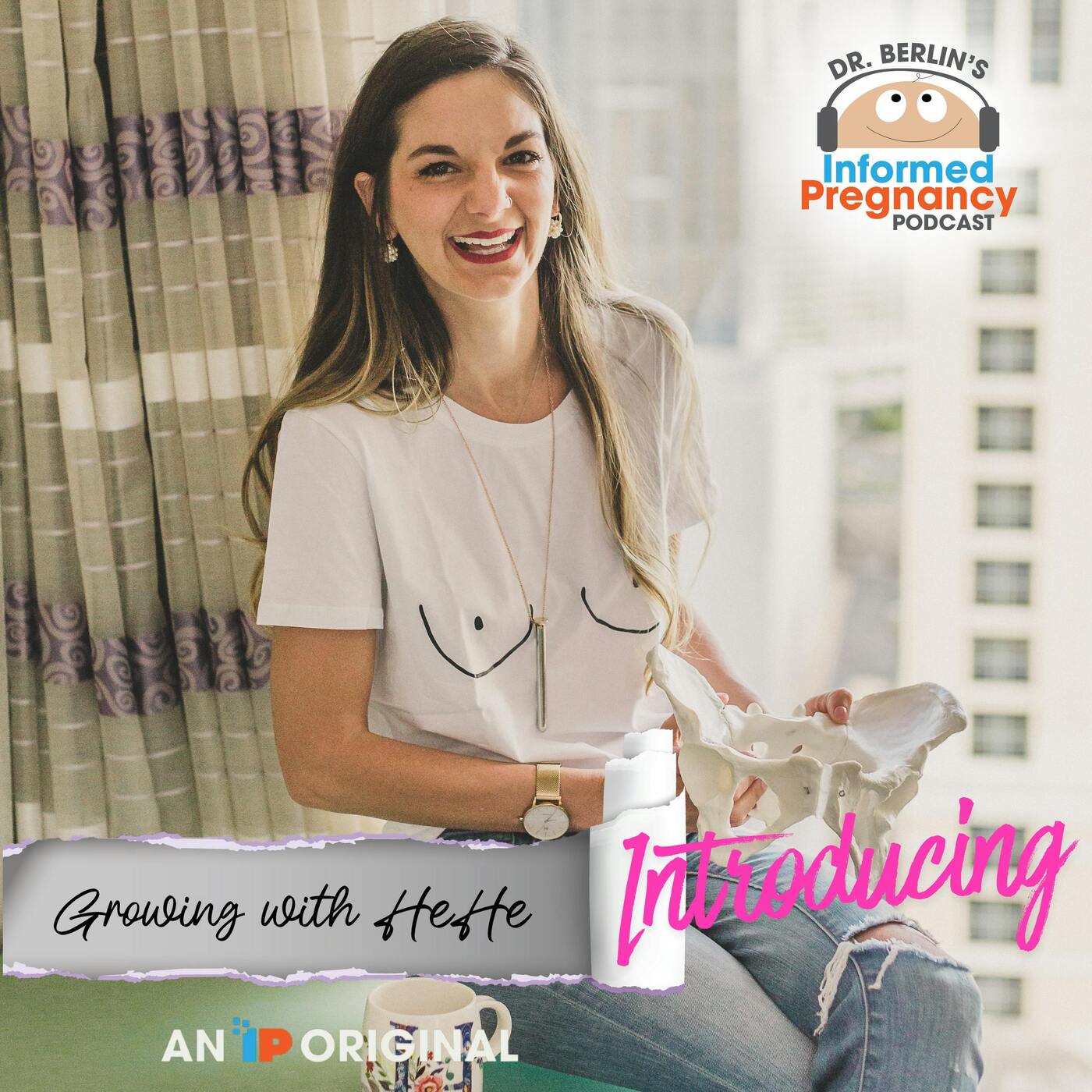
We have a brand new addition to the Informed Pregnancy family! This week on the podcast we have a special holiday audio preview of the first 3 episodes of Growing with HeHe. Or check out the full visual series here! Growing with HeHe is an intimate short-form video series following HeHe Stewart’s real-time first pregnancy journey. You may know her as a doula, educator, and advocate for trauma-informed birth but this time, she’s turning the spotlight inward.
From her roots in a small Mississippi town to founding The Birth Lounge, HeHe has spent years empowering others with calm strength and fierce clarity. Now, she invites us to follow her own path, sharing week by week the emotional highs, physical shifts, and vulnerable truths of her first pregnancy. Through honest reflection and intimate storytelling, we meet HeHe, her husband Nick, and the circle of people who shape her journey.
“I do a lot of encouraging people that you are doing enough and you are enough and your love just the way that you are.”
“my authority comes from the parents that hire me. I answer to them, they are my boss and I am loyal to them.”
“I don't need a piece of paper that says I'm a good doula. I know I'm a good doula.”
“thank you so much for sharing that. I appreciate your perspective. I wanted to let you know that I'm going to be declining this for X, Y, and Z reasons, and I feel really confident in that.”
“We didn't judge cows by how they had their babies. We didn't judge ducks when they laid their eggs”
AI-generated transcript with speaker labels — may contain errors, especially names and medical terms. Dr. Elliot Berlin, DC appears in blue; HeHe Stewart in orange.
Dr. Elliot Berlin, DC[0:00] Hi, I'm pregnancy-focused chiropractor Dr. Elliott Berlin, and welcome to our second holiday hiatus episode in our very first Informed Pregnancy podcast episode of 2026. As we ease into the new year, I'm excited to bring you another special feature from our Informed Pregnancy Plus streaming channel. This time, we're diving into Growing with Hihi, a real-time pregnancy series following Hihi Stewart, doula, educator, and founder of Tranquility by Hihi. After years of guiding parents through pregnancy and birth, Hihi now turns the lens inward, inviting us to experience her own pregnancy through both her professional expertise and her personal, vulnerable day-to-day reality.
[0:47] Even with her deep knowledge, Hihi approaches each stage with curiosity, intention, and a refreshing willingness to discover things as she goes. In our Zoom conversations, we explore how her body is changing, how her mindset around birth is evolving, the decisions she's weighing, and the surprising ways her professional experience both supports and challenges her as she moves through the journey herself. The video series pairs these conversations with personal photos and clips from her life, creating an intimate, real-time portrait of a birth professional navigating pregnancy from the inside out. What you're about to hear is a special audio-only cut featuring a three-episode
[1:29] arc of Growing with Hihi. To watch the full series and explore more pregnancy and postpartum programming, visit Informed Pregnancy Plus at informedpregnancy.tv. I now present Growing with Hihi. Welcome to Growing with Hihi, a new series from Informed Pregnancy Media where we follow beloved doula educator and fierce birth advocate Hihi Stewart through her first pregnancy week-by-week. If you've heard episode 454 of the Informed Pregnancy podcast, you've heard Hihi talk about birth from the outside. This time, she's taking us inside. It's her first pregnancy and she's documenting it all, honestly, bravely, and with nothing to hide. Hihi grew up in a tiny town in Mississippi, just about a thousand people.
[2:42] Her home was full of love, discipline, and high expectations. The parenting style leaned authoritarian. Her parents worked hard, often multiple jobs, and they expected the same drive and dedication from their daughters. Even as a kid, Hihi was drawn to babies. She started babysitting at age 12 and became known for her uncanny ability to soothe even the fussiest newborns. That instinct eventually led her to earn a master's degree in human development and family studies, with a focus on child development and trauma-informed care. Nearly a decade ago, Hihi took her first doula training and immediately felt like something was missing. The training was too shallow, too impersonal.
[3:28] So she built something deeper. She founded the BirthLounge, a trauma-informed, data-driven support system for expectant parents who want more than just birth prep. They want real tools to protect their autonomy and reduce trauma. For years, Hihi has been the calm in the storm, the voice of reason, the person holding space for others. Now, the story is hers. In this series, we'll follow Hihi in real time through her first pregnancy and birth. Each episode, we'll hear directly from her, raw, unfiltered, and fully open about what she's experiencing in her mind, body, and spirit. From time to time, we'll also hear from her husband, Nick, and others in her world,
[4:13] adding layers to the story and new perspectives on this transformational journey. The first few episodes will introduce you to who Hihi is, the life she's built, and the fire that drives her. Then we'll catch up to present day and follow along week by week, all the way to birth and beyond. This is Growing with Hihi. Join us for the next episode, where Hihi herself takes the mic, brings us into her world, and starts from the very beginning. Welcome to Growing with Hihi, episode 2. Now that you've heard a bit about Hihi's journey from the outside, it's time to bring her in. This series is all about her, her voice, her story, and her experience. So let's rewind to the beginning and get to know Hihi in her own words.
[5:19] Not the pregnant mama, not the doula or educator, at least not yet. Just a good girl from Mississippi who wasn't even told where babies come from, and who somehow still grew up with a fire to change the way families are born. Hihi Stewart, welcome to Growing with Hihi.
HeHe Stewart[5:36] Thank you so much. I'm so excited to be here.
Dr. Elliot Berlin, DC[5:39] I'm excited to have you. Let's get to know you. You grew up in Mississippi in a tiny town. What was that like day to day?
HeHe Stewart[5:45] Well, at the time, it was all that I knew. And it was lovely, I thought. It was great. Our neighbors were right down the street, which also meant my parents and their friends were so close. We always had people around us. And we lived what today people would call a crunchy life. Our food came from our backyard. And we slaughtered the cows that my dad raised for meat. And our neighbor gave us eggs when we traded them meat. And our veggies came from our neighbors. And the teachers that taught me in high school were also my dad's teachers. And so growing up, it was great. I didn't know any different. I loved being from a small town.
Dr. Elliot Berlin, DC[6:25] Wow, no Instacart. No Instacart, no Instagram. Yeah, no Instagram, Insta-slaughter. Okay, so I mean, does that give you a little insight into birth? I mean, if you had the animals around you, were you exposed to birth in that way?
HeHe Stewart[6:41] Every day, all day. And I think that's actually why it was so normal for me is because when cows were born on the farm, nobody delivered them. They delivered themselves. And my dad would be there observing and watching to make sure things went well. But a lot of times, cows would have their babies overnight. And so we would wake up to new babies. Every now and then, we would have a cow that went missing, and we knew she was pregnant, and we'd go searching for her. And something was, in fact, wrong. I learned that cows do have C-sections. And so from cows to pigs to horses to ducks to chickens, I learned about birth in a very normal and natural way.
[7:21] And it was very normalized. It was just a part of life.
Dr. Elliot Berlin, DC[7:25] It's very cool. I once met, when I was doing doula work, an Ogudjuin who was towards the end of his career. And he had grown up on a farm, and he was so gentle and so calm and so patient with his patients. And I one day asked him about it. I'm like, how and why? It's just not the norm. He stands out from the norm in that way. And he's like, well, I just grew up with it on the farm. We'd go, let's just be there. And if they needed a little help in hand, we would just get in there and give them a helping hand. Otherwise, we would just stand by and watch. Now you make me think, I didn't realize cows have C-sections. I'm surprised nobody has marketed it as Caesarian beef.
[8:02] I don't know what the benefit would be one way or the other, but there's always people looking to find an angle. How about growing up? You're one of two kids.
HeHe Stewart[8:12] I am, yeah. I have a little sister. She's five years younger than me. And growing up, we were really close. But then as we got older, five years is a lot. So 15 and 10, very different ages. 20 and 15, 25 and 20, those are really, really different ages. And so during our teen years, we kind of got a little bit more distant just because our lives were in such different places. She was in high school when I was deep into college. And now that we're adults again and we're both, well, she's almost in her 30s. She would die if I said, we're both in our 30s. She'd be like, I am not. But now that I am in my 30s and she's nearing her 30s, we are starting to get close again
[8:52] because our lives are back into the same place. And I not only love having a sister, but I love being an older sister. And it is one of the titles in my life that I hold to a high esteem. I really take a lot of pride in being an older sister. And I think for me having this first baby, it's also very important that we have other children because I know what it's like to be a first born and have other siblings. And it has definitely shaped me and who I wanna be as a mom.
Dr. Elliot Berlin, DC[9:23] You have described yourself as a rule follower. How does that affect your relationship with your parents?
HeHe Stewart[9:29] Yeah, my parents and I have a very interesting relationship. I was a big rule follower as a child. I grew up being a really good kid, if you will. I didn't sneak out as a teenager. I didn't lie because I was always afraid of getting in trouble. My parents though, growing up in a really strict conservative household, it did sometimes feel like no matter how good I was or how well I followed the rules, I couldn't do enough. I couldn't be enough for them. And that has definitely impacted me as an adult as well. And I think it has impacted the work I do as a doula. I do a lot of encouraging people that you are doing enough and you are enough and your love just the way that you are.
Dr. Elliot Berlin, DC[10:15] It's such an interesting mix you put together
HeHe Stewart[10:18] because it's sort of like conservative hippie. Yeah, I think that when you live 35, 40 minutes from your nearest grocery store, you're not a hippie because you want to live on a commune. You live on a commune because your nearest grocery store to get milk is three, five minutes away, you know?
Dr. Elliot Berlin, DC[10:36] Right. But I mean, it seems like you've moved to the other side, liberal hippie.
HeHe Stewart[10:41] Yeah.
Dr. Elliot Berlin, DC[10:44] And also, okay, age 12, you're babysitting and they call you the baby whisperer. So you obviously had a knack for kids from an early age.
HeHe Stewart[10:53] Earlyest age. And so I could put any baby to sleep and I still can. My parents, I mean, obviously you can't drive at 12 and my parents used to drop me off and I would babysit. And sometimes I would have multiple children at a really young age, at 12, 13, 14. And these parents were just blown away. And I used to say, well, I'm gonna be a professional babysitter which I thought would translate to being a nanny. Which I'm grateful now that I'm a doula and I get to help people for much longer than a nanny. And I get to be part of the birth experience too which a nanny doesn't get. But yeah, I've always been kind of this baby savant, if you will. I feel very connected to them and I can walk
[11:35] into a room and babies are very drawn to me. And I don't know, I can be around a baby and they just settle and I don't know. It's just an energy I have.
Dr. Elliot Berlin, DC[11:45] Like you said, sister, five years younger is not exactly the same cohort. So was that sort of a babysitting 101 for you?
HeHe Stewart[11:54] Yeah, I think so. Obviously at five, my parents didn't have me babysitting her, but I always had a little tag along. And so for my entire life, for what I can remember, I was always having to think about, oh, and we've got to accommodate it for her and oh, but she can't do this. So maybe we choose something different or oh, I don't think I'm gonna play that game because my little sister can't play either. And so it's just, you know, it was a natural way to kind of think about younger children and get used to life with younger children and learn how to care for something and someone that was younger than me.
Dr. Elliot Berlin, DC[12:32] You studied human development and family studies.
HeHe Stewart[12:34] What drew you to that field? Yeah, so at the time I actually thought that I would work with families on the autism spectrum. So families that had children that had autism spectrum disorder, it was a big passion of mine. And I knew that I needed something in addition to my psychology undergrad degree. And I chose human development and family studies because human development, I feel, is pretty obvious. But the family studies piece came from me really understanding and being able to observe how ASD impacts family dynamics. And I knew that I wanted to get into families and make their life easier. It's kind of funny because after I got my master's,
[13:17] I moved to Boston and I did try to get into the ASD community and doors were just shut in my face and the universe was just like, nope, nope, nope, nope. I couldn't get emails back. I couldn't get my foot in the door. I couldn't, there were no openings in organizations I was trying to join. And it ultimately pushed me into early childhood education which ultimately led me to be in a doula.
Dr. Elliot Berlin, DC[13:40] The universe clearly wanted you there because there was such a need in the autism community for great energetic people like you. So the fact that the universe was artificially closing doors for you made you kind of go where you needed to be. I wonder what college was like. Growing up in a super conservative family, we kind of said in the intro, no even talk about sex. How did like getting into college sort of, I'm curious what walking into that tunnel feels like.
HeHe Stewart[14:10] Well, I think it's probably no surprise that I had a lot of firsts in college, including sex. I went to the first late night taco bell run in college and drank alcohol for the first time in college. And there were so many firsts where people around me had already experienced these things in high school and I just didn't. Not only did I not have that freedom but growing up in a super small town, I didn't really have the access to a lot of it either. And yeah, so for me, for college, the first year was a little wild. I'm sure everybody can kind of predict that. But after that I settled down and I really kind of settled into who I was and I started to find my voice
[14:55] and I started to really find that maturity that I think a lot of people pick up in college. And it wasn't until my second semester of my senior year of college that I decided to go to grad school. So I actually decided to go to grad school just weeks before I needed to apply.
Dr. Elliot Berlin, DC[15:13] Was it hard to shake the sort of guilt
HeHe Stewart[15:15] that you must have had as a kid with all those firsts? Oh, I didn't have any guilt over any of those firsts. I actually had a period of time where I was really resentful to my parents for not letting me have more of a fun high school experience. And so college showed me that I wanted to be a little bit different as a parent. And so I think it has shaped who I wanna be as a parent. And my husband and I talk about this a lot is what kind of freedoms will we give our kids in high school? Because he grew up with a lot of freedom and he did not have that experience freshman year. He had a very easy transition into college and not one that was mirroring Bourbon Street.
Dr. Elliot Berlin, DC[16:02] Well, we're just at the beginning of the journey and there'll be a lot to talk about. Hihi's story is powerful and we're just getting started. In our next episode, we'll explore how she stepped into the birth world, what she saw missing from traditional doula trainings and how she created something entirely her own. Every pregnancy is a story. This one belongs to Hihi. Share us with a friend and be sure to come back next time as the journey continues. Previously on Growing With Hihi, we explored Hihi's upbringing, family life and the early academic journey that gave her a deeper understanding of childhood and families. Today we pick up with the moment that changed everything
[17:10] when Hihi found her calling it birth work. From her very first doula training to the creation of the birth lounge, this is the story of how she built something that didn't exist and why. Hihi, welcome back.
HeHe Stewart[17:23] Hi, I'm excited to be here.
Dr. Elliot Berlin, DC[17:25] All right, so what first introduced you
HeHe Stewart[17:27] to the world of birth work? Well, I was working in early childhood education and I realized that when parents brought their children to childcare for the first time as a newborn, this is right as your maternity leave is ending. You're a fresh parent, your baby is a fresh newborn and you're having to kind of go through this transition of going back to work and handing over your baby to what seems like strangers, people that yes, you have met and interviewed and you feel comfortable with the facility, but they are essentially strangers. I just found like parents had so much angst. There was a lot of energy there. They were a little bit excited to get back to normal life and have routine.
[18:09] They were a little bit nervous about handing over their baby. They were a little bit sad to have to be going to work and I just thought there has to be a better way to this. I don't know why this is so hard. I'm not sure, I was very young. I did not have children at the time and the more I looked into it, I realized, hmm, actually I think that we've got to intercept these people way down the line, way before this because the more birth stories I heard, the more traumatic birth stories and to me at the time it was normal. I was like, wow, birth is horrible. This is terrible and I realized that if we could actually help people prepare for birth that their transition back to work
[18:54] would not be filled with as many or as intense of emotions as what I had seen in the classroom. So that's kind of what drove me to explore birth work.
Dr. Elliot Berlin, DC[19:03] That was really powerful insight from someone 10 years before having your first kid and also being really young.
HeHe Stewart[19:12] I think having a master's in human development and family studies helped. I really understand the family dynamics. I really understand the inner workings of human interaction and human relationships and at the time I was fresh out of my master's and not only was I really passionate about it but it was in the forefront of my brain. And so I was really, really committed to helping families have a smoother and easier time and I think I did that in the classroom but my impact as a doula has just been tenfold from what I could and was able to do in the classroom.
Dr. Elliot Berlin, DC[19:48] How did you learn about doula work?
HeHe Stewart[19:51] So I had a coworker actually who had shared with me like you'd be a really great doula and I thought, what is a doula? And she said, well, it's kind of like a birth coach. Like you work alongside midwives and OB-GYNs and you coach people in having babies. Well, growing up in Mississippi, we are the state that has the highest teen pregnancy, right? So I had already had it.
Dr. Elliot Berlin, DC[20:10] Congratulations.
HeHe Stewart[20:11] Thank you very much. I'm not sure that's an award we wanna win but we've got it year after year.
Dr. Elliot Berlin, DC[20:15] You're the best at something.
HeHe Stewart[20:17] Yeah. And so I had friends that had had babies before and I thought like, oh yeah, I've already kind of done this in some regard, not obviously in the role of a doula but kinda and so I took a course and I was actually very, at the time I was really excited because it was only a weekend course and I thought, yes, I'm gonna be a doula after a weekend.
Dr. Elliot Berlin, DC[20:42] That's how I became a bank writer. Exactly. For your weekend course.
HeHe Stewart[20:47] Exactly. And then I got into the weekend course and I was really disappointed and I was actually a little bit, I don't know, I might even say like light devastation because I just could not believe, disbelief is another great word. Like I could not believe that the training was so shallow and remember I already had a master's at this point in human development and family studies and so when they talked about the development of pregnancy, it was like an hour. Why? I just studied that for years and then when we talked about postpartum struggles, we talked about it for maybe two or three hours and I was just blown away. I really was blown away and I was really, really sad
[21:33] and also concerned with the lack of mentorship that came from the training afterwards. After the weekend course, you get a certificate that says, congratulations, you're a doula and then they send you out into the world and you start being a doula and there's no mentorship. Now of course, this was 10 years ago and so there are other programs now that probably incorporate more mentorship but who knows if it's a requirement. I certainly don't but it wasn't even incorporated in the program that I took 10 years ago and like I say, that was my first really kind of hit in the face where I was like, woo, what a wake up call. We are having people go out to call themselves doula
[22:12] and support people in this very pivotal time in life like pregnancy and birth and we are training them for just 16 to 20 hours.
Dr. Elliot Berlin, DC[22:22] My brain is exploding with ideas right now. First of all, I think that your training as a doula came much earlier. I think that doula was always a thing in smaller towns and people were always surrounded by the village and you just learned on the job naturally and now it's a professional trade because we don't live in the village anymore. We don't have all the people around us. So I think you got the OG doula training which probably by contrast showed you how much was lacking in the more traditional training. That's explosion number one in my mind. Number two is I did doula training. My wife did doula training and I thought it went two different ways.
[23:08] I was impressed at how much they packed into that three or four days on the one hand if it was only gonna be three or four days but we also had a training where there was strong encouragement for mentorship afterwards. So I sort of looked like, I looked at it like getting a driver's permit. It was like, hey, okay, now you can get behind the wheel and we're pretty sure you're not gonna harm anybody but you don't know how to drive yet. Now you have to go learn how to drive and you do that with other people who are very good at it and teach you from all their experience how to drive. That's kind of how I saw the doula certificate but I wonder for you
[23:41] because you kind of had real world birth experience already both on the farm and with all those teens where you grew up, if the contrast of that just few days really and then all your college and graduate training made it feel very skimpy.
HeHe Stewart[23:59] Well, I also didn't know about a ton of programs. Like I say, this was 10 years ago. I just did a simple Google search and there were only two programs at the time that really popped up as the main ones. And so I took the one that came to me first in Boston in the Boston area. And so, I gotta be honest, I didn't really do too much due diligence into the training that I did. I didn't realize that I should and I do think 10 years ago, the access to the many types of trainings that we have now just was not available.
Dr. Elliot Berlin, DC[24:32] You decided not to certify.
HeHe Stewart[24:35] I did, I've never been certified and God be willing, I probably never will. I have a real problem with doulas being certified because it typically means that you answer to that organization. That organization has some sort of not ownership, but they do have some sort of authority over you. And the way that I view a doula's role is my authority comes from the parents that hire me. I answer to them, they are my boss and I am loyal to them. I don't take insurance money because of that. I don't work for hospitals because of that. I work for the people who hire me. I am their cheerleader, I am their person. And so for me, it was a conflict of interest
[25:22] to become certified. Now that wasn't my original thought. I didn't become certified because at the time it felt like a money grab. They made you pay for the booklet and they made you pay for the test and they made you pay for this and they made you pay to print out your certification and they made you pay for that. And for me, it felt very, in all honesty, it felt very pyramid schemey where I thought, I don't like this at all. And I don't need a piece of paper that says I'm a good doula. I know I'm a good doula. I have two other pieces of paper from universities telling me that I am qualified for this position. And so, yeah, I didn't. And now just over the years,
[26:02] I've seen how certifications, not always, but they can definitely interfere sometimes with patient care and compromise that in certain ways.
Dr. Elliot Berlin, DC[26:12] A zillion questions, but I have to really harp on one thing that you said. You don't take insurance money and what comes along with that? I think we all want to go to providers who take our insurance, which is one of the things that's wrong with the system. Insurance is really in my mind there for when there's disease, when there's something wrong and you need to write it, not for all the health and wellness things that we do. My gym doesn't take my insurance. I can choose whatever gym I want to. My trainer's not told which exercises they're allowed to do with me and which exercises they're not allowed to do with me. And I think we don't realize
[26:45] how much of that control we give up when we put ourselves in the insurance arena. Very strong point. Also, I wonder what it was like to attend your first birth that really is a professional doula.
HeHe Stewart[26:59] Yeah, so as for the insurance question, I do take HSA and FSA dollars and I will give people a super bill that they can then submit to their insurance to get reimbursed and we do have a lot of clients who are successful in that. For me, I envision a world where our nation gives a stipend to families and they are allowed to use that stipend in whichever way that they want and hire whoever they want for their birth, regardless of that person's training or certification or education background. That family will be able to use that stipend, that money to hire their doula.
Dr. Elliot Berlin, DC[27:35] Is it too soon to start calling you Madam President?
HeHe Stewart[27:38] Oh, I don't know if I want that responsibility.
Dr. Elliot Berlin, DC[27:42] I bet you don't. Nobody who would be good at it wants it, but I really do love that approach.
HeHe Stewart[27:46] I do think that it's a very equitable way to get doula care into the hands of people and it leaves your doulas as a neutral third party and they are not obligated to anyone except that family, which is essential in the doula role. When doulas start answering to insurances or hospital systems, then it really does compromise that role almost 100% in my mind. As for attending my first birth, it was really great. So this was a second time mom and we're still friends today. She actually is, I love her so much and we stay connected and that baby is almost 10 and I cannot believe it. Oh my goodness, it goes so fast. That is wild. And I get pictures every year
[28:28] when that child goes to school for a new grade and it's just so much fun. But yeah, she had a lot of trauma. She had a very traumatic first birth and it was actually the birth that led me to realize, oh, I cannot just meet with someone once or twice and then be at their birth. We have so much education to do. We have so much to talk about. I have so much to learn about this mom and this family and her relationship with her partner and the goals that she wants to achieve and any past births that she has. And it's really funny, I'll give you a little snippet, but we had this plan that we did not want a certain provider because that provider had caused her trauma in her first birth.
[29:14] She did decide to go with the same hospital, but we had a plan. We had practice advocating. We had practice asking for a new provider. We had practice saying, no, thank you. I don't consent to this provider being part of my birth. And wouldn't you know that when we showed up in labor, we were pretty far along and the only provider that was available was the one that we didn't want. And we did say, no, thank you. I don't consent to this provider. And they said, well, she's the only one. And we said, okay, we'll just wait for the next provider. And he said, they are in the OR and it's going to be a while and this baby is coming. And so we did practice and we did use the things
[29:53] that we had practiced and we did advocate. And it still turned out in a way that we didn't want, but looking back, and this mom will tell you the same thing, that was very healing. It was not about not having that provider. It was about finding her voice to know that she could stand up to that provider and advocate even if that provider was there. And that changed my whole look as a doula. And so now I don't teach people just to say yes or no to things. I teach you how to interact and engage with the hospital system, no matter who shows up to your birth. Yes, your doctor may be on call, but they may not be either. And I still want you to have the same amount
[30:35] of confidence that you would with your provider with a provider that you've never met before.
Dr. Elliot Berlin, DC[30:41] Wow, that's so powerful. And you've switched from doing one-on-one doula support and you built something bigger, the BirthLounge. Tell me about that.
HeHe Stewart[30:49] I did, the BirthLounge is an online platform. It provides comprehensive childbirth education that is designed to help people avoid birth trauma. So it is trauma-informed patient-centered care from start to finish. And it teaches women how to engage and interact with the hospital system in a way that centers them and de-centers the hospital. It is respectful care. So it teaches you how to respectfully communicate, which I think is lost in a lot of advocacy. A lot of times, advocacy looks like, no, I'm not gonna do this, or I absolutely will not follow your rules. And that's not what we teach in the BirthLounge. The BirthLounge is more like, thank you so much for sharing that.
[31:28] I appreciate your perspective. I wanted to let you know that I'm going to be declining this for X, Y, and Z reasons, and I feel really confident in that. I am so thankful that you're gonna be respectful of that. And I'll let you know if anything changes. And please come to me if anything changes on your end. And so you can see where it's collaborative care between patients and providers, but it's still very much centers that birthing person and their partner and their goals.
Dr. Elliot Berlin, DC[31:57] How do you think your background, both personally that we've talked about, and also in child development, has sort of uniquely shaped the way that you educate and support the families that you work with?
HeHe Stewart[32:09] Well, in two ways. I think that my confidence is impenetrable because just growing up in a small town and on a farm, you have no choice but to be confident. There are so many things in a small town and on a farm that you just have to be confident, and we have to do this, and you've got to get up at 6 a.m., and this is what today looks like, and you just have to do it. I guess that kind of goes back to grit and hard work as well. My work ethic is, I think, very different than a lot of people's as well, and then the second thing is, there is no judgment. We didn't judge cows by how they had their babies. We didn't judge ducks when they laid their eggs,
[32:49] and again, going back to the small town, you're with those people your whole life, so the same people that are in your preschool class, you're with them forever. It is the only thousand people that are around you, and so you have to learn how to be nonjudgmental because it's just the way of life. If you judge that person, then now you've got someone in your very small circle that you don't get along with, and that doesn't serve anybody, and when you are in kind of a smaller village versus where I live now in Boston, if I didn't like somebody, I could just turn to the left and meet 10 more people. That doesn't happen in a small town, and so you have to learn how to get along with people.
[33:30] You have to learn how to work together with people, and when natural disasters strike, especially down in Mississippi, we are affected by hurricanes. Our little town was taken out by Hurricane Katrina, and we are affected by tornadoes. Just recently in 2024, the spring of 24, my parents lost their entire home. It was completely demolished by a tornado, and it is those thousand people that are around you that rally around you and help you clear your land. They come and cut the trees off your house. They come and help you gather up your belongings that have been strode for miles and miles, and so I think that this idea of we're all in this together
[34:13] and we love each other no matter what was really instilled in me from a really young time in life, and I really do carry pretty much no judgment for people in life. I just want you to choose what you choose and be happy and more so be confident in that.
Dr. Elliot Berlin, DC[34:31] Super refreshing. After we talked about you growing up in the town of a thousand people on Informed Pregnancy Podcast episode number 454, a great episode, I was standing in the supermarket looking around and assuming there's about a thousand people in here and I'm like, what if this was the entire community I grew up with? This is hee-hee's whole town right here. This is hee-hee's whole town. It was a crazy revelation. Next time we'll learn about Nick, the EMT turned healthcare administrator who won hee-hee's heart. Every pregnancy's a story. This one belongs to hee-hee. Share us with a friend and be sure to come back next time as the journey continues.
Want more pregnancy + parenting? Start your FREE TRIAL of Informed Pregnancy+ and get access to all our curated pregnancy and parenting content — original series, iconic birth films like The Business of Being Born, prenatal workouts and more.
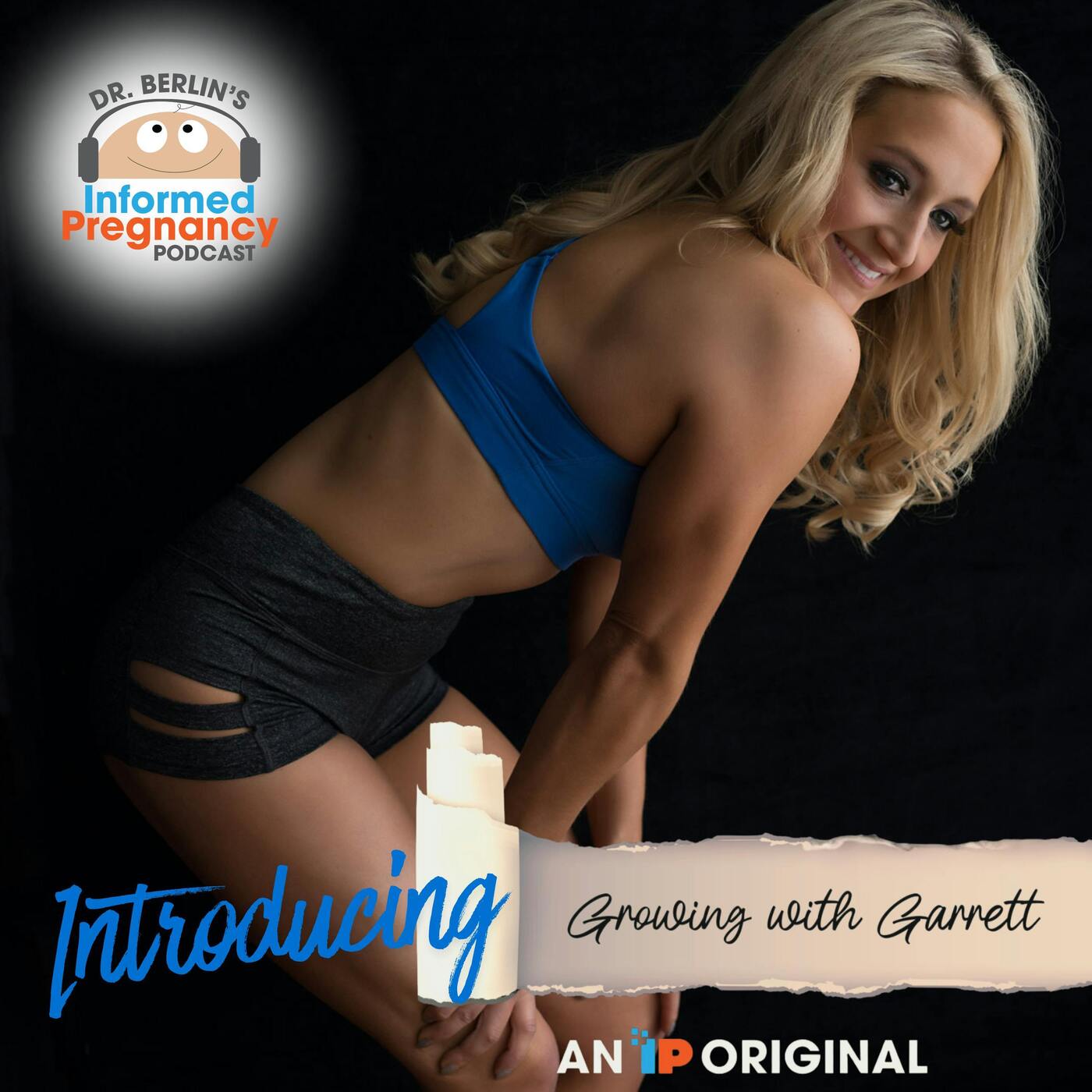
We have a brand new addition to the Informed Pregnancy family! Here’s a special holiday audio preview of the first 3 episodes of Growing with Garrett. Or check out the full visual series here!
Growing with Garrett is an intimate short-form video series following Garrett Kusmierz’s real-time pregnancy journey as she prepares for a more empowered second birth and postpartum experience. The series was inspired by Garrett’s guest appearance on The Informed Pregnancy Podcast where she shared her remarkable story: an easy conception, a traumatic birth, a challenging postpartum recovery, and an unexpected struggle with infertility leading up to her second pregnancy.
We’ll follow Garrett through weekly checkins as she navigates this pregnancy differently, armed with lessons learned from her past and a deep commitment to making this experience better. Each episode features Garrett’s personal photos and videos to help bring her raw story to life, a visually dynamic guide through Garrett’s mental and physical experiences.
AI-generated transcript with speaker labels — may contain errors, especially names and medical terms. Dr. Elliot Berlin, DC appears in blue; Garrett Kusmierz in orange.
Dr. Elliot Berlin, DC[0:00] Hey everyone, it's pregnancy-focused chiropractor Dr. Elliott Berlin. While our team takes a short holiday break from our regularly scheduled Informed Pregnancy podcast episodes, I'm excited to share something really special from our Informed Pregnancy Plus streaming channel. We recently launched an original series called Growing with Garrett, which follows the real-time pregnancy journey of Garrett Kozmeyers, founder of Cozy Kozy, and a resilient, thoughtful second-time mom navigating a challenging and emotional chapter of her life. Garrett takes us along through unexpected detours, emotional hurdles, and powerful breakthroughs she's navigating,
[0:37] all while juggling the everyday challenges and rewards of parenting her toddler. Through the series, Garrett and I connect over Zoom for honest conversations about the physical and emotional changes of pregnancy, lingering postpartum feelings, preparing for birth as an entrepreneur, and the realities of growing a baby while managing real life. The video version blends our talks with personal photos and footage from Garrett's world, creating a warm, intimate portrait of her journey as it unfolds. After a rough first birth, Garrett struggles with postpartum, and then secondary infertility, and then a rollercoaster of a second pregnancy and plans for a better birth. What you're about to hear is a special audio-only
[1:22] cut from a three-episode arc of Growing with Garrett. If you find yourself drawn into her story and want to follow the full experience from vulnerability to resilience to birth and beyond, you can watch the complete series on Informed Pregnancy Plus. Visit informedpregnancy.tv. Now, let's get started. Welcome to Growing with Garrett. Garrett's first pregnancy was smooth and easy, but her birth and postpartum experience? Not so much. The reality of what happened in the delivery room and the weeks that followed changed everything, not just for her, but for the work she does and now to help other parents. This series, Growing with Garrett, was sparked by her conversation
[2:16] on the Informed Pregnancy podcast, episode number 451, where she shared her full pregnancy, birth, and postpartum story. Now, we're following up with her in real time through this pregnancy, a brand new pregnancy, seeing how she's preparing for a more empowered birth and postpartum experience. Today, we start at the very beginning. What happened the first time around? Garrett Cosmiers, welcome to your show, Growing with Garrett. Let's dig in.
Garrett Kusmierz[2:44] I'm so excited to be here and to share all the things, but really, I think to reflect in this first episode on my very first pregnancy, it was the easiest thing I've ever done.
Dr. Elliot Berlin, DC[2:57] Oh, you don't hear that a lot. Okay. Let's even jump before pregnancy. What was your life like before you had your first baby? Can you even remember?
Garrett Kusmierz[3:05] I can because it was very busy. I was in the girl boss era. I had five jobs. I wrote a book. I did real estate. I had a coaching business. I started a podcast. I was really doing the most. And on top of that, really focused on my fitness. I wanted to become as strong as humanly possible. And I think I did it. I competed in powerlifting. I competed in bodybuilding. And I was really dedicated to fitness. At the time, I didn't realize how obsessive it was in a healthy way. But what I realized in hindsight is it was really a grounding thing for me because I was so in my head for work. So fitness was really how I got into my body and connected with myself.
Dr. Elliot Berlin, DC[3:46] I mean, does that leave you with a great relationship with your body,
Garrett Kusmierz[3:49] really aware and understanding and taking care of each other? Yeah. You know, the beginning of bodybuilding, I didn't realize it, but it was the beginning of a healing journey with a long standing eating disorder, with a long standing, I guess, poor self image that I didn't realize I was healing. And I had to master my physical self to really heal my inner self. And so there was some wounding that informed the beginning of the bodybuilding journey. But it became such an empowering journey. It became something that was really healthy for me. And getting as strong as humanly possible had this crazy side effect of also getting into the best shape of my life with ease, really. And I enjoyed it.
[4:29] So it was a powerful healing experience that I can say by the end of it. Aside from some injuries, I'm also a former gymnast and cheerleader. I was just really proud of myself.
Dr. Elliot Berlin, DC[4:40] Gymnasts, did you start that as a kid?
Garrett Kusmierz[4:43] Yes. Like as soon as I was out of diapers, I was.
Dr. Elliot Berlin, DC[4:46] Oh, wow. And that came full circle, which we'll talk about later. But
Garrett Kusmierz[4:51] so a lot of flying through the air. Yes. Lots of that. I really thrived on living on the edge.
Dr. Elliot Berlin, DC[4:57] And what kind of time commitment during bodybuilding? What's the daily grind like
Garrett Kusmierz[5:02] there? Is it at the gym every day? I would do Monday through Friday. I was also a fitness instructor in Boston. I taught spinning. I taught Barry's boot camp. And so I taught 5 a.m. for about three years of my life, Monday through Friday. And then after I teach the 5 a.m., if I wasn't teaching the 6 a.m., I'd go lift and then I'd teach a spin class. And then some days I'd go back later after like the nine to five hours to teach more classes. So it was very full, but I based it on a squat bench and deadlift day. So lower body and upper body pull, lower body, upper body push. And then some days I'd have a fourth kind of mixed day with accessory work.
Dr. Elliot Berlin, DC[5:43] You make it sound so easy. How many hours? How many hours in the gym on a given day?
Garrett Kusmierz[5:48] I was pretty efficient. I think 45 minutes I could get a pretty solid workout done. But if I was filming stuff or wanting to watch my form, I would sometimes be in there an hour to 75 minutes.
Dr. Elliot Berlin, DC[6:00] And for someone who has poor self-image, not a lot of self-confidence, a competition, what's a competition like both in terms of competing against other people and then just being so observed?
Garrett Kusmierz[6:11] You know, it didn't feel like observed until the moment I was on stage. For me, it was really this competition of feeling like I wonder what… It was a science experiment. I wonder what will happen if I tweak my carbs, if I cut water weight for a weigh-in, you know, what will happen? I really approached it with curiosity, which I think helped my, I guess, self-image and the leaner I got. I just I actually had the the reverse experience of that movie Shallow Howl, where once I saw myself in the best shape of my life, I really can't see myself in any other way. And I'm definitely not in that shape right now, but I still feel that because I got to see it and see what was possible for myself.
[6:53] But the only thing that kind of, I guess, bothered me was that people would start commenting on how great I looked. And it almost for a… Before I did some work around it, I was like, oh, are they affirming that I didn't look good before that?
Dr. Elliot Berlin, DC[7:07] You know, that's where my mind would go. Yeah, if ever I spent the 45 minutes. Okay, so then you've got the whole pregnancy thing came easy to you, both in terms of conceiving, first shot, and then being that healthy going through a pregnancy, you felt good.
Garrett Kusmierz[7:28] Yeah, I was shocked at how hungry I was. I was constantly eating and I just leaned into that. My dad has a story about going out to dinner with me and I always ordered two entrees. And he's like thinking he's going to get some of my leftovers and there were none. Very hungry. I leaned into the weight gain. I didn't feel like fat or I just felt like, wow, I can't believe what my body's doing right now. This is wild.
Dr. Elliot Berlin, DC[7:56] Did you keep up working out during the pregnancy?
Garrett Kusmierz[7:59] Yes, I didn't have as robust of a business as I do now. It was during the pandemic, so I didn't have a robust social life. So the gym was really where I spent the most quality time with myself and my internet friends posting my workouts. And I was doing three to four workouts a week in the gym lifting on top of walking and jogging.
Dr. Elliot Berlin, DC[8:20] Oh, weight lifting. And were you still teaching fitness?
Garrett Kusmierz[8:24] I taught until 14 weeks.
Dr. Elliot Berlin, DC[8:27] Until 14 weeks. What kind of classes?
Garrett Kusmierz[8:29] So this was during the COVID era, but I was doing Zoom, Barry's Bootcamp classes. I was doing some of my own fitness classes on Zoom. And then I did actually teach one Barry's class in Boston while they had like plexiglass up. And I was 14 weeks and I was like, something just feels weird about this choice right now. We were living in New Hampshire. It was a commute. And I was like, I think right now I need to pause.
Dr. Elliot Berlin, DC[8:54] And for your own personal workouts, did you go all the way to the end?
Garrett Kusmierz[8:58] I dead lifted the day I went in for my induction.
Dr. Elliot Berlin, DC[9:00] Wow. Other types of exercise besides lifting?
Garrett Kusmierz[9:06] I did a lot of mobility work. I spent much more time working on breath work, pelvic floor stuff, and a little bit of yoga. Not as much as I thought I would do, to be honest. I think since I'm pretty hypermobile that sometimes going, you know, that you get even more lax in pregnancy. So I almost felt like it was a little too much. But a lot of stabilization work on top of lifting.
Dr. Elliot Berlin, DC[9:29] And what did you have in mind for birth? Did you give a lot of thought?
Garrett Kusmierz[9:32] I didn't want to set myself up for just one reality. I was open-minded and I wanted to have a natural birth if possible. I wanted low intervention. I had met some experts through my podcast that had given me a lot of great information and I had a doula. But I also knew that if I needed the epidural to relax and open up, that I would do it if I needed to, but it wasn't part of my ideal plan.
Dr. Elliot Berlin, DC[9:59] What was your motivation for leaning towards unmedicated? Are you just not a medication person in life? Did you want to be more attached to the birth, be more present? What was driving that decision for you?
Garrett Kusmierz[10:12] Many things. I, like many, watched the business of being born and I was worried about what Pitocin could feel like, what it could do. I really wanted to focus on the fact that for hundreds of thousands of years, people have been giving birth and that it's something my body's designed to do and that it can do. And I also figured that I was strong and that I could move through the pain and use my breath to get through it. So I wanted that experience of, like you said, the presence and connection.
Dr. Elliot Berlin, DC[10:43] So super healthy fit person at the prime of your fitness of life, deadlifting on the last day before birth, planning for an empowered, ideally unmedicated or low intervention birth. What could possibly go wrong? Well, I guess you could listen to the full story of Garrett's first pregnancy, birth and postpartum experience on episode number 451 of the Informed Pregnancy podcast. And also you mentioned the business of being born. That wonderful documentary plus 30 others or so are streaming on Informed Pregnancy Plus, which can be accessed at informedpregnancy.tv. Thanks for joining us, Garrett. We're going to be back next time and really talk about the birth experience
[11:24] that you had. Don't miss it. Thanks for watching Growing with Garrett. Please share us with your friends and stay tuned as the journey continues. Previously on Growing with Garrett, we talked about Garrett's pre-pregnancy life, fitness, competitions, healthiest time of her life, peak and prime, and then an easy conception and a fairly easy pregnancy, and lots of thoughts and preparations for a low intervention empowered birth. What other kinds of things did you do to prepare for birth specifically? I know you mentioned the business of being born.
Garrett Kusmierz[12:37] Yes, I had the pleasure of having several guests on my podcast that were midwives, doulas, childbirth educators, and they all gave me access to their courses and portals, and I was just really inundated with great information about what I can do, what I can choose, what my rights are. I had a doula. I was doing prenatal massage. I was seeing a chiropractor. I was doing breath work, meditation, like anything and everything I could do to just get into the head space of trusting myself, and I was tipped off to a little bit of anxiety and fear just because it's something new that I had never done, but otherwise just working through that.
Dr. Elliot Berlin, DC[13:25] So it sounds like you are ready physically, ready mentally, ready emotionally, just very well-informed, well-prepared. Who was coming to the birth with you?
Garrett Kusmierz[13:34] My husband and my doula, and my mom wasn't coming, but she was going to be
Dr. Elliot Berlin, DC[13:40] geographically in the state of New Hampshire so that when I got home, she would be there. Oh, that's sweet. Okay. So what could possibly go wrong, I guess, is what I said last episode. How did your birth go?
Garrett Kusmierz[13:53] It was awful. I don't say this to scare anyone, but the lived experience I had felt like being a prisoner of war by the end, and I was induced, and so it was kind of a series of many interventions, but what I thought was positive was that I wasn't induced until 41 weeks, or maybe 41 in one was the day that I went in.
Dr. Elliot Berlin, DC[14:19] And was there a particular reason for the induction or just that you were beyond your
Garrett Kusmierz[14:24] due date? Just that I was beyond my due date. I had done a non-stress test. Everything looked good. They made me at 40 weeks. The day or two before I went in for the induction, we did another ultrasound, and everything looked good. Placenta looked good, and they just said, if you don't come in for your induction at 41 weeks, we can't guarantee that we'll have a spot for you in this hospital.
Dr. Elliot Berlin, DC[14:45] One of those lovely scare tactics. Were you doing things like some of the, I don't know, medical things, old wives tales to try to get things rolling?
Garrett Kusmierz[14:55] I think we tried everything except the pump, like trying to induce by nipple stimulation, like using my pump scared me a little bit, and so I was like, we tried it, and I was like, oh no, there's milk coming out. I want to save that for the baby. I don't want to do this. But literally everything dates, raspberry leaf tea, having sex, working out more, curb walking, induction massage. We tried it all.
Dr. Elliot Berlin, DC[15:22] Reflexology, acupuncture?
Garrett Kusmierz[15:23] Acupuncture. I hadn't met the acupuncture yet in the town that I live in. So I hadn't done that, but there were many points on my feet that my doula, who was also my prenatal masseuse, was activating.
Dr. Elliot Berlin, DC[15:36] All right. So all the things, and did anything seem like it was getting the ball rolling?
Garrett Kusmierz[15:42] Nothing. I was doing cartwheels on 41 and a half, 40 and a half weeks,
Dr. Elliot Berlin, DC[15:49] and I was like, maybe this will help, and nothing. Literal cartwheels?
Garrett Kusmierz[15:53] Literal. I have footage of this.
Dr. Elliot Berlin, DC[15:54] Oh my God. Okay. So already from outside the gate, you went to low intervention birth, and you're starting with interventions. I know it was a long process. What are the different interventions that you ended up having?
Garrett Kusmierz[16:14] So when I got to the hospital, I had zero dilation. So the first step was the pill that's designed to soften your cervix. And it took, I want to say, three or four of those pills to try to get me to open up. And I made it to a half a centimeter, maybe considerably one. It was questionable. And so then we did the Foley balloon, and that got me to just a hair under four. But we had to pull it out early because of my son's heart rate dropping. So that wasn't ideal. And then we tried Pitocin without an epidural. And by, it was technically day three of being in the hospital at night, we did an epidural that I believe did not work. And also, at the same time, things started to speed up.
[17:09] I'm trying to think what else would be considered an intervention. Just a lot of breaking my water, a lot of cervical checks.
Dr. Elliot Berlin, DC[17:16] I mean, that sounds like pretty much everything except surgery. So I mean, the pill, was that a vaginal pill? Inserted vaginal? Yes. Okay, so misoprostol probably. And then the Foley balloon, and then Pitocin without an epidural, then with an epidural, then water breaking, and a bunch of cervical checks. Sounds the exact opposite of what you were planning for. It sounds actually fairly business of being born, you know, sequel. Yeah. I mean, was that barreling towards potential cesarean?
Garrett Kusmierz[17:57] It's interesting in hindsight. I don't know why they waited so long because a few, I want to say 30 minutes after the epidural, I learned that I was spiking a fever. And my son's heart rate was continuing to drop, and I was transitioning. So I was making progress, but there were also things happening that were not ideal. The epidural technically happened on Wednesday, but it was very close to midnight. And it was by about 2 a.m., 1 or 2 a.m., I hit 10 centimeters. And then by about 4-ish in the morning, they said, it's time to start pushing. And I said, well, I don't feel like I need to push. But they were like, nope, this is what we're doing.
[18:37] And I was like, well, okay, I guess I'll just do what you are asking. But I hadn't thought about C-section. It wasn't until about 9 a.m. of pushing that the doctor came in and said if the baby's not out in 15 minutes, we'll go to C-section. So I went in on a Monday, and that was Thursday morning.
Dr. Elliot Berlin, DC[18:54] Wow. You really got everything you could out of the insurance, I guess.
Garrett Kusmierz[18:58] Yeah.
Dr. Elliot Berlin, DC[18:58] So there's that. What was your mind and spirit like during this time? Because I only know you as strong, confident, mellow, a weird combination of wonderful things that aren't being strained. But seeing your birth plan go not in the opposite direction of what you wanted. And it's such a big, important, pivotal thing. And also in my mind, just knowing that you do have that strong relationship with your body and you push your body to do a whole bunch of things. And now you're wanting it to, and it just seems like it isn't.
Garrett Kusmierz[19:38] Yeah. It's such an interesting question because I've always wanted that. I've always had that connection to my body. And I felt like the second they actually missed the IV port three times in my arm, I felt disconnected from my body. So all these interventions made me question how I feel, because how I felt when I went in was not like I'm ready to give birth. And I continued to be disconnected, disconnected, disconnected. And I didn't realize it at the time. It was a doula who informed me later. But that your brainwaves go to a different state once you're in labor. And so by the time I had the fever and I was hungry because they hadn't told me I needed to eat before the epidural
[20:20] and they didn't want me to eat, I couldn't be my bulldog self because I was in this labor land brainwave state. But I remember feeling rage. I remember feeling angry at them. I actually got into an argument with the nurse because she wanted me to push like I was taking a poop. And I said, I took a class on how to push using my core. I don't want to do it that way. And she said, well, you can do one your way and then you have to do two my way. And we got nowhere. And doing the catheters, I could feel everything. So that was really uncomfortable because they told me I wouldn't feel it because the epidural, but I did feel it. And towards the end of four hours of pushing,
[21:01] I was like, I can't take this anymore. I don't feel great. And so I had been the whole time, my mindset had been you're going to do the hardest thing of your life and it isn't here yet. So no matter how hard the fall by balloon feels, no matter how hard the epidural feels, it's not birth. And that will be the hardest thing. So brace yourself, brace yourself, brace yourself. But all those things accumulated to a point where I felt like I couldn't take anymore, hence feeling like a prisoner of war. And as soon as the doctor came in and said, you got to get this baby out, I pretty much like, I remember kind of looking up to God, I don't know. I just felt like, okay, I'm done.
[21:37] And that's when the fetal ejection reflex kicked in. And my body did eventually take over to get the baby out.
Dr. Elliot Berlin, DC[21:44] What was that moment like?
Garrett Kusmierz[21:47] It was really sad. Like I didn't consciously think, wow, I'm really sad, but it was just like hopeless. It was, I had used my anger up. Like anger takes energy. And so I felt like I was getting nowhere, being angry and frustrated. And so I just felt like sad, but it was also a level of surrender because I had to trust that something was going to work out. And I just remember laying my head back. And then all of a sudden, I felt like I was going to curl up and throw up. And instead of it coming out of my mouth, like throw up coming out, my body bared down. And the nurse said, that, whatever you're doing, that, that's what we want. Keep doing that.
[22:25] And I looked at my husband and I was like, I'm not doing anything. And so they're like, do it again. And I said, I don't feel it again. And then like 10 seconds later, it felt like a long 10 seconds. My body did it again. And so that's eventually how my son came out.
Dr. Elliot Berlin, DC[22:37] Wow. That's pretty dynamic. Pretty incredible. So you probably came through in the end.
Garrett Kusmierz[22:44] Yes.
Dr. Elliot Berlin, DC[22:48] Difficult birth, all the things that you didn't really want for the most part. And then you have that powerful concluding moment. And of course, the next thing that happens is postpartum. And have you given postpartum a thought? A lot of people don't.
Garrett Kusmierz[23:06] I was so fortunate to have a lot of people come into my world by way of my podcast and give me advice on what to do. And there was a woman who advised that I schedule a lactation consultant to come to my house for either the day I get home or the next day. And so knowing that this professional was going to be at my house felt so nice. Just knowing when I get home, I have my mom, I have a professional coming to check my latch because I was getting a lot of different feedback about breastfeeding in the hospital. And then I also knew through this podcast connection that she had a whole list of postpartum doulas should I want to reach for that. I knew where to call.
[23:45] I didn't have anyone scheduled, but I knew I could tap that. And then my own doula was going to be making a house visit about four or five days postpartum. So I also knew I had her coming.
Dr. Elliot Berlin, DC[23:55] I honestly see because our practice is all pregnancy and postpartum. Especially before we used to actively try to help people think about the postpartum experience, I just see people so focused on the pregnancy with very little thought about what happens afterwards. My wife was a psychologist, says people spend nine months planning on a 12 hour event and very little time planning on the next 12 to 20 years. And then it takes you by surprise. But you're in a position where you had some intel and were able to prepare before you got there. I'm curious to see what that experience went like when we come back next time. But before we do that, you keep mentioning your podcast.
[24:36] Tell us a little bit more about it.
Garrett Kusmierz[24:38] Sure. I have a podcast called the Cozy Cozy Podcast. It's spelled with K, so K-O-Z-E-K-O-Z-E. It was actually originally called Dare to Move when I launched my book that was called Dare to Move. And then when I started my new venture, which I'm sure we'll talk about, I changed the name. And we talk about all things birth and business.
Dr. Elliot Berlin, DC[24:57] Check out the Cozy Cozy Podcast. One episode will feature somebody who will sound familiar to our audience. And for Garrett's full story of her first pregnancy, birth and postpartum experience with all the details, check out episodes 451 of the Informed Pregnancy Podcast. When we come back next time, we'll dig into your postpartum experience. You're not going to want to miss it. Join us on Growing with Garrett. Thanks for watching Growing with Garrett. Please share us with your friends and stay tuned as the journey continues. We're back with Garrett Kozmeyers on Growing with Garrett. Okay, so Garrett was super strong, super fit, super healthy, nothing I can relate to.
[26:09] And then she had a great easy conception, very fit pregnancy, aimed for a low intervention birth and got all the interventions but the cesarean. And eventually her body kicked in, did the fetal ejection reflex. And postpartum, right? You don't just go to Disneyland. It's like, okay, now the real juice begins. The real work begins. And unlike I think a lot of people, you were very prepared from your podcast, the Cozy Cozy podcast and all the experts that you've been in touch with. You had support ready for you. So let's start with right after the baby came out, that golden hour. And how was the experience of postpartum for you?
Garrett Kusmierz[26:50] The golden hour was not so golden. There was immediate relief, obviously, seeing him, hearing him. But I noticed that there were a bunch of people in the room that I really hadn't been aware of. So then we got to cuddle and work on our connection and starting to breastfeed, even though the nurses said, don't try. You don't need to right now. Thought that was interesting because it was sort of a natural reaction. And we stayed for two days and then we went home.
Dr. Elliot Berlin, DC[27:20] How was the toll of the multi-day birth on your body?
Garrett Kusmierz[27:24] It was awful. It felt like I truly did an Ironman. The first hour of pushing, I had been holding onto this bar and my favorite exercise is chin-ups. And so I was prepared because I'm pulling, like a lat pull down, like a chin-up almost. But my lats were so sore, I could not lift my arms up to put a shirt on for about five days. So you can imagine I felt pretty broken sitting in that hospital bed.
Dr. Elliot Berlin, DC[27:48] Wow. Did you tear?
Garrett Kusmierz[27:51] I had a second degree tear. What's interesting is they didn't tell me that I tore. They just said, we're stitching you. I found out at my six-week appointment that I had had a second degree tear.
Dr. Elliot Berlin, DC[28:00] Oh, wow. I think that would be nice to know. And you talked about starting to latch and breastfeed at the hospital. How did that go for you?
Garrett Kusmierz[28:13] Again, it just felt like this thing that you're supposed to try. The baby's kind of rooting down. This is a natural thing. And then the doctor or nurse who came in was like, oh, you don't need to worry about that yet. And I was kind of like, that's a weird comment. I know my milk's not in, but maybe there's colostrum I'm going to try. So we were just kind of fumbling through the dark, trying to check it out. And by the 24 hours later, so about a day and a half, he was a day and a half old, both of my nipples were raw and cracked and bleeding. And it was very uncomfortable. I had a couple lactation consultants come in and try to give me support that night,
[28:51] the first full day, second full day he was alive. And then right before we were discharged from the hospital.
Dr. Elliot Berlin, DC[28:58] Did they attribute that to anything in particular?
Garrett Kusmierz[29:02] They were just saying, oh, it could be his latch. He's not getting a proper latch. But then they each were kind of instructing me different ways that they said I needed, positions I needed to be in. So they were conflicting views coming at me. And so I just knew in the back of my mind, okay, lactation consultants coming to my house. I'll see what she says. She'll be the third opinion. And we ended up kind of going with the third opinion. And that's sort of what started to work for us.
Dr. Elliot Berlin, DC[29:27] Okay. So once you're home, your body's recovering, it sounds like in multiple ways, like your whole upper body is sore and been through the five day Ironman. You're recovering not even knowingly from second degree tear stitching. And you're on this learning curve with raw crack nipples and a new dependent who needs you for everything in life. How has that mind, body and spirit journey unfold?
Garrett Kusmierz[30:01] It was really rough. And it was also a day's. I basically fell into my mom's arms when I came home and I said, please take the baby. We need to sleep. And we slept for the 90 minutes till he needed to feed. And I just felt like I woke up in a new reality, I'm grateful to be home, obviously, but in a lot of pain. I kept thinking to myself like, I'm supposed to take care of this baby now and do all these basically sit ups in bed to sit up, feed him. And yet I know I'm not supposed to be active right now, but taking care of a newborn felt like the most physical thing I could be doing because you hold them so long, they start to feel heavy actually.
[30:40] And so I'm like, I'm sore, I'm exhausted. I'm walking to and from the kitchen to drop milk off that I'm catching in a milk collector. I'm making trips to and from the bathroom. And granted, I have my husband who's on paternity leave and my mom helping, but it just felt like so, so, so much. And my feet actually felt really interesting because of the weight change in my body. I had gained 55 plus pounds. And so while I didn't go home 55 pounds later, I probably went home, I think I only went home like 50 pounds later from the fluid. I just felt different walking. I literally felt like I landed in a new body. My feet were really sore.
Dr. Elliot Berlin, DC[31:20] What things were helpful to you in that moment? What either things that people said or did or products, what helped you out?
Garrett Kusmierz[31:30] It was really helpful to know that we created the space to just not have to worry about anything else. Knowing my husband was on a leave, I was on a leave. I had my mom's support there and I had two experts coming to check on me. That was huge. And then I actually heavily relied on a nipple shield because I was so raw, cracked and chafed. The nipple shield really helped me feel like I could have him latch and feed. It was complicated because I had my husband have to like help me put it on while I'm holding the baby and getting in the right position. And then my mom would help the baby latch, but the nipple shield was just something that really came into play for us.
Dr. Elliot Berlin, DC[32:09] Also just a lot of people involved in feeding the baby. How did the next weeks and months progress? And I guess one thing that runs through my mind is as such an active person, you know, healing, how did you incorporate getting movement and physical activity back into your life?
Garrett Kusmierz[32:30] Great question. I think it was really quiet and really precious, but it was also like a lot of night sweats that were really uncomfortable. A lot of just complete haze because of going into postpartum under slept and then going into sleepless nights. I actually remember laying on a heating pad that was really interesting. It was like an infrared heating pad and it felt like it was helping my swelling go down. And I would lay with that for like 20 minutes and then I would do core activations like on all fours, I'd push one hand into a ball. And that was really nice just to feel like I could kind of connect back to my tummy muscles. And then I started doing some walking,
[33:12] but I really had to take it slow. We live on a hill and so you're kind of committing to a hill walk and we had to go very, very slow, but getting some steps in was really nice.
Dr. Elliot Berlin, DC[33:21] And ultimately did breastfeeding get easier?
Garrett Kusmierz[33:27] It did eventually. I will say that I went from a not memorable B cup I joke to just massive engorged boobs that were, I mean, just I couldn't understand what was on my body. I felt like I had two appendages that I couldn't take off. It was so uncomfortable, so heavy, so much back pain. I wasn't able to breastfeed without having like a series of pillows and a special formation to help me until like eight weeks. I tried to nurse one time at a park at four weeks postpartum. And somehow I think we maybe did it, but otherwise I think that was a fluke. And so it took me a long time to feel comfortable. And I also had just constant engorgement. I never felt empty.
[34:11] I never felt like I wasn't leaking. And that was just an interesting experience. The only thing I can point to is that my mom had the same experience. So maybe it's genetic. About seven months, I felt a little bit more regulated.
Dr. Elliot Berlin, DC[34:25] That's a long time. I mean, that's already when the baby started eating solids or, you know, food. So not the just shopping right into the fitting room for the baby and keep going experience for you.
Garrett Kusmierz[34:41] No, I wish.
Dr. Elliot Berlin, DC[34:44] Your postpartum experience led you to realize there are some ailments, some discomforts, some needs of postpartum women that aren't being met. And you created a couple of very innovative products. Tell me about them.
Garrett Kusmierz[35:02] Yeah, thank you. And hopefully more in the future. I really wanted to invent a solution for leakage that didn't have to do with collecting the milk or anything that had to be attached to you because I wanted that feeling of freedom. I didn't want to wear a real bra, but I also didn't want to leak breast milk all over my house, all over my bed, wherever I was, I was leaking. And a lot of women joke that they'll be naked around their house because they're just really engorged and uncomfortable, at least for the first few days after you get birthed. So I wanted to invent the world's first absorbent disposable bra and liken it to really like the hospital underwear you go home with
[35:38] or the adult diaper that you're wearing if you had a vaginal birth because nobody thinks twice about throwing that away. And yet we're leaking into whether it's a real bra or a sweatshirt or a t-shirt, if you're a leaker like I was, and then that's adding to your laundry pile. And if you want to keep your baby and your body hygienic, you really do have to wash that bra every day. And the chances of getting a load of laundry every day done for yourself and baby is kind of crazy. So I didn't start working on it until my son was 18 months, but I really wanted to bring that to the world as my gift because personal hygiene shouldn't get in the way of bonding with your baby.
[36:13] It really shouldn't. And so when you're going through engorgement and leaking, you're also potentially dealing with the bra cracked, chafed, bleeding nipples. So I made a ceramic applicator nipple bomb that allows for easy use, mess free. You know, we're dunking your finger in a jar, but also it's in sustainable packaging and it's USDA certified organic. I found that a lot of the organic options out there were in a jar and I'm getting it stuck on my hands and then I have to either get up to go wash them or like wipe it on a burp cloth. And I'm just like, let's reduce the mess and stress for moms.
Dr. Elliot Berlin, DC[36:48] You have the nipple diaper and the nip gloss,
Garrett Kusmierz[36:52] which is also a lip gloss. It is, yes.
Dr. Elliot Berlin, DC[36:55] Multipurpose.
Garrett Kusmierz[36:56] Multipurpose.
Dr. Elliot Berlin, DC[36:58] And where can we find them?
Garrett Kusmierz[37:00] They are both found on cozycozy.com and Amazon.
Dr. Elliot Berlin, DC[37:05] Garrett, thanks for sharing your postpartum story. Again, not easy for someone who's super strong and well-informed. You were set up for potentially a great postpartum experience and it was not easy for you. But you're one of those people who picks yourself up, dusts yourself off and keeps going and comes up with innovative products to help other people have a better experience. We're going to be back next time because spoiler alert, Garrett's pregnant again and through growing with Garrett, we're going to check in regularly and see how this experience is going for you the second time around. We're going to see what you have in mind for your next birth and postpartum experience
[37:49] and all the things that you do to prepare for it along the way. Tune in to Growing with Garrett as the story continues. Thanks for watching Growing with Garrett. Please share us with your friends and stay tuned as the journey continues.
Want more pregnancy + parenting? Start your FREE TRIAL of Informed Pregnancy+ and get access to all our curated pregnancy and parenting content — original series, iconic birth films like The Business of Being Born, prenatal workouts and more.
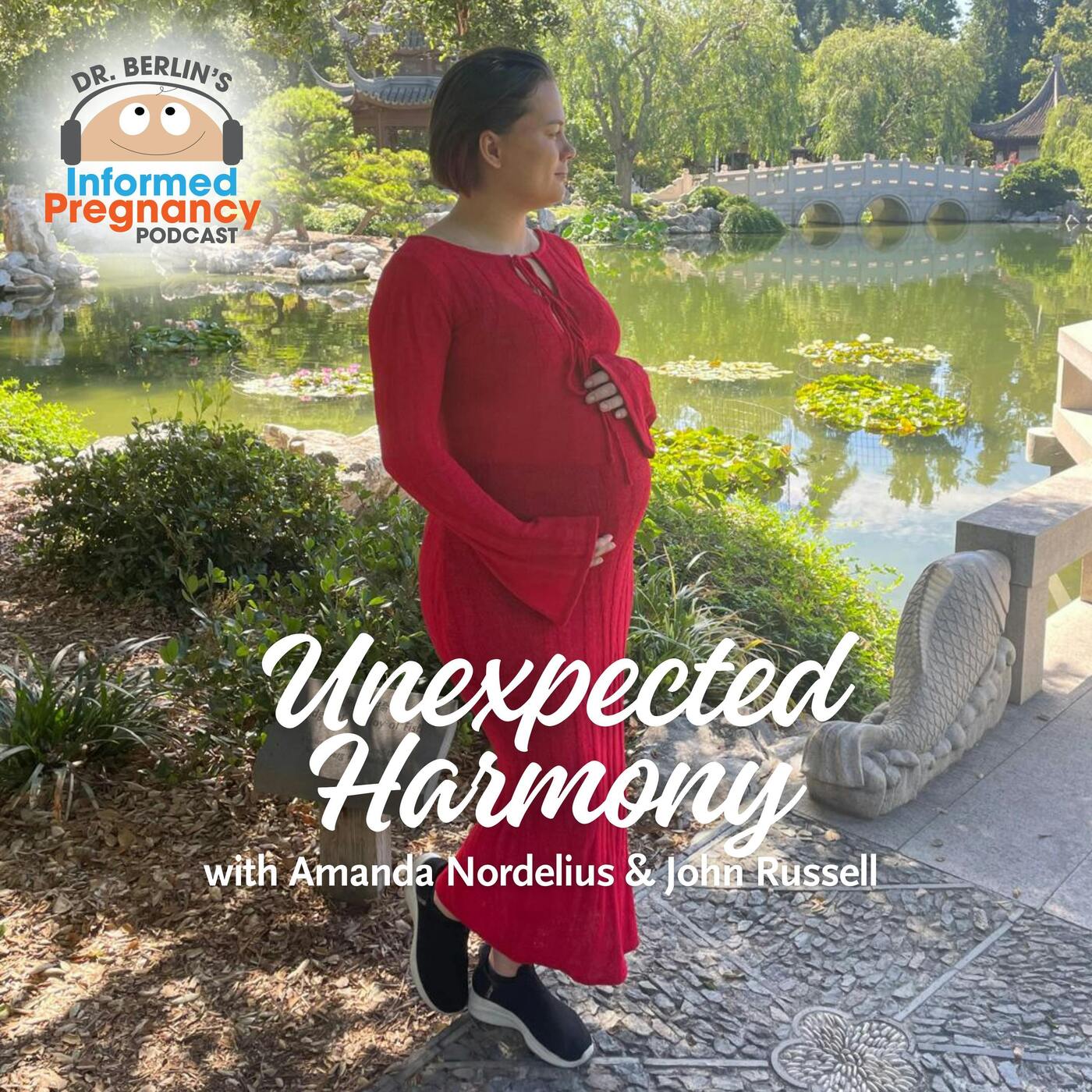
International songwriting couple Amanda Nordelius and John Russell discuss their creative and home lives, including how they met on stage at Universal Studios and a surprising home breech birth.
Grow with us on IP+! Informed Pregnancy Media presents two all new intimate short-form video series following Garrett and HeHe’s real-time pregnancy journeys as they prepare for an empowered birth and postpartum experience. Each episode features weekly updates with personal photos and videos to help bring these raw stories to life, a visually dynamic guide through each mother’s emotional and physical experiences.
AI-generated transcript with speaker labels — may contain errors, especially names and medical terms. Dr. Elliot Berlin, DC appears in blue; Amanda Nordelius & John Russell in orange.
Dr. Elliot Berlin, DC[0:00] My guests today are an international songwriting couple splitting their time between Los Angeles and Stockholm. Together, they've built creative and family lives that blend two music cultures, two languages, and now, two new parents' perspectives. They'll share how they met on stage at Universal Studios, what it's like collaborating in work and love, and the surprising turn their story takes with a home-breach birth they hadn't planned for. I'm Pregnancy Focus Chiropractor Dr. Elliott Berlin, and you're listening to the Informed Pregnancy Podcast. Amanda Nordelius and John Russell, welcome to the podcast.
Amanda Nordelius & John Russell[0:49] Thank you. Thank you. Thanks for having us. From Sweden.
Dr. Elliot Berlin, DC[0:53] Yeah, all the way on the other side of the world right now. I was just saying before, you guys have the best energy and I still feel it coming through the room as if you're in here with me. Even though the sun is coming up here and it must be going down there at the
Amanda Nordelius & John Russell[1:07] same time. That's why they showed up here today. Yeah, that's true.
Dr. Elliot Berlin, DC[1:10] Oh, it's a white night?
Amanda Nordelius & John Russell[1:11] Darkness. I mean, it's about three hours of light a day.
Dr. Elliot Berlin, DC[1:15] Oh, you just have dark all the time.
Amanda Nordelius & John Russell[1:17] Yeah. We make up for it in the summer, but it's pretty rough in the winter.
Dr. Elliot Berlin, DC[1:22] Well, it's coming up over here so I can try to shine a little bit your way.
Amanda Nordelius & John Russell[1:26] Thank you.
Dr. Elliot Berlin, DC[1:27] We have so much to talk about. Let's start at the beginning with your background. John, you grew up in Detroit as a pastor's kid. What was that like?
Amanda Nordelius & John Russell[1:37] Oh, gosh. Well, you know, it's interesting. It has its definite, you know, pros and cons. I joke with people saying I was indoctrinated with religion from birth because my newborn baby picture, which is about me at 24 hours old, I'm holding a little Bible picture that says the little Bible, you know, exactly, precisely. And so I had to, you know, navigate finding out what religion means to me and what God means to me on my own terms, because, you know, you're just told this is what we believe and this is the thing to believe and this is what we do. And, you know, there's a lot of really deep concepts that are hard for a kid to understand. It's hard for adults to understand.
[2:30] Hard for adults to understand. So just kind of sifting through those and, you know, trying to keep the really good things that I learned and not keep the things that were holding me back, I would say.
Dr. Elliot Berlin, DC[2:41] Holding you back. So you're in music, you're a musician, but you considered law at some point. What was the journey like?
Amanda Nordelius & John Russell[2:51] That was kind of the plan was I wanted to be a lawyer. There was some sort of like justice bone that I had that just couldn't let injustice pass me by without standing up and saying something about it. So it felt like that was a natural course.
Dr. Elliot Berlin, DC[3:05] But that seems like a biblical concept.
Amanda Nordelius & John Russell[3:08] Yeah. Right. Exactly. I think so. I think it might have had something to do with that. But as I became a teenager and started feeling feelings, I decided, you know, like songwriting and music was really where I felt the most passion and love. At that point, did you have formal training? So not exactly. I grew up playing in church, you know, which is honestly amazing training, especially when you're playing with like gospel musicians who are some of the best in the world. And you kind of just show up, you know, maybe a guest shows up with music and they're just like, all right, here's my set list. Learn how to play it now. Wow. And so it's really great.
[3:45] Yeah. Training.
Dr. Elliot Berlin, DC[3:46] I feel like some incredibly soulful musicians start in church.
Amanda Nordelius & John Russell[3:50] They do. Yeah. Like, you know, I had the opportunity to have a close relationship with John Legend and I know he started in church as well. Yeah. Ironically, I also have a short relationship with John Legend. Look at this. He shared the same. Yeah. And you could hear it when he sings. Like you can feel that church energy come out of him. Exactly. Yeah. It's something really special about it. Undeniable.
Dr. Elliot Berlin, DC[4:16] So you do have that kind of musical background and then that took over your
Amanda Nordelius & John Russell[4:20] feelings for law. Yeah, it did. Yeah. I think I was just, you know, I found that music and writing was how I processed life. And I think my piano knew every secret that I didn't tell anybody else. And it was my therapist and it was my best friend. And I think that I just learned, like, well, this is kind of how I want to live. I want to do this.
Dr. Elliot Berlin, DC[4:44] I don't want to make this about me, but my parents tried to get me and I'm a little ADD and I'm also I can play by ear. So anytime I could figure out how the melody was supposed to go, I just play it. And I couldn't look at those little squiggles and dots on the page anymore. Right. No. So I could never really progress in my lessons. But I did do a lot of playing on my own and it was definitely my therapy. And I never thought about the way you just said that about your piano, you know, being the one who knows everything and helps you process.
Amanda Nordelius & John Russell[5:19] Yeah, yeah, we've got a lot of tears together.
Dr. Elliot Berlin, DC[5:23] Something with piano lessons that can be so boring for some reasons,
Amanda Nordelius & John Russell[5:26] like classic ill training with piano could be pretty challenging.
Dr. Elliot Berlin, DC[5:30] I should have gone to church.
Amanda Nordelius & John Russell[5:32] You should have gone to church, that's right.
Dr. Elliot Berlin, DC[5:34] Exactly. So, Amanda, your story starts in a really different place, a small island life outside of Stockholm. How did you get involved in songwriting, also a musician?
Amanda Nordelius & John Russell[5:45] I mean, I was just always a part of my life, I guess. Just having music instruments at home and, you know, I think Sweden as a culture, you know, a lot of our TV shows here are, you know, revolves around music in different ways, music competitions and songwriting competitions. And, you know, I think I just grew up loving music and art of all forms and just started to write, I think, as like a kid at, you know, six or seven years old. And that was just always a part of my life. I've never considered law. No, but I actually wanted to become an accountant for a while. And I think for me, it was like, I'm just going to do music for fancies in my teenage years, and then I will get serious, you
[6:29] know, so a little similar to John. Like I had a different idea of a job and then I just got stuck and I never, you know, I never became an accountant.
Dr. Elliot Berlin, DC[6:37] Stuck. So, I mean, your career sort of took off.
Amanda Nordelius & John Russell[6:42] Yeah, and I do the admin for me and John for our company.
Dr. Elliot Berlin, DC[6:45] So I guess I do get to do a little bit of that. Some accounting there, too. How did you progress in your music career from writing songs at home in a small island to where it led?
Amanda Nordelius & John Russell[7:00] Yeah, I mean, I went to songwriting school for a couple of years and then I became part of this girl band in Sweden. And very long story short, we just ended up in Los Angeles with the management over there. And then I just stayed, you know, for about, yeah, I mean, eight years or nine years.
Dr. Elliot Berlin, DC[7:22] You just loved it so much.
Amanda Nordelius & John Russell[7:23] I just loved it. It was just Los Angeles had a very different music scene at the time. And Stockholm, there was like no places to really play live. So it felt natural to move to a place where we could actually perform. And, you know, yeah, just be sharing our music with people like, you know, face to face.
Dr. Elliot Berlin, DC[7:41] I have two questions for you guys. Number one, I always wonder, lyrics first or melody first, or does it not have to pick?
Amanda Nordelius & John Russell[7:51] For me, it's melody for sure. Yeah. But that's just me. I go both ways. So a lot of times when we're writing together or with other people, we'll go melody first and then fill in the lyrics. But a lot of times, sometimes like a certain phrase will just evoke a certain melody in your brain. You know, like, ain't no sunshine when she's gone. It just feels like that melody is the right way to sing those words. So it goes both ways. Yeah, for me.
Dr. Elliot Berlin, DC[8:22] I was afraid you were going to say that. So I'm not sure what to do when I get home tonight. OK. The second question is, in your formative music years, did you have each of your inspirations that kind of inspired you?
Amanda Nordelius & John Russell[8:37] I mean, so much. I don't even know where to begin. Yeah. But I mean, I'm very inspired by, I think, actually outside of music. I think I'm very inspired by modern art. And I think that visual art really actually inspired me musically. Like more than what music inspires me musically at times. Yeah. I love to consume all the other art forms to be inspired musically. If I listen to music, I kind of feel like overwhelmed. I'm like, no, I can't. I barely listen to music. Yeah. Just a very strange trait. For a songwriter. Yeah. I almost never go to the carparker. OK, then that's not true. I do all the time. I had a very rich, I would say, musical experience at home.
[9:27] We listened to a lot of Motown, obviously. We listened to a lot of great classics with Stevie Wonder, Aretha Franklin, Marvin Gaye. Seemingly Bill Withers. Yeah, yeah, yeah. Exactly. Yes. So that was a great foundation. As I got older, I was a bit of an emo kid in high school. So I love the rock scene and all of those things. And yeah, I feel like I have a very diverse palette that just kind of developed over the scope of my life. And now I put all of those things into one place. Which is just like, yeah, which is me, I suppose. Which is the goal.
Dr. Elliot Berlin, DC[10:08] So you're both from Los Angeles, and music kind of brings you together at Universal Studios. What's the story?
Amanda Nordelius & John Russell[10:15] I mean, we were both, they had this program where you were like a hired street performer, basically. And we were both on the program. But you never play, I mean, yeah, I guess you play at the same time but at different spots. So even if you are playing at the same time, you don't really see each other because you're both playing. But then they had this anniversary show where everyone on the program came together and got to meet and hang out and play on the main stage at CityWalk. And we met in the green room for the first time. And we knew of each other, but not really met. I think it was after my set before your set. And we met in the green room,
[10:56] and it was love at first sight. I think you were eating pizza and lounging on your friend. I love how you don't remember what I was wearing, but you remember what I was eating. Yes, yes, yes. You were wearing a really cool jacket. I do remember, as you were always super stylish. My crushes growing up were Cyndi Lauper and Hayley Williams. So Amanda was very much like that kind of alt girl, you know, rock and roll. I was very lucky that that was your preference. Funky style. I thought I was too emo for him, so I'm very, yeah. Also, we both thought like each other were gay when we first met, so we didn't even know that this was going to develop into anything.
[11:42] But the spark was there regardless, yeah. It was, it truly was.
Dr. Elliot Berlin, DC[11:47] Well, I think everyone should meet in the green room. It's so relaxing. What a great way to start a new journey. And then, you know, not too long ago, your journey took a turn towards parenthood. Why don't we take a quick break and when we come back, we'll find out what that was like. Welcome back. Welcome to Amanda and John. Okay, so the green room is where everything starts for you guys. Turns out you're not gay and you like each other. And you blend so many things together, including career, you start to work together. But then, you somehow end up having a baby together. Was that a conscious choice to?
Amanda Nordelius & John Russell[12:38] Yeah, it's hard to say, yeah. I think we had just been together for like a month when we said we wanted to have kids for the first time. So it was very much a dream that had been with us for like seven years. Right. But I mean, I think we just both felt like we wanted to wait and you know, the timing. It was a conscious choice to engage in intimacy and not have birth control. So it was also- But we wanted the universe to like, you know, decide. It was one of those things where like, it'll happen when it's meant to happen. And it did, it happened at the perfect time.
Dr. Elliot Berlin, DC[13:12] Does not have birth control, meaning not even thinking about timing or things like that?
Amanda Nordelius & John Russell[13:18] We were tracking the timing, actually. No, we knew, well, not after we decided to- The natural cycles? Yeah, but we weren't tracking it in terms of this is the week, so we should be intimate this week.
Dr. Elliot Berlin, DC[13:34] Oh, right, right, right, right.
Amanda Nordelius & John Russell[13:35] We were aware of like my cycle over the years, but we weren't like aiming, if that makes sense, I think that would very much happen sooner or later. If we were trying and it wouldn't be successful, I think we would start to be more conscious about that. But it was also nice to just let the first year be kind of like, you didn't want to be too aware of it because it just felt, you know, freeing to not have to be.
Dr. Elliot Berlin, DC[14:00] So how soon after you get together are you choosing to not prevent a pregnancy and how long after that until you're pregnant?
Amanda Nordelius & John Russell[14:11] Was it six years? Yeah. Yeah, six years, five, six years. Yeah, and then four months until you get pregnant. Yeah, yeah, pretty good.
Dr. Elliot Berlin, DC[14:19] Boom, what was it like finding out?
Amanda Nordelius & John Russell[14:23] It was so shocking, it was so strange because we had three pregnancy tests, they were all positive and- Nobody has one, I don't know why. John was taking a nap. Well, it's this tricky thing with natural cycles where you're supposed to get your period on a certain day, but if you don't get it that day, it just, it moves till, oh, it's coming tomorrow. And if it doesn't show up that day, it will move again and be like, oh, it's coming tomorrow. So like, I looked at the app and every day when my period didn't show up, it said, it's supposed to come tomorrow. So I thought, oh, I must be going crazy. It's not supposed to come today, it's supposed to come tomorrow.
[15:03] Like it took me three days until I realized the app is just moving this little circle that says I'm getting my period so my period is actually late. And that's what I was like, should go and get a pregnancy test. Or three. Or three. And John was napping and I was like, is this where you should film this? Like, should we do a thing? I mean, it feels for us, but then it feels kind of weird because if you're not pregnant, it just feels a little anti-climatic. So we were like, how should we do this? This is the last second of our life that if we find out we're pregnant, this is the last time we will ever not be parents, consciously, I guess. Yeah, when I saw the test,
[15:39] I looked at him and I was like, so yeah, what does this mean? We even called your family. All of a sudden, now we're just pregnant. This is how this works. Like you just aren't pregnant and then you are. Like it was mind boggling that, you know. We called your family or your brother and my sister-in-law and we were like, what should we do? Should we view this as we are pregnant? Or should we wait a couple of weeks and they're like, you are pregnant. You should think that you are pregnant.
Dr. Elliot Berlin, DC[16:08] Right. And here you are. At that point, when you found out you were pregnant, did you have a vision on how you wanted pregnancy to be or how you wanted birth to be, what you wanted to do or not do?
Amanda Nordelius & John Russell[16:24] No, not at all. I think you- At least not me. No. I don't know when like the, I guess those thoughts developed more, but I know there was just a little bit of an expectation of how things would go just because of like your family history.
Dr. Elliot Berlin, DC[16:39] What's the family history?
Amanda Nordelius & John Russell[16:41] Well, so it's just basically I was a C-section baby and my sister as well. And then my dad was and John was. So I don't have a lot of, or at the time I did not have a lot of mom friends. So I didn't have a lot of experience or just knowledge about any other birth than C-section. So I think in a way I felt like that was how it was gonna be for me too. Like it was just felt like that's just the way. And in that way, I almost felt like I don't really need to educate myself on anything else. I mean, it was just such a natural thought that that's how it's gonna be. So it didn't feel weird.
Dr. Elliot Berlin, DC[17:21] Were you all cesarean like electively
Amanda Nordelius & John Russell[17:24] or were there specific reasons? No, they were all- I was the elective. Oh, you were, yeah. Cause you were the third. Yeah. You were the third cesarean? Yeah.
Dr. Elliot Berlin, DC[17:35] That seems like a sort of, it could be an album. Pfft. Genius.
Amanda Nordelius & John Russell[17:42] Sorry.
Dr. Elliot Berlin, DC[17:43] You're hired, you're a hired guy now.
Amanda Nordelius & John Russell[17:45] Consulting on my side.
Dr. Elliot Berlin, DC[17:48] Okay, so you were elective and then-
Amanda Nordelius & John Russell[17:50] No, but I was breech.
Dr. Elliot Berlin, DC[17:51] Oh, you were breech. Oh, you were in Sweden? They don't do breech birth?
Amanda Nordelius & John Russell[17:55] They do, but I was frank and also my water broke. I don't remember. I've asked about this so many times during my pregnancy.
Dr. Elliot Berlin, DC[18:05] I wouldn't expect you to remember.
Amanda Nordelius & John Russell[18:07] But it is basically, it was an emergency C-section.
Dr. Elliot Berlin, DC[18:10] Oh, got it. You're still kind of frank.
Amanda Nordelius & John Russell[18:14] Yeah, definitely, definitely.
Dr. Elliot Berlin, DC[18:16] It left an impression. Okay, so like cesarean birth was not something foreign to you?
Amanda Nordelius & John Russell[18:22] No, it was definitely not. And I think in general, I've been very scared and fearful around birth. Both C-section and natural birth. I just thought it was a scary thing. I was a little scared about being pregnant. So I think a lot of it, I really knew I wanted kids. So I think I thought, I'll just take it day by day. But I didn't necessarily want to maybe dream so much about it. And it felt like, yeah, I just felt a little scary to do so.
Dr. Elliot Berlin, DC[18:49] I don't know if pregnancy changed you or you hide it really well. But by the time I met you, you were knee deep into pregnancy and you exude bad ass confidence like I could do anything. So when you're talking about the fear of this, fear of that, I just would never have known.
Amanda Nordelius & John Russell[19:08] No, I really changed. The third trimester completely changed me. We were in Sweden. I remember even the first trimester, my friend called me and she's like, do you have a doula yet? Do you have this? All the good ones go really fast. And I was like, I don't even wanna think about it. John booked all the, what do you call it? The Swedish brain here, like the checkups, the ultrasounds, all those things John booked. There were no, nobody had your number. Nobody even had my number. I was talking to everyone on your behalf. Yeah. People maybe thought we had a really strange dynamic in our relationship. But I really just didn't wanna really, I don't know why,
[19:51] it just made me very anxious. So John dealt with all of it. But then when we arrived in LA for my third trimester, I just knew I wanted to have the baby in Los Angeles. And I felt like I would find the right people. And finally third trimester, I was like, now I'm ready to actually be present, face this fear head on, find the right people, start to read the books, start to understand what birth is like. I was ready to get my fingers in the dirt. And I think that's when we met. I was just a different person in the third trimester.
Dr. Elliot Berlin, DC[20:24] I guess it's funny that you say head on, but we'll talk about that soon. So up until the third trimester, you're roughly in the back of your mind just planning to have a cesarean birth, just scheduled. What changed in the third trimester?
Amanda Nordelius & John Russell[20:40] Well, so we met the doula that we decided to hire. Right. Our plan kind of before that was we were with kind of a group pregnancy situation, which was really awesome support. But their whole like kind of care plan was like, you come here, you know, every two weeks and then every one week in the third trimester, and we'll do a little checkup and then we're gonna send you to St. John's where you'll meet your doctor and then that's where you'll give birth. So it's like. It's not the most common model here. Right, yeah. So we told our doula about it and she was like, so you're not gonna have any sort of relationship with your doctor before you like give birth?
[21:25] Like, no, we don't know them. She was like, that's a little weird in my opinion. I think you guys would really benefit from like building a relationship and hopefully, you know, like talking to a doctor about, you know, what options you have and them getting to know you to help your birth experience. So she recommended a doctor. We took that first recommendation, not knowing anything about the doctor except for that they were recommended by our doula. Sure, we recommended a few actually, but we just went. We just took the first recommendation.
Dr. Elliot Berlin, DC[22:00] And so how did that change the vision?
Amanda Nordelius & John Russell[22:04] I think it was just that doctor, like as we were talking and I was sharing that I had my fear around birth and she was just pointing out, like she was just asking me very straight on, like, why are you scared? What is scary about hospitals? What freaks you out about this? And like, as I started to talk about it, she made me feel like, I mean, in a good way, she made me feel like, how do I say this the right way? She made me feel like it wasn't normal. Like, obviously it's very normal to feel like I do, but she made me feel like you don't have to, it doesn't have to be this way. Like, it doesn't have to be a scary thing. And maybe it's just whoever says it to you
[22:41] in the right time and place, but it just really, how she was approaching me was just speaking to a deeper part of me where I realized I just got perspective on my situation that I'm like, I'm just carrying this story. Like, this is how it's gonna go and that's just it. Like, and something in our conversation made me realize that there might be another way. And maybe I should start to like plan for that and I'm there to like dream about it, I guess.
Dr. Elliot Berlin, DC[23:08] Did you get excited about birth?
Amanda Nordelius & John Russell[23:10] Yeah, I think I did. And I want to add too that I got a book about hypnobirthing from a friend in Sweden and that also kind of sparked some kind of, you know, deeper like earth woman in me. Like, it felt like I was starting to connect with like the physical body and like process.
Dr. Elliot Berlin, DC[23:29] Okay, that's the Amanda I met.
Amanda Nordelius & John Russell[23:31] Yeah. Yeah, yeah. I became a nerd kind of about it. But it made everything make sense. Like, there was so much mystery wrapped around giving birth and what it would be like, and you know, it is kind of this like cold medical procedure where you go to a place that you're supposed to go to when something's wrong with you to have a baby. So we had read through this book and it was talking about how birth is like the most natural physiological process for humans to do. Like, your body is made for it. Your body knows how to do it. Your body like needs to relax into it, you know. It almost feels like labor is a misnomer at times because of how important it is for the body
[24:16] to like be in a state of relaxation and peace and, you know, how important that is for oxytocin and everything to, you know, help the process along. So it really just like, everything started clicking, I think, after we started getting into that and like, oh, okay, this makes sense now. Like, nothing was really speaking to us before and then that made everything make sense. Yeah.
Dr. Elliot Berlin, DC[24:40] So it sounds like things were really changing for you in your perspective and from a fear of birth to an excitement about birth and like your plan for that scheduled C-section was going to change. I can't wait to hear what actually happened. We're gonna take a quick break and we'll be right back.
Dr. Elliot Berlin, DC[25:07] Welcome back. We're talking to Amanda Nordelius and John Russell. Okay, so scheduled C-section changes. What was the vision, regardless of how it turned out, what was the vision after you had sort of met this new doctor and doula and had a change in perspective? What did the ideal birth look like for you at that point?
Amanda Nordelius & John Russell[25:28] It was still a hospital birth. I think I had, you know, when people shared home birth or birth center stories, there was something in me that was like very curious and excited, but I didn't maybe listen to that voice because I thought that's for other people, not for us and definitely not for our first time, you know, birth. But very, very close or very soon, we found out that our daughter was breech. So immediately I started to get kind of fearful again and felt like, you know, what are my options? Not actually knowing that in Sweden, we do breech birth, ironically. I had left the country that actually do those things.
Dr. Elliot Berlin, DC[26:08] So I was a little surprised when you said you were born because of breech, because Sweden's one of the places that still does it. Globally, there's not that much going on breech wise.
Amanda Nordelius & John Russell[26:19] Right. And we were just uneducated. So I didn't even know we did that until after birth when I told my family and they were like, Sweden also do that. You know that, right? But I still feel like I was supposed to find, you know, everyone on the journey that I was, you know, you and amongst so many others that really helped us, you know, sculpt our birth story. Like the way that we met you, the way I think is because the medical professionals and people we had on our team, beside our doctor, I think everyone was trying to help us to get the baby to flip, you know, to be head down. And so we did all the yoga poses. We did all the, you know, Spinning babies.
[27:02] All the exercises and everything. It's the best journey. Yes, we came to Dr. Berlin. Which was the best ever. I mean, regardless of spinning the baby or not, it was just the best treatment that I've ever received.
Dr. Elliot Berlin, DC[27:18] Amazing. Thank you, I'm so glad.
Amanda Nordelius & John Russell[27:21] And yeah, our little girl didn't want to flip. And I could feel, like I could sense that she didn't want to move. She's a rebellious alt girl like her mom. She wants to do things her way. And no matter what we did playing music or shining flashlights toward, you know, at the bottom of like the womb or whatever, nothing was going to spin her around.
Dr. Elliot Berlin, DC[27:47] Well, I hope she came out wearing a cool jacket.
Amanda Nordelius & John Russell[27:50] She came out with a unique haircut. That's for sure.
Dr. Elliot Berlin, DC[27:54] That's awesome.
Amanda Nordelius & John Russell[27:55] But yeah, so we just had to like, we had to start to dream about a possibility to do a natural birth breach. And we were just lucky that the doctor that we had hired was knowledgeable in that and experienced in that. I mean, it's crazy that we had basically no plan. And then we took the first recommendation for a doula. That doctor happened to be-
Dr. Elliot Berlin, DC[28:17] For a doctor, you mean?
Amanda Nordelius & John Russell[28:19] For the doctor. And that doctor happened to be maybe the only doctor in Southern California or I don't know how far. That does breach birth and at home. And we had no idea when we hired the doctor. And we also didn't know that our daughter was breached. Right. So it was just like- We were very lucky. The serendipity of everything falling into place was a miracle, honestly. We shared it with her. We said, we have a breached baby. How do you feel about it? And she was the only one who was like, okay, I mean, nothing has to change. Like, she was just unbothered.
Dr. Elliot Berlin, DC[28:51] I know that you said during your postpartum phase, which we'll get to in a moment, you did watch a lot of Lord of the Rings. And this is sort of feeling like a Frodo one ring moment here, this journey, an episode. How did the birth actually unfold?
Amanda Nordelius & John Russell[29:05] So I had asked my doctor if I was allowed to choose in the moment of my birth, if I wanted to go to the hospital or stay at home. And she had said, yes, we can just feel it out. So to be sure, we had half of a birth kid at home. In case, like we had the day of the birth, we basically, we went to do a EVC. ECV, external sub-health version. Right. We went to do it, but when we arrived, we all realized or they realized that she was fixated and too far down. So they advised me against it. But because we were at the doctor's office, they were like, you know, take this home birth kid home. And then we're gonna order like a bigger one that arrives to the doorstep.
[29:50] And this was maybe 12 days before she was due. Yeah. And the strange thing was, was after the doctor said, like she's not going to flip, we felt the most peace we'd felt in the entire pregnancy. Yeah. We went home that day and Amanda fell asleep, like took a nap and looked like a graceful little angel sleeping on a cloud. She was so peaceful. I think that we had like fully surrendered and accepted like she is breeched, it's gonna happen. We're gonna attempt a natural birth. It might be a home birth, it might be a hospital birth, but we're gonna have this kid in case, you know, and we just felt fully at peace to stop kinda, we're not gonna fight it anymore.
[30:26] We're just gonna let it be this way. Right. So yeah, I took a nap. I went out for a jog. Amanda got up from her nap and went inside of the piano and played like two chords. And also, I just wanna add, like I haven't played piano my entire pregnancy. Like, this is like the first time I'm like, I'm gonna sit down and I'm gonna write her a song. Yeah. It would be beautiful to write her something. And yeah, I played two chords. Played two chords.
Dr. Elliot Berlin, DC[30:51] It was major chords, minor chords. I'm trying to get a sense.
Amanda Nordelius & John Russell[30:54] They were major.
Dr. Elliot Berlin, DC[30:55] A major. Good question.
Amanda Nordelius & John Russell[30:56] I was going for like the Coldplay vibe, you know, trying to write her something epic, you know. But you played like C and G. Yeah. And then my water broke. And then my water broke, yeah.
Dr. Elliot Berlin, DC[31:06] Oh, I'm gonna try to recommend that to my other clients.
Amanda Nordelius & John Russell[31:09] Yeah.
Dr. Elliot Berlin, DC[31:09] Who wanna go into labor. The C-G combination.
Amanda Nordelius & John Russell[31:12] Those courses have it, yeah. C and G. And I called John and I'm like, you know, don't freak out, but my water just broke. So yeah, I sprinted home from the other side of the neighborhood. We immediately like called our doctor. And at that point, we just knew, I mean, we didn't even think twice. Like from that moment, it was just gonna be a home birth. Like not once during the birth did I even think about the hospital. Like I didn't even consider it. It was just like, we're home, it's gonna be home. Yeah.
Dr. Elliot Berlin, DC[31:42] Who was gonna be there besides the two of you?
Amanda Nordelius & John Russell[31:45] In that moment, we just kinda, or I think I just felt very strongly that I just wanted to be alone with John. I think, cause I felt like the circumstances with the breach was so, I just felt like I really needed to just be on my own in a way. I mean, obviously with the support of the doctor. So we decided last second to not go with the doula. It wasn't so much of a decision more than it was just not calling the doula and just doing birth alone, if that makes sense. Which felt like a crazy thing. It felt like a very Frodo and Sam in the third movie experience, for sure. Yeah. Just us two. I mean, I think it had some pros and cons. It was really nice to be just with John,
[32:29] but obviously there's certain positions that will, you know, pain relief and stuff like that, that it would have been great to have that guidance. And I kinda had to figure that out on my own, but it was nice that it was just the two of us. Yeah. So then, yeah, I took about, I don't know, we slept through the night. I did all the hypnobirthing. I thought I'm gonna stick to hypnobirthing as long as I can. And I don't think I'm gonna make it all the way through, but I think I used it a lot in the first, like the early labor. We were just doing affirmations, laying in bed and relaxing and, you know, using language like welcoming the surges and the waves.
[33:07] We watched the notebook. Watched the notebook. To get the oxytocin flowing. So the early labor was really nice, like just very calm. And I think it was maybe about, yeah, I don't know how many hours, but 12 or 14 or something.
Dr. Elliot Berlin, DC[33:23] At what point does your doctor come over?
Amanda Nordelius & John Russell[33:26] So she came over in the morning during early labor just to check the heart rate and stuff like that. I was also told like, you know, if anything, we will go to the hospital, like not when it's a red flag, but when it's like a yellow flag, like very early, we will go. So I felt safe that like, if there's anything that feels off, we will leave, you know, immediately. Yeah. She came back a few times that day. I also had cranial sacral therapy mid-labor, which was really cool. It was actually one time in the session that I felt the contraction and it didn't feel painful at all.
Dr. Elliot Berlin, DC[34:00] That's nice.
Amanda Nordelius & John Russell[34:01] So there is actually pain-free like contractions, but I think that it was a very, overall, I think my strongest memory from birth is really like, depending on where I put my mind or how much I relaxed my body, the feeling of the contractions completely changed. The more I was like fearful, tensed up, like it was just so much more challenging. But when I was like relaxing and welcoming, like there was a lot of times it was really not painful and it was just cool how my mind and my body like played such a huge part in that.
Dr. Elliot Berlin, DC[34:34] Amazing to be so consciously aware of that.
Amanda Nordelius & John Russell[34:37] Yeah.
Dr. Elliot Berlin, DC[34:38] All right, so how did things turn out?
Amanda Nordelius & John Russell[34:41] I mean, the active labor in the shower. It was about two hours. The shower was a lifesaver. Yeah. And I was texting the doctor trying not to freak out because the doctor wasn't there yet and Amanda's contractions were two minutes apart. Also, I had no clue. About a minute long. Like John timed it. I didn't ever know like the time of it. You never like, I didn't want to be aware of time and space basically. So I didn't want to be like, oh, my contractions are slow and now they're fast. Like I knew I would get in my head about it. So I was just kind of present in my body and then John timed everything. So then in active labor, yeah, you start to get a little freaked out
[35:17] because I was like one minute apart. Yeah. No, I was cool as a cucumber on the surface, but yeah, I was a little nervous. On the deep down inside. Yeah, yeah, exactly. And then at that point I was like, don't talk to me, don't touch me. But I wanted you to watch me. Like the moment he left the room, the contractions felt more uncomfortable and painful. So I was like, you have to be in the room, but like, but don't stand in the corner. See you fly on the wall. Let me do my thing. And then I had this memory of a woman who had been on all fours from my Instagram. So I was like, maybe that's something I should try. Cause so at the end of the active labor,
[35:51] I was just on all fours in the shower. I just had to go in a deeper and deeper squat. It felt like for every contraction. I remember the knees on the tile in the shower. That was half of the challenge. I was like, I'm happy I've done some Pilates in my life.
Dr. Elliot Berlin, DC[36:05] So eventually your doctor does come.
Amanda Nordelius & John Russell[36:09] The doctor came right in the nick of time, like the calvary coming over the hill. And we marched Amanda from the shower to our bedroom. Like she was coming out for her like boxing entrance. And we meet three midwives that we've never met before. We met three midwives we hadn't met. Or not, we met once. And our doctor and you- Just jump on the bed. Started pushing. Yeah, cause since it's a breach, like you can't do water birth. Right. Obviously, or at least according to our knowledge, you have to do it. Right. Yeah, on the bed. And you didn't know how to push because how can you know how to push? But you instinctually did kind of know and eventually figured it out.
[36:56] And I think it was 16 minutes. Yeah, it was a very intense-
Dr. Elliot Berlin, DC[36:59] Of pushing?
Amanda Nordelius & John Russell[37:00] Yeah.
Dr. Elliot Berlin, DC[37:01] Wow.
Amanda Nordelius & John Russell[37:02] There was no rest period, which I don't know. We heard also with breach, like the pushing part is faster. Yeah.
Dr. Elliot Berlin, DC[37:10] And the booty came out first?
Amanda Nordelius & John Russell[37:12] Yeah. Yep. The booty came out first. That's always a little interesting to watch a baby kind of back out of the parking space. It's so cute. Yeah. So I was hugging John, actually. Yeah. So you didn't see it, but we have the birth video. It's very cute. Yeah.
Dr. Elliot Berlin, DC[37:28] Well, that is a total shift, if I've ever seen one, a 180. Did you ever finish the song, by the way?
Amanda Nordelius & John Russell[37:36] No, I still have to do that. She interrupted me mid-session. What is that?
Dr. Elliot Berlin, DC[37:40] Yeah. Okay, I can't believe it. Just right when you're getting into the second chord, the water breaks.
Amanda Nordelius & John Russell[37:45] Can I add that, I think it was 20 minutes after she was born, our birth kit arrives at our doorstep.
Dr. Elliot Berlin, DC[37:51] Well, I am a little musical, but one thing I'm bad at is timing and the birth kit coming 20 after. That's kind of my song.
Amanda Nordelius & John Russell[38:01] That's amazing. I mean, it was still 12 days early. You know, didn't know if she would arrive early, you know, but just a little too late.
Dr. Elliot Berlin, DC[38:09] You guys are a really lovely couple. You have a great, each individual has a great energy and together you have this even greater energy. And I really appreciate you coming and sharing that incredible journey and birth story. And what I would love to do is really talk about what happens next because, you know, as smooth, as incredible as that birth story was, it doesn't always stay smooth right away. And postpartum is, no matter how it goes, kind of rocky terrain, I think. And so I would love to learn more about how you navigated that and what the experience has been like. And you've been gracious enough to agree to come back for a second episode on postpartum,
[38:54] which I'm really looking forward to. Thank you so much for coming and joining me today and joining our audience today and sharing your story. Before we go from this episode, where can we find you guys online?
Amanda Nordelius & John Russell[39:08] Thank you, by the way. You could go to gluten-freemusic.com. That's basically our portfolio as you can see the work that we've done and- I love that for silly hack music, music interests. Yeah, gluten-freemusic.com with a dash gluten-free. Or yeah, I guess you can find our Instagrams as well. Always post things and sing some songs every once in a while on there.
Dr. Elliot Berlin, DC[39:34] Are they your names?
Amanda Nordelius & John Russell[39:36] Yes. John Shy Russell, so S-H-Y, so. And Amanda.Nordelius. Yeah.
Dr. Elliot Berlin, DC[39:43] These are a dot?
Amanda Nordelius & John Russell[39:44] Yes, Amanda.Nordelius.
Dr. Elliot Berlin, DC[39:46] Amanda.Nordelius, gluten-free. I love it. Thank you again for joining us and at home. Thanks for listening to the Informed Pregnancy podcast for more pregnancy and parenting information just like this. Visit us online at informedpregnancy.com and don't forget to tune in probably a few weeks down the road for part two, The Postpartum Journey.
Amanda Nordelius & John Russell[40:17] I got a.
Want more pregnancy + parenting? Start your FREE TRIAL of Informed Pregnancy+ and get access to all our curated pregnancy and parenting content — original series, iconic birth films like The Business of Being Born, prenatal workouts and more.
Carli Roth and Joshua Katz are expecting their first baby after a successful pregnancy with eggs retrieved before they even met. They discuss their journey to pregnancy and what inspired them to create a company based on an often uncomfortable topic – hemorrhoids.
Grow with us on IP+! Informed Pregnancy Media presents two all new intimate short-form video series following Garrett and HeHe’s real-time pregnancy journeys as they prepare for an empowered birth and postpartum experience. Each episode features weekly updates with personal photos and videos to help bring these raw stories to life, a visually dynamic guide through each mother’s emotional and physical experiences.
AI-generated transcript with speaker labels — may contain errors, especially names and medical terms. Dr. Elliot Berlin, DC appears in blue; Carli Roth and Joshua Katz in orange.
Dr. Elliot Berlin, DC[0:00] My guests today are a couple who took one of the most cringe-inducing, universally-avoided health topics and turned it into a mission-driven movement. After nearly two years of fertility hurdles, miscarriages, multiple IUIs, and ultimately a successful IVF transfer, using eggs frozen long before they ever met, they're now joyfully expecting their first baby any second, and planning a natural hospital birth with a doula by their side. What makes them remarkable isn't just their journey to pregnancy, but the humor, vulnerability, and total honesty they bring to conversations most people run from. In the process, they've built a company that's changing how millions approach hemorrhoids
[0:42] and other once-taboo health issues, and they've strengthened their relationship along the way. I'm pregnancy-focused chiropractor Dr. Elliot Berlin, and you're listening to the Informed Pregnancy Podcast. Carly Roth and Joshua Katz, welcome to the podcast.
Carli Roth and Joshua Katz[1:12] Thank you for having us. I would not be happier to have anybody talk about any topic other than hemorrhoids. It's what we do, it's what we know, and a big part of our conversations on a daily basis now. That and pregnancy. That and pregnancy now.
Dr. Elliot Berlin, DC[1:27] Hemorrhoids and pregnancy, which oftentimes go together like a horse and carriage. So why don't we start at the beginning, Carly, before pregnancy and before getting norms, what were you doing professionally, and how did you get into this realm of things?
Carli Roth and Joshua Katz[1:42] So for the past four and a half years, I've been running community for Female Founder Collective and working side-by-side with an incredible team of women who are supporting the entrepreneurial journey for females from startup mode inception, pre-launch into women who are building businesses doing well over $400 million in revenue a year. And as a previous founder myself, I swear I would never do it again, but here we
Dr. Elliot Berlin, DC[2:08] are.
Carli Roth and Joshua Katz[2:09] Being part of FFC has been a beautiful experience in a reminder and just the challenges that come with a female founder and raising money, sourcing operations, building a team. And it has led to incredible opportunities for me to also become an angel investor myself. So I see a lot of businesses, I hear a lot of stories. My role tends to be a little mix of therapists, customer service, hospitality, support for a lot of our members and our growing community. And, you know, when I met Josh very early on, he can talk more to this, but he brought up the idea, you know, and I think of starting a hemorrhoids company and there's so much more to norms than just hemorrhoids.
[2:55] But in the beginning, it was that and he mentioned it. And so it's always been something that's kind of been sitting in the corner to get started. So it's kind of amazing that you fast forward three and a half years, four years into where we are now. And now it's an actual full thriving business.
Dr. Elliot Berlin, DC[3:14] Well, congratulations on that judge for you hemorrhoids are a little more
Carli Roth and Joshua Katz[3:20] personal. Yeah, but apparently I brought him up on our second date, according to Carly. So I guess I might have already started to have grown out of the shame and embarrassment that I had carried with me along with my hemorrhoids for 20 something years. So, yeah, hemorrhoids don't define me, but they've definitely been there with me through much of my career and adult life. Although Carly and I only finally crossed paths about four years ago, we definitely kind of lived in similar worlds doing different things. And so it's really fun to be able to do this business and to do this life with her because she knows what it means to be an entrepreneur.
[4:03] And she also knows what it means and what's required of supporting them. And she does both of those really well.
Dr. Elliot Berlin, DC[4:10] And yeah, I can only be a lot of analogies between entrepreneurship and hemorrhoids. They're both.
Carli Roth and Joshua Katz[4:18] Well, that's starting with that. They do have cycles to them. You know, a typical hemorrhoid flare up, you know, might start with only a little bit of discomfort and then towards, you know, days five or six, you might be reaching peak pain and discomfort. And then like everything else, it wanes and diminishes. And then like starting multiple businesses, as soon as you're done with one hemorrhoid, you've forgotten all about the pain and suffering that you went through and you act like you're never going to do it again or have it again. And then sure enough, you do it again. And so I'd say that there are, at least in my experience, quite a few parallels.
[5:00] And, but what's I think dissimilar is that there's no one for entrepreneurship. Not yet. If there is, I haven't found it.
Dr. Elliot Berlin, DC[5:10] Yeah.
Carli Roth and Joshua Katz[5:11] But, you know, one of the big differences is that people seem to like to talk about their startups and the journeys that they go through. And I think that particularly on podcasts and other forums that have developed over the last decade, there's become a culture of conversation around not just the wins that happen and starting and operating businesses, but the challenges and losses and for embarrassing self-care issues, such as hemorrhoids or diarrhea, gas, bloating, constipation, funky foot fungi, all the things that we're working on in terms of products and other solutions, you know, there isn't really a forum for conversation around these things.
[5:51] And so there isn't really a normalization kind of movement, you know, in those categories, certainly not in the way that the solo entrepreneur has become part of a community by virtue of there being these types of forums for it, but also, you know, for pregnancy. And I think for women's health, there's been amazing progress in, you know, digitizing and connecting the conversations that women are having, whether it's around, you know, pregnancy and postpartum or menopause or other things. And so it's interesting because there are these inspirational kind of analogs that we can look to with something like norms and hemorrhoid care, and two of them are right here today.
[6:36] You know, one is conversation around pregnancy and being a mom, becoming a mom, and also, and even just talking to people about the stuff that, you know, whether it's on business or otherwise that they maybe otherwise wouldn't celebrate or talk about.
Dr. Elliot Berlin, DC[6:49] I've been doing what I've been doing for about 25 years and a lot of pregnancy care and pregnant, and our clients open up to me about what I thought was about everything. And we have this show on our streaming platform, Informed Pregnancy Plus, and it's called Growing With Hihi. And I follow a woman, her name is Hihi Stewart, through her pregnancy, she had years of being a childbirth professional before she had her own baby. And so it's kind of neat to follow her through and watch her go through all the stages that she's supported so many other people through from both the doula lens and the person going through it lens, the pregnant mama lens, and she kind of talks about everything very openly.
[7:34] And at one point she's like, can we just talk for one minute about the discharge? I think she was in her third trimester. And she's like, it is like the cheesecake factory down there. Now, first of all, I think I immediately lost any opportunity of getting the Cheesecake Factory as a sponsor of our podcast, but also nobody had ever said that to me before. And again, people open up about everything. And after that episode came out, I'm like, you know, what do you think about that cheesecake factory? Yeah, yeah, I have it, but nobody really talks about it. So I assume that you suffered with hemorrhoids for a long time before you felt comfortable talking about it.
Carli Roth and Joshua Katz[8:12] Yeah, absolutely. I made a joke earlier about talking to Carly early on about hemorrhoids, and perhaps I delivered it through a vehicle of a new business idea as an indirect way of telling her about something that I hadn't told virtually anybody, but yeah, I mean, for 20 years and through multiple relationships, you know, live in girlfriends, an ex-wife and so on. It was never something that I talked about. It was something that I hid both, you know, me suffering from it and the tubes of yellow butt cream that I, you know, stash around the bathroom and in my travel toiletries kit. And certainly wasn't something that, you know, I spoke to a doctor or spoke
[8:58] to, you know, friends or informed individuals about, and, you know, I think as I got older, you know, the silliness of that became more apparent, but also the gap in, you know, products, brands and spaces to, you know, ask the questions and have the conversations. It was quite surprising to see that, although I'd been talking about doing this for maybe five or six years during that time where I was just talking about it, still nobody had done anything about it. And that was a real good signal to me that if somebody else wasn't going to do it, I had to do it. And thankfully, although Carly fortunately hadn't suffered in the same way, you know, she'd been around me enough to understand the urgency
[9:43] of it and kind of what it means to us beyond just being another brand that we launch or product that we sell. So a big piece of that too, is just those conversations, right? You know, no one's having them. And when you were talking about comparing them to the business conversations that are happening on podcasts and the entrepreneurial insights that people get when we talk to people about what we're building and what we're doing and, you know, we're standing at a party and we'll be standing with six people. And it's kind of like, has anyone had a hemorrhoid before? It was always like one person, they put their hand up, they're a little shy or Josh notices them.
[10:20] And he asks like the right next question and they engage in the conversation and they share their story. And I think having an underlying mission of normalizing, embarrassing self care, because we're all doing it behind the bathroom door anyway. I mean, the times Josh has walked out of the bathroom with an itchy foot, you know, an itchy bum, and then a stye on his eye. You know, he's like, this is why we're building what we are. And being able to have those conversations, whether they're on a platform like this or one by one in our New York City clubhouse, where we've created a space for people to come in and have these conversations and safety and comfort, you know, it just makes everyone
[10:55] feel like they're not alone and they don't have to be navigating this by themselves.
Dr. Elliot Berlin, DC[10:59] Right. As you said, Josh, even hiding it from the people that you're closest to, because it's just embarrassing. All right. Let's take a little break. When we come back, hopefully you'll still be pregnant because I mean, wait, 39 weeks, 40 weeks tomorrow, 40 weeks tomorrow, 36. So I'll make the commercial break real quick. And I want to, when we come back, I want to find out more about how you guys met and got to this stage. Don't go anywhere. We'll be right back.
Dr. Elliot Berlin, DC[11:38] Welcome back to Carly and Josh. I want to talk to you about how you first met.
Carli Roth and Joshua Katz[11:46] Do you want to share Josh or do you want me to take it? I would love you to share. Okay. So I had just moved here from New York. I was Los Angeles. Here's Los Angeles. And I was about five months in on living by myself after living with a couple of friends who came to do a two month stint. And I was at a concert with friends. Met a lovely human named Jesse who was doing a movie screening for his documentary the next night. And I was in a place of yes. And I just wanted to say yes to everything that I could to meet people and then specifically meet Jewish men. And anyway, Jesse invited me to his screening and I went and I remember it was a rainy Monday night in October and I went by myself.
[12:39] It was great. Hung around for some drinks afterwards and Josh was there with another friend and he was recently out of a very long-term relationship. I was very much not recently out of any long-term relationship and we met, it was very brief. We connected. He found me on Instagram later that evening and slid into my DMs, which I now know is not something he does. Even knew how to do. And that was Monday and we went for a hike early morning on the Friday, which is not something I usually do that early. And while we were hiking, I think it must've been like a two and a half hour time spent together and learned a lot and you know, my ears really
[13:23] perked up when I heard that his dad was South African and me being a South African Jew, I was like, Oh, you don't say, and you know, the rest is history. You know, I pulled into his driveway that Friday morning and he's like, I've kidnapped you. Or what did you say? Like you can't leave. And there's some truth to that, right? Like I arrived and you know, our relationship was just going and it went and we're here. So yeah, nine weeks and six days. Yeah. Most natural. I'd prefer you leave out the kidnap to you part of it is out of context. So Carly, thank you for your version of the story, which is pretty consistent with mine and normally I would be standing next to you inserting
[14:06] myself with slight edits, but I've got no edits to your version of the story. And I think just the follow-up to that is how both of us were at a time in our lives where we actually knew what we wanted. And so in addition to me being comfortable talking about my hemorrhoids, maybe on a second date, we also talked about family and kids and you know, our homes and our timelines. And it was romantically. We were next to a fire. I remember we had like a conversation cards that I think our friend Liz gave us for Hanukkah and we sat by the fire and played them like really early on. And it was just, I remember just being like, we are totally aligned. Yeah.
Dr. Elliot Berlin, DC[14:49] That's a perfect dream. Yeah.
Carli Roth and Joshua Katz[14:54] Oh, that's good. So I think from that time, it was easy for us to actually think about the future while not just only living for the future. And so it seems like both forever and a small amount of time all at once. And certainly, you know, the time since we got married and, you know, started to try to make a family to now has been similarly, it feels like a long time, but no time at all. Oh yeah.
Dr. Elliot Berlin, DC[15:21] So I mentioned that in the introduction that it didn't come super fast or easy for you.
Carli Roth and Joshua Katz[15:27] No, but you know, and I remember women saying this to me, but clarification, it always comes fast and easy for me, but that's not the issue here. Super sperm. Yeah. And I remember women saying, you know, it all comes in due time and it's so quickly, so quickly how you forget when you get pregnant, like what the journey was, but you know, I say this and I swear by it. But I got pregnant September. We got married that June. So a couple months later, and if we would have had that baby, the following June, our lives would be very different. There would be no norms, you know? And I think the timing of this baby is just so wonderful and aligned and perfect, you know, so I wouldn't change the process for a
[16:11] thing because it just feels right.
Dr. Elliot Berlin, DC[16:14] I mean, but in the moment, it can't feel very good.
Carli Roth and Joshua Katz[16:17] No, it didn't. But, you know, I think eggs earlier. Yeah. You know, the perk of having a Jewish mother on your, on your shoulder, reminding you that you should always use your eggs and have your eggs available, you know, she wanted me to do them when I was 28, I was living in New York at the time and they're like, you're fine. And then I ended up finally agreeing to do them and I ended up flying back home to San Diego to freeze them in February of 2020. And, you know, cause my mom wanted to keep them close. She always kind of knew I was going to come back to California, I guess. And she watched over them. Yeah. She kept a very close eye on them.
[16:56] And, you know, it worked out great. And, you know, it's really a fascinating thing because most of my friends have frozen their eggs and none have really been able to use them. They either got pregnant naturally, or when they defrosted them or they thawed them, defawed them, sorry, you know, they didn't work. And so I recognize how lucky we are that we were able to have used them, gotten three healthy embryos and now have two more on ice, but that wasn't family. Yeah. And it's nice to know that, you know, if we go through it again and or even going through it the first time we didn't have to do that first half, right? So the transfer felt pretty simple.
[17:36] Cause it was only the second half of the process. You did the first half earlier.
Dr. Elliot Berlin, DC[17:41] How's the pregnancy been?
Carli Roth and Joshua Katz[17:42] Pregnancy has been great. I love it. It's been very enjoyable, easy, no nausea, no morning sickness. My body's taken it like a champ. I feel strong. I've been sleeping well. I feel like this is my gift of having a two-year fertility journey.
Dr. Elliot Berlin, DC[18:00] It does make you appreciate things in a different way, but it's really interesting for you to say that literally at 40 weeks, because a lot of people say that at 24 weeks, 26 weeks.
Carli Roth and Joshua Katz[18:10] I mean, minus my huffing and puffing into the microphone.
Dr. Elliot Berlin, DC[18:13] Oh, there's no more lung capacity.
Carli Roth and Joshua Katz[18:16] No, it feels good. I'm still sleeping. I mean, I think Josh is the one getting less sleep with me grunting every time I'm turning over. Well, I blame the chiropractic care.
Dr. Elliot Berlin, DC[18:25] Okay. So you have a plan for your birth. What's the vision?
Carli Roth and Joshua Katz[18:31] The vision is a unmedicated vaginal birth at Cedars with my loving husband and incredible doula Stacey Blackwell by my side.
Dr. Elliot Berlin, DC[18:44] What went into that thinking? I mean, there's a lot there. There's vaginal versus the serine. There's hospital versus out of hospital, unmedicated versus medicated.
Carli Roth and Joshua Katz[18:54] I am a naturally curious person. And I think when it comes down to it, I really want to understand what the body is actually capable of doing. I know it intuitively and I know it in theory from stories from other women and just knowing that women have been doing this since the beginning of time, like every single human since the beginning of time has come to this planet in the same way and has started their life in the same way. And you know, the curiosity of like, if I can do it and kind of testing myself with it, which I feel very confident that I can, but I also understand that these are birth preferences.
Dr. Elliot Berlin, DC[19:31] I feel your entrepreneurial spirit coming out again.
Carli Roth and Joshua Katz[19:34] I think we live a little too far from a hospital to feel safe doing this at home. And I think for me, knowing that medical interventions are available at the door if needed makes me actually calmer than attempting a home birth. But, you know, Stacey's absolutely incredible and she's really prepared us and I feel more so excited more than anything and just understanding the physiological components that go into birth and understanding what the body's doing and how it works and the mechanisms and the hormones and everything that comes into play to actually make it possible is really just spectacular.
Dr. Elliot Berlin, DC[20:14] How do you see the role of Stacey versus the role of Josh?
Carli Roth and Joshua Katz[20:19] Josh is there for me and Stacey is sort of there for the two of us. So she's really the vocal one who's kind of the intermediary between the nurses and the doctor and she knows what we want. But this way Josh gets to be a hundred percent next to me and my support. And he doesn't have to try to be in three different places at once and thinking through any of the things that we went over and he can just be there.
Dr. Elliot Berlin, DC[20:45] Yeah, actually my wife and I were both doulas and we hired a doula for the birth because I wanted to be the partner, I wanted to be the husband. Anybody can be the doula. Was that hard for you? Did you catch yourself sort of leaning into your doula instincts? A little bit. I think there's overlap between like if you have experience with birth and you have some training, I think there's some overlap, but only one person can be the partner like Josh knows you a lot better than Stacey knows you. He knows what makes you tick. He knows what makes you smile. He knows what your expressions mean. Even when you're not talking and doulas can kind of tap into that
[21:23] somewhat, but your partner is the only one who really can sometimes just hold you in a little embrace or whisper just the right thing or just, you know, a little kiss at the right time and just make you feel safe that way. But also generally, especially on a first birth doesn't really have experience with what's going on and what's normal and what's atypical. So where a doula can kind of come in and make you feel safe that way. Oh, that thing that you're feeling that you've never felt before. It's intense, but it's totally normal. And if you surrender to it, it'll feel a lot better. So I think the two have different roles with a little bit of overlap.
[21:57] And I wanted to be the partner without having the kind of pressure, and like you said, to also be the doula. Carly, you didn't get hemorrhoids during your pregnancy. Is that no pun intended, but does that bum you out? Like it's your whole thing. Do you have nothing to talk about?
Carli Roth and Joshua Katz[22:12] We have been. Fingers crossed it's not over. I haven't pushed yet, so there's still a possibility. I did have for the past two weeks or so, I have had an itchy inflammation situation happening between like my nipples, my butt, my vagina, my belly is just crazy itching. And I thought when that was starting on my butt, I was like, we're doing it, we got our hemorrhoid. But it turns out it's just like dry discomfort.
Dr. Elliot Berlin, DC[22:42] At least you have dry, itchy nipples and stuff to talk about.
Carli Roth and Joshua Katz[22:45] Yeah. I mean, I went through all the products when I had that moment of thinking it was hemorrhoids and everything was incredible and I'm still using our witch hazel wipes. Sometimes I'm using the cream, but you know, it's not there yet. There's still a chance. We're still hoping.
Dr. Elliot Berlin, DC[22:59] How has pregnancy affected the relationship for you, Josh?
Carli Roth and Joshua Katz[23:04] I think it's been fantastic on a lot of levels. I think while we were trying to get pregnant, it was very, although, you know, certain aspects that were dramatic, it was also very comforting to see how the two of us can navigate something like that. Because, you know, you see how each of you endure and support each other. And in some ways it seems like a good test for all the other tests that are, you know, ahead. And maybe that's the silver lining on something that, you know, we have now seems so far behind us, but I think since she's been pregnant, it's been similarly really amazing to see Carly kind of, you know, preparing and becoming a mom.
[23:49] And it's been good for me to see whether or not I really have it in me to step up and evolve and, you know, do the types of things that, you know, maybe a younger self with me doubted I could do or would do with grace. And seeing that, you know, for the most part I am, and, you know, I almost cringe when Carly talks about how easy her pregnancy has been, because I know how difficult it can be for a lot of other moms. And so similarly, you know, I say this next thing with all due respect is that Carly is just a damn joy to be around in general. And, you know, as she's been pregnant, it's been just more of the good stuff. And so, you know, she said she's been very fortunate not to be sick,
[24:35] not to have any physical complications. So aside from, as she says, you know, her heavier breathing at night and convenient inability to do certain things that she probably could do. But now has an excuse not to, you know, it's been really good. And it's also really fun to have a project together, a project that's not work, a project that's not about something ephemeral, but also, you know, that has gravity to it. And I know that it's just the beginning of a project, but even the project of becoming pregnant and then the project of, you know, getting ready to have a baby, those are fun things to do with people that you'd like to be a partner with, you know?
[25:17] Yeah. It's been fun. And we just work and live in the same space. The only times I'm not around Carly's when she's at one of her many, many appointments, whether she's to see a chiropractor on the west side of Los Angeles, or she's doing any number of things with her many amazing healers and support system. But other than that, we're together all the time and it couldn't be more joyous. I think pregnancy is all about the pillows and all about the appointments.
Dr. Elliot Berlin, DC[25:47] The pillows.
Carli Roth and Joshua Katz[25:48] You heard it from a doctor, Josh. That wasn't me. Yeah. I mean, okay. So I'm going to assume that Dr. Berling is a bit biased in this, but the amount of pillows, specialty pillows, pillows of all shapes, sizes, densities, and I still don't even have one of those big pregnancy pillows.
Dr. Elliot Berlin, DC[26:04] Oh, the giant U shape. We have that one and many others as Josh is talking about in our house. I called it the Berlin wall because I needed an intercom to talk to my wife over the pillows to see how the weather was on her side of the wall.
Carli Roth and Joshua Katz[26:20] Yeah. Yeah. Shane, even snuggling is like so hard sometimes because it's just like either way you turn, there's either a pillow or a belly and you can't get too much closer.
Dr. Elliot Berlin, DC[26:28] Yeah.
Carli Roth and Joshua Katz[26:29] These are the good things and, you know, the good problems to have. So yes, I will be curious to see what we do with all these highly specialized pillows, because even if one of those huge body pillows, that's something that we could have converted or otherwise utilized, you know, postpartum, but there's some very unique ones that I'd be interested to see how Carly chooses to creatively utilize those in the future.
Dr. Elliot Berlin, DC[26:53] A dog bed. What I like actually, what you can't see at home is Carly is squirming around quite a bit and I'm just hoping that her water breaks on the podcast that has never happened.
Carli Roth and Joshua Katz[27:03] You know, I was, I was actually just thinking that I'm getting so flooded with like love and appreciation from even just hearing Josh speak and just kind of going through all of this. So I'm like, there's so much oxytocin probably running through my body right now that will be an interesting thing to trigger some courage and actions later.
Dr. Elliot Berlin, DC[27:20] I could do better.
Carli Roth and Joshua Katz[27:22] No, no, no.
Dr. Elliot Berlin, DC[27:22] I'm out of practice. Insert a cheek popping noise, replicating water break. Uh, actually that is our sound that goes into commercial breaks. So why don't we do that right now? When we come back, we've teased all this information about get norms. I want to get serious about it. Learn more about what it is and how people can access it. Don't go anywhere. We'll be right back in case you're wondering, Carly is still pregnant and let's talk about get norms. Okay. So this is the other baby get norms and it started with hemorrhoids, which plague a lot of people. Let's start there. What are the stats? How many people actually struggle with hemorrhoids?
Carli Roth and Joshua Katz[28:13] Um, statistically speaking, 15 million plus American self-report having hemorrhoids each year and 50% of us will get them before we're 50. As you probably know, 40% of women experience hemorrhoids during or after pregnancy. And oftentimes it, uh, is a recurring condition after a new mom has them that might either be caused by them being pregnant or the act of childbirth. So it's incredibly common. You know, it's statistically more common than a lot of other and less taboo personal health conditions that we talk about. And most of us have products for, you know, year round in our medicine cabinets, and yet, you know, it's underrepresented in, you know,
[29:04] popular conversation and misrepresented in popular culture. So it's not just me out there.
Dr. Elliot Berlin, DC[29:10] I'm going to go back about 15 years, maybe even more, probably somewhere between 15 and 20 years ago. I was really differentiating myself in the world of prenatal care, which is not, you know, at the time certainly wasn't a car product specialty for various reasons. All the arrows pointed in that direction. That's where our practice was moving. And I had my first lunch with an OB GYN. Actually it was my second lunch. I came the first time and I came because we had several clients in common and I was doing all these things to help them sometimes with back pain and other types of discomfort. And sometimes just to improve function of the low back hips and
[29:54] pelvis for the pregnancy and for the birth, better function for birth and based on what his clients were saying, he didn't really understand what I was doing. So I wanted to kind of go in there and show them. And it's also unique that I went to massage school and chiropractic school and smushed them together. So it's not exactly what a typical chiropractor does. And I say it's my second lunch because I went the first time on lunch time with my spine. I walked in with my big spine to hold it and show them what I was doing. And I waited for a little bit. Then I went into his office and he goes, where's lunch? I'm like, Oh, was I supposed to bring lunch?
[30:28] And he goes, you don't come to a doctor's office for a lunch without lunch and he nicely kicked me out. He's like, I got to go get lunch. So we never had a chance to talk about it. He goes, look, I'm going to give you a second chance. Come back next week with lunch. And I came and there were a couple of other doctors and I brought a whole deli platter from Pico kosher deli of blessed memory. And at first they kind of showed me into his office and he was on the phone. This story has a point and he's on the phone and he seems to be talking to a woman and I could even hear her through the phone. It was kind of loud and she's really worked up. And I'm like motioning to him.
[31:06] Should I leave while you're talking to one of your patients? Like, no, no emotions to me. Sit down. And she is just really worked up talking about something that very uncomfortable. I don't know. And how am I supposed to deal with this and blah, blah, blah. And I don't even know what she's talking about until he says to her, he says, you know, Judy, you know, the great thing about having hemorrhoids. And then there was a pause and he goes, at least you're not a perfect asshole. And she laughed also. I could hear her laughing and they just made her feel so better with a tiny bit of humor. And that was probably one of the earliest biggest lessons for me too,
[31:45] that at the right time, you know, sometimes it's just psychological first aid, you can make somebody feel better in their mind than you can make somebody feel better in their body.
Carli Roth and Joshua Katz[31:53] Yeah, a hundred percent comfortable. I mean, that's a big underlying mission of ours is we always try to say it's, you know, it's hemorrhoids with a smile and our cream, our creams come with these multicolored finger cots so that you have something joyful to put on your finger and apply the cream if, you know, touching your own hole is uncomfortable, which is for many people. And there's a fine line that we ride in terms of not making fun and not making it full of puns and creating shame, but creating a space of comfort and humility and, you know, making people smile and like adding humor to it, but like not saying it's funny because you have hemorrhoids.
[32:38] Hemorrhoids can be funny, but without, you know, shaming people.
Dr. Elliot Berlin, DC[32:41] Right. I think it's brilliant and it is a fine line. And that's what I learned at that moment. He just had the right delivery. I mean, I guess that's good for an OBGYN.
Carli Roth and Joshua Katz[32:50] Hey, absolutely.
Dr. Elliot Berlin, DC[32:53] That's what you, that's what you want. And I had the right delivery platter. Everybody was really happy. And we forged a great relationship, working relationship back and forth. So hemorrhoids is how you started and it's sort of community and products, right?
Carli Roth and Joshua Katz[33:08] Yeah. I mean, I think ultimately our products are at the center and the products have to work for the people that we design and build them for. But building off of Carly's note around humor and levity, you know, those are entry points into a conversation that needs to be have had in order for people to understand, you know, what to use and when, when it comes to medical products, like the ones we make, but also, you know, the kind of lifestyle modifications and, you know, other things that people can do to either prevent or minimize the severity or duration of hemorrhoids. And so, as Carly said, you know, we try to have fun with, but not make fun of these topics because it is one entry point into something that
[33:59] oftentimes most people have not been led into, but we also have to meet them there with, you know, trusted products and trusted information. So in addition to Carly and I, you know, there, we have a founding partner and medical advisor named Dr. Wendy Labrette. And she is amazing, a double board certified gastroenterologist that also happens to be one of the most followed GI docs on TikTok. So she has been instrumental, not just in, you know, fortifying our technical understanding of all things, gut to butt, but also, you know, helping all of us figure out how to bridge the gap between doctor and patient or, you know, brand and products company and
[34:43] community. So we have aspirations around the idea of community, but we also know that, you know, being a member of the hemorrhoid diarrhea and athlete's foot community isn't on the top of everyone's list, but to create places where people can share information or access information and just otherwise not feel like they're the only ones. I think that's kind of the driver of our ideas around community. And if it's been fun over the last few months to have our store in New York, in Soho, which just on the surface, having a hemorrhoid store on a high street is notable in and of itself, but to approach that as a friendly place where people can talk about the things
[35:24] that they don't normally want to talk about. And yes, they can also learn about maximum strength hemorrhoid relief products and have a little fun and potentially buy them. That's, I think, pointing in the right direction. Now, I think a store dedicated to diarrhea might have to have different flooring than our current one does, but you can see how the idea is expansive enough to take things like retail. And normally you find hemorrhoid products on the worst shelf of the most embarrassing aisle of a poorly lit, bright pharmacy store. And to take that out of that context and put it into a place where the products are accessible and friendly, but honest in terms of
[36:07] packaging, the people there are knowledgeable, but aren't talking down to you and put it in a place where, you know, there'd normally be a coffee shop or a fashion boutique. I think that is representative of just the types of improvements that can be made on the overall kind of way that these things are talked about or treated. Yeah. And even having, you know, the way people walked into the store and have been walking into the store, just excited to share their experience and understand and know more about the products because they're familiar with the experience and their first time they found out, you know, everyone's like, everyone's got their first time sex story,
[36:45] but like we get to hear everybody's first time they found out they have a hemorrhoid story and you know, there's consistencies. Most of them called their mom, you know, there was, you know, there's stories they were embarrassed at the CVS. They couldn't get it out. There was a price check, like, you know, kind of Josh's real life stories. It's very validating for me. Not only do I suffer from all of the gross bodily dysfunctions that we endeavor to help treat, but that also millions of other people out there have the same stories navigating them. So I think it's doing something right. Cause I have friends who are like, I want to get a hemorrhoid.
[37:20] I want to be part of the club.
Dr. Elliot Berlin, DC[37:21] I get it. With you. Yeah.
Carli Roth and Joshua Katz[37:25] You can go pregnant to try to get one in, but nothing. I'll tell you just being in the store and actually like interacting with people all day long, the group of people that are most vocally communicate and seem to identify with what we're doing are moms. And that's not just new moms that have recently had children, but in New York, you know, whether they're recently pregnant or whether it's been 10, 15, 20 years, they're the ones that usually come right on in and will tell whoever from my teams at the front of the store, all about their hemorrhoid story, and it's great because, you know, we get to learn a lot. And also they've never been supported by any human being, you know, that's
[38:09] tied in with a product or brand. And so it's fun being just human entrepreneurs that also have these things that are trying to do things a little bit better than those old stuffy brands that have been around for decades and decades.
Dr. Elliot Berlin, DC[38:24] My standup comedy show all about having babies, which is, you know, pregnancy, postpartum, breastfeeding relationships, infants, toddlers, teens, tweens, the whole thing. They're all filled with different struggles and triumphs. And it started with a childbirth education class where we just kind of made it fun and we did it in a comedy club and part of it was education, part of it was the improv and we had beer and we had mocktails and it was just fun. And then people were like, wait, we had our baby, can we come back? And like, it's kind of childbirth education. It was called ultimate prenatal date night. And then we made it ultimate prenatal and postpartum date night.
[39:04] And then people came back and we still do it. And people are like, so I'm having my second baby now. I'm like, it's ultimate prenatal and postpartum and parents of second baby date night. And eventually we realized, okay, let's get rid of the childbirth education and just do the comedy part. That's what people are coming for. And we just thought it was called a kidding comedy about having kids. And we do it about four times a year, but people have said it's incredibly therapeutic to bring up these things that, you know, comedians can bring up that people don't really talk about. This is Josh's whole point. Comedians have a way of, you know, bringing it all together.
[39:40] So it can break the ice on a topic. It can help couples talk about things that are hard to talk about or hard to do and makes it a little bit easier. So I get that feedback all the time and it's rewarding to help people that way. And so I see that's what you're doing with get norms and I plot it. And I do wonder what's on the horizon, what uncomfortable bodily discomforts are coming next.
Carli Roth and Joshua Katz[40:03] Well, actually, let me quickly just reflect on the comedy and comedians and particularly standup comedy and how it's actually becoming very much part of the norms world. We like to say that we have kind of two tent poles in terms of the influential communities that we interact with in order to help us reach larger audiences. And one of those is health care professionals. So the HCP community, which really for us is led by Dr. Wendy, is incredibly important because helping doctors help their patients and also embracing a new generation of doctors that communicate and interact with patients on a different level and through different mediums. That's a huge opportunity, right?
[40:44] So beyond just doc talk and influencers is just knowing that whether it's doctors are learning from other doctors or even patients are learning from doctors through social media. That's a really amazing space for us. But the other tent pole is standup comics. So not just the vague notion of comedy, but we have been working a lot with standup comics because, you know, as you said previous, is that comedians are very good about talking about the things that we don't normally talk about and bringing into light these things that make us uncomfortable. And I think that if you have it at two ends of the spectrum, you know, it's important to bring people in and standup comics are great at elevating
[41:26] the conversation, but then you also have to meet them with trustworthy information and solutions. And that's where the healthcare professional community comes in. Two great tent poles. And everything else fits in between, right? And so, in fact, actually one of our investors is the comedian Pete Davidson, and I was asked the other day, you know, why is he so into hemorrhoids? I said, well, I can't speak for him as to how into hemorrhoids he is, but what I do know that, you know, he's into is talking about the things that oftentimes make people uncomfortable. And we actually, while we've been in New York, we've been working with different amazing New York based standups, doing a man on the
[42:04] streets style, you know, kind of comedy videos, because our store is too small to be a good room for standup comedy, but the streets of New York are vast, and there's plenty of subject matter to do crowd work with. And so we actually just did our ninth session with different ninth comedian and really amazing comedian, also a cat's like myself, Louis Katz. I'm not sure if you've heard of him. He is an amazing comedian, a comedian's comedian. I highly recommend looking up Louis Katz hemorrhoids, which is one of his bits that from a few years back that, you know, I always watched whenever I wanted a good laugh. And so we've got a lot of things in store on that level, because as
[42:43] you said, you know, it's not just comedy, but I think standup comedy and that format and that really human vulnerable format is such a amazing trigger for the types of conversations that can and should be had doesn't mean we're asking comedians to educate people about hemorrhoid treatment. But if you can start the conversation, then you can provoke the education and hopefully then people can make better choices about treating themselves. And if they have that choice, maybe they'll select norms, but at the very least, at least they won't be suffering in silence.
Dr. Elliot Berlin, DC[43:16] Mission accomplished. What beyond hemorrhoids?
Carli Roth and Joshua Katz[43:19] We like to say we're moving from the butt to the gut and beyond. So hemorrhoids are largely caused by pressure on the lower rectum. That's why pregnant women oftentimes get hemorrhoids when they're pregnant, not just through the act of childbirth, but because the baby is in there and it's putting pressure on their guts and lower rectum and all of that and inflammation of those veins, which is what we conventionally call a hemorrhoid, but you know, constipation is really the key driver. And so when we talk about things to prevent or mitigate hemorrhoids, we talk about how do you prevent being constipated? So working from the butt to the gut and beyond is a laxative
[43:59] products and other things that both can help, you know, relieve the discomforts of constipation, but also help diminish the prevalence of hemorrhoids. And we're also working on some products to treat those funky fungals that turns out I'm not the only one that gets like athlete's foot and jock itch and Carly alluded to it earlier, really there's nothing that's off the table for us. In fact, as long as, you know, they are conditions that are essentially underserved and that there are legitimate medical relief solutions for, so I get ice dives three times a year and I've used these same wipes that I buy on Amazon. I probably spend $70 a year on these wipes.
[44:42] Now one would say you should probably move upstream and figure out why you're getting ice dives three times a year, but in the meantime, I figured, Hey, you know, we know something about educating people about maybe the causes and preventative solutions, but we're very happy to provide better versions of the, you know, the medical product solutions in the meantime. So, you know, there's a few fun things in store that you're
Dr. Elliot Berlin, DC[45:06] serving the underserved.
Carli Roth and Joshua Katz[45:08] You know, that's, we're just here to provide solutions for the marginalized, disenfranchised groups of gross kids like me.
Dr. Elliot Berlin, DC[45:17] All right. So a few things, first of all, I was vetting a comedian for our show and I was watching her a little bit and she goes, they say that what happens in Vegas stays in Vegas, but I don't think so because it still burns when I pee. And I was like, okay, that's hilarious, but you know, who talks about it? So the standup comic thing, 100%. We should do a show together here. We should merge our topics, but more important than anything else. I want to wish you guys an incredible birth in the next hopefully couple of days or hours, and I want to know where we can all go to find more about get norms online.
Carli Roth and Joshua Katz[45:57] The best place to find more about norms is at get norms.com, which is our website. I think you, Dr. Berlin will be really excited to see our own kind of version of a podcast series that we call totally normal conversations. And it's Carly and I endeavoring to do what you do along with Dr. Wendy, who's our founding partner and medical advisor. And there's fun little segments on there. One of them is Carly talks about things that no one else will, and it's where Carly as very much herself asks questions related to hemorrhoids and sex and the body and pooping and all the things that I'm too proper to bring up, and that's the role she plays oftentimes.
[46:41] So there's a bunch of great fun, but also very informative educational content. You see me trying my best to entertain people, but also educate people. And there's a lot of really amazing content with Dr. Wendy, who is a very great communicator and established physician. And I let her handle all the more technical sides of the much needed educational content that we've been creating. So get norms.com.
Dr. Elliot Berlin, DC[47:10] Sounds like a great combination.
Carli Roth and Joshua Katz[47:12] Don't forget about Amazon. Oh yeah. And then also head to Amazon and purchase our products.
Dr. Elliot Berlin, DC[47:18] Yeah.
Carli Roth and Joshua Katz[47:18] Our whole thing is, you know, when you need hemorrhoid relief, you need it as soon as possible. So we actually decided to launch on Amazon exclusively before you finish clicking out. Yeah. You know, the truth is that they can do a way better job of delivering you your norms, hemorrhoid products than I can from our Shopify store because, you know, they've got depots nearby. And so here in Los Angeles, you can get it oftentimes same day, you know. So that's where you can learn about it. And that's where you can enjoy it and hopefully get some relief from it. And follow us on Instagram and TikTok at get norms from both of them. Social media guy, Devin does an incredible job with all of our
[47:59] content and it's, it's a fun account to follow.
Dr. Elliot Berlin, DC[48:02] Yeah. Carly, we're off and Joshua counts and a little baby soon to be named. Thank you so much for joining me on the podcast for sharing openly this very uncomfortable topic. I really appreciate it. Enjoyed it at home. Thanks for listening to the informed pregnancy podcast for more pregnancy and parenting information. Just like this, visit us online at informed pregnancy.com.
Want more pregnancy + parenting? Start your FREE TRIAL of Informed Pregnancy+ and get access to all our curated pregnancy and parenting content — original series, iconic birth films like The Business of Being Born, prenatal workouts and more.
Dr. Joel Warsh is a Los Angeles based integrative pediatrician, speaker, and advocate for balanced discussions around children’s health and vaccination. Combining conventional and holistic approaches, he recently authored a forthcoming book exploring nuanced, evidence based conversations about this complex topic.
Grow with us on IP+! Informed Pregnancy Media presents two all new intimate short-form video series following Garrett and HeHe’s real-time pregnancy journeys as they prepare for an empowered birth and postpartum experience. Each episode features weekly updates with personal photos and videos to help bring these raw stories to life, a visually dynamic guide through each mother’s emotional and physical experiences.
“People get mad at me from both sides. Some people say I'm too anti-vax. Some people say I'm too pro-vax.”
“Do you want the risk from nature or do you want the risk from the vaccine? Everything has a risk”
“It shouldn't be censored. You don't have to agree with me. You can totally disagree with me. That's totally fine. If I say something wrong, I'm happy to be proven wrong.”
“I don't care if kids get a thousand vaccines or zero. I want them to be healthy as possible”
AI-generated transcript with speaker labels — may contain errors, especially names and medical terms. Dr. Elliot Berlin, DC appears in blue; Dr. Joel Warsh in orange.
Dr. Elliot Berlin, DC[0:00] My guest today is a Los Angeles-based integrative pediatrician, speaker, and advocate for balanced discussions around children's health and vaccination. That's right, vaccination. Originally from Toronto, he combines conventional and holistic approaches in his practice and recently authored a forthcoming book exploring nuanced, evidence-based conversations about the complex and often contentious topic, childhood vaccines. I'm pregnancy-focused chiropractor Dr. Elliott Berman, and you're listening to the Informed Pregnancy Podcast. Dr. Joel Warsh, welcome to the podcast.
Dr. Joel Warsh[0:47] Thank you for having me back on. It's good to chat with you again. I think the last time we spoke, I was in your office. Well, my wife was in your office. I was there too. Oh, yes. And you were flipping our baby or helping flip the baby. And you did.
Dr. Elliot Berlin, DC[0:58] Yeah. One day later.
Dr. Joel Warsh[1:00] Yeah.
Dr. Elliot Berlin, DC[1:01] Look, it was great that the baby turned and came out the easy way.
Dr. Joel Warsh[1:03] Yeah. I will give you all the credit. Whether it was fluke or what, I don't know. But it's the next day. So I'll give all the credit to you.
Dr. Elliot Berlin, DC[1:08] Thank you. I'll take whatever I can get these days. I want to talk about everything. I really want, for everybody who's listening, I think vaccines is one of those polarizing issues that people sometimes have a strong opinion about, even if they don't have very much information to base that opinion on. There's like a team, a camp, and you just do whatever your team or camp does, whether you understand it or not, even whether you agree with it or not. This is an avenue for a real evidence-based conversation. It's not political. It's a chance to take a breath, relax and listen and try to get some information that you can actually make decisions about for yourself and for your family.
[1:47] And maybe even if you get into a conversation, speak smartly about it. So before we get into that, let's understand a little bit more about you. From Toronto originally, eh?
Dr. Joel Warsh[1:56] I am, eh? Lots of hockey and baseball in my past. Mostly hockey.
Dr. Elliot Berlin, DC[2:01] Oh, you played?
Dr. Joel Warsh[2:02] I did play and I coached, yeah. Back in the day.
Dr. Elliot Berlin, DC[2:04] Oh, wow. Okay. I can't skate. I always, when you're from Canada, you know, you're like, you have to, they won.
Dr. Joel Warsh[2:10] Yeah.
Dr. Elliot Berlin, DC[2:11] I'm from New York. I eat bagels.
Dr. Joel Warsh[2:13] You have no choice. I eat bagels too, but not, not as good.
Dr. Elliot Berlin, DC[2:15] Yeah. And so when did you come to Los Angeles?
Dr. Joel Warsh[2:18] So I moved to the States for medical school to Philadelphia and then to Los Angeles, probably about 13 years ago for residency at Children's Hospital Los Angeles.
Dr. Elliot Berlin, DC[2:27] Welcome.
Dr. Joel Warsh[2:28] I haven't moved since. I loved it here.
Dr. Elliot Berlin, DC[2:30] You like it here. Okay. And what was your pathway to pediatrics?
Dr. Joel Warsh[2:35] I always love working with kids. You know, I think it started with me coaching in sports and coaching my brothers hockey and baseball. And then I worked in summer camps and I just always love working with kids and I love science in school. And so when I decided to go to medical school, it was always to become a pediatrician. I always thought that it was more fun working with kids and kids actually listen and they got better and you can get ahead of problems. So that was really my path into pediatrics. But I wouldn't say I was very holistic minded, you know, per se as a child. I had a pretty normal upbringing. I really think things changed for me when I met my wife here.
[3:09] I met her during residency. She was very holistic minded. And of course, anybody who's here in LA that knows Children's Hospital is not very integrative at all. You know, probably one of the best Western programs that there is top five, but not very holistic at all. And so the really the only things you learn about integrative anything are kind of woo woo and out there and cracking backs and that's all you kind of hear at that time. And for me, it was really interesting to get outside of that a little bit and start to see how much better I felt eating her food and really being open to some other perspectives. And so I started learning some integrative medicine.
[3:39] And as soon as I started to take some courses and learn, it's like, wow, there's nothing woo woo about this. It's so interesting. It's so useful. Why aren't we learning this? Why aren't we learning about nutrition? Why aren't we learning about exercise? Why aren't we thinking about root cause? And I just loved it and kept learning and have opened a practice here in LA and continued to do that and try to balance Western medicine with alternative medicine. I'm not against Western medicine and all will do medications if we need them, but I just try to minimize using them as much as possible. That was kind of my journey into integrative medicine. But with vaccines, again, during residency and training, you really don't
[4:13] get a ton of education on vaccines. I mean, we obviously learn about the horrible diseases and we learn about how much better they are now and how many fewer cases we have and how great the vaccines were and how they work and what your schedule is and just kind of go do it. And that's really all that I thought about vaccines at the time. Very quickly, when you get into the integrative space, you realize how many questions parents have about vaccines and how many more concerns there are. And so I really quickly had to start getting my own education and learning and reading. And that really led me on this journey of trying to understand the vaccine landscape a little bit more over the last few years.
[4:49] There's certainly been a lot of censorship around the topic, and that was really frustrating for me. I think for a lot of people, certainly during the pandemic, there was a lot of censoring. And for me, that really pushed me over the edge. They look, I think we need to talk about this. I think we need to have discussions. People ask me all the time questions and everything out there so polarizing. And it's just a medical product. Why can't we talk about it? Why can't we have discussions? Why can't there be a book that's balanced and not just saying that vaccines are the best thing ever or the worst thing ever, like going through what the evidence is and discussing it.
[5:18] So that's what led me to write a book. And obviously, it's controversial.
Dr. Elliot Berlin, DC[5:22] So, I mean, I'm going to have a million questions for you and I'm going to try to put myself in the shoes of, let's say, an audience member who's listening, who is pregnant or recently had a child and really has all these questions, you know, somebody who's thinking about what they do before they do it wants to know what are the pros, what are the cons and, you know, what are the odds of X, Y, or Z happening if I do the vaccine, if I don't do the vaccine. And there's so many that you have all those questions for each of them or you just go with the flow. And I think a lot of people are happy to go with the flow, which is great. And I think a lot of people also want to know, want to do, you know, a
[5:58] risk benefit analysis and have more data and understand what you're putting in your child's body and why. Before I get to that, even just your approach, like the integrative approach to healthcare, being able to have the pharmaceuticals and the other interventions, medical interventions, if you need them. But sort of that being a plan B and trying to work with nutrition, exercise, all the things that you mentioned that help the body naturally. To the doctor inside to diagnose and heal itself is such a refreshing approach. You must get the question all the time. Could you be my doctor too, from parents?
Dr. Joel Warsh[6:33] I mean, we get a lot of requests. I think integrative medicine is certainly growing and the integrated medicine is absolutely growing just because there's such a chronic disease epidemic, and we're seeing like 50% of kids with a chronic disease, 75% of adults, and there aren't a lot of answers to some of those questions in mainstream medicines. Yeah, I think more people are interested and we don't have to do any advertising. People are always calling it and wanting to come in. And that's, I think, true of a lot of integrative practitioners, which is great. I think that's a good, good moment. And the one thing I didn't get to say is I'm not against vaccines.
[7:02] We do vaccines in our office. I just believe in informed consent and I don't believe in forcing people to do things. We have people in our office that do the regular schedule. Some people do a slower schedule. Some people don't do it. And we just have discussions around vaccines. And that's what I think my role is. I think my role is to educate, not to force. And that's the way that I do things in the office, in the book. When I talk on podcasts, I don't tell anybody what to do. I just want to discuss and provide information. And then people can make the decisions that they feel are best for them.
Dr. Elliot Berlin, DC[7:29] So, I mean, my understanding is that's how a doctor is supposed to be. All kinds of doctors are supposed to be. The problem is in the polarized world that we live in, there's only seemingly two choices for everything. It's either, you know, black or white. And if you're not a hundred percent in one camp, then you must be anti that camp, even if you're 97% in that camp. So I think it just becomes a really polarizing topic and it's hard to have discussions around it and get information around it.
Dr. Joel Warsh[7:59] People get mad at me from both sides. Some people say I'm too anti-vax. Some people say I'm too pro-vax. Whatever side your bias is towards, I get, you know, anger from both sides because I try to be more balanced and that just pisses off everybody. Yeah.
Dr. Elliot Berlin, DC[8:12] Cause if you're, again, in a polarized world, if you're not a hundred percent with me, you must be against me and you're not a hundred percent with either side. You're just a balanced conversation. So let's take a little break. When we come back, we're going to jump hardcore into these questions. Don't go anywhere.
Dr. Elliot Berlin, DC[8:39] Welcome back. We're talking to Dr. Joel Warsh, my new doctor. Oh, well, if I can only be a kid again. Okay. Let's jump into these vaccines. I'm going to just start with, because you are getting the questions all day, every day. And it's what sort of stimulated you to write a book about it. What are some of the top questions, top three or so questions that you get about vaccines?
Dr. Joel Warsh[9:00] One question I get most often, it would be just, what should I do? You know, I get the question all the time, like, what should I do? What should I give my kid? Tell me what to do. I think that's number one. Number two right now really is the concerns around vaccines and autism. And three would be just general safety and chronic disease. So concerns about getting a vaccine and how safe they are and whether they should be worried about eczema, allergies, autoimmune conditions, cancer, anything that could potentially be related to vaccines. And should they be worried that there are a lot more vaccines than when they were younger, combinations of vaccines?
[9:35] Like what is the risk profile for our vaccine schedule today?
Dr. Elliot Berlin, DC[9:39] And what should I do as a loaded question, but maybe we can start with the autism question that seems like, you know, there was some study that indicated maybe there is a link between a vaccine and autism. Then it seemed like that study was debunked and thrown out. And there wasn't a link. And now in the new data that's coming up, maybe there's more research that needs to be done about a link. Where do we stand?
Dr. Joel Warsh[10:05] Yeah, it's a very turbulent topic, certainly turbulent at the moment. I mean, this is kind of the apex of controversy of the vaccine world. From my research, I would say this is to me, the most shocking really area of vaccine research in that I was always taught that the link has been debunked and the science is settled and there's just absolutely so much research around vaccines and autism. And the reality is that we have studied MMR and we've studied thimerosal, the mercury component, but really that's the majority of what's been studied. There hasn't been a ton of research on the other vaccines as it relates to autism and certainly no research on vaccinated versus unvaccinated
[10:43] children and vaccinated and the cumulative sense of all the vaccines that we have on the schedule. So to me, the answer is, I still think we don't know. And that is in line with the changes that we've seen in the CDC, but also it's very controversial. There absolutely are some studies. There have been studies that the Danish did. There's some studies on MMR, but mostly those studies are still MMR versus no MMR in the setting of getting the rest of your vaccines. And I believe the real question that parents have is if my child is unvaccinated, they have a lower chance of getting autism. And I don't think that we have that research yet. I would love to see that done.
[11:17] I would love to see vaccinated versus unvaccinated trials moving forward. I think that would be very helpful for parents and really helpful for science to look into those answers and dive deep. But we have not done that yet.
Dr. Elliot Berlin, DC[11:28] Yeah, I mean, both sides of that question, if my child is vaccinated, do they have a higher chance of getting autism and vice versa? And then, of course, even that wouldn't really be satisfactory. It'd be more like, OK, what are the increased odds and are there ways to mitigate them? And is it particular vaccines or is it all the vaccines or is it the combination of vaccines? And it sounds like we just don't have that data, like some of the research hasn't even started yet.
Dr. Joel Warsh[11:53] Yeah, I really don't think it has. I really think there's been a push to say it's been debunked and settled. And when you look at the research, I have a master's in epidemiology. The research is really not there. You have to study vaccinated versus unvaccinated kids. You have to follow kids forward to have any sort of definitive answer. You can certainly use epidemiologic research, but even that we haven't looked at the big databases that we have and looked at vaccinated versus unvaccinated kids like it just doesn't exist in the literature. So I think that's something that needs to be done. And it's something that seems to be so controversial because people,
[12:23] again, they're just on their tribes and they hear, oh, no, we know that. We know that vaccines don't cause autism and maybe they don't. I'm not saying that they do. I've never once said that they do. But I wouldn't sit here and say that we've studied this and it's totally been debunked. But I've also taken care of kids with autism that never had a vaccine. So there's no question that autism is multifactorial, that genetics are involved, that many things are involved. And there's no way in my mind that it's just vaccines. But I think given the steep rise that we've seen in autism over the last few decades, going from about one in 10,000 now to one in 31.
[12:54] And in California, it's one in 12.5 boys. And absolutely, we're better at diagnosis. Absolutely. We're noticing it more. Absolutely. There are many other factors that are playing into the fact that it's rising. But it's not just that we're better at diagnosing it. There's no way there's one in 12.5 adult males in California with autism. So it's both things. We're better at diagnosing it, but it's also happening more and it's more severe. And I believe that we owe it to our kids to research everything, including vaccines. And ultimately, they may have nothing to do with it, but we shouldn't rule it out, especially when thousands of parents swear by the fact that their kid went in one way one day
[13:28] and then the next day things changed after getting a vaccine. I think that's a plausible mechanism, which we should look into and see what the reality of all those stories are and whether that bears out in the data.
Dr. Elliot Berlin, DC[13:40] In my mind, if you're going to look at this, not emotionally, but just logically, and you want to know every time I put a drug in my kid's body, I want to know what are the pros and cons of this? What happens if they don't do it? Are there other alternatives, things like that? And so with vaccines, it's no real exception. I want to know those things, too. And there are so many vaccines today. If I was doing a risk benefit analysis on each one, I would have to look at the kid in particular. Not every kid is the same. For example, some diseases that we're preventing are more of an issue for boys and some are more of an issue for girls. So there's an automatic difference.
[14:19] Some of them might have to do with whether a baby's being breastfed or not. Some of them might have to do with the sanitary environments that they're exposed to or the geographic locations that they live in and what they might be exposed to there. Some of them have to do with how new or old the vaccines are. Some have a record that goes on for a long time and some are newer and don't have quite the same record. It seems like so much work and so much data that it's no wonder to me that the main question you get is like, should I just do this or should I not do this? But if a parent wants to be more discerning, where do they start?
Dr. Joel Warsh[14:58] Yeah, I think it's a very difficult question. It has been for a while because everything is so polarizing. So for so long, my answer was always, well, I think you do need to become educated. I think you need to read some sources and I think you need to read multiple sources. I think it's really important that people start with, I think it's really arrogant if I was like, oh, Dr. Joel knows better than the CDC, right? I think you need to go and you need to learn that. You need to read very mainstream things like something from Paul Offit. And I think those are good books. That gives you a good landscape of the vaccines and the diseases. But if you want to know more,
[15:28] if you want to learn about the concerns that people have, then you have to go look at some other resources as well to kind of get the other perspective. So you can start to see what those questions are and what the concerns are. And then you can start to formulate your own opinion of where you want to go. So that's the way that I formulated my book, Between a Shot and a Hard Place, but I think you need to read more than one thing. And so that to me is where you go. That the more popular books that are not just like a Paul Offit book would be something like Turtles All the Way Down that really looks at the history of how vaccines were studied. Dissolving Illusions is a really popular book
[15:57] that goes in the history of vaccines. And then Aaron Seary is a lawyer and he has a new book out, Vaccines Amen, about kind of the lawsuits and the legal aspects of vaccines and understanding from that perspective. So there's a good few resources that you can get that are not just the CDC, but I do think you need that too. And I think you need to understand the diseases and how common they are and what your risk is. If you choose not to vaccinate or choose to do anything outside of the normal schedule, it's really important to understand what those risks are.
Dr. Elliot Berlin, DC[16:27] Yeah, it's just very confusing. I think another question that comes up a lot is, what would you say are the most important vaccines for me to do if I was picking and choosing?
Dr. Joel Warsh[16:39] To me, the way that I go through this with parents is if a parent wants to do something outside of the regular schedule and ultimately they decide they wanna do some sort of slow schedule or alternate schedule, which a lot of families do, then it really comes down to weighing the risks versus the benefits for each disease. So the way that most families break it down and the way that I usually break it down is by thinking through the diseases and thinking what's around, what you can actually catch, what could kill you because serious disease versus what's less likely. So that's how usually we would break it down. So in the newborn period, vitamin K,
[17:12] if parents are gonna do one thing, that's usually the thing that they do because there is a real risk of bleeding. It's not a huge risk, like one in 10,000, but if you have a brain bleed, then that's pretty severe. And we know that-
Dr. Elliot Berlin, DC[17:22] Let's break that down a little bit for anybody who doesn't know what we're talking about. That's not a vaccine. That's just after birth, there's a chance that you don't have enough clotting capability. So if there's a ruptured blood vessel in the brain, then that can have serious consequences. But if we give a little injection to the child of vitamin K, then we can prevent that. Is that what we're talking about?
Dr. Joel Warsh[17:46] That's correct. So that's an immunization. I think it's clumped in with vaccines, but technically, yes, it's not a vaccine. And that is often the first big choice that parents have to make around vaccines. Hepatitis B is also offered at birth, but a lot of parents do choose to decline that and do that later just because the risk is very low for hepatitis B and we can come back and talk about that more after. But yeah, for vitamin K, there's a risk of bleeding because we have low vitamin K when you're born and there's a small risk. So people do tend to choose to do that if they're going to do one thing because the risk is low and it's a vitamin in general.
[18:17] It's the main ingredient in it. But then-
Dr. Elliot Berlin, DC[18:19] Do you offer drops?
Dr. Joel Warsh[18:21] So we have that. A lot of people do drops. So there's an oral vitamin K as well. For the vaccine, the shot, it works extremely well. Your risk is basically zero. With oral, as long as the pregnancy is normal, there's no major issues. There's no risk of some sort of condition or medication that would decrease your risk of clotting. Generally oral works very well. Many countries around the world use oral. It's about as effective for a normal, healthy pregnancy as the shot. So that's something that certainly is a reasonable option if you're going to choose not to do the vaccine. But the only thing in America that's offered in standard is the vaccine
[18:56] or the immunization for vitamin K.
Dr. Elliot Berlin, DC[18:56] Do people prefer the oral because there's no needle
Dr. Joel Warsh[18:59] because it's less concentrated or more natural? I think both. I mean, any injection, there's certainly other ingredients in there. There's more pain. So I think some people would rather just do oral. It's a little bit lower dose, a little bit more of a natural route, just eating something versus injecting it.
Dr. Elliot Berlin, DC[19:16] Okay. And then hepatitis B, that's always an interesting choice because of the ways that you naturally get hepatitis B activities that newborns are not usually engaged in. So I think sometimes critics of the vaccine program look at that and be like, you see, this is a crazy program. Babies are not having sloppy sex or IV, dirty needles and IV drug needles and things like that. And for advocates, sometimes pediatricians and other advocates of the full vaccine schedule, rigidly, then that kind of puts them in a spot that looks awkward, like you're just pushing these without thinking it through.
Dr. Joel Warsh[19:55] Yeah, I couldn't agree more. Of all the vaccines and the regular schedule, the newborn hepatitis B vaccine would be the most turned down or disregarded vaccine for parents. I think there's a lot of questions around that vaccine and even now there's a lot of discussion around it and potentially the schedule is going to change because the risk is just so low to a newborn healthy baby that has a mom that's tested negative that doesn't have hepatitis B. So if you go back in history, originally the hepatitis B vaccine was given to individuals are high risk. So IV drug users, prostitutes, sex workers, things like that. So that's what it was originally,
[20:32] but there was still hepatitis B in the community. There were people still getting it. There were still tens of thousands of cases every year. And so they decided at some point, well, we're just going to give it to every newborn. So that way we're going to prevent every case of hepatitis B and it has worked. I mean, we have decreased hepatitis B rates dramatically, but still the question remains that just every newborn who's healthy, whose mom doesn't have hepatitis B, do they really need that shot on day one because the risk is probably one in a million, one in several million that they would contract hepatitis B if that mom is negative. So there's always a possibility the test could be wrong.
[21:07] Maybe they get hepatitis B somehow after they did the test. Maybe somebody comes over who doesn't know they have hepatitis B and bleeds on your baby, but realistically the risk of that is infinitely low, almost zero. So I think there's a reasonable argument to be made that that's something that could be potentially pushed back if you choose that you don't want that risk from a vaccine. Every vaccine has risks, everything has risks. And so to me, if you are giving a one-day old baby a vaccine, it should have very serious benefits. And I think for most babies who are healthy, there's basically no benefit. It's certainly in those first couple of months.
[21:43] So I think that's something that needs to be continued to be discussed because it's nuanced and it doesn't make you anti-vaccine to say, well, I don't want to give my baby something that is no benefit with all risks. I think that's not an unreasonable discussion to have. And that's why I think a lot of parents turn it down.
Dr. Elliot Berlin, DC[21:57] But I think for a vaccine, I guess the most general questions is, is this safe and is this effective? And so when you say that there's risk, every vaccine has risks, doesn't mean that they're risky. It just means that there's some risk involved. And I think risk benefit analysis is something that's very personal. So one person might hear that one in 10,000 babies could develop some reaction to this vaccine. Probably most people will be like, okay, I'm willing to take that risk for whatever benefit there is. How effective is this thing? And what would happen to my child if they got the disease we're trying to prevent? Other people would hear one in 10,000
[22:30] and say, I'm not taking that risk. It's a very personal thing. So to say that there is risk doesn't mean that you think it's a bad idea. It just means realistically, every drug has some risk involved. So I guess overall, I mean, it would be great to go through every vaccine and be like, what are the risks involved in this one? If I give the vaccine, what are the risks involved if my child gets the disease we're trying to prevent them from getting, if I don't give the vaccine, how effective is it? So if I give the vaccine, how likely are they gonna be to not get that disease because I gave them the vaccine? Or ineffective is it? Like if I give them that vaccine,
[23:08] I'm taking the risk, but they still have a giant risk of getting that disease anyway. Our platform doesn't allow us to go into every vaccine like that.
Dr. Joel Warsh[23:17] And I wanna learn more about this. I can do it in general if you want. Do you want me to do like in general?
Dr. Elliot Berlin, DC[23:20] Yeah, so I was gonna say, I wanna learn more about the structure of your book and the kind of information that people can get from reading it. But generally speaking, what would you say about safety and effectiveness?
Dr. Joel Warsh[23:30] Yeah, and just to say from the books, that's literally what I do for the first half of the book is kind of going through that. And then the second half is really going through those big questions and what the evidence is. Because obviously in a platform like this, I mean, we could spend three hours, but to go through each thing is probably boring and not very useful for everybody. But in general, so the vaccines that you'd have in the first year, what we know is we have a good idea of the diseases. We have a good idea of how many people get each one of those diseases. We have a good idea how serious each one of these diseases are if you get it.
[23:58] And we have a pretty good idea, I think, of the short-term complications and risks for each vaccine. What I think we don't have a great handle on is the long-term risks from vaccines because most studies are pretty short and generally don't follow kids for a long time. And so that's the big piece of the puzzle that I think we're missing. And that's why I think frustrates a lot of parents. When they're trying to make these risk-benefit calculations, like we talked about with autism, there is some epidemiology out there, but not a ton, because most research is done before the vaccine hits the market. And so those studies are a couple months, maybe a year, maybe two years, if you're really lucky,
[24:31] but not really long-term studies following kids forward. And that to me is really the big piece of the puzzle that we're missing to make a risk-benefit calculation. But you do have to make a decision today. So you have to make a decision based on what we know. And what we do know from the diseases are there's lots of whooping cough out there. I mean, as the diseases go, it's not a ton, but there are still thousands of cases every year. And especially for a newborn, if they were to get whooping cough, then there's a very good risk that they would go to the hospital. About 50% of kids go to the hospital if they get whooping cough in the first few months.
[25:01] If you're older, whooping cough is not fun, but generally not dangerous. It could be, but usually it's just a bad cough, but it's mostly dangerous for the little kids. Homophilus influenza can be very dangerous, but it's extremely rare now. So really, really low risk, but used to be a much bigger concern 20 years ago. Pneumococcus is much more rare than it used to be, but still certainly there are thousands of cases every year, and one of the highest concerns for pneumonia. So that is something you could get and could be severe. Rotavirus, generally I would say if people are weighing pros and cons, one of the ones that people choose to do less.
[25:37] In America, we have IV fluids that can cause bad diarrhea. So it's bigger concern in third world countries than it is in America. I mean, you certainly can get it, but generally just bad diarrhea, not super severe putting you in the hospital. What else? So polio, obviously nobody wants polio, but there hasn't been polio in America in a very long time.
Dr. Elliot Berlin, DC[25:54] So like 40 years. 1980s.
Dr. Joel Warsh[25:57] Yeah, so a very long time. So realistically you have almost no risk of getting polio. So that is one of the vaccines that sometimes people decide to push back. Obviously that would change if we got a lot of cases of polio, that'd be different, but as of right now, the risk is super low. Diphtheria and tetanus, which is part of the whooping cough shot, is extremely low risk for a newborn. Almost nobody's had diphtheria. Babies don't really get tetanus.
Dr. Elliot Berlin, DC[26:16] By the way, just to point out what you're saying is here in the United States, but that could change a lot depending on which parts of the world you might travel to.
Dr. Joel Warsh[26:23] Correct, if you're traveling somewhere else, that's where that risk calculation is different for you. Like we don't give everybody a yellow fever vaccine here, but if you're traveling somewhere with yellow fever or malaria, you have to weigh those risks for you. So that's the way that parents, I feel like, have to weigh these pros and cons, is what is your risk? What's the risk of death? What's the risk of serious disease? And you have to decide what you prefer. Do you want the risk from nature or do you want the risk from the vaccine? Everything has a risk and you have to balance that for yourself inside what you're most comfortable with. And just like you said,
[26:52] everyone's gonna weigh those things differently and ultimately come down in a different location on what they're gonna do. And I don't think we should be judgmental of people who weigh things differently. I think we should be open to having these discussions so that way we can make these decisions in the most educated way possible.
Dr. Elliot Berlin, DC[27:08] Thank you so much. That's really helpful and really valuable information. I think part of the reason it gets so polarized is because of this idea that if you don't vaccinate your kid against something, you're putting my kid at risk. And I wanna take a little break, but when we come back, I wanna get into a little bit more about the politics of vaccines, the debates about vaccines, personal immunity versus herd immunity, and more recently, government regulation. We'll be right back. Welcome back. I don't know about you, but we're learning a lot from Dr. Joel Warsh and we'll give the information, a lot of resources that you gave, we'll put in the show notes,
[27:58] including where we can find you and your brand new book, very helpful brand new book about vaccines. Before we get to that, I promised we were gonna talk a little bit more about why there's so much polarization in the conversation about vaccines. And I think that there are some people who benefit from the polarization and not like to make these cases and arguments more polar than they should be, more polarizing than they should be. But also there is this idea that if you don't vaccinate your kid, even if I don't judge you as a parent, you could do whatever you want with your kid. But if you don't vaccinate your kid, you're putting my kid at risk.
[28:35] Tell me more about that.
Dr. Joel Warsh[28:37] So that's called the social contract in most of the vaccine circles. And it is a real and important concept and something that unfortunately becomes very polarized, but it's absolutely nuanced and deserves discussion. First of all, many of the vaccines don't protect anybody else. And I think most people don't realize that. Many of the vaccines are not designed to create herd immunity or to protect other people. They're designed to protect you. So things like polio vaccine. So the old polio vaccine did prevent it from spreading. The new polio vaccine only protects you. Whooping cough, you can still have transmission even if you get that vaccine.
[29:11] And I think people understand that concept now a little better after COVID, because originally we were told, oh, it stops transmission. It's gonna prevent other people from getting it. But the reality of most respiratory viruses are if you do get a vaccine, oftentimes it does help you and it does decrease your risk of serious disease, but it doesn't necessarily stop you from being exposed to it. It doesn't necessarily prevent you from being able to spread it to somebody else. It doesn't actually do anything for herd immunity because you can still get it. You just don't get sick. So I think that's important to understand when it comes to a lot of these vaccines,
[29:44] because it's really for you protection. But there are some vaccines, like measles would be the prime example, where if you are vaccinated, you really have a very difficult, if not impossible, to spread measles. It's really hard to do, because after you're exposed, there's a long time before you're gonna be able to pass it on to somebody else. And if you're vaccinated, it never gets to that point. So there is something to be said for herd immunity and protecting other people. The nuance comes in when you have to have the discussion around personal autonomy and what you should be forced to do versus protecting other people. I hope that everybody wants to protect other people
[30:16] and nobody wants to make anybody sick. I certainly don't want anyone to get measles and die or get sick. But at the same time, vaccines have risks. So each parent is going to have to make decisions on what risk they're comfortable with. And now as we have more and more vaccines, it's not unreasonable to have discussions around what should expectations be? What should parents be forced or required to do? How many vaccines is too many? Should we force people to get 100 vaccines, 200 vaccines, 20 vaccines, 30 vaccines? Where is the line? And if you feel like your child is higher risk from having a reaction from a vaccine, maybe they've had a reaction in the past,
[30:53] and then you're like, well, this kid has to get the measles vaccine. Well, maybe they're the kid that's really high risk to having a reaction. And so yes, you wanna protect other kids from getting measles, but who's protecting that kid from having a reaction from the vaccine? So it's an absolutely nuanced conversation. I don't think it's extraordinarily simple. And yes, we wanna protect other people, but there's also a right to autonomy and a choice of what you put in your body. So I think that's where the nuance comes in because it's not so cut and dry.
Dr. Elliot Berlin, DC[31:18] Yeah, so there's two major points there. Number one, some vaccines don't even help with herd immunity. So you don't have to judge your neighbor on those vaccines because that's between them and their own kids. And that's more of a personal choice. The question becomes more of an issue when a vaccine does offer herd immunity, which means if X number of people get that vaccine, then that disease, that virus is not gonna be able to spread through the population. There are just simply not enough hosts to be able to spread it. And so if a certain number of people don't vaccinate, that could make the whole herd more susceptible to that disease. And even then, I think what you're saying, Dr. Warsh,
[31:57] is that there's a discussion to be had about how responsible am I to take risks for my child in order to protect the herd. And I don't think it's a simple conversation. I think it's one of those challenging conversations, but it is something that tends to be pretty polarizing. And again, when advocates and agitators add fuel to the fire, it becomes polarizing in a way that it really destroys sometimes families even and communities and neighborhoods. Now, the government here in California has weighed in in a huge way, seemingly fueled by the medical community. And in California now, you can't send your kid to schools and sometimes camps and even little preschools,
[32:39] unless you're pretty much fully vaccinated or on board with the vaccine program. What are your thoughts on that?
Dr. Joel Warsh[32:47] Yeah, I mean, personally, I'm not a fan of forcing people to do anything. I don't feel like you should be required to vaccinate to go to school. We have a lot of rules against discrimination and medical discrimination, choosing to exclude somebody based on their vaccine status is something that's been allowed and is something that is, it's not that common in America, but certainly there are several states that do it. Most of the states do have exemptions. You do have personal choice. You can either get a religious exemption or a personal belief exemption, but several states like California do require it. And the theory is, well, if we require it for school,
[33:22] then more people are gonna get vaccinated. So we're protecting the herd and it's for public health. But alternatively, you're essentially keeping certain kids out of school because their family has chosen for whatever reason not to get a vaccine. So I don't think that that's right. I think they're more of an argument to be made if a lot of people don't wanna vaccinate. Most other states, they don't have these rules and there aren't huge outbreaks of everything going on. The kids that are unvaccinated, it's like 3%. So it's not a huge amount. There's about one to 2% of kids totally unvaccinated. So I think for the small percentage of individuals
[33:52] that don't wanna get any vaccines or wanna get fewer vaccines or go slower, I think there's certainly an argument to be made that we can let people have their personal choice. And if there are major outbreaks or other issues at that time, we can deal with it then, but everything has its risks and its benefits. And of course, the requirements do increase the number of kids that are vaccinated because people are essentially forced to, they can homeschool. But you are forcing kids who are unvaccinated to congregate basically, because you're forcing them to be in homeschools and pods together, which also has its own downside as well. So I think again, it's not cut and dry,
[34:25] but at least for me personally, I'm not a fan of forcing people to do things. I think the trend is certainly moving in the direction away from that again. And I don't know that that's gonna continue 10 years from now. I think that in every other way, we have religious freedom and religion kind of pops everything else. And so it is a little odd to me that in this state or in certain states, you wouldn't be able to have your religious freedom for this one topic. So I wonder if that's gonna move the other direction now, but we'll see.
Dr. Elliot Berlin, DC[34:51] Yeah, one wonders. And to me, it just seems like a bit of a government overage, even if you believe that vaccines are safe and effective and a great thing to do for kids. It seems like depriving a kid of education because they don't have a vaccine is not a great idea. And even if you're a huge advocate for herd immunity, you just mentioned that a bunch of the vaccines that are required for a child to go to school don't even offer herd immunity. So it seems like to me, like an overreaching program and you sort of have to wonder what motivation there is behind it. Getting kids vaccinated is the motivation, but why exactly?
Dr. Joel Warsh[35:26] Yeah, I agree. I think there are different opinions and different motivations, but ultimately, at least for California where we are, the ones that are required don't make sense. Like they're just not logical. If you're gonna pick and choose certain ones to require, some of the ones that I would think would be more important are not even the ones required and some of the ones that are less important are, and they don't necessarily prevent herd immunity. So I think that there's certainly some politics behind it and who knows what the discussions were five, 10 years ago when they were coming to these decisions, but I think there's gonna be some changes.
[35:58] I mean, there already have been lots of lawsuits and there are gonna be more. So I think in the next year or two, things may change, but it's hard to know, hard to know.
Dr. Elliot Berlin, DC[36:05] What do you think lesson-wise we learned
Dr. Joel Warsh[36:07] from the COVID vaccine program? I think a lot of people learned that we can't necessarily trust all the public health messaging. I think that we understood what kind of role pharma plays in messaging and influencing everything from politics to schools to doctors to journals. And that has trickled down to a much greater distrust in institutions and doctors and public health in general. And that's not a great thing, but that is what happened. And so we're seeing that now absolutely trickle into the rest of medicine and the rest of vaccine science and the rest of just vaccines in general, where the hesitancy rates are the highest they've ever been.
[36:46] The questions are the highest they've ever been and probably led to things like Secretary Kennedy being secretary of HHS, because I think there's such a pushback to censorship and forcing people to do things that they didn't wanna do, but you're seeing kind of the other side of that kind of going to the other extreme. So I think we've seen a real polarizing shift because of this push to force people to do something.
Dr. Elliot Berlin, DC[37:08] We have other episodes on vaccines with Dr. Sears, with Dr. Jay Gordon, and definitely up until recently they were banned from several platforms. And it's kind of like this one. I'm not coming across as like, you should do all the vaccines or you should not do any vaccines. It's just a conversation about pros and cons, risks and benefits. And they just got censored because again, if you're not 100% in, then you're anti. And I think the climate has changed a little bit on that, at least in the online platforms. And there's still a lot of heated, passionate debate about things. And people will definitely get some colorful comments on this episode.
Dr. Joel Warsh[37:50] Oh yeah, and can I say like, I'm not against vaccines in any way. And I mean, the reason why I wrote the book in the first place, it wasn't to convince anyone to do a vaccine. It wasn't to convince anyone not to do a vaccine. It's so that we can have these discussions because we should be able to have this. It shouldn't be censored. You don't have to agree with me. You can totally disagree with me. That's totally fine. If I say something wrong, I'm happy to be proven wrong. Send me why you think it's wrong and I'll change what I'm saying. We need to be able to discuss this because parents have these questions and they're scared and they're concerned
[38:19] and they're hearing things on social media. And it was just censored for so long. Thankfully that's not happening anymore. I've been on so many podcasts now and it's been wonderful that people have been so open and nice and I have not gotten a lot of hate and I thought I would when I wrote the book, but having these discussions has been, I think really helpful to a lot of parents to hear that they're not alone and it's okay to have questions and it doesn't make you anti-vaccine because you have concerns that you have to give your kids 30 vaccines. I think you need to be okay with understanding where things are, understand there are some risks and then finding practitioners that you can talk to
[38:54] so you can voice those concerns that you have and have discussions. The more that we can do this, I think the more that we can move forward and ultimately the more that we can have real nuanced discussions, then the medical community can understand where the concerns are and then hopefully they can go and get that research that the people want to have done and that is gonna ultimately either convince people that the vaccines are safe and they won't be concerned about getting vaccines or we're gonna find issues and no doctor wants to give a kid a product that creates an issue, like gives them asthma. We would say, okay, why is this vaccine increasing your risk for asthma
[39:29] or why are kids that are vaccinated increasing your risk for asthma? Let's look into that. Let's figure out, let's change the ingredients. Let's change something. Like we wanna protect kids from disease but we also wanna minimize risk and chronic conditions and anything that might be related to a product that we're giving and there's nothing anti-vaccine. That is science. Like I'm not trying to not give kids vaccines. I don't care if kids get a thousand vaccines or zero. I want them to be healthy as possible and if we can't have conversations around risk versus benefits, then that's not science and that's all that I want.
Dr. Elliot Berlin, DC[39:57] It's a really important conversation and I'm grateful for you that you'd saw the need. You did a lot of research and you've compiled together your findings into the book, Between a Shot and a Hard Place, which is now available at all major booksellers and isn't gonna be banned from those platforms and I appreciate you coming on here and sharing some of this important data with me and with our audience. Doc, where can we find you online?
Dr. Joel Warsh[40:26] Thank you again for having me on and thank you for being open to discussing it. The main places would be Instagram or X at Dr. Joel Gator or you can find the book, Between a Shot and a Hard Place, Amazon or anywhere books are or on Substack, also Between a Shot and a Hard Place and that's been great. I mean, it's really interesting to see. It's grown to one of the biggest substacks certainly in health and people are really excited about talking about vaccines and health and having nuanced conversations and that's been really, really awesome to see that grow so quickly. I did not expect it.
Dr. Elliot Berlin, DC[40:58] People are thirsty for information and I think when you get more towards the middle away from the polarized ends, there's more level headed conversation going on and you've given us the resources to be able to do that. Thank you again and at home, thanks for listening to the Informed Pregnancy podcast for more pregnancy and parenting information just like this. Visit us online at InformedPregnancy.com.
Want more pregnancy + parenting? Start your FREE TRIAL of Informed Pregnancy+ and get access to all our curated pregnancy and parenting content — original series, iconic birth films like The Business of Being Born, prenatal workouts and more.