
September 10, 2020 · 31 minutes · Episode 192
About this episode
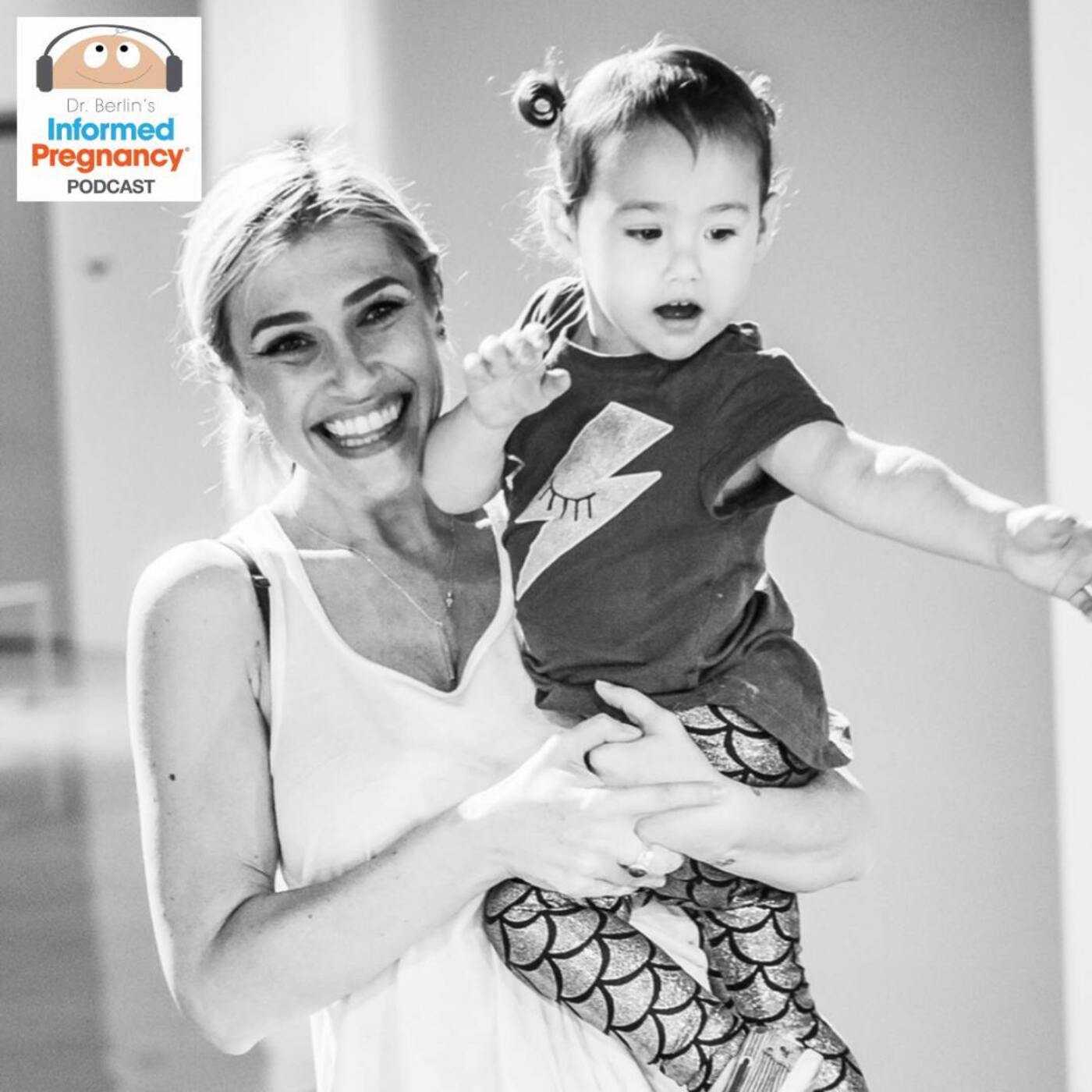
Certified Lactation Educator Counselor, and Postpartum Doula Jamie Lipsky Garcia shares valuable information about breastfeeding with circumstances such as nursing for non-birth mothers, breast augmentation or reduction, nipple piercings, difficult deliveries and so much more.

Learn more about your ad choices. Visit megaphone.fm/adchoices
See Privacy Policy at https://art19.com/privacy and California Privacy Notice at https://art19.com/privacy#do-not-sell-my-info.
Key quotes
“good to have a plan, but children, babies have a real way of just knocking you on your butt. So have that plan, but you know, be prepared to adapt and be flexible.”
“No, absolutely not. It's not a true indication whatsoever. I mean, that would be the easiest fix if you could plan that ahead. If someone had a smaller chest as opposed to a larger one, you could be like, well, okay, so now we know we're gonna have to work on your supply issues. I wish it was that easy, but it's definitely not.”
“Implants that are underneath the muscle, you have a better chance of successfully breastfeeding than those that are on top of the muscle.”
“Absolutely not. The miracle of the human body, it's absolutely insane. The only thing that you do need to have a placenta for is to produce colostrum. But you don't have to have a baby to breastfeed.”
“once the baby is latched, the nipple isn't anywhere near the baby's mouth. It's actually all the way down the back of the baby's throat.”
Related episodes
- Ep. 455 In Conversation with Jaime Lipsky Garcia
- Ep. 310 Amaris Rodriguez: After Birth
- Ep. 188 Joanna Bavero – Birth Story
- Ep. 182 Randi Wood – Birth Story
Transcript
AI-generated transcript with speaker labels — may contain errors, especially names and medical terms. Dr. Elliot Berlin, DC appears in blue; Jamie Lipsky Garcia in orange.
Download PDF of the Transcript
Dr. Elliot Berlin, DC [1:36] Welcome to the informed pregnancy and parenting podcast. I'm your host dr. Elliott Berlin We've done a couple of episodes on lactation and breastfeeding such as breastfeeding basis with Linda Hannah But today we're going to discuss breastfeeding with circumstances such as non birth mothers breast augmentation or reduction Nipple piercings difficult deliveries and more my guest today is a certified lactation educator counselor She's a postpartum doula with a primary focus on being on lactation on chestfeeding and she's a wonderful mom and someone who I'm lucky Enough to call it your friend Jamie Lipski Garcia. Welcome to the podcast. Oh
Jamie Lipsky Garcia [2:14] Thanks, dr. B. It's really good to be here finally
Dr. Elliot Berlin, DC [2:17] It's true. I've been planning this for a while The one thing about you that I wish is that you were more open and honest but outside of that
Jamie Lipsky Garcia [2:25] Yeah, you know, I'm totally closed book yeah, I don't know anybody who
Dr. Elliot Berlin, DC [2:30] More like it is and you do before we jump into breastfeeding stuff. How did you get into this?
Jamie Lipsky Garcia [2:36] Wow quite a story. I was in television production my entire life It was a myth buster. I worked on the show for 11 years busting myths. I was a fan before I even knew you well, there you go I was a fan before I started working on the show Which was awesome But then I met my husband who was also in the television industry and is always away as you know and I realized once we got pregnant that we both could not work in this industry and raise our daughter the way we wanted to raise her and While I Enjoy watching how I met my stripper wife behind bars in the OC. It's not really something that I want to work On so I Went back to school and I got my
[3:30] Qualifications in lactation and postpartum
Dr. Elliot Berlin, DC [3:33] What drove this?
Jamie Lipsky Garcia [3:35] besides the fact that Television wasn't as fulfilling as what it was before my daughter But it really does take a village and I think that This gets lost and I think you know There's so much pressure on women nowadays to be a great mom to be a great wife to you know work and do all of this and Coming from a situation where neither Jason or I had a mother to take care of us I really needed that support and I had an incredible birthing team you included I Credit my delivery to you. Thanks. I feel like you did most of the work. I don't know I don't know. There's a couple of like, you know hip openers and things but But I didn't have those mothers and I didn't have that
[4:29] Innate close, you know family people around me that would help me and so I sought out people like yourself and my my doula Lori Bregman who were just Erica Chidi who were just the most Exceptional women I've ever met in my life and were just there and how they made me feel and how they guided me through the process Was just such an eye-opener and I really wanted I wouldn't ever be off every other woman on the basis plan Every other man on the basis plan every other family ever had a parent to have that experience. And that's what made me do it.
Dr. Elliot Berlin, DC [5:05] You said you had a great team of me and Laurie Bregman and Erica Chidi and it was the best group of women ever. Well, I mean, it's okay. I relate. I relate. I have so much estrogen exposure every day. The greatest women and man. And you're a man. So here's the thing. So you became a lactation educator counselor and you help people. You're part of that team now. I mean, you guys didn't have your moms, but even, you know, I think so many people move away from their families that we just don't have the kind of support we used to have. So all these careers and professions pop up like childbirth educator and doula and lactation helpers and all those things
[6:01] used to just be there. They used to just be family members or village people. You know, not the village people, but village people from your village. That would be a weird group of birth. And maybe I could see it. And so, you know, you wanted to be a part of that team and birth doula is a crazy part of that team. They have known like normalcy to their life. So the postpartum side is a little more structured. Absolutely. Kind of gives you what you were talking about, the ability to be there as a mom and also be there supporting other women.
Jamie Lipsky Garcia [6:36] Yeah. I think as well, you know, you spend some time in prep. I hope, you know, it's one of the things that I like to work on is before his birth prep and pre before baby pre breastfeeding, but you have this baby and then, and then what? Then there's this baby and now what? And now you have to feed it and take care of it and do it alive. That's so much. So, you know, I was waiting after our first baby came out. I stuck around for a little bit. Uh, the placenta came out and then I was waiting for the user guide, which never came out. Ours came with no user. And also the like the 30 day,
Dr. Elliot Berlin, DC [7:16] trial guarantee. You like return it for returns. No returns. No take back.
Jamie Lipsky Garcia [7:21] Ours must've been refurbished because none of those came with it. Um,
Dr. Elliot Berlin, DC [7:26] when you had your baby was breastfeeding a question for you. Did you always know
Jamie Lipsky Garcia [7:31] that you wanted to breastfeed? So I did. I mean, and this is what I tell, you know, clients is that it's a really, and it's, it's same with birth, I guess, is it's really good to have a plan, but children, babies have a real way of just knocking you on your butt. So have that plan, but you know, be prepared to adapt and be flexible. So I knew I wanted to breastfeed. My goal was six months. Five years later, I found myself breastfed into a corner. Oh, you exchanged months for years. I really did, but I knew that I wanted to do it. And I, I love the closeness that it brought for my daughter and I, and it was really wonderful. Did it come easy to you or did you have
[8:22] challenges? I had challenges. I think as everyone does, nothing worth having ever comes easy. And I find it's very rarely challenging in the way that you expect it to be. I knew I wanted it. I persisted with it. I eventually dropped the expectations. I think that I had kind of had in my head and was more flexible and went with the flow and that really helped.
Dr. Elliot Berlin, DC [8:48] Is that a pun? Okay. I don't know. Sometimes I got really let down. We could go on and on and on. I don't want to milk it though. So, okay, so let's jump into our topic here. We want to talk about unique circumstances with breastfeeding. And it's not like we're doing an episode on breastfeeding because breastfeeding is the only way. There's people who pump and bottle feed. There's people who form in the field, lots of different options. But for someone who wants to breastfeed, there are sometimes circumstances that come up that play a role. So I would ask this question before getting into very unique circumstances. Does breast tissue in general play a role? Like how
[9:40] much breast tissue somebody has play a role in their ability to make milk and in their ability
Jamie Lipsky Garcia [9:45] to adequately breastfeed? No, absolutely not. It's not a true indication whatsoever. I mean, that would be the easiest fix if you could plan that ahead. If someone had a smaller chest as opposed to a larger one, you could be like, well, okay, so now we know we're gonna have to work on your supply issues. I wish it was that easy, but it's definitely not.
Dr. Elliot Berlin, DC [10:06] So not having a lot of breast tissue could still make tons of milk, and just because you have more breast tissue doesn't mean you're gonna make, you know, it's a cinch for you. Actually, kind of reminds me of somebody with a friend who unfortunately, she gave birth to triplets and vaginally, and then she had complications afterwards, and she fell into a coma, and she really wanted more than anything for her babies to have breast milk. And so at the time, put out a call for people, if anybody was breastfeeding and they could spare some milk. To donate. To donate, and you know, I remember driving up on Thursday nights through the streets of Los Angeles
[10:53] with a cooler, picking up breast milk, and the one person-
Jamie Lipsky Garcia [10:56] Gosh, you are the best human I've ever known in my life.
Dr. Elliot Berlin, DC [10:59] Oh, that can't be true. And then the person who made the most, I mean, who just donated bags and bags and bags of milk. I'm like, where are you getting all this milk from? And for one thing, it's like hard to part with it. It's like liquid platinum when you have it. It really is. Really wanna give it away. She's like one of the best humans ever on the planet. But also, it was just like mind boggling because, you know, she's not a person with a lot of breast tissue, and she just made tons of milk. But on the other side, so are there latching issues on either side, on either extreme?
Jamie Lipsky Garcia [11:35] So there can be, but again, there are so many other factors that play into this. There's not just, you know, breast size, but it's also the type of nipple, it's the baby's mouth. You know, if there's a lip tie or a tongue tie that's involved. So many other factors that I wouldn't, you know, even consider chest size, any type of telltale sign about breastfeeding.
Dr. Elliot Berlin, DC [11:59] You know, sometimes it's a question that people have is they wonder, will I be able to breastfeed because am I too big? Am I gonna suffocate my baby? Am I too small? Am I not gonna be able to latch or make milk? You're saying wait till you get there. There's nothing specific you need to do ahead of time. Is that right?
Jamie Lipsky Garcia [12:17] Yes, I would say know your options. So know about different positioning that will make it more comfortable for you and your baby to feed and to latch. That's so funny that you mentioned larger breasts and suffocating. It's such an, I get this question a lot. And women are like, my breasts are too big, my nipples are too big. I'm literally, I'm going to suffocate my child. It's really interesting, but everything in our bodies is structured that way for a purpose. And even a baby's nose, which will change over time, is severely flared, the nostrils. And so you can push the baby's nose completely flat down and that baby will still be able to breathe
[12:57] through little flared nostrils.
Dr. Elliot Berlin, DC [12:58] Is it weird that I want to try that?
Jamie Lipsky Garcia [13:00] No, try it, try it, try it.
Dr. Elliot Berlin, DC [13:03] I'm sitting here doing it right now.
Jamie Lipsky Garcia [13:06] I see that, yeah, nobody else can see except for me. I ask new moms to do that because they're like, no way, that's not true. I'm like, it really is.
Dr. Elliot Berlin, DC [13:16] It's incredible, whoever put this all together, the little features that you don't even think about and how they work to make survival happen. All right, we are just getting the ball rolling. We're going to take a quick break and come back with more breastfeeding under unique circumstances with Jamie Lipski-Garcia.

Dr. Elliot Berlin, DC [16:01] Welcome back to the informed pregnancy podcast. We are talking to Jamie Lipski-Garcia. Okay, let's talk about this question that comes up all the time. Breastfeeding after having breast implants. Are there considerations? Is it possible? Is it change anything?
Jamie Lipsky Garcia [16:19] So I have, in fact, have breast implants and we all know my breastfeeding situation for like, yeah, I'm breastfeeding till college. I was like, is this going to be a problem when she goes away to college? I'll just pump and send her. Like, yeah, you just got to schedule the classes around. Right. So it depends as with everything to do with breastfeeding. It depends on the type of surgery, what was done, the incision. I will say that especially nowadays, surgeons are very savvy that most women will want to do this. And so if they're doing any areola cuts, they will be mindful of ducts and nerves that are there. So it may or may not interfere, but it's way less of a chance. Implants that are underneath the muscle, you have a better
[17:14] chance of successfully breastfeeding than those that are on top of the muscle. And that's just because underneath the muscle, it doesn't really disturb any of the ducts or, you know, your tissue and nerves that are going into the nipple.
Dr. Elliot Berlin, DC [17:28] When you got your implants, did you have breastfeeding in mind?
Jamie Lipsky Garcia [17:32] I did. And I actually said that to my surgeon. I said that this was something that I want to do eventually, is this going to be an issue for me? And we decided on a plan on a different type of cut. So I have a cut underneath my breast instead of through the nipple. And I have my implant underneath the muscle and I never had a problem.
Dr. Elliot Berlin, DC [17:53] Okay. So if somebody wants to breastfeed and they're getting breast implants, it's a conversation to have with the surgeon.
Jamie Lipsky Garcia [18:00] Absolutely. And I think it's also something to think about yourself. I know that there's so many, been so many recalls with implants and silicone and so many people that might be a concern for them. So that would be something, you know, to think about and to talk to your surgeon about. But as far as I know, I think now they do mostly, it's all saline. So that's not even a worry in terms of leakage.
Dr. Elliot Berlin, DC [18:22] Okay. What about the other way, somebody who has a breast reduction?
Jamie Lipsky Garcia [18:27] So I've had a few clients. I would say it's probably like an 80-20 split between people that breastfeed successfully, but need to supplement. And again, it depends on the scar that you have, the surgery, the amount of nerve damage that might
Dr. Elliot Berlin, DC [18:45] have occurred. Is that also a conversation to have with the surgeon ahead of time to
Jamie Lipsky Garcia [18:52] preserve the ducts? Exactly. And it's not necessarily something that you would know until you start to do it either. That's a tricky part of it too is why, again, I'm so, this is just one of the perfect examples of having a plan but being flexible around it.
Dr. Elliot Berlin, DC [19:09] In the first segment, we talked a little bit about breast tissue, larger or smaller breasts. And you mentioned, but it also has a lot to do with nipple type. Are there certain nipple types that are more or less conducive to breastfeeding? And if so, are there things that people should know ahead of time or things they can do ahead of time to increase their success with breastfeeding? So there's always things,
Jamie Lipsky Garcia [19:36] that you can do depending on what type of condition you have. The thing about nipples and breastfeeding, and it sounds like nipples are still important because it's breastfeeding, but actually once the baby is latched, the nipple isn't anywhere near the baby's mouth. It's actually all the way down the back of the baby's throat. baby actually, I wish I could actually show you this diagram. Once the baby's latched, the suction and the way the tongue moves is all above the areola. It's around the areola and the actual nipple part is shoved way down the back of the baby's throat. So you can have a flat nipple or a bifurcated nipple, which is basically two nipples on
[20:25] one. It looks like two tiny little mountains or any type of deformity. That doesn't really play much of a role. There's a way around it. It's definitely a learning curve. You know, when you have a different type of nipple, like, you know, there's certain positions that you would want to avoid, you know, flat nipples, things that you can do to ridge the breast so that the baby can get a proper latch, a deeper latch so that the tongue of the baby is not just flicking on the nipple.
Dr. Elliot Berlin, DC [20:53] Is that something that they can work on ahead of time? Uh, so they do, for lack of a technical term, they make nipple poppy-outy things. Oh. I just got that bug bite thing that sucks the venom out of bug bites and I thought, that's a weird name for it, that bug bite thing. But now the nipple poppy-outy thing, isn't it a suction device?
Jamie Lipsky Garcia [21:19] One of them is actually called the nipplet. So it's not far off from the truth. And it's almost a little suction device that you can use to kind of pop out an inverted or flat nipple right before you breastfeed your baby. That could help with latch. But again, you know, these things, once you find a rhythm of breastfeeding, the nipples become less important. And I guess it's more, you know, that initial setting up your latch that nipples are more of an issue.
Dr. Elliot Berlin, DC [21:54] Okay. If you do it enough times, do they stay warm permanently? So horrible. And I'm so sorry for every person who's ever thinking about breastfeeding. Um, yes, sometimes they do.
Jamie Lipsky Garcia [22:07] They do. Okay. Even mine, like, you know, and they tend to like point in different directions. So you like never know where they're looking. But what happens to be with a baby suctioning, it does tend to elongate them. And this can or cannot be permanent. And I've seen more women than not that do have permanently elongated nipples depending on, you know, the time they breastfed for. There you have it.
Dr. Elliot Berlin, DC [22:36] Yeah. Let's talk about piercings.
Jamie Lipsky Garcia [22:40] Yes.
Dr. Elliot Berlin, DC [22:41] Can you breastfeed with piercings?
Jamie Lipsky Garcia [22:43] You can. Again, it's something you might want to keep in mind if you know you want to breastfeed in the future. A friend of mine, a very, very dear friend of mine had nipple piercings and she had absolutely no problems. The only strange, only strange thing was that milk would kind of pop out one of the holes.
Dr. Elliot Berlin, DC [23:05] Wait, does she take it out to feed?
Jamie Lipsky Garcia [23:08] Oh, yes. Always, always.
Dr. Elliot Berlin, DC [23:10] That's what I'm wondering.
Jamie Lipsky Garcia [23:11] Always. It's a choking hazard. Yes. Take out any jewelry. Not just a choking hazard, but it will definitely interfere with the baby's latch in the suction. Yeah, definitely take it out before you want to breastfeed. But it shouldn't cause too much of a problem. I've never seen it. And I'm not to say that it doesn't happen, but I haven't come across it. But just that sprinkler effect.
Dr. Elliot Berlin, DC [23:33] Yeah, I just kind of like, you know, squirt the baby in the eye like a fire hose. Squirt yourself in the eye. Okay, let's take another little break. Okay. When we come back, I have lots more questions for you. Don't go anywhere. Can't wait. We'll be right back. Welcome back to the Informed Pregnancy Podcast. We're talking about Jamie Lipsky-Garcia, such a good friend. I'm having a great time with you, as always.
Jamie Lipsky Garcia [24:12] Yay, me too.
Dr. Elliot Berlin, DC [24:13] Time is moving fast, so I'm going to jump right into the next set of questions. Okay. Do you have to give birth to a baby to breastfeed?
Jamie Lipsky Garcia [24:21] Absolutely not. The miracle of the human body, it's absolutely insane. The only thing that you do need to have a placenta for is to produce colostrum. But you don't have to have a baby to breastfeed. In fact, there are genetically male parents out there that have breastfed their child.
Dr. Elliot Berlin, DC [24:46] How do you go about doing that?
Jamie Lipsky Garcia [24:50] You take a hormone. Prolactin is a miracle hormone. It's really a case of hormones. with enough prolactin and enough prolactin receptors that get set up in the brain, which usually happen with a breastfeeding mother, usually happen in days zero to three. They set up these receptors in your brain and that tells your body to make milk and that's prolactin. And there are so many galactogogs and wonderful western medicine and eastern medicine nowadays that actually promote an incredible supply.
Dr. Elliot Berlin, DC [25:26] I wanted to because I know that some people when they're breastfeeding they have a hard time losing let's say their last several pounds that they put on during the pregnancy and other people just like it sucks all the weight out of them. So I was trying to latch my son to see if I could suck some of the weight off my body. It didn't work. I didn't have the nipple sucky outy thing. Also the hair, the hair bothers them. The hair is yeah waiter there's a hair in my suit of course. So yeah we've had couples especially two mom couples where one will
Jamie Lipsky Garcia [26:01] give birth but they can both breastfeed. Absolutely. It's a case of nipple stimulation of hormones and of taking that baby to breast. That would be similar with the surrogate. Yes exactly. So I have had a client who has successfully had two babies via surrogate and she wanted to breastfeed and she did. She did. They had an agreement with the mother that the baby would have her colostrum and then she pumped and they stashed some of her breast milk together because it can take a minute. Generally anything in lactation is two weeks before your milk supply settles, before it ups, before it lessens. The cycle takes about two weeks so I would just say people out there that are in this sort of situation
[26:55] is just to be mindful of that that nothing happens quickly. Yeah maybe I didn't give it a long enough try. I think so. You've got to be committed. A good enough lactation helper.
Dr. Elliot Berlin, DC [27:08] I didn't know you back then. Yeah there you go. There was this one time where I was holding my baby and he was three months old and I had come out of the shower and I was wrapped in a towel watching a high-speed chase on the cable TV. As you do. Well it just caught my attention. Anyway my wife put the baby in my arms and I wasn't fully conscious of it and all of a sudden I felt this awful sensation at the nipple level. I was like oh my god and that
Jamie Lipsky Garcia [27:36] was my first experience. Yeah it happens. I'm sure I have a story of my daughter journey doing the same thing to me. Yeah I was so grateful for the dimple cream. The nipple butter. It was dimple butter. It was so helpful. Chuck the nipple butter. Breast milk
Dr. Elliot Berlin, DC [27:53] is by far the best healer of wounded nipples. Well if you could make your own that's wonderful but I had no luck there. I was saved by earth mama angel baby. Yes also a good one. Okay so let's say somebody gives birth and then you know let's say six weeks eight weeks later they become sexually active again. Is there a change in the hormones? Does breastfeeding affect getting back into sexual activity or vice versa?
Jamie Lipsky Garcia [28:22] So I find it can be a mental thing. I know a lot of women that while they are breastfeeding don't feel comfortable doing it and their body because there's something in their mind they don't feel comfortable doing their body follows suit and then I know some women who actually will have sex while breastfeeding because it's the only time that that can happen. Multitasking? Multitasking yeah I mean that's hashtag moming and it's.
Dr. Elliot Berlin, DC [28:48] All right so if someone breastfeeds and while they're breastfeeding they get pregnant again does that affect lactation? I mean we know lactation sort of affects your ability to get pregnant but not as well as people think. Yes. A whole bunch of babies come through the office where people are like I don't know how I got pregnant and breastfeeding them.
Jamie Lipsky Garcia [29:11] Right Irish twins it's a thing. So very specific circumstances have to happen to be able to use breastfeeding as a pro-galactic. You know the baby has to be within I think it's within the first three months of life you have to be solely breastfeeding so no bottle no substitution. You can't have your period because once you get your period back that's also another factor your body's ready and the last factor is you need to be co-sleeping with your baby and even then it's not a hundred percent so it can happen.
Dr. Elliot Berlin, DC [29:42] What about the other way so if you do get pregnant while you're breastfeeding
Jamie Lipsky Garcia [29:45] can you keep breastfeeding does it change anything? You can continue to breastfeed eventually you will see a dip in your production and that's just because your
Dr. Elliot Berlin, DC [29:55] hormones are changing. I've heard that it changes the flavor of the milk, and sometimes babies pick up on that and reject it.
Jamie Lipsky Garcia [30:07] That's 100% true. It can absolutely happen. It's the same for mothers who continue nursing once they have their period. A lot of them experience spiciness in their babies when they're menstruating, because it tastes different.
Dr. Elliot Berlin, DC [30:20] Did you taste your own breast milk?
Jamie Lipsky Garcia [30:23] I did.
Dr. Elliot Berlin, DC [30:24] What does it taste like?
Jamie Lipsky Garcia [30:25] It's like almond milk.
Dr. Elliot Berlin, DC [30:27] Oh, really?
Jamie Lipsky Garcia [30:28] Yes.
Dr. Elliot Berlin, DC [30:29] Is that just because you're so nutty?
Jamie Lipsky Garcia [30:31] Oh, you know. Oh? Yeah, it's really sweet. I would say like vanilla almond milk, you know?
Dr. Elliot Berlin, DC [30:40] Oh, not just unsweetened vanilla almond milk.
Jamie Lipsky Garcia [30:42] No, the vanilla, like the legit stuff.
Dr. Elliot Berlin, DC [30:48] I feel like if I breathed breast milk, it would be more like oat milk. I don't know why. I just felt I'm a more of an oat kind of guy.
Jamie Lipsky Garcia [30:55] You're an oat kind of guy.
Dr. Elliot Berlin, DC [30:56] Yeah. I don't know. Now that you told me you don't have to have a baby.
Jamie Lipsky Garcia [31:00] You can do it. I believe in you.
Dr. Elliot Berlin, DC [31:03] I'm starting a project today. We'll see. I can't wait to taste my own man breast milk. Man milk, good. So we blew through our whole time and I didn't even get to ask you all the questions I had in my mind, which means, you know what? You have to come back one time. Part two. Part two. I would love to schmooze with you again. And you know, I said at the beginning, I wish you were more open and not so shy.
Jamie Lipsky Garcia [31:32] I know, I'm super shy. I really watch my words.
Dr. Elliot Berlin, DC [31:37] But now the audience knows why you're a great guest for this topic. Because there's nothing, you're super easy to talk to and there's nothing that you won't just be open about.
Jamie Lipsky Garcia [31:48] So I appreciate you. Thank you. I appreciate you. I hope that someone heard something that they can take away from it. Thanks for having this forum and for being such a, gosh, such a pillar of stone in all of the birthing community. It's amazing.
Dr. Elliot Berlin, DC [32:05] Thanks, Jamie. I have a question for you. Where can we find you online?
Jamie Lipsky Garcia [32:11] So I am part of the Loom Dula Collective. You can also contact me over Instagram at JamieLipsGarcia.
Dr. Elliot Berlin, DC [32:20] JamieLipsGarcia?
Jamie Lipsky Garcia [32:22] JamieLipsGarcia.
Dr. Elliot Berlin, DC [32:23] How do you spell JamieLipsGarcia?
Jamie Lipsky Garcia [32:26] J-A-I-M-E-L-I-P-S-G-A-R-C-I-A.
Dr. Elliot Berlin, DC [32:30] Oh, you're not kidding. It's really JamieLipsGarcia.
Jamie Lipsky Garcia [32:33] JamieLipsGarcia. I tend to work more through word of mouth. I like to keep it small and sensitive.
Dr. Elliot Berlin, DC [32:43] Nice. I'm grateful for you joining us today at home. I'm grateful for you listening to our podcast. We've been getting more feedback than ever and sometimes it's like great topic suggestions. And then sometimes it's just questions. And some of the questions that I asked today are questions that were submitted by audience members. And so we put a whole bunch of them together, got an amazing expert and answered your questions. If you have more questions or comments, write to us at info at informedpregnancy.com.
Want more pregnancy + parenting? Start your FREE TRIAL of Informed Pregnancy+ and get access to all our curated pregnancy and parenting content — original series, iconic birth films like The Business of Being Born, prenatal workouts and more.
