
July 27, 2023 · 36 minutes · Episode 365
About this episode
Human communication advocate, parenting expert, author, and baby sign language teacher Dr. Etel Leit is answering all your burning questions about baby sign language including how it’s used, why it’s beneficial, and what signs to teach your child first.

- Connect with Dr. Etel online: https://www.instagram.com/etelleit/ and https://www.instagram.com/signshine/
- Find her book “You are My SignShine” : https://www.signshine.com/etel-leit-books/
Keep up with Dr. Berlin and the Informed Pregnancy Project online!
www.instagram.com/doctorberlin/
www.facebook.com/InformedPregnancy
Learn more about your ad choices. Visit megaphone.fm/adchoices
See Privacy Policy at https://art19.com/privacy and California Privacy Notice at https://art19.com/privacy#do-not-sell-my-info.
Key quotes
“Because the myth is that if I'm going to sign with my children, they will not speak because they will rely on signing.”
“So when you give your child the tools to express themselves, boom, no frustration.”
“Yes, because the brain already knew the vocabulary for the words. It doesn't matter if it's verbal words or sign words, the brain already knew it. All he needed is to develop the muscles.”
“And I believe that when you sign with a child, it creates eye contact. It really, really invest in the communication and connection with your child.”
“For me, it's not about the signs. For me, it's about the benefits and the process of signing with your child.”
Related episodes
- Ep. 329 Valentina Trentini: After Birth
- Ep. 331 The Umbilical Cord with Dr. Emiliano Chavira
- Ep. 382 Caitlin Wilder: Before Birth
- Ep. 336 Natalie Dreyfuss: After Birth
Transcript
AI-generated transcript with speaker labels — may contain errors, especially names and medical terms. Dr. Elliot Berlin, DC appears in blue; Dr. Etel Leit in orange.
Download PDF of the Transcript
Dr. Elliot Berlin, DC [0:12] Welcome to the Important Pregnancy and Parenting Podcast. I'm your host, pregnancy-focused chiropractor Dr. Elliot Berlin. My guest today is a human communication advocate, parenting expert, professor, author, and baby sign language teacher. We're going to discuss what baby sign language is, why it's an important tool for you and your baby, and what signs are best to start with. Dr. Ethel Light, welcome to the podcast.
Dr. Etel Leit [1:03] Hello, everyone. I am honored and humbled to be here after so many years of-
Dr. Elliot Berlin, DC [1:09] I know. We met a long, long time ago in the very small Los Angeles baby world, and we just reconnected recently, and I don't know what took so long. Literally, when parenting world was in its diapers, right? Like many years ago, and look, you know, today it's grown so much, right? Now it's a teenager. Okay. So let's start at the beginning. Where are you from originally?
Dr. Etel Leit [1:33] So I call myself the Holy Chick. I was actually born in Jerusalem, Israel, and it was a privilege because I was born to a community of many, many languages. I mean, literally, each one of my neighbors spoke a different language. Even my grandparents spoke a different language, and we were kind of like the first generation who spoke only Hebrew, and this is what I was introduced to, different types and different ways of communicating, which I bring into the world of babies, children, and today teenagers,
Dr. Elliot Berlin, DC [2:05] and even adults. Okay. So Hebrew is your first language.
Dr. Etel Leit [2:10] Hebrew is my first language, and I know four and a half languages with different alphabets. Hebrew, English, Arabic, sign language, and Spanglish. That's my half. So four different alphabets with different languages.
Dr. Elliot Berlin, DC [2:26] Wow. I mean, you're sort of that almost universal adapter plug
Dr. Etel Leit [2:33] that can go to different regions of the world and communicate. Yes. You know, and I remember when I was pregnant, obviously I asked myself, so what language will I speak to my children? Because the dad of my children, he is not fluent in Hebrew, and it was Hebrew, English, and I kind of researched. I love researching. It's my favorite thing to do today, including AI, and I researched like, okay, what language should I speak with them or, you know, expose them to? And I found something that is called, I mean, mind you that it happened 20 years ago. I can't believe it, 20 years ago. I found a little article about baby sign language, and I thought, wow, that's interesting.
[3:12] And I read about a doctor named Dr. Garcia. I mean, what really always stood up is like, he has this like long mustache, and he did deaf studies at the University of Alaska. And he was invited by a couple, couple deaf people for dinner. And he went to dinner. The couple had a baby, a 10-months-old baby. And the baby, which was hearing baby, completely understood the parents by signing. The parents were deaf, right? But the baby didn't cry as much because he could communicate with the parents who were deaf. When I read it, Dr. Berlin, I had like, ding, ding, ding, ding, my head with all this linguists. I learned linguists and Arabic culture and Hebrew culture, and then education and leadership
[3:59] at Pepperdine. And all of my being wanted to bring it to the world. I'm going to teach baby sign language to everyone, and I'm going to write a curriculum about it. I was really excited until I came to the world about it. And I said, okay, you know, I have this program. We're teaching baby sign language. And people 20 years ago looked at me and said, oh, literally with puppy eyes, really feeling sorry for myself and for my daughter that I'm going to sign with her. Because the myth is that if I'm going to sign with my children, they will not speak because they will rely on signing. That was the myth back in the days.
Dr. Elliot Berlin, DC [4:34] Well, I mean, there is this idea that bilingual kids sometimes talk a little bit later,
Dr. Etel Leit [4:40] but they start talking full sentences right away. Exactly. Yes. So you pointed out about bilingual, not about sign language, and I will explain why. Actually children with sign language, they speak faster. At the age of two, they have 50 more spoken words. That's the research from University of David. By the age of two, they speak like three years old, and I'll explain why. So when parents who do not sign with their children, they expose the children to language slower, right? They rely on the rhythm of the verbal communication, right? And maybe you know, but what is the average age of a child starting speaking? When I say speaking, it's like two or three words.
[5:23] The average age is about, you know, trivia, trivia to all of our listeners, about 16 months old, at least about 16 months old, of course, you know, they're like crawling, like walking, you know, like anything there is like younger and older, but by the age of two, the pediatrician always asks how many words that the child knows, right? So parents who sign with their children just expose the kids to language way before. They don't follow the verbal communication, the verbal, the cognitive communication. Does it make sense? Yeah. Let's, let's give a little example because I'm using big words. So a child, you know, when they're born, they communicate.
[6:09] They don't wait until 16 months, right? And how does every baby and child communicate in toddler? You know that? How do they communicate before they have words? They cry like adults, they cry, just like adults, by the way, they cry. Because there is no other way to convey what they need or what they see or what they want. So they cry, right? And older age, like toddlers, instead of crying, they do the crying and the pointing, right? This, this, this, this, this, or they throw a tantrum on the floor, right? This is not because their IQ is not developed, not because they're not smart. I love the moms that come and say, oh my God, he's so smart, he starts speaking
[6:49] at the age of like, you know, 12 months old. My mom always tells me when I was one year old, I sang to myself, happy birthday to you. She thought I was Jean, I'm Jean. This is just babies and children not speaking, it's just the muscles, you know, and I know your chiropractor, you know, that the muscles development has to do a lot of development. So we have muscles in our throat, in our tongue, you know, that help us to say the sounds that will create a language, right? In any language, there are different sounds, right? For example, milk, there is leche, there is halal, and there are different muscles that needs to be developed in order to say it in different languages, right?
[7:31] So let's concentrate on milk because I'm sure most of our listeners are English listeners, right? So for a baby to say milk, they need to know how to pronounce mm and l and k, which is really, really difficult out of the three. The easiest one to pronounce is the mm because it's a lip sound, m-m-m, that's why they say sometimes, m-m-b-b for the bottle. Yeah, it's called the lip sound, b-b-b, m-m-m. Listeners try to do it, m-m-m, v-m, m-m-m. So exactly, mm lips. Now I'm going to challenge you, try to say nah, like the n, try to say n. now great now close your nose pinch your nose you know with your index and your thumb okay and now saying you can't really say it why yes we know how to do it like driving but baby needs to learn
[8:31] that ah i need to take up the air not from my mouth like i do from i need to take the air from my nose like enough so all these things the baby needs to learn and what happens we as parents and educators we follow the muscle development instead of following the cognitive development because the baby knows when they're hungry and they know when their diaper is wet and they know when they want just to be hugged they just don't know how to communicate that it doesn't
Dr. Elliot Berlin, DC [9:03] make sense i think i have that problem also in life with people uh yeah i'm not a great communicator it gets me into trouble sometimes but now i'm wondering if that's why it's called a nose exactly because it's called it to say the nose okay until let's take a quick break and Welcome back. We're talking to Etel Light about baby sign language. Okay. So really interesting that you can teach babies to communicate well, articulate before they can actually speak well. And I mentioned there's a lot of benefits to doing that.
Dr. Etel Leit [11:19] Before the benefits, I want to kind of like share with the listeners what sign not to sign. So when I ask people, like, what are the first five signs that you think we should sign with your baby? Usually one of the three will be, I mean, can you guess what is the first sign that parents sign?
Dr. Elliot Berlin, DC [11:40] Milk or food, eat?
Dr. Etel Leit [11:42] Right. Milk, food, eat. Yes.
Dr. Elliot Berlin, DC [11:45] Up?
Dr. Etel Leit [11:47] Yes, up. Actually, the sign up is the sign that every child signs with, even without knowing baby sign language. Because what happens when you go to the baby, they kind of like show you both of their arms, right? Like, I want to go up. Yeah. They do it intuitively because that's what you do to them. You show them the two hands, right? Like towards them. So that's what they do when they want to be lifted. That's a sign for look me up. Right. But let's go to the one sign that I think that is actually a dangerous sign. And that's the sign more. Somehow somebody started this, like, phenomena. Exactly. You even know the signs, both hands together, the sign more.
[12:26] And if you come to my programs, I always sign, if you go to my YouTube, which is sign channel, Dr. Etelai, you will see the explanation of why not to sign the sign more. More. And it's exactly goes to what we just spoke before. More means absolutely nothing. More for me, just like crying, but it's a very sophisticated. It's the Porsche of the crime. It's pointing what we're doing to the brain. We tell the brain, Hey, brain, you don't need to be articulate. Just sign more. It's exactly with adults. What you said, just cry, just manipulate, and you will be given whatever you need to be given. But we don't want, you know, the purpose of signing is really not the sign. And that's
[13:09] what parents needs to understand. The purpose of signing is really to be articulate to my needs and wants and desires. Does it make sense? Yeah. Yeah. So parents do not start with the summer. More is like crying. And with the sign more, I have some parents coming to, Oh my God, I'm signing, but my child is not speaking. And the question that I would ask, do you sign the sign more? And they say, yes. Boom. So what are the benefits of signing? One of the benefits for me is absolutely reduce frustration, not only the babies, but also the parents, right? Because it's so frustrating when you hold your baby, you know, you just had this baby, you see all the movies, only the happy,
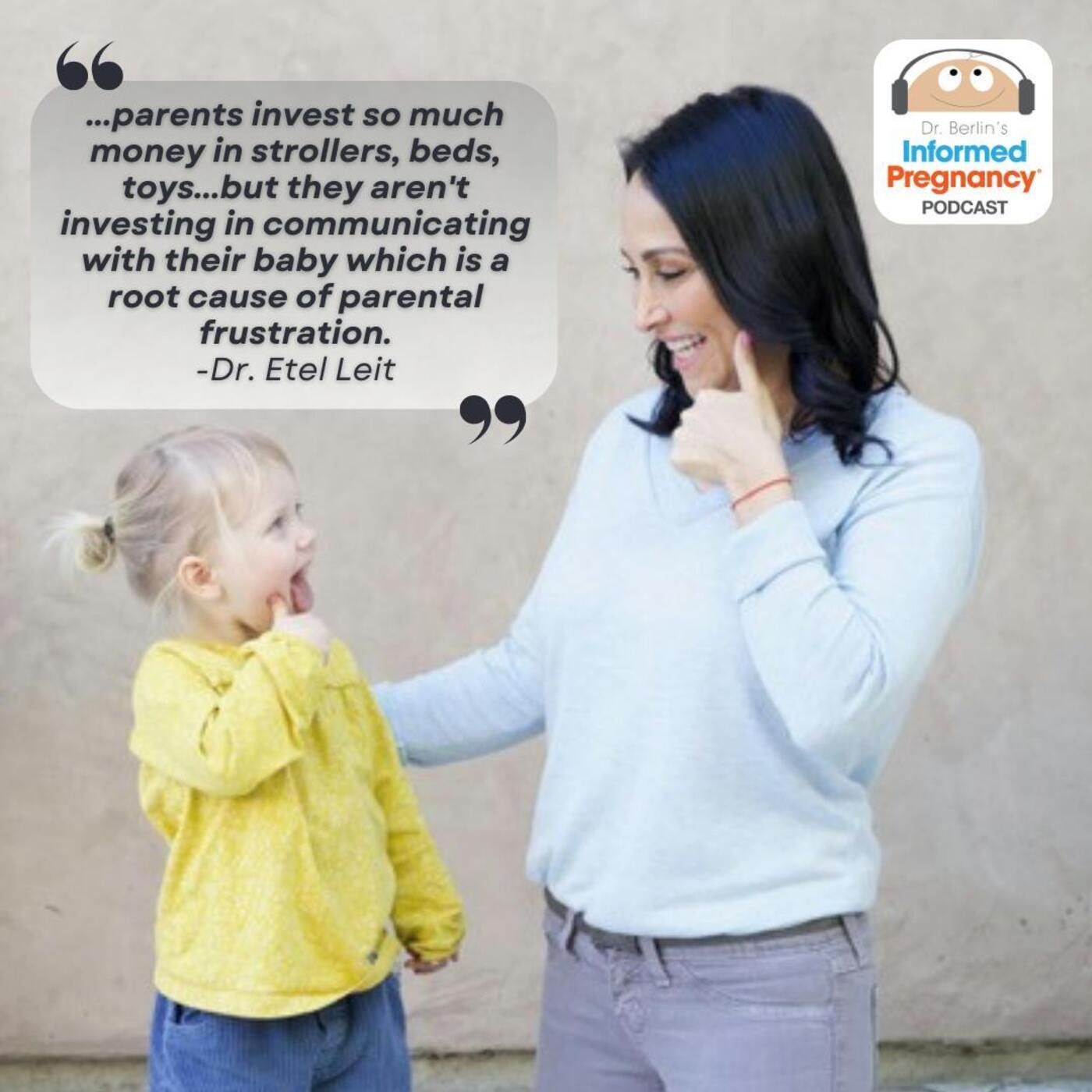
[13:49] lovey things and your baby is crying. And you just don't know why. And you will do anything, anything to solve it. Right. It's amazing to me that parents buy strollers and two, $3,000, but they're not investing in communication because this is the core of everything. So when you give your child the tools to express themselves, boom, no frustration. As I said earlier, children speak faster by the age of two. They have 50 more words by the age of three. They really speak faster. They know how to articulate emotions. And I'm not going to say now, but I have in my program, the three F signs, which is a little tool of what signs to sign and whatnot. And you already know that the sign not to sign is what
[14:31] the sign more, more. Yes. No more, more. There's so many benefits. One benefit that I love is maybe learning something new with your child. Many parents don't know sign language. And when they learn sign language with their children, it puts them in the head of like, Oh, I don't know it all. I'm learning something with my child. Another benefit that I love is just being really silly. I mean, so many parents when they first signed, they kind of like, none of one is silly. Like you and I, Dr. Raleigh and bright. people it's hard for them they have a child and they don't know how to play or to listen to music and the signing just helps them be you know more flowing because it's something that is like body
[15:09] and communication there are so many i can like really talk now for an hour but any specific benefit that you want me to talk about or addresses either the parents or the toddler or
Dr. Elliot Berlin, DC [15:21] yeah first of all a little story my father on his mother's side had three aunts who were born deaf so all of the ones that had kids two of them had children and the children all speak in here typically but their parents are deaf and they both married people who are deaf so i remember my uncle erving who i used to see as a kid from time to time we grew up in new york and they were in berkeley and we were in staten island so not so far we would see them from time to time and he would always teach me and my brother sign language asl right so we knew the alphabet pretty well we knew a few signs the third sister also ended up losing her sight and so
[16:15] it was a really interesting experience to go visit her because she would just touch our face and know exactly who we were just touching the face and the way you could sign with her is she would feel your signs you'd spell things out and she can feel the signs that you're doing with her hands was really quite incredible but i hadn't seen my uncle ever in a very long time and he had moved out to california and then we moved out to california and again i think this is probably about 20 years since i had seen him something like that and we had a son and my son was just over a year so he came out and he brought a soccer ball for my son he wanted to just give him a little present and my son was so excited about the soccer ball
[17:02] he started signing ball and my uncle just started crying just balling for lack of a term he was so happy he's like is he communicating with me sign language and i said yeah he knows i don't know maybe 25 signs and one of them is bomb and he just cried and he said his whole life that he hasn't been able to really communicate with adults because adults don't learn sign language and he's communicating with my one-year-old and it just made him so happy and they got along oh god they were playing you know the age gap was huge and they were just on the floor playing like nobody's business so you know i know that's a heartfelt story wow i know it's not typically why people learn sign language for babies there's other
Dr. Etel Leit [17:53] benefits yeah but this is exactly the benefits so you know what is the third most common language in northern america first english yeah second spanish spanish and third sign american sign language exactly because it's not only the people who are hard of hearing or deaf sign it's also their families i mean everyone around them so like i don't know if you know that if you ever been to in israel in israel there is a law that anything on the news there is a little screen like a little circle in the bottom right or left i don't know and there is interpreter hebrew sign language interpreter and with that said for me teaching children american sign language baby sign language which i based it on american sign language not
[18:36] on baby science or any other programs there are so many programs out there purely on american sign language they accept different cultures because deaf studies is you know deaf is a culture they accept people that don't look or sound like them what a beautiful window is and i came as i said i was born in jerusalem in israel we are not the same you know and sometimes what creates fear in adults and in children is someone that is not like me how beautiful if you teach sign language to a child and all of a sudden they see someone that is deaf or someone that is not like them and just being acceptance so for me it's also the values i didn't mention it because we have such a short time with marcus but it's beyond it's really beyond
[19:19] another benefit that i absolutely love literacy skills because i teach the abc as he said you know you know the alphabet the alphabet is a core for baby sign language my babies in my practice they know how to actually put their name together and start literacy skill in a very very young age because you don't wait for them to start reading when they were two you started when they were 15 months old so if anyone is curious you can look at my instagram which is etalite and sunshine and see little babies at 14 months old already reading and putting their names together so there's so much and that answers the change in the persistency of the brain of babies and
[20:00] They're unlike us. They don't have a linear, you know, we, we, we think of everything is linear, you know, there are steps, one, two, three, four, children at this age, you know, with this very fast, you know, development, they think like a spider web. So we can teach them baby science, literacy skills, values, everything at the same time.
Dr. Elliot Berlin, DC [20:20] Yeah, I think that's something that we noticed with my son too, is he was able to start forming sentences where other kids weren't speaking yet because they just didn't have the skills to make words so they couldn't make sentences. And when he started to talk verbally, he was already talking complete sentences.
Dr. Etel Leit [20:40] Yes, because the brain already knew the vocabulary for the words. It doesn't matter if it's verbal words or sign words, the brain already knew it. All he needed is to develop the muscles. Boom, I have a language because all it takes is muscles.
Dr. Elliot Berlin, DC [20:53] Right. It's really interesting. Would you say that there's anybody who isn't a good candidate, kids who shouldn't learn baby sign language?
Dr. Etel Leit [21:03] It's really an interesting question. Nobody really asked me who is not, you know, which children are not a good candidate. I would say it's really about the parents.
Dr. Elliot Berlin, DC [21:10] Oh, let's talk about that.
Dr. Etel Leit [21:12] No, because some parents want to do it because it's really a trend. So these are the parents that usually teach the sign more and signs that you should not start with. And they go and they, I don't know, they found all these like words out there. Right. Because you really need to know what are you teaching and what age. So you're not doing it because of its trend. You're not doing it to raise the IQ of your child. By the way, the research shows that the same research that I told you at University of Davis, California, they took hundred children who are not signing and have the children who are signing and they follow them. They found out the children who sign by the age of eight, they have 12 higher IQ, 12 IQ points higher.
[21:56] Why? Because you provide more stimulation to the brain. So if a parent, this is the parent that I say, oh, maybe you don't want to sign. The parent wants to do it to add points for university or to be like, you know, if it's not like, oh my God, my child is, you know, maybe you don't want to do it. Invest in your child communication. You know, fortunately, and you know, you know, that, you know, the world of technology. Some parents text their kid when they want to talk to them instead of really talking to them. And I believe that when you sign with a child, it creates eye contact. It really, really invest in the communication and connection with your child.
[22:32] Again, I'm going to say something that most baby sign language instructors and experts don't say. For me, it's not about the signs. For me, it's about the benefits and the process of signing with your child. Like what happens? You know, what happened to a child when the parents really understood them when they're crying and saying pain? You know, do we have time for the pain story, Dr. Belain?
Dr. Elliot Berlin, DC [22:55] Sure.
Dr. Etel Leit [22:56] So it happened 14 years ago. I had a group of signers and, you know, usually we have babies signing one, two, three. And the parents were sitting in a circle. And Nathaniel, Nathaniel was so sweet, a baby that his parents signed with him everything. I'll never forget it. His dad used to sign with him the sign exit. Every time they saw exit, the dad used to fingerspell it. Exit. And one day they coming, you know, to the class and you will like it because it's about baby development. And baby Nathaniel just didn't crawl. He was crawling and he didn't crawl. He kind of like stopped crawling. And we all noticed that because there was this one toy that he loved.
[23:36] And he always like, you know, kind of like got this bowl first before all the babies. It was kind of a joke and he didn't crawl. And I asked the mom what happened. She said, oh, no, the pediatrician said he's striking because I quit nursing him. We're stopping nursing and he's striking. A protest. Mid class, exactly the protest. Exactly. Mid class, I see baby Nathaniel signing the sign pain. So when you put both of your index fingers together, tap, tap, this is the sign for pain. So this is a earache. This is a toothache, bellyache and so forth. And he was signing ache, right? A headache. Interesting. Another mom saw the same thing. She saw Nathaniel signing pain.
[24:20] I went to the mom in the end of the class and I said, you know, I think that Nathaniel was signing pain. Mama went to the pediatrician. And unfortunately, I'm not saying I have goosebumps every time I talk about this story. It's also in my book, You Are My Sunshine. Baby Nathaniel had stage four cancer that went from his heat all the way to his spine and up. And the parent wouldn't really tap into it right if he wouldn't sign a lot of pain. He was in pain. Forward, amazing Sunshine parents did a big fundraiser. And we collected, I mean, back in the time was a lot of money. And the parents of Nathaniel could afford to. to go to New York to do the surgery.
[25:03] When baby Nathaniel woke up from the surgery, which was successful, he looked at everyone in the room and he signed duck. He signed the signed duck and everybody didn't really understood why is he signing the signed duck. Right, it was after surgery, in the recovery room. And all of a sudden they're looking behind them because they were facing Nathaniel. There was a mural of a duck on the wall. And it was such a miracle because think about it, a baby 14 months old cannot really speak. So how do you know that cognitively is right after a big surgery? Penny was signing duck and that was a sign for the parents that cognitively is there, is with them.
Dr. Elliot Berlin, DC [25:41] Beautiful story, unbelievable. So, yeah, I mean, it's just an extreme example of the benefit of being able to communicate earlier and then mutual communication from the child to the parent and back. Ethel, let's take a quick break. We're not gonna come back, I wanna find out about your books. Don't go anywhere, we'll be right back.

Dr. Elliot Berlin, DC [26:12] Welcome back to the podcast. We are talking to Dr. Ethel Light and we're talking about baby sign language. Okay, so you made a very compelling case here for why it's a good idea to teach your babies sign language. What age roughly does someone start and what are the initial steps?
Dr. Etel Leit [26:29] Yes, and I think I tapped and it's really not about the age of the child, it's really about the parents. I had from pregnant parents in the class because they wanted to sign when the baby is born. I have one year old, six months old, two years old. It really depends what benefits you want to have from it. If you look online, you find six months old. Again, I don't know who came up with this number. It's really about when the parents are ready. When you're ready, it's never too early or never too old. Even when your child started saying a few words, it's really not too late because even a toddler, when they start to saying a few words and you do it with a sign, it really helpful.
[27:04] For example, the sign wait. I love the sign wait. I also teach in early childhood programs and centers for children who already speak. The sign wait comes to tell the child, hey, I see you, but now I'm on a phone and you're coming to talk to me. We're waiting. That's it. So just wait. That's the sign wait. So it really depends on where the parent is. When the parent is ready, come on, start learning sign language.
Dr. Elliot Berlin, DC [27:30] Okay. And if somebody wanted to just give it a little try at home, is there a favorite starting word or a couple of favorite starting words?
Dr. Etel Leit [27:41] Sure. So as I said, the three F signs, what signs to start. I'll start with the first F, which are functional signs. So functional signs will be the first signs that I would love parents to see starting. What are functional signs? Signs and words that all households with babies use. For example, milk. That will be the first sign because babies use milk and drink milk and want milk all day long. So right before you offer them milk, say milk, milk. Do you want milk? How many times did I say milk right now, do you know? Approximately. By? Yeah, actually more than 10 because I said it verbally and I signed it. Interesting. Parents of children of babies who do not sign,
[28:28] they don't even say the word milk one time. They would just give the baby milk. So if you're signing automatically, you're emphasizing on the verbal and the nonverbal words. And that's why children are really articulate when they grow up because they've seen the word so many times. So milk is one of the first signs. Milk, mommy and daddy, of course. Depends on the family.
Dr. Elliot Berlin, DC [28:47] Yeah. Yes. Okay, so that's the functional. The first F is functional.
Dr. Etel Leit [28:53] Yes, and I won't tell you about the next F. But in my book, You Are My Sunshine, there is actually a free Pictionary there with all the first signs that every parent wants to learn. And in my website, Sunshine, if you just go there, you can click and get a free Pictionary with the first 18 signs that I think that every parent should start. And what sign is not there? More. Yes, you're not going to find the sign more. Please do not sign the sign more unless your child is already signing five signs, right? So it's a Pictionary of all the first signs that are recommended. Very cute.
Dr. Elliot Berlin, DC [29:30] Yes. All right, so that looks like a great resource. So what's your second F?
Dr. Etel Leit [29:38] Oh, I'm not going to say. People who want to know that. Oh, you've got to check it out. Okay, so we gave you one of them.
Dr. Elliot Berlin, DC [29:43] Yes, you're going to check it out.
Dr. Etel Leit [29:44] One out of three Fs.
Dr. Elliot Berlin, DC [29:46] Right.
Dr. Etel Leit [29:46] Functional signs, mommy, daddy, milk, stuff like that.
Dr. Elliot Berlin, DC [29:49] Milk. Okay, and then there are two more Fs. But if you want to know what they are, you're going to either have to visit signshine.com or check out the book, You Are My Sign Shine. all right let's talk about your books then you have a few books yes i have seven books actually
Dr. Etel Leit [30:05] published and my last book uh i'm addicted to you i'm going to talk about that in a second i had a book signing at the bars and noble last sunday oh wow very excited yes thank you and i'll tell you you know i was a child that was born in jerusalem and in my wildest dreams i never thought i'm going to write one book in english let alone had a book signing at bars for me it's really big accomplishment because i love to do what i do and i think that when you lead with your passion and lead with love everything else comes it's about really what you feel it's about the feeling that brings you the results and not something else and that's why when you sign with your children when you communicate it's really about the
[30:47] feeling so a little bit about my book so my first book is called you are my sunshine that's name of the you know organization sunshine really about how to start signing where to start the benefits signing with special needs we didn't talk about it today nathaniel's miracle and so forth this is a you are my sunshine which was my first book and then with my research when i did my phd i really thought that i'm going to research baby sign language but when i find out that i wanted to research more how adults communicate and i think we touched upon in the beginning because i really believe that most adults really don't know how to articulate their feelings and needs and wants you know they cry they cry they being the victim oh
[31:34] they feel guilty i mean i have a jewish mom right i was born to a world of guilt yeah we share that right and i say all the time you know guilt is optional so i took everything that i know about early childhood and really implemented on adults and it's the same thing it's really the same thing communication and connection and being articulate to yourself and to one human being in the world about what you really feel without whining about it it's really important that's the base of baby sign language and i wrote a book it's just called and addicted to you 360 pages about me being a commander of the israeli intelligence about my move from jerusalem to america about my work about being addicted to other people not
[32:19] knowing how to articulate yourself because i wish i would learn baby sign language right and in between i wrote a children's series book five books which called where is water it's about a little fish that went to his parents and ask every day lots of lots of questions and the parents are very proud to tell him the answer but when he came and asked mommy daddy where is water they didn't know the answer so after i published it more and more of my clients are not only mommy and daddy i'm clients with mommy and mama daddy and papa so i published three books right and then my client came and said well what about single moms and i said well right that single mom so i have single moms and single dad because i do
[33:00] have single dads today you know who decide to have kids with surrogate moms so it's a series of books of where is water in five editions so here we go seven books you can find them on amazon or bars the noble and i'm very proud and it's funny i don't have even one book in uber
Dr. Elliot Berlin, DC [33:18] not yet i have a final question for you and then we'll see if you have any final thoughts but is there any overlap between sign language and different languages i know like we do american sign language you said there's ciber sign language is there overlap between them
Dr. Etel Leit [33:34] good question so some words are the same not only hebrew sign language there is french sign language arabic sign language it's interesting because people think that sign language is international for every region their its own sign language some are the same and some not i don't know all sign language i know a few words in hebrew sign language and i know american sign language but really it's about being articulate non-verbally and really all of us and that's why it's important for us to have a zoom when we are actually seeing each other most of communication is really non-verbal it's not only in words and therefore people love to use emojis right the emojis is exactly like sign language because when i tell someone without
[34:19] emojis and i add just a tiny emojis i can tell them how i feel what do i really want to express with it and that's the core of signing it makes me wonder if kids or people in general who are on the autism spectrum because they have a hard time with body language if signing would be more perceivable to them the meaning yes because you know when i say happy it's not just the son of signing now happy you know i need to sign happy but you acted out yes i acted out my face my eyebrows my shoulders everything i mean parents when they come to me and educators we first do like almost an acting class right children on the spectrum it's very hard for them to read
[35:00] social cues that's the hardest thing so when you sign with them it's easier for them to kind of like guess what is this social cue and I have many parents you know that come to my practice for private with children on the spectrum and signing of them tremendously but to ease into what does it really mean you know it's like almost like wearing glasses oh oh okay yes well that's so powerful I learned a lot from you as always and I would love to find out do you have any final thoughts and where can we find you online final thoughts is really love what you do because if you communicate you know out of your heart people will understand you I think that the most beautiful thing for
[35:49] babies toddlers adults from my work of research is really that people want understand me you know that's what people spend so much money on the therapy so you know couch right he didn't understand me she didn't understand me so the most important thing is invest in that help your child being understood raise their self-esteem you didn't have it and I'm sure many parents complain later that they didn't have it as child as children you know invest in that help your child feeling that this is something that will stay with them forever so where to find me oh my god so as I said you know Amazon and Bars and Noble for my books there is an app which called sunshine on Apple Store which all the songs that you
[36:31] all know and I teach you how to sign all the songs so you don't have to really you know learn by yourself there was a dictionary and the song my website sunshine and at a light of course on Instagram and Facebook and even tick-tock I'm doing funny rules right now I don't even ask or so believe I'm doing it with my entrance to show really the benefits and what to do and how not to start and how to start that's really kind of like where to find me I think there was everywhere you can type at a light or
Dr. Elliot Berlin, DC [36:58] you pop up fine I'll pop up amazing that's all thanks again so much for joining me and at home thanks for listening to the podcast if you would like more pregnancy and parenting information visit informed pregnancy calm
Want more pregnancy + parenting? Start your FREE TRIAL of Informed Pregnancy+ and get access to all our curated pregnancy and parenting content — original series, iconic birth films like The Business of Being Born, prenatal workouts and more.
